Source Spider Crane for Warehouse, Shipboard, and Workshop Use
Find 30 Spider Crane models suitable for narrow space lifting, building construction, and shipboard operations. Compare hydraulic driven types with varying capacities from 1.2t to 8t, featuring compact structures and explosion-proof options to meet diverse industrial lifting needs.
Key considerations
Products List


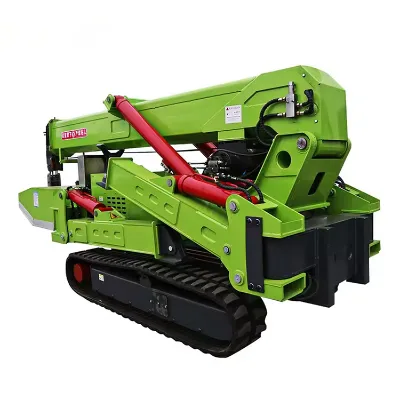
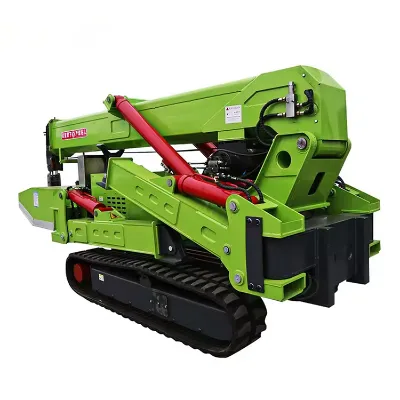
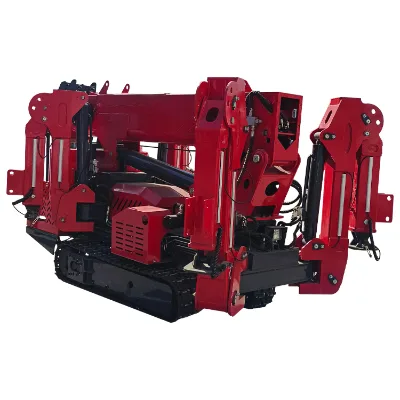
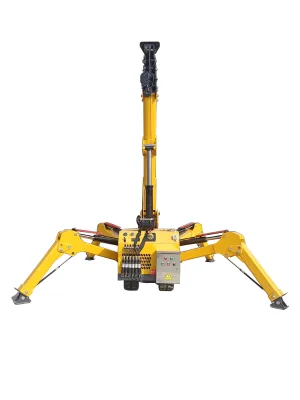

High Efficiency Spider Crawler Crane for Heavy Lifting
$22150.00 - $22350.00
MOQ: 1 Pieces
Xuzhou SKPL-LIFT Heavy Industry Machinery Technology Co., Ltd.


Hot Sale Crane Lifting Equipment 1.5 Ton Mini Spider Crawler Crane
$11800.00 - $11900.00
MOQ: 1 Pieces


16 Meters Load 5ton Spider Crane Mini Lifting Hydraulic Crawler Crane
$18300.00 - $41200.00
MOQ: 1 Pieces
Comprehensive Sourcing Guide
Spider Crane Sourcing Guide
The Spider Crane represents a specialized class of lifting equipment designed for environments where space is constrained and traditional cranes cannot operate. These machines are characterized by their compact structure and articulated lift mechanisms, allowing them to navigate narrow spaces with precision. For procurement professionals, understanding the specific operational parameters of these cranes is essential to matching the right equipment to the job site. The primary value proposition lies in their ability to provide heavy lifting capabilities in areas that are otherwise inaccessible, making them indispensable for modern construction, warehouse management, and shipboard operations.
When sourcing spider cranes, buyers must navigate a market that offers a wide variety of configurations, from electric to hydraulic driven types. The observed product landscape includes models with varying lifting capacities, operating radii, and power sources, reflecting the diverse needs of different industrial sectors. A successful procurement strategy requires a clear definition of the lifting requirements, including the maximum weight to be handled and the specific spatial constraints of the work area. This guide provides a structured approach to evaluating these machines based on observed market data and technical realities, ensuring that procurement decisions are grounded in verified specifications rather than marketing claims.
Product Scope and Observed Listing Signals
The current market for spider cranes exhibits a broad range of specifications, with observed listing prices spanning from approximately $8,990 to $90,000 USD. This significant price variance reflects differences in lifting capacity, structural complexity, and power systems. For instance, smaller models with a 1.2-ton capacity may be positioned at the lower end of the spectrum, while larger units capable of handling 5 tons or more command higher prices. Buyers should interpret these price ranges as indicative of the equipment's scale and capability, recognizing that the final cost will depend heavily on the specific configuration required for their operational needs.
Minimum Order Quantities (MOQ) in this category are typically set at one unit, indicating that spider cranes are often treated as individual capital equipment purchases rather than bulk commodities. This single-unit MOQ structure allows for flexible procurement, enabling companies to acquire exactly the number of units they need without committing to large inventory holdings. However, buyers should be aware that customization options are available, which may impact lead times and final pricing. The condition of the products is consistently listed as new, suggesting that the market is dominated by manufacturers selling fresh inventory rather than refurbished or second-hand equipment.
Technical Specifications to Verify
Technical verification begins with the lifting capacity and operating radius, which are critical determinants of a Spider Crane's utility. Observed data indicates models with rated loading capacities of 8 tons, while other listings specify capacities such as 1.2 tons or 1.3 tons. The maximum operating radius varies significantly, with some models offering a range of 4.7 meters to 16.5 meters, while others have a fixed maximum radius of 5.35 meters. Buyers must carefully match these specifications to their site requirements, ensuring that the crane can reach the necessary lift points without exceeding its structural limits. The maximum ground lift height, observed at 6.3 meters for certain models, is another key parameter that dictates the vertical reach of the equipment.
The power source and mobility features are equally important considerations. Spider cranes are available in both electric and diesel-powered variants, with voltage specifications such as AC380V for electric models. Hydraulic driven types are common, offering robust performance in demanding environments. Mobility is facilitated by walking speeds ranging from 0 to 2.5 km/h, allowing for precise positioning on site. Additionally, gradeability is a crucial factor, with some models capable of operating on slopes up to 25 degrees (36%). Buyers should verify these mobility and power specifications to ensure the crane can operate effectively on the specific terrain and power infrastructure available at their facility.
Compliance and Safety Documentation
Compliance with international standards is a non-negotiable aspect of sourcing spider cranes. The most frequently observed certifications include CE, RoHS, and ISO, which indicate adherence to European safety, environmental, and quality management standards. Some listings also mention GS certification, which further validates safety compliance in specific markets. Buyers must request and verify these certification documents to ensure that the equipment meets the regulatory requirements of their operating region. The presence of these certifications is a strong indicator that the manufacturer follows established quality control processes and safety protocols.
Safety features and operational modes also play a vital role in compliance and risk management. Observed features include explosion-proof and insulating capabilities, which are essential for hazardous environments or areas with specific electrical safety requirements. The running mode is typically described as moving, indicating that the crane is designed for dynamic operation rather than static lifting. Buyers should ensure that the crane includes necessary safety mechanisms, such as overload protection and emergency stop functions, and that the documentation clearly outlines these features. Verifying that the equipment is designed for specific applications, such as narrow space lifting, building cranes, or shipboard use, is also crucial for ensuring safe and effective operation.
Cost Drivers and Commercial Terms
The cost of a Spider Crane is influenced by several key factors, including lifting capacity, operating radius, and power system. Higher capacity models, such as those rated for 5 tons or 8 tons, naturally command higher prices due to the increased material and engineering requirements. Similarly, cranes with extended operating radii or specialized features, such as fly jibs or diesel engines, will be more expensive than basic electric models. Buyers should analyze the total cost of ownership, considering not just the purchase price but also the energy consumption, maintenance requirements, and potential downtime associated with different power sources and configurations.
Commercial terms, including packaging and warranty, are also important considerations. Observed packaging methods include wooden crates and cases, which are designed to protect the equipment during transit. Buyers should verify that the packaging is suitable for the mode of transport and destination to avoid damage upon arrival. A standard warranty of one year is commonly offered, providing a baseline level of protection against manufacturing defects. However, buyers should negotiate for extended warranty options or comprehensive service agreements if the equipment will be used in high-intensity applications. Understanding these commercial terms helps in budgeting accurately and mitigating financial risks associated with equipment failure.
Supplier Qualification and Quality Control
Supplier qualification is a critical step in the procurement process, requiring a thorough assessment of the manufacturer's capabilities and reputation. Buyers should verify the supplier's production standards, such as ISO 9001, which indicates a commitment to quality management. Additionally, the origin of the product, often listed as China, should be considered in the context of the supplier's export experience and logistical capabilities. Buyers should request video outgoing-inspections, which are provided by some suppliers, to visually verify the condition and assembly of the crane before shipment. This step provides an additional layer of confidence in the quality of the product.
Quality control measures should be integrated into the procurement process to ensure that the delivered equipment meets the specified requirements. Buyers should establish clear acceptance criteria based on the technical specifications observed in the listings, such as lifting capacity, operating radius, and power performance. It is advisable to conduct pre-shipment inspections or hire third-party inspection services to verify that the crane conforms to the agreed-upon standards. By implementing rigorous quality control procedures, buyers can minimize the risk of receiving defective or non-compliant equipment, ensuring a smooth installation and commissioning process.
Long-Term Procurement Checks
Long-term procurement success depends on establishing a sustainable relationship with suppliers and ensuring the ongoing availability of spare parts and service support. Buyers should evaluate the supplier's after-sales service capabilities, including the availability of technical support, maintenance manuals, and replacement parts. Given the specialized nature of spider cranes, having access to expert technical assistance is crucial for resolving operational issues and extending the lifespan of the equipment. Buyers should also consider the modularity and standardization of the crane's components, which can facilitate easier maintenance and repair.
Regular performance monitoring and maintenance planning are essential for maximizing the utility of spider cranes. Buyers should develop a preventive maintenance schedule based on the manufacturer's recommendations and the intensity of usage. This includes regular inspections of the hydraulic systems, electrical components, and structural integrity of the crane. By proactively managing the maintenance of their equipment, buyers can reduce the risk of unexpected breakdowns and ensure consistent performance over time. Additionally, staying informed about technological advancements and new models in the Spider Crane market can help buyers make informed decisions about future upgrades or replacements.
FAQs
What certifications do spider cranes have?
Spider cranes typically hold RoHS, CE, ISO, and GS certifications. These standards ensure compliance with safety and environmental regulations for industrial lifting equipment used in various applications.
Can spider cranes operate in narrow spaces?
Yes, spider cranes are designed specifically for narrow space lifting applications. Their compact structure allows them to maneuver effectively in confined areas where larger cranes cannot operate.
What is the maximum operating radius of these cranes?
The maximum operating radius varies by model, ranging from 4.7 meters to 16.5 meters. Some specific models offer a maximum working radius of 16 meters with a 0.5-ton capacity.
How are spider cranes packed for shipment?
Spider cranes are packed in wooden crates or wooden cases suitable for export. This packaging ensures the equipment remains protected during international shipping and handling processes.
What is the warranty period for spider cranes?
The standard warranty period for these spider cranes is one year. This coverage applies to new condition units and helps protect buyers against initial manufacturing defects.
Are spider cranes available with customization options?
Yes, customization is available for spider cranes to meet specific buyer requirements. Buyers can request tailored specifications to suit unique operational needs or site conditions.
What is the rated loading capacity of the crane?
The rated loading capacity is 8 tons for certain models. Other specifications indicate capacities such as 1.2 tons or 5 tons depending on the specific product model selected.