Source Sport Racing Motorcycle for Track, Street, and Off-Road
Compare 30 Sport Racing Motorcycle listings with varying engine sizes, cooling methods, and speeds. Buyers can evaluate specifications like displacement, braking systems, and tire dimensions to find suitable options for racing, street riding, or dirt track applications.
Key considerations
Products List

Racing Motorcycle 400cc Sport Motorcycle Speed 400cc Motorcycle Racing
$1160.00 - $1170.00
MOQ: 30 Pieces

Racing Motorcycle 250cc 300cc Sport Motorcycle Speed 400cc Motorcycle Racing
$1160.00 - $1170.00
MOQ: 30 Pieces


400cc Sportbike Motorcycles Gasoline Racing Motorcycle with 4 Stroke
$2900.00 - $3000.00
MOQ: 1 Pieces


Comprehensive Sourcing Guide
Strategic Sourcing Guide for Sport Racing Motorcycles
The global market for sport racing motorcycles presents a complex landscape for B2B procurement professionals seeking high-performance two-wheeled assets. Sourcing these vehicles requires a disciplined approach that balances aggressive performance metrics with rigorous compliance verification. Buyers must navigate a diverse inventory where specifications vary significantly across different models, ranging from compact racing units to high-displacement machines. This guide outlines the critical technical, regulatory, and operational factors necessary to secure reliable supply chains for sport racing motorcycles, ensuring that procurement decisions are grounded in verified data rather than marketing assertions.
Technical Specification Analysis and Performance Verification
The foundation of any successful procurement strategy lies in a granular understanding of the technical specifications. In the current market, sport racing motorcycles are not monolithic; they span a wide spectrum of engine capacities and performance characteristics. Procurement teams must carefully distinguish between models designed for entry-level agility and those engineered for high-speed endurance.
Data indicates a significant divergence in engine displacement. Some units in the observed inventory feature engine sizes under 250cc, with specific displacement figures noted around 126cc to 250cc, often utilizing air cooling systems. These models typically target lighter weight classes, with net weights observed around 140kg and maximum speeds capped near 125 km/h. Conversely, other segments of the market offer high-performance variants with engine sizes ranging from 251cc to 750cc. Specific models in this higher tier boast exact displacements of 400cc or 601cc to 750cc, often employing water cooling methods to manage thermal loads during sustained high-speed operation.
When evaluating a potential supplier, buyers must verify the following technical parameters against the product data sheet:
- Engine Configuration: Confirm whether the unit is a 4-stroke engine and verify the valve train configuration, such as DOHC with 4 valves per cylinder, which is common in higher-performance 400cc class models.
- Power and Torque: For models claiming high output, verify maximum power ratings (e.g., 14.5kW at 7500r/min) and torque figures (e.g., 20.5N·m at 5500rpm).
- Dimensions and Weight: Physical dimensions vary widely. Some models list standard dimensions around 2070mm in length, while others may differ significantly. Net weight is a critical factor for handling; observed weights range from 120kg to 140kg depending on the class.
- Chassis and Suspension: Verify tire specifications, as racing performance is heavily dependent on grip. Front tires may range from 110/70-17 for sport models to 80/100-21 for dirt-oriented racing bikes, with rear tires similarly varying from 140/70-17 to 120/100-18.
- Braking Systems: Ensure the braking configuration matches the intended use case. High-speed models often feature disc brakes on both front and rear axles, whereas entry-level units may utilize different configurations.
Compliance, Certification, and Regulatory Standards
In the international B2B context, regulatory compliance is non-negotiable. Buyers must verify that all sport racing motorcycles meet the safety and environmental standards of the destination market. The presence of specific certifications, such as CE marking, is a primary indicator of adherence to European safety directives. However, the absence of a listed certification in a product description does not automatically disqualify a model; it necessitates a direct request for valid documentation from the supplier.
Beyond general safety, buyers must scrutinize the product standards listed in the technical data. These standards often relate to the physical dimensions and packaging requirements rather than performance testing. For instance, specific models may adhere to dimensional standards such as 20707451210 mm or 2170 x 750 x 1350 mm. While these measurements describe the physical footprint, they are essential for logistics planning and warehouse storage calculations.
Furthermore, the origin of the product plays a pivotal role in compliance. A significant portion of the observed inventory originates from China. While this location is a major hub for motorcycle manufacturing, it requires buyers to conduct enhanced due diligence regarding export regulations, intellectual property rights, and the specific quality control protocols employed by the manufacturer. Buyers should verify if the supplier provides third-party test reports that validate the claims made regarding maximum speed, fuel consumption, and emission levels, as these are often subject to strict regional regulations.
Cost Drivers and Pricing Structure
Understanding the cost structure of sport racing motorcycles is essential for budgeting and negotiation. The observed price range in the market spans from approximately $257 to $3,500 USD. This wide variance is driven by several key factors, including engine displacement, cooling technology, and the complexity of the electrical system.
Lower-priced units typically fall into the sub-250cc category, often featuring air cooling and simpler ignition systems like CDI. These models are generally lighter and may have lower maximum speeds, making them suitable for entry-level racing or training purposes. In contrast, the upper end of the price spectrum is dominated by models with larger engines (400cc to 750cc), water cooling systems, and advanced features such as EFI (Electronic Fuel Injection) ignition and higher maximum speeds (up to 180 km/h).
Minimum Order Quantity (MOQ) is another critical cost driver. The observed MOQ range varies from 1 unit to 105 units. Buyers purchasing small batches may face a higher per-unit cost but benefit from lower capital commitment. Conversely, bulk orders can leverage economies of scale, though they require significant upfront capital and robust logistics planning. The packaging method also influences costs; units shipped in steel and cartons may incur different freight charges compared to those in wooden boxes, particularly regarding customs duties and handling fees.
Typical Applications and Market Segmentation
Sport racing motorcycles serve diverse applications depending on their technical specifications. The market can be segmented into distinct categories based on the intended use case:
| Application Segment | Typical Specifications | Primary Use Case |
|---|---|---|
| Track Racing | Engine: 400cc-750cc, Cooling: Water, Speed: >150 km/h | Professional circuit racing, high-speed endurance events. |
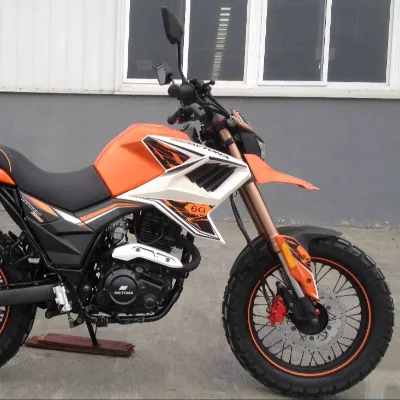
| Off-Road Racing | Engine: 250cc-300cc, Tires: Knobby (e.g., 80/100-21), Ground Clearance: >300mm | Dirt track racing, motocross, and rugged terrain competition. |
| Entry-Level/Training | Engine: <250cc, Cooling: Air, Speed: ~125 km/h | Beginner training, recreational racing, and lightweight events. |
| General Sport | Engine: 250cc-400cc, Mixed Cooling, Speed: 105-110 km/h | Street-legal racing, sport touring, and club-level events. |
Buyers must align their procurement with the specific application. For instance, a model with a ground clearance of 340mm and a wheelbase of 1380mm is optimized for off-road agility, whereas a model with a wheelbase of 1680mm and a net weight of 120kg might be better suited for paved track environments. Fuel consumption is another differentiator; some high-performance models claim fuel efficiency as low as 1L per 100km, which is a critical factor for teams managing long-duration races.
Supplier Evaluation and Production Capabilities
Evaluating a supplier for sport racing motorcycles requires a focus on their production consistency and customization capabilities. The availability of customization is a high-confidence attribute in the current market, allowing buyers to tailor vehicles to specific team requirements or regional regulations. However, buyers must verify the extent of this customization, including options for color schemes (e.g., Dawn Gold, Midnight Black, Starstream Red, Aurora) and specific component upgrades.
When assessing a supplier, procurement teams should investigate the following:
- Production History: Verify the year range of the models supplied. Models produced after 2010 generally incorporate modern safety and emission technologies.
- Quality Control Processes: Inquire about the testing protocols used to validate maximum speed, torque, and power output.
- Logistics and Packaging: Confirm the packaging standards, such as the use of wooden boxes or steel cartons, to ensure the motorcycles arrive in pristine condition.
- Lead Time and Capacity: While specific lead times are not universally standardized, buyers should establish clear timelines for production and delivery, especially for large orders with high MOQs.
Quality Control and Long-Term Procurement Strategy
Implementing a robust quality control (QC) regime is essential to mitigate the risks associated with sourcing high-performance vehicles. Given the variation in specifications, buyers should not assume that all listed products meet the same performance standards. Instead, a sampling strategy should be employed where a representative unit from a batch is tested against the claimed specifications before full shipment approval.
Key QC checkpoints include:
- Dimensional Verification: Ensure the physical dimensions match the stated standards (e.g., 2170 x 750 x 1350 mm).
- Performance Testing: Validate maximum speed, fuel consumption, and power output through independent testing.
- Component Inspection: Check the integrity of critical components such as the engine, brakes, and tires.
- Documentation Review: Verify that all certifications, including CE, are valid and applicable to the specific model and destination market.
Long-term procurement considerations involve building a sustainable relationship with suppliers who can provide consistent quality and support. This includes ensuring the availability of spare parts, technical support for maintenance, and the ability to scale production as demand fluctuates. Buyers should also consider the lifecycle of the product, noting that models with advanced features like EFI and water cooling may require specialized maintenance expertise.
In conclusion, sourcing sport racing motorcycles requires a meticulous approach that prioritizes technical verification, regulatory compliance, and strategic supplier evaluation. By focusing on the specific attributes of each model and maintaining a rigorous quality control framework, buyers can secure high-performance assets that meet the demanding requirements of the racing industry. The diversity of the market offers opportunities for tailored solutions, but success depends on the buyer's ability to navigate the complex landscape of specifications and standards with precision and diligence.
FAQs
What engine sizes are available for sport racing motorcycles?
Available engine sizes range from under 250cc up to 750cc. Specific models include displacements between 126cc and 250cc, as well as 251cc to 500cc and 601cc to 750cc options.
Can I find sport racing motorcycles with water cooling systems?
Yes, water cooling is available for certain high-performance models. While many units use air cooling, specific variants with larger engines utilize water cooling to manage thermal loads.
Which certifications are verified for these racing motorcycle models?
Some models carry CE certification to indicate compliance with safety standards. Buyers should verify specific documentation for each unit as certification availability varies by model.
How does the price range vary for these motorcycles?
Prices range from 257 to 3500 USD depending on specifications. Lower costs typically apply to sub-250cc air-cooled units, while larger engines and advanced features command higher prices.
What is the minimum order quantity for these products?
Minimum order quantities vary from 1 to 105 units per order. Buyers can source single units or place bulk orders depending on the specific supplier and model requirements.
Which tire sizes are standard for these racing bikes?
Tire sizes vary by model type, with sport bikes using 110/70-17 front and 140/70-17 rear tires. Dirt bike variants may feature 80/100-21 front and 120/100-18 rear tires.
Can suppliers offer customization for these racing motorcycles?
Customization is available for many models to meet specific buyer needs. Options may include color variations like Dawn Gold or Midnight Black and specific component adjustments.