Source Stainless Steel 304 Fountain Nozzle for Hotels, Pools, Outdoor
Compare 30 listings of Stainless Steel 304 Fountain Nozzle from verified suppliers. Evaluate specifications like pressure, height, and material options to find the right fit for your project needs.
Key considerations
Products List


$1.00 - $18.80
MOQ: 1 Pieces




Comprehensive Sourcing Guide
Strategic Sourcing Guide for Stainless Steel 304 Fountain Nozzles
Understanding Technical Specifications and Material Integrity
When sourcing stainless steel 304 fountain nozzles, the primary objective is to identify components that balance corrosion resistance with hydraulic efficiency. The core material specification, stainless steel 304, is widely recognized for its durability in aquatic environments, offering a robust defense against rust and chemical degradation common in fountain systems. Based on observed product attributes, these units are frequently constructed from stainless steel or a combination of brass and stainless steel, ensuring longevity in both indoor and outdoor installations. The material selection is critical because fountain nozzles are subjected to constant water flow, pressure fluctuations, and potential exposure to varying water chemistry.
The technical performance of these nozzles is defined by specific operational parameters. Observed data indicates that these units are designed to operate within a pressure range of 50 to 200 Kpa. This range suggests versatility, allowing the nozzles to function effectively in systems ranging from low-pressure decorative features to high-pressure performance jets. The height of the water jet is a critical specification, with observed models capable of projecting water to heights between 1 and 10 meters. This variability allows procurement teams to select nozzles that match the specific aesthetic and hydraulic requirements of a project, whether it is a subtle pool feature or a dramatic music fountain display.
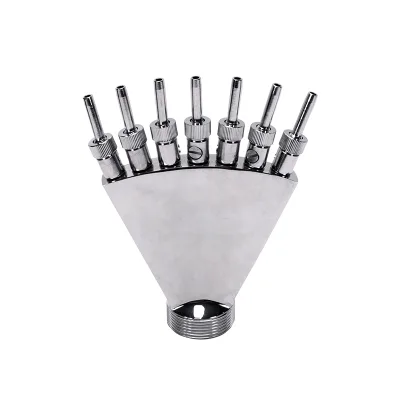
The nozzle type is another vital technical consideration. The observed product line includes "Straightaway Shot" nozzles, which are engineered to produce a focused, vertical water column. This specific design is often preferred for music fountains where synchronization with lighting and sound requires precise water trajectories. Furthermore, the models observed include specific designations such as "superelevation nozzle" and "single nozzle shooting," indicating specialized engineering for enhanced water projection. The connection interfaces are equally important, with observed specifications listing DN25, DN40, and DN50 as standard connection sizes. These metric diameters must align with the existing piping infrastructure of the fountain system to ensure a leak-free and efficient installation.
Compliance, Certification, and Regulatory Standards
Navigating the regulatory landscape is essential for B2B procurement, particularly when importing fountain equipment from international markets. The supplied product data highlights several compliance markers that buyers should verify. One of the most prominent standards observed is the CE mark, which indicates conformity with health, safety, and environmental protection standards for products sold within the European Economic Area. When sourcing stainless steel 304 nozzles, confirming CE certification is a baseline requirement for ensuring the product meets European safety directives.
Beyond the CE mark, buyers must scrutinize other potential standards that may apply to the specific application. While some product listings reference standards such as "1kg 1.2KG 1.6KG," these appear to be weight specifications rather than formal industry standards and should be treated as product attributes rather than compliance certifications. In contrast, the mention of "Conventional packing" and "Standard Packaging" refers to logistical handling rather than technical compliance. It is crucial for procurement teams to distinguish between packaging standards and product safety certifications.
The origin of the product also plays a significant role in compliance verification. The observed data indicates that these products originate from China, specifically from regions such as Guangdong and Chongqing. While these regions are major manufacturing hubs, the specific location of the factory can influence the consistency of quality control and adherence to international standards. Buyers should request documentation proving that the stainless steel 304 material meets international metallurgical standards, such as ASTM A240 or EN 10088, to ensure the alloy composition is accurate. Relying solely on the "Made in China" or "Place of Origin" label without verifying the underlying material certifications can lead to procurement of substandard components that may fail prematurely in corrosive water environments.
Cost Drivers and Pricing Dynamics
The pricing of stainless steel 304 fountain nozzles is influenced by a complex interplay of material costs, manufacturing complexity, and logistical factors. The observed price range for these products spans from 1 to 324.76 USD, a wide spectrum that reflects the diversity in nozzle sizes, features, and included technologies. The lower end of this range typically corresponds to basic stainless steel nozzles with simple "Straightaway Shot" functionality and standard packaging. These units are often sold as single items with a minimum order quantity (MOQ) of just one piece, making them accessible for small-scale projects or replacement parts.
Conversely, the higher price points in the observed range are driven by advanced features and integrated systems. Products that include lighting effects, such as underwater lights with AC24V RGB capabilities, command a premium. The integration of a DMX control system, which allows for synchronized water movement and lighting effects, significantly increases the unit cost. Additionally, the complexity of the nozzle model, such as those designated with specific codes like PL-SGN8025-3/4'' or PL-N9007-G1'', suggests custom engineering that adds to the manufacturing expense.
Material composition is another key cost driver. While the core keyword specifies stainless steel 304, some observed listings mention "Brass/Stainless Steel" combinations. Brass components may be used for specific internal mechanisms or fittings, which can alter the cost structure. The packaging method also impacts the final price; options ranging from simple "Package" to premium shipping via DHL, UPS, TNT, EMS, or FedEx represent different cost tiers. Buyers must evaluate whether the added cost of expedited shipping or specialized packaging is justified by their project timeline and logistics requirements. The MOQ of 1 piece offers flexibility for testing, but bulk orders may yield better unit economics, though specific volume discounts are not explicitly detailed in the provided data.
Typical Applications and System Integration
Stainless steel 304 fountain nozzles are versatile components designed for a wide array of applications, ranging from private residential pools to large-scale public installations. The observed product attributes list "Fountain," "Outdoor," and "Hotels" as primary usage scenarios. This versatility is enabled by the durable stainless steel construction, which withstands the harsh conditions of outdoor environments, including UV exposure and fluctuating temperatures. The "Music Fountain" style designation indicates that these nozzles are particularly suited for dynamic displays where water patterns are choreographed to music, a common feature in hotel lobbies, city squares, and entertainment districts.
The integration of these nozzles into existing systems requires careful attention to the control and power infrastructure. The observed data highlights the availability of DMX control systems, which are essential for modern fountain installations. DMX (Digital Multiplex) allows for precise control over the timing and intensity of water jets and lighting effects, creating immersive visual experiences. For systems that require autonomous operation, the observed "Battery Operated" power supply option provides a solution for locations where hardwiring is impractical. However, for permanent installations, the standard AC24V RGB lighting and water pump supply are more reliable.
The suitability of these nozzles for square-shaped configurations suggests they are designed to work within specific geometric constraints, often found in modern architectural designs. The "Water Pump" supply attribute confirms that these nozzles are part of a larger hydraulic system, requiring a compatible pump to generate the necessary pressure. The connection sizes of DN25, DN40, and DN50 must be matched with the corresponding pump output and piping to ensure optimal flow rates. Whether used as a standalone feature in a pool or as part of a complex music fountain array, the stainless steel 304 nozzle serves as the critical interface between the hydraulic system and the visual display.
Supplier Evaluation and Origin Verification
Evaluating suppliers for stainless steel 304 fountain nozzles requires a rigorous assessment of their capabilities, location, and track record. The observed data points to manufacturers located in China, with specific mentions of Guangdong and Chongqing as places of origin. Guangdong is a well-established hub for manufacturing and export, known for its supply chain efficiency and experience in producing metal components. Chongqing, while also a significant industrial center, may have different logistical advantages depending on the destination of the shipment.
When evaluating potential suppliers, buyers should verify the "Brand Name" associated with the products. The observed listing includes "Svadon" as a brand, which serves as an identifier for the manufacturer or distributor. However, relying on a single brand name is insufficient for comprehensive supplier due diligence. Buyers should investigate the supplier's history, production capacity, and ability to meet customization requests. The "Customization: Available" attribute indicates that suppliers are willing to adapt products to specific client needs, such as custom colors or modified dimensions. This flexibility is a positive indicator of a responsive supply chain, but it requires clear communication of specifications to avoid production errors.
The "Selling Units" being listed as "Single item" suggests that suppliers are open to small orders, which is beneficial for prototyping or small projects. However, for larger procurement needs, buyers should negotiate terms regarding volume pricing and lead times. The "Place of Origin" should be verified through factory audits or third-party inspections to ensure that the manufacturing processes meet the required quality standards. Additionally, the "Product Name" and "Model Number" should be cross-referenced with the supplier's catalog to ensure consistency and availability. A supplier that can provide detailed technical documentation and consistent model numbering is more likely to deliver reliable products.
Quality Control and Long-Term Procurement Considerations
Ensuring the long-term reliability of stainless steel 304 fountain nozzles requires a proactive approach to quality control and maintenance planning. The observed attributes, such as "High Quality" and "Customizable colors," suggest that manufacturers are focused on both performance and aesthetics. However, buyers must implement their own quality assurance protocols to verify these claims. This includes checking for surface finish quality, ensuring the stainless steel 304 grade is genuine, and testing the nozzle's pressure resistance within the 50-200 Kpa range.
The "Installation Types: Outdoor" attribute highlights the need for durability against environmental factors. Buyers should request test reports or certification data that confirm the nozzle's resistance to corrosion and mechanical stress. The "Lighting Effects: Underwater Lights" feature adds another layer of complexity, as the electrical components must be fully waterproof and compliant with safety standards. Verifying the "LED Light Voltage: AC24V RGB Light" specification is crucial to ensure compatibility with the fountain's power supply and control systems.
For long-term procurement, buyers should consider the availability of spare parts and the ease of maintenance. The "Product Packing: Package" and "Standard Packaging" attributes indicate that the products are shipped in protective containers, which is essential for preventing damage during transit. However, buyers should also inquire about the packaging for replacement parts and the availability of technical support. The "Customization: Available" feature can be a double-edged sword; while it allows for tailored solutions, it may complicate the procurement of spare parts if the customization is unique. Therefore, buyers should aim for a balance between customization and standardization to ensure long-term supply chain stability.
In conclusion, sourcing stainless steel 304 fountain nozzles involves a careful analysis of technical specifications, compliance standards, cost factors, and supplier capabilities. By leveraging the observed data and applying rigorous procurement practices, buyers can secure high-quality components that meet the demands of diverse fountain applications. The wide range of models, from basic straightaway shots to complex music fountain nozzles with integrated lighting, offers ample opportunities for customization and innovation. However, success depends on thorough due diligence, clear communication of requirements, and a commitment to quality assurance throughout the procurement lifecycle.
FAQs
What material is used for these fountain nozzles?
The nozzles are constructed from stainless steel or a combination of brass and stainless steel. This material selection ensures durability and corrosion resistance for both indoor and outdoor aquatic environments.
Can the nozzles operate with music fountain systems?
Yes, the product line includes models specifically designed for music fountain styles. These units feature straightaway shot nozzle types that synchronize with lighting and sound for dynamic displays.
Which pressure range do these nozzles support?
These units are designed to operate within a pressure range of 50 to 200 Kpa. This versatility allows them to function effectively in systems ranging from low-pressure decorative features to high-pressure jets.
How high can the water jet project?
The observed models are capable of projecting water to heights between 1 and 10 meters. This variability allows procurement teams to select nozzles that match specific aesthetic and hydraulic project requirements.
What certifications are available for these products?
The products carry the CE mark, indicating conformity with European health and safety standards. Buyers should verify this certification to ensure the product meets international safety directives for the European Economic Area.
What is the minimum order quantity for these nozzles?
The minimum order quantity is 1 piece for single item sales. This low threshold makes the nozzles accessible for small-scale projects or replacement parts without requiring bulk commitments.
Can the nozzles be customized for specific projects?
Customization is available for these fountain nozzles, including options for customizable colors. Suppliers are willing to adapt products to specific client needs, though clear communication of specifications is required.