Source Skin Care Plastic Cosmetic Jar for Creams, Lotions, and Serums
Find and compare 30 Skin Care Plastic Cosmetic Jar options from Chinese manufacturers. Evaluate materials like PP and plastic, certifications including ISO and CIQ, and customization features for your packaging needs.
Key considerations
Products List


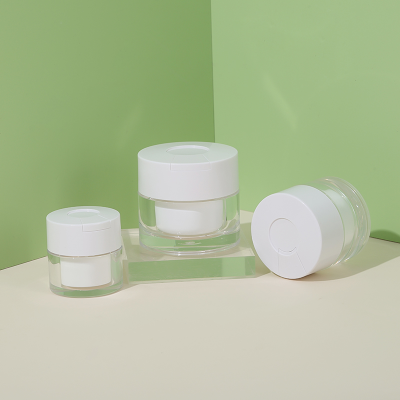


15ml Double Wall Jar Plastic Asjar Cosmetic Container Empty Skin Care Jar with Lids
$0.10 - $0.12
MOQ: 10000 Pieces


Comprehensive Sourcing Guide
Skin Care Plastic Cosmetic Jar Sourcing Guide
The global demand for skin care plastic cosmetic jars has driven a shift toward versatile, lightweight packaging that balances aesthetic appeal with functional integrity. Based on observed market listings, these containers are frequently engineered for specific industrial uses including cosmetics, aerosols, and chemical applications, indicating a broad utility beyond simple storage. Buyers must recognize that while the core material is consistently identified as plastic, the specific polymer type—ranging from general plastic to Polypropylene (PP)—dictates the chemical resistance and durability required for different formulations.
Procurement strategies for these items must account for the high degree of customization available in the current supply chain. Suppliers often offer tailored solutions where the product model, such as OPP or specific codes like WL-PJ009, can be adapted to meet unique branding or volume requirements. This flexibility allows brands to differentiate their offerings, but it also necessitates rigorous verification of the supplier's ability to maintain consistency across custom runs, ensuring that the final product aligns with the intended visual and functional specifications of the skin care line.
Product Scope and Observed Listing Signals
The market for skin care plastic cosmetic jars presents a wide spectrum of capacity options, with observed standards ranging from 10ml to 50g units. Listings indicate that manufacturers produce jars in various configurations, including screw cap sealing types and non-spill features, which are critical for user experience in bathroom or travel settings. The physical dimensions of these containers vary significantly, with some specific models noted at 29mm by 17mm, while others are defined by their volume capacity such as 10ml, 15ml, or 20ml, requiring buyers to match the jar size precisely to their product viscosity and dispensing needs.
Packaging and origin data reveal that these products are predominantly sourced from manufacturing hubs in China, specifically regions like Ningbo and Yuyao, with Zhejiang also appearing as a place of origin. The export packaging methods are diverse, ranging from standard export cartons to specialized safe export packs and cardboard boxes, suggesting that logistics handling varies by supplier. Buyers should note that while some listings highlight eco-friendly attributes and recyclable features, the specific environmental claims must be validated against the actual material composition and the supplier's sustainability documentation to ensure they meet corporate responsibility goals.
Technical Specifications to Verify
When evaluating the technical integrity of a Skin Care Plastic Cosmetic Jar, the sealing mechanism is a primary consideration for product preservation. The observed listings frequently specify a screw cap sealing type, which provides a reliable barrier against contamination and leakage, essential for maintaining the efficacy of active ingredients in skin care formulations. However, buyers must verify that the thread pitch and cap tightness are compatible with their specific filling equipment to prevent cross-threading or inconsistent sealing during high-speed production runs.
Material composition and dimensional accuracy are equally critical, as the listed specifications include models like OPP and OPPP1202, alongside general plastic and PP materials. The distinction between these materials affects the jar's clarity, rigidity, and resistance to solvents found in certain cosmetic ingredients. Furthermore, the size specifications, which include options like 15g, 30g, and 50g, must be cross-referenced with the actual internal volume to ensure the jar holds the intended amount of product without excessive headspace, which can lead to oxidation or product degradation over time.
Compliance and Safety Documentation
Navigating the compliance landscape for skin care packaging requires a thorough review of the certifications held by the supplier. The observed data indicates that manufacturers may hold certifications such as CIQ, ISO, CE, and SGS, which serve as indicators of adherence to quality management systems and safety standards. However, the presence of these certifications on a listing does not guarantee that every specific batch of jars meets the same rigorous criteria, so buyers must request current, valid certificates that are specific to the production facility and the product model being ordered.
Safety documentation must also address the intended use of the container, particularly when the jar is designated for chemical or aerosol applications. While some listings mention eco-friendly and recyclable features, these claims should be supported by third-party test results or material safety data sheets (MSDS) that confirm the plastic does not leach harmful substances into the skin care product. Buyers should verify that the supplier can provide evidence of compliance with relevant regional regulations, ensuring that the packaging is safe for direct contact with cosmetic ingredients and does not compromise consumer health.
Cost Drivers and Commercial Terms
The commercial terms for skin care plastic cosmetic jars are heavily influenced by the Minimum Order Quantity (MOQ), which varies widely across the market. Observed listings show MOQs ranging from 10,000 to 30,000 pieces, with some suppliers offering lower thresholds starting at 10 units, though this may apply only to samples or specific custom configurations. Buyers must align their order volume with these thresholds to secure competitive pricing, as the unit cost often decreases significantly as the order quantity approaches the higher end of the supplier's capacity, which is noted to be up to 50,000 pieces daily.
Lead times and delivery cycles are additional cost drivers that impact the overall procurement timeline and inventory planning. The observed delivery cycles range from 7 to 10 days for some suppliers, while others indicate a lead time of 10 to 25 days, depending on the complexity of the customization and the current production load. These variations mean that buyers should factor in buffer time for production delays, especially when ordering custom models or specific colors like white, and should negotiate clear penalties for missed deadlines to protect against supply chain disruptions.
Supplier Qualification and Quality Control
Qualifying a supplier for skin care plastic cosmetic jars requires a deep dive into their production capabilities and quality assurance protocols. The observed daily capacity of 50,000 pieces suggests that larger suppliers can handle significant volume, but buyers must verify if this capacity is dedicated to their specific order or shared across multiple clients. It is essential to confirm that the supplier has a robust quality control process in place, particularly for custom orders, to ensure that the final product matches the approved samples in terms of color, finish, and structural integrity.
Quality control should also extend to the packaging and shipping process, as the listed packing methods include export cartons, boxes, and safe export packs. Buyers need to ensure that the packaging is designed to prevent damage during transit, especially for fragile plastic components that could crack or deform under pressure. Additionally, the availability of free samples allows buyers to physically inspect the product before committing to a large order, providing a practical method to validate the supplier's claims regarding quality, such as the "High Quality" designation often seen in listings.
Long-Term Procurement Checks
Establishing a long-term partnership for skin care plastic cosmetic jars involves regular audits of the supplier's ability to maintain consistent quality and compliance. As the market evolves, suppliers may update their materials or certifications, such as shifting from standard plastic to more eco-friendly alternatives, and buyers must stay informed about these changes to ensure their packaging remains aligned with brand values and regulatory requirements. Continuous communication with the supplier is necessary to track any updates in standards, such as the transition to newer SGS or ISO certifications, which may affect the suitability of the product for specific markets.
Finally, buyers should monitor the supplier's performance regarding lead times and delivery reliability over multiple order cycles. While initial listings may promise delivery cycles of 7 to 10 days, real-world performance can vary based on raw material availability and production scheduling. Implementing a performance review system that tracks on-time delivery rates, defect rates, and responsiveness to issues will help identify potential risks early, ensuring that the supply chain remains resilient and capable of supporting the brand's growth without interruption.
FAQs
What certifications are available for these plastic cosmetic jars?
These jars are available with CIQ, ISO, CE, and SGS certifications. This ensures compliance with international quality and safety standards for industrial use in cosmetics and chemical applications. Buyers can verify specific documentation based on their regional regulatory requirements before placing bulk orders.
What is the minimum order quantity for custom plastic jars?
The minimum order quantity typically ranges from 10,000 to 30,000 pieces depending on the specific model and customization level. Standard models may have lower thresholds, while fully customized designs often require higher volumes to justify production setup costs and ensure efficient manufacturing cycles.
Can these plastic jars be customized for specific branding needs?
Yes, customization is available for branding and design requirements. Manufacturers accept custom orders for colors, sizes, and sealing types like screw caps. This allows brands to tailor the packaging to their aesthetic guidelines while maintaining the structural integrity required for aerosol or chemical contents.
What are the standard sizes for these cosmetic jars?
Standard sizes include 10ml, 15ml, 20ml, 10g, 15g, 20g, 30g, 50g, and 15g variants. These dimensions cater to various skincare and cosmetic product volumes. The plastic material ensures durability and non-spill performance, making them suitable for both retail and industrial packaging applications.
How long is the lead time for production?
Production lead times generally range from 7 to 25 days depending on order volume and complexity. Standard items may be delivered within 7-10 days, while customized orders or larger batches requiring specific certifications can take up to 25 days. Daily capacity supports up to 50,000 pieces.
Are these plastic jars eco-friendly and recyclable?
Yes, these jars are designed to be eco-friendly and recyclable. Made from materials like PP and plastic, they support sustainable packaging initiatives. The recyclable feature aligns with modern environmental standards, allowing brands to reduce their ecological footprint while maintaining high-quality protection for their cosmetic products.