Source Stainless Steel 304 Paddle Latch for Cabinets, Gates, and Doors
Compare 30 listings for Stainless Steel 304 Paddle Latch options featuring various weights, certifications, and customization capabilities. Buyers can evaluate models like 23020 and DK05725519 from suppliers in China with MOQs ranging from 1 to 2000 units.
Key considerations
Products List


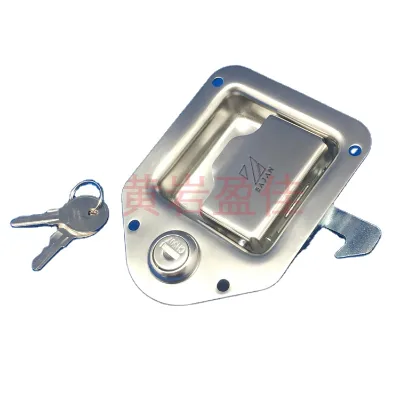
Premium Custom Stainless Steel 304 Paddle Latch Lock for Secure OEM Solutions
$3.50 - $6.50
MOQ: 100 Pieces



Comprehensive Sourcing Guide
Strategic Sourcing Guide for Stainless Steel 304 Paddle Latch Procurement
Understanding Material Integrity and Alloy Specifications
The foundation of a successful procurement strategy for stainless steel 304 paddle latches begins with a rigorous verification of material composition. In the industrial and commercial sectors, the distinction between generic "steel" and specific alloys like SS304 is critical for long-term durability. Based on observed market data, suppliers frequently list materials as "SS304," "Ss201," or simply "Steel." A buyer must explicitly demand confirmation that the product is fabricated from SS304 or SS304L, as these grades offer superior corrosion resistance compared to the lower-grade SS201 or carbon steel alternatives. The presence of SS304 is often cited in contexts involving industrial applications where exposure to moisture or varying environmental conditions is expected.
When evaluating product listings, procurement teams should look for explicit mentions of "Stainless Steel" or "SS304" in the material field. It is important to note that some suppliers may list multiple material options, such as "SS304, Ss201, Steel," indicating a range of product tiers. In such cases, the buyer must ensure the purchase order specifies the exact alloy grade required to avoid receiving lower-performance materials. The material selection directly influences the latch's resistance to rust and structural integrity under load. For applications requiring high mechanical strength, the specific weight of the component, which can range from 18g to 1.1kg depending on the model, serves as a secondary indicator of material density and volume. A significant variance in weight for similar-looking latches often suggests a difference in material thickness or alloy composition.
Technical Specifications and Design Parameters
Technical due diligence requires a detailed examination of the physical and functional specifications of the paddle latch. The design architecture is a primary differentiator, with observed market data indicating a "Dial" design and "Mortise Door Lock" style configurations. These specifications suggest that the paddle latches are engineered for integration into door systems where a specific locking mechanism is required. The "Type" is frequently categorized as "Mechanical" or "Key Lock," implying that the procurement focus should be on the reliability of the mechanical action rather than electronic integration.
Dimensions and fitting capabilities are equally vital. The "Door Thickness Fits" specification is often listed as "Customized," which means buyers cannot rely on a single standard dimension. Instead, the procurement process must involve a clear exchange of door thickness requirements with the supplier to ensure the latch fits the intended application. The "Packing Size" of 322215cm provides a baseline for logistics planning, though this may vary based on the specific model number, such as 23020, 23220, or DK05725519. Furthermore, the "Weight" of the product is a critical data point; observed weights range significantly from 18g to 1.1kg. This variance suggests that the "Locking Load" capability, observed at 74G in some listings, is a key performance metric that must be matched against the operational demands of the installation. Buyers should verify that the locking load rating aligns with the security requirements of the specific door or gate being secured.
Compliance, Certification, and Standard Verification
Navigating the compliance landscape for stainless steel hardware requires a careful review of certifications and standards. The market data indicates the presence of certifications such as "ISO" and "ISO/TS16949." The ISO/TS16949 certification is particularly significant as it relates to quality management systems specific to the automotive industry, suggesting that suppliers holding this certification adhere to rigorous manufacturing controls. However, buyers must verify that the specific product batch carries this certification, as it is not automatically applicable to all items listed by a supplier.
In addition to quality management certifications, the "Anti-theft Standard" is listed as "A" in some contexts. This classification implies a specific level of security performance, but the exact definition of "Standard A" must be clarified with the supplier to ensure it meets local security regulations. The "prod_standard" field often contains values like "OEM" or specific weight-based standards such as "574g" or "74G." These entries highlight a potential confusion between product standards and weight specifications. Procurement teams must distinguish between the manufacturing standard (e.g., OEM or ODM acceptance) and the physical specifications of the latch. The "Surface Treatment" process, observed as "Electroplating," "Polished," or "Zinc-Plated," also plays a role in compliance, particularly regarding environmental regulations and corrosion resistance. Buyers should request documentation confirming that the surface treatment processes comply with relevant environmental and safety standards.
Cost Drivers and Pricing Dynamics
The pricing structure for stainless steel 304 paddle latches is influenced by several dynamic factors, including material costs, customization levels, and order volume. The observed price range in the market spans from $0.1 to $25 USD, a wide spectrum that reflects the diversity of product quality, material grade, and order quantities. The lower end of this range likely corresponds to basic models, potentially using SS201 or thinner gauge steel, while the higher end reflects premium SS304 units with advanced surface treatments and customization.
The "MOQ" (Minimum Order Quantity) is a significant cost driver, with observed ranges from 1 to 2000 units. For buyers seeking to minimize initial capital expenditure, suppliers with low MOQs are advantageous, though the unit price may be higher. Conversely, larger orders often secure better per-unit pricing but require a higher upfront investment. The "Customization" attribute is available, which typically incurs additional costs. Customization may involve specific dimensions, unique surface finishes, or tailored packaging. The "Surface Treatment" options, such as "Polished" or "Zinc-Plated," also affect the final cost, as these processes add value and require additional labor and equipment. Buyers should request a detailed cost breakdown that separates the base material cost from the customization and processing fees to understand the true value proposition.
Supplier Evaluation and Operational Capabilities
Evaluating potential suppliers requires a holistic view of their operational capabilities, including production capacity, lead times, and logistical support. The "prod_origin" is consistently listed as "China," with specific regions like "Shandong" mentioned. This geographic concentration can be beneficial for supply chain consolidation but requires verification of the specific factory's capabilities. The "D/T" (Delivery Time) is observed as 30 days, which serves as a benchmark for planning. However, buyers should confirm if this lead time is standard or if it varies based on order size and customization requirements.
The "Condition" of the products is listed as "New," ensuring that buyers receive fresh inventory rather than refurbished or used goods. The "Samples" attribute indicates that suppliers are willing to provide samples, a crucial step for quality verification before committing to a large order. The "Shipping" options, described as "Shipping or Express," offer flexibility in logistics planning. Buyers should assess the supplier's ability to handle both standard freight and express delivery to meet urgent project timelines. Additionally, the "ODM/OEM" acceptance status confirms that suppliers are capable of manufacturing products according to buyer specifications, which is essential for custom projects. However, buyers must ensure that the supplier has the necessary infrastructure to maintain quality control during the OEM/ODM process.
Quality Control and Long-Term Procurement Strategy
Implementing a robust quality control (QC) strategy is essential for mitigating risks associated with hardware procurement. The "Surface" finish, observed as "Polished," and the "Process" of "Electroplating" are areas where defects can occur. Buyers should establish clear acceptance criteria for surface finishes, ensuring that the latches are free from scratches, pitting, or uneven plating. The "Weight" variance observed in the market data underscores the need for random sampling and weight verification during the QC process to ensure consistency.
For long-term procurement, building a relationship with suppliers who offer "Factory Standard Packing" or "Carton+Pallet" options is beneficial. Proper packaging protects the latches during transit and reduces the risk of damage. The "Application" scope, ranging from "Household" to "Industrial" and "Commercial," suggests that the product line is versatile. Buyers should select suppliers who have a proven track record in the specific application sector they serve. The "Usage" field, which includes "Household, Industrial, Commercial," indicates that the latches are designed for a broad range of environments. To ensure long-term reliability, buyers should request test results or performance data that validate the latch's durability in the intended environment. Finally, maintaining a clear communication channel for after-sales support and warranty claims is vital for managing any issues that may arise post-delivery.
Comparative Analysis of Product Attributes
To facilitate decision-making, the following table summarizes key attributes observed in the market for stainless steel 304 paddle latches. This comparison highlights the variability in specifications and helps buyers identify the most suitable options for their specific needs.
| Attribute Category | Observed Options | Key Considerations for Buyers |
|---|---|---|
| Material Grade | SS304, Ss201, Steel, Stainless Steel | Verify explicit SS304 designation for corrosion resistance. |
| Surface Treatment | Polished, Zinc-Plated, Electroplating | Ensure treatment matches environmental exposure requirements. |
| Locking Mechanism | Key Lock, Mechanical, Dial | Confirm compatibility with existing door hardware systems. |
| Weight Range | 18g, 0.35kg, 0.4kg, 0.56kg, 1.1kg | Cross-reference weight with locking load capacity (e.g., 74G). |
| Certification | ISO, ISO/TS16949 | Verify specific certification validity for the product batch. |
| Customization | Available, OEM, ODM | Clarify scope of customization and associated lead times. |
| Origin | China, Shandong | Assess logistics costs and supply chain stability. |
| Packaging | Carton, Bags & Cases, Carton+Pallet | Select packaging that minimizes damage risk during shipping. |
By systematically evaluating these attributes against project requirements, buyers can navigate the complex landscape of Stainless Steel 304 Paddle Latch procurement with confidence. The focus on material integrity, technical specifications, and supplier reliability ensures that the final procurement decision supports the long-term operational goals of the organization.
FAQs
What material grades are available for stainless steel 304 paddle latches?
Available material grades include SS304, Ss201, and Steel. Buyers must explicitly specify SS304 in the purchase order to ensure superior corrosion resistance compared to lower-grade alternatives like Ss201 or generic steel.
Which certifications do suppliers typically hold for these latches?
Suppliers often hold ISO and ISO/TS16949 certifications. The ISO/TS16949 standard indicates adherence to automotive industry quality management systems, though buyers should verify that specific product batches carry this certification.
How long is the standard delivery time for these products?
The standard delivery time is 30 days. This lead time serves as a benchmark for planning, but buyers should confirm if it varies based on order size or specific customization requirements.
Can buyers request customization for these stainless steel latches?
Yes, customization is available for these products. This may involve specific dimensions, unique surface finishes like polished or zinc-plated, or tailored packaging, though it typically incurs additional costs and affects lead times.
What is the observed price range for these stainless steel latches?
The observed price range spans from 0.1 to 25 USD. Lower prices often correspond to basic models or lower-grade materials, while higher prices reflect premium SS304 units with advanced surface treatments.
Where are these stainless steel 304 paddle latches manufactured?
These products originate from China, with specific regions like Shandong mentioned. Buyers should verify the specific factory capabilities and assess logistics costs associated with this geographic concentration.