Source Stainless Steel Air Pressure Sensor for HVAC, Industrial, and Medical
Compare 30 Stainless Steel Air Pressure Sensor options from verified Chinese suppliers. Buyers can evaluate models like HPT300 and HL-06, checking certifications such as CE and RoHS alongside accuracy grades and output signals.
Key considerations
Products List
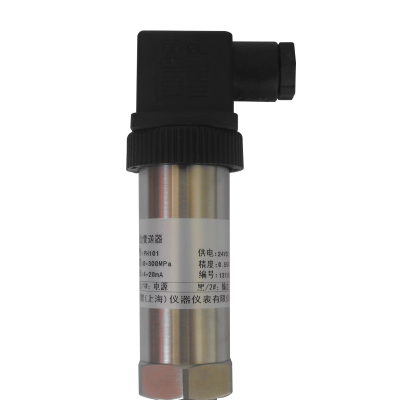


Industrial Gauge Pressure Sensor with 2-Valve Manifold Stainless Steel
$135.00 - $530.00
MOQ: 1 Pieces


Comprehensive Sourcing Guide
Strategic Sourcing Guide for Stainless Steel Air Pressure Sensors
Procuring industrial-grade stainless steel air pressure sensors requires a disciplined approach that balances technical precision with supply chain reliability. The market for these components is vast, yet the specific requirements for measuring air and non-corrosive gases demand rigorous verification of material integrity, accuracy grades, and signal output compatibility. This guide synthesizes observed product attributes and industry standards to provide a framework for evaluating potential suppliers and selecting the right components for your application.
Technical Specifications and Performance Parameters
When evaluating stainless steel air pressure sensors, the primary focus must be on the sensor cell technology and the resulting accuracy grade. The core technology often involves a diffused silicon sensor or a ceramic pressure transmitter, each offering distinct advantages in stability and temperature resistance. For applications involving air or non-corrosive gases, the accuracy grade is a critical differentiator. Observed data indicates that products are available with accuracy grades ranging from 0.2G to 1.0G. A 0.2G grade suggests high-precision instrumentation suitable for critical process control, whereas a 1.0G grade may suffice for general monitoring applications.
The pressure range is another fundamental specification that dictates sensor suitability. The market offers a wide spectrum of differential pressure capabilities, categorized into micro and middle ranges. Micro differential pressure sensors typically cover ranges from 100 Pa up to 10 kPa, making them ideal for low-pressure ventilation or filter monitoring. In contrast, middle differential pressure sensors extend from 10 kPa to 1000 kPa, serving heavier industrial pneumatic systems. Buyers must verify that the selected model, such as those designated by codes like HPT300 or HPT701, aligns with their specific pressure requirements.
Power supply requirements are equally standardized but must be confirmed against the facility's electrical infrastructure. Most modern stainless steel pressure transmitters operate on a DC voltage supply between 10V and 30V, or more specifically 12V to 28VDC. The output signal type is typically analog, with common configurations including 4-20mA current loops or 0-5V/1-5V voltage outputs. The 4-20mA signal is generally preferred for long-distance transmission due to its noise immunity, while voltage outputs may be suitable for short-range control systems.
Material Integrity and Environmental Ratings
The "stainless steel" designation in the product title refers to the wetted parts and the housing material, which must be verified to ensure corrosion resistance. The specific grades observed in the market include 304ss and 316ss. While 304 stainless steel provides robust protection for general industrial environments, 316ss offers superior resistance to chlorides and harsh chemicals, making it the preferred choice for more aggressive applications. The material selection directly impacts the longevity of the sensor in humid or chemically active atmospheres.
Environmental protection is quantified by the IP (Ingress Protection) rating. While specific IP codes vary by manufacturer, the presence of an IP rating is a mandatory check for any sensor intended for outdoor or washdown environments. The sensor's ability to withstand dust and water ingress is crucial for maintaining signal integrity. Additionally, the structure type, whether it is a ceramic pressure transmitter or a diffused silicon type, influences the sensor's thermal stability and resistance to overpressure events.
The physical dimensions and mounting interfaces are also critical for integration. Products may feature a bottom square profile of 1721 mm or utilize specific thread types such as G threads. The pressure connect port is often specified as Rg 6.5 Gas Mount or an M101 male thread. Buyers must ensure that the selected sensor's thread type matches the existing piping or manifold systems to avoid costly adapter modifications.
Compliance, Certification, and Standards Verification
In the global B2B market, compliance with international standards is non-negotiable for safety and interoperability. The most frequently observed certifications for these sensors include CE, RoHS, and ISO9001. The CE mark indicates conformity with health, safety, and environmental protection standards for products sold within the European Economic Area. RoHS compliance ensures that the sensor is manufactured without specific hazardous materials, which is essential for electronic waste regulations. ISO9001 certification verifies that the supplier adheres to a recognized quality management system, providing assurance of consistent manufacturing processes.
Beyond third-party certifications, buyers must verify adherence to specific product standards. Some products are listed with standards such as "5-8KG" or "0.3kg," which may refer to weight specifications or load capacities rather than pressure standards. It is vital to distinguish between these physical attributes and actual pressure testing standards. For instance, a standard labeled "Stainless steel" likely refers to the material specification rather than a pressure rating standard. Buyers should request test reports that explicitly confirm the sensor's performance against relevant industry pressure standards, ensuring that the device can withstand the maximum operating pressure without failure.
Cost Drivers and Pricing Structure Analysis
The pricing of stainless steel air pressure sensors is influenced by a complex matrix of factors, including accuracy grade, material grade, and customization requirements. The observed price range in the market spans from $2 to $530 USD. This wide variance reflects the difference between basic off-the-shelf units and high-precision, customized solutions. A sensor with a 0.2G accuracy grade and 316ss construction will naturally command a higher price than a 1.0G unit with 304ss housing.
Customization is a significant cost driver. While many suppliers offer standard models, the availability of customization allows for tailored thread types, specific pressure ranges, or unique output signals. However, custom orders often involve higher unit costs and longer lead times. The Minimum Order Quantity (MOQ) also plays a role in the total cost of ownership. Observed MOQs range from 1 to 100 units. Buyers purchasing small quantities may face higher per-unit costs but benefit from lower upfront capital expenditure. Conversely, bulk orders can reduce the unit price but require careful inventory management to avoid obsolescence.
Packaging standards also impact logistics costs. Products are typically shipped in cartons, with some suppliers using a "Holykell Standard Carton Box" for enhanced protection. The weight of the unit, observed at approximately 0.35kg, affects shipping calculations, particularly for international freight. Buyers should factor in these logistical costs when comparing total landed costs from different suppliers.
Supplier Evaluation and Origin Verification
Geographic origin is a key factor in supplier evaluation, as it influences lead times, shipping costs, and regulatory compliance. The primary manufacturing hubs for these sensors are located in China, with specific origins noted in Zibo, Shanghai, and Hunan. These regions have established supply chains for electronic components and precision machining. When evaluating a supplier, buyers should verify the specific factory location to ensure it aligns with their logistical strategy.
The warranty period is a critical indicator of supplier confidence in their product. A standard warranty of 12 months is commonly observed, suggesting a baseline expectation of product reliability. Buyers should scrutinize the terms of this warranty, including coverage for manufacturing defects versus damage from improper installation. Additionally, the production process, often cited as "Ceramics" for certain models or general manufacturing for others, should be understood to assess the robustness of the final product.
Supplier reliability is further gauged by their ability to provide detailed technical documentation and support. A reputable supplier will offer clear datasheets that specify the measuring medium, power supply requirements, and output signal options. They should also be transparent about their production capacity and ability to handle custom orders. The availability of single-item selling units allows for easy prototyping and testing, which is essential for validating the sensor's performance in the specific application environment before committing to large-scale procurement.
Quality Control and Long-Term Procurement Strategy
Implementing a robust quality control (QC) protocol is essential for mitigating the risks associated with sensor procurement. Buyers should establish a verification process that includes incoming inspection of the sensor's physical attributes, such as thread integrity and material finish. For high-precision applications, functional testing of the output signal against a known pressure source is necessary to confirm accuracy. The observed accuracy grades, ranging from 0.2G to 1.0G, must be validated through calibration reports provided by the supplier.
Long-term procurement considerations extend beyond the initial purchase to include supply chain continuity and lifecycle management. The availability of spare parts and the supplier's ability to support the product over its operational life are critical. Buyers should prioritize suppliers who offer consistent quality and have a track record of meeting delivery schedules. The customization options available, such as specific pressure ranges or thread types, should be leveraged to future-proof the procurement strategy, ensuring that the sensors remain compatible with evolving system requirements.
Furthermore, the integration of these sensors into larger systems requires careful attention to the output signal compatibility. Whether the system requires a 4-20mA loop or a 0-5V signal, the sensor must be seamlessly integrated to avoid signal degradation. The use of analog output types is standard, but the specific voltage or current range must be matched to the controller's input specifications. By maintaining a disciplined approach to specification verification and supplier evaluation, buyers can ensure the reliable performance of stainless steel air pressure sensors in their industrial applications.
Application Scenarios and System Integration
The versatility of stainless steel air pressure sensors makes them suitable for a diverse array of industrial applications. Their ability to measure gas and air pressure with high accuracy allows for their use in HVAC systems, pneumatic control loops, and medical devices. The specific pressure connect ports, such as the Rg 6.5 Gas Mount, facilitate easy integration into existing gas lines without the need for complex adapters. The IP rating ensures that these sensors can operate reliably in environments where dust or moisture might compromise less robust components.
In process industries, the choice between a ceramic pressure transmitter and a diffused silicon pressure transmitter depends on the specific process conditions. Ceramic sensors often offer better resistance to overpressure and temperature fluctuations, making them ideal for harsh environments. Silicon sensors, on the other hand, provide high sensitivity and are well-suited for applications requiring precise measurement of low differential pressures. The selection of the appropriate sensor type is contingent upon a thorough understanding of the process medium, operating temperature, and required accuracy.
Ultimately, the successful procurement of stainless steel air pressure sensors relies on a comprehensive understanding of the technical specifications, compliance requirements, and supplier capabilities. By adhering to the guidelines outlined in this guide, buyers can make informed decisions that ensure the reliability and efficiency of their industrial systems. The combination of verified material grades, accurate performance data, and robust supplier relationships forms the foundation of a successful sourcing strategy.
FAQs
What accuracy grades are available for stainless steel air pressure sensors?
Available accuracy grades range from 0.2G to 1.0G depending on the specific model. High-precision applications typically require the 0.2G grade, while general monitoring may suffice with the 1.0G grade.
Which certifications do these sensors typically hold for international compliance?
Common certifications include CE, RoHS, and ISO9001 for safety and quality assurance. These marks verify conformity with health standards and ensure the absence of hazardous materials in the manufacturing process.
Can I find stainless steel air pressure sensors with customized sizes?
Yes, customization is available for specific size requirements and pressure ranges. Buyers can request tailored thread types or output signals to match their unique system integration needs.
What power supply voltage is required for these pressure transmitters?
Most units operate on a DC voltage supply between 10V and 30V, with some models specifying 12V to 28VDC. This standard range ensures compatibility with most industrial control systems.
Which materials are used for the wetted parts of these sensors?
The wetted parts are constructed from 304ss or 316ss stainless steel. This material selection provides robust corrosion resistance suitable for measuring air and non-corrosive gases in various environments.
What is the typical warranty period for these industrial pressure sensors?
The standard warranty period is 12 months for manufacturing defects. This coverage ensures reliability and gives buyers confidence in the long-term performance of the purchased equipment.
How do I select the correct output signal type for my system?
Common analog output options include 4-20mA current loops or 0-5V/1-5V voltage signals. The 4-20mA signal is preferred for long-distance transmission due to its superior noise immunity.