Source Stainless Steel Corner Work Table for Hotels, Restaurants, and Canteens
Find and compare 30 Stainless Steel Corner Work Table options from Chinese manufacturers. These units feature customizable dimensions, CE and ISO certifications, and durable metal construction suitable for commercial kitchens, hotels, and schools.
Key considerations
Products List

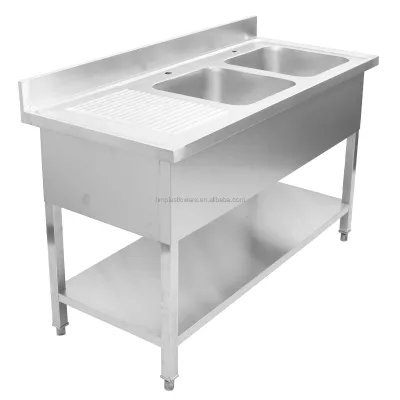


Stainless Steel Storage Work Table Bench
$150.00 - $200.00
MOQ: 5 Meters
Guangdong Zhijian Experimental Equipment Technology Co., Ltd.


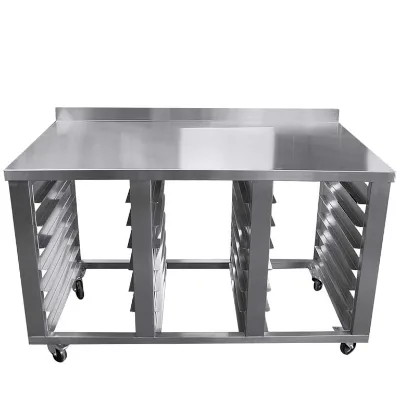


Comprehensive Sourcing Guide
Stainless Steel Corner Work Table Sourcing Guide
Sourcing a Stainless Steel Corner Work Table requires a careful balance of spatial efficiency, material durability, and functional versatility. These units are specifically engineered to maximize utility in environments where floor space is at a premium, such as compact commercial kitchens, hotel back-of-house areas, and hospital food service departments. Unlike standard rectangular tables, corner configurations allow for seamless integration into L-shaped layouts, creating continuous workflow zones without obstructing traffic patterns. Buyers must recognize that while the core function remains food preparation and storage, the specific geometry of the corner unit introduces unique engineering challenges regarding structural stability and surface continuity.
The procurement landscape for these items is diverse, ranging from basic, unfixed units to highly customized, multi-functional stations. Market observations indicate a wide variance in product attributes, including material thickness, surface finish, and modular capabilities. Procurement teams should approach this category not as a single commodity but as a spectrum of industrial furniture solutions. Understanding the specific operational needs of the target facility—whether it is a high-volume school canteen or a specialized hospital kitchen—is essential for filtering the available options. The goal is to identify a unit that aligns with both the physical constraints of the room and the ergonomic requirements of the staff who will use it daily.
Product Scope and Observed Listing Signals
Current market listings reveal a broad range of specifications that buyers must navigate to find the right fit. Observed data points to a significant variation in dimensions, with standard sizes ranging from compact units measuring approximately 940x640x150mm to larger, more substantial workstations reaching up to 1800x700x850mm. This disparity highlights the importance of precise measurement before ordering. Some listings describe the shape as "square" or "common," while others specify "rectangle" or "corner" configurations. Buyers should verify the exact footprint of the unit, as the term "corner" can sometimes refer to a table with a rounded edge rather than a true 90-degree L-shape designed to fit into a corner niche.
Material composition is another critical signal that varies across suppliers. While stainless steel is the dominant material, some listings also categorize the product under generic "metal" classifications. The thickness of the steel is a key differentiator, with observed ranges spanning from 0.8mm to 1.5mm. Thicker gauges, such as 1.2mm or 1.5mm, offer greater resistance to denting and warping under heavy loads, which is crucial for commercial environments. Additionally, surface finishes are noted as "smooth" and "polished," which aids in cleaning and hygiene compliance. Buyers must confirm whether the stainless steel grade is appropriate for food contact and whether the polished finish is maintained throughout the manufacturing process to prevent bacterial harborage.
Technical Specifications to Verify
When evaluating technical specifications, the structural integrity of the corner joint is paramount. Buyers should verify whether the unit is fixed or unfixed, as this impacts both stability and installation requirements. Fixed units typically offer superior rigidity, which is necessary for heavy-duty tasks like chopping or mixing, while unfixed units may offer flexibility for reconfiguration. The number of layers and the presence of shelves or undershelves also dictate storage capacity. Some models are described as having four layers, providing ample space for ingredients and equipment, while others may be single-surface units. It is essential to confirm the load-bearing capacity of each shelf and the overall table to ensure it can handle the intended weight without sagging.
Dimensional accuracy and standardization are equally important for seamless integration into existing kitchen layouts. Buyers should cross-reference the listed standard dimensions, such as 1000x600x850mm or 1500x800x800/850mm, with their actual floor plans. Tolerances in manufacturing can lead to gaps or misalignments when placing multiple units together. Furthermore, the voltage specification is listed as "other" in many cases, indicating that these are primarily manual or non-electric worktables. However, if the corner table includes integrated features like refrigeration or heating elements, electrical specifications must be explicitly confirmed. Buyers should also check the packaging type, as "carton" or "general goods" packaging affects shipping costs and the risk of damage during transit.
Compliance and Safety Documentation
Compliance with international and local safety standards is non-negotiable for commercial kitchen equipment. Buyers must request documentation verifying that the Stainless Steel Corner Work Table meets relevant certification requirements. Observed listings frequently cite CE and ISO certifications, which indicate adherence to European safety and quality management standards. In some cases, ISOCCC is also mentioned, suggesting a focus on environmental or specific quality management systems. These certifications provide a baseline assurance that the manufacturer follows regulated production processes. However, buyers should not assume that all listed products hold these certifications; each supplier must provide valid, current certificates for the specific model being purchased.
Food safety and hygiene compliance are additional critical areas. The material used must be food-grade stainless steel, typically 304 or 316 grade, to resist corrosion from acidic foods and frequent cleaning agents. Buyers should verify that the surface finish is free of pits, scratches, or weld defects that could harbor bacteria. The "smooth, polished" finish observed in many listings is desirable for hygiene, but it must be maintained. Additionally, the condition of the product should be confirmed as "new," as refurbished or used items may have compromised structural integrity or hygiene standards. Documentation should also confirm that the product is suitable for its intended application space, whether it is a hotel, restaurant, school, or hospital, as these environments may have specific regulatory requirements.
Cost Drivers and Commercial Terms
The cost of a Stainless Steel Corner Work Table is influenced by several key factors, including material thickness, surface finish, and customization options. Thicker steel gauges, such as 1.2mm or 1.5mm, command higher prices due to increased material costs and manufacturing complexity. Customization is widely available, allowing buyers to tailor dimensions, shelf configurations, and surface treatments to their specific needs. However, custom orders often come with higher minimum order quantities (MOQs) and longer lead times. Buyers should also consider the impact of packaging; robust packaging may increase initial costs but reduce the risk of damage and associated replacement expenses.
Commercial terms and payment structures vary among suppliers. Observed data indicates that some suppliers require a 30% deposit via T/T with the remaining 70% due before delivery. This structure is common in international trade but requires buyers to assess the financial risk and supplier reliability. MOQs can range from as low as 1 piece to 200 pieces, depending on whether the item is a standard stock item or a custom order. Buyers should negotiate terms that align with their cash flow and inventory needs. Additionally, the selling unit is typically listed as a single item, but some products may be sold in sets, which could offer cost efficiencies for large-scale outfitting projects.
Supplier Qualification and Quality Control
Selecting a qualified supplier is crucial for ensuring the long-term performance of the Stainless Steel Corner Work Table. Buyers should prioritize suppliers with a proven track record in manufacturing commercial kitchen equipment. The origin of the product, often listed as Guangdong or Shandong in China, can provide insights into the local industrial ecosystem and supply chain efficiency. However, geographic origin alone is not a guarantee of quality. Buyers should verify the supplier’s production capabilities, including their ability to maintain consistent material thickness and surface finish across large orders. Requesting samples or visiting the factory can provide valuable insights into their quality control processes.
Quality control measures should be explicitly defined in the purchase agreement. Buyers should insist on pre-shipment inspections to verify that the products meet the agreed-upon specifications, including dimensions, material grade, and finish. The presence of OEM/ODM capabilities indicates that the supplier can adapt to specific design requirements, but it also requires rigorous oversight to ensure that customizations do not compromise structural integrity. Buyers should also inquire about the supplier’s warranty policy and after-sales support. A reliable supplier will stand behind their product and provide timely assistance in case of defects or damage during transit. Establishing a clear communication channel with the supplier can help resolve issues quickly and maintain operational continuity.
Long-Term Procurement Checks
Long-term procurement success depends on establishing a sustainable relationship with suppliers and continuously monitoring product performance. Buyers should implement a system for tracking the durability and functionality of the stainless steel corner work tables in their facilities. Regular maintenance checks can identify issues such as surface corrosion, joint loosening, or shelf sagging before they become critical failures. This proactive approach extends the lifespan of the equipment and reduces the need for costly replacements. Buyers should also stay informed about industry trends and new technologies that may offer improved efficiency or hygiene standards.
As operational needs evolve, buyers may need to scale their procurement or adapt their equipment to new layouts. Maintaining a diverse supplier base can mitigate risks associated with supply chain disruptions. Buyers should periodically review their supplier performance based on criteria such as delivery reliability, product quality, and customer service. This ongoing evaluation ensures that the procurement strategy remains aligned with the organization’s goals. Additionally, buyers should consider the environmental impact of their procurement decisions, opting for suppliers who demonstrate commitment to sustainable manufacturing practices. By focusing on long-term value rather than just initial cost, buyers can build a resilient and efficient commercial kitchen infrastructure.
FAQs
What certifications do these stainless steel corner work tables have?
These tables hold CE and ISO certifications to ensure safety and quality standards. Some listings also mention ISOCCC compliance. Buyers should verify specific certification documents for their region before finalizing orders to meet local regulatory requirements.
Can I request custom dimensions for this stainless steel work table?
Customization is available for these stainless steel corner work tables to fit specific kitchen layouts. The standard sizes vary, but manufacturers offer tailored options. Buyers must confirm exact custom requirements and potential lead time impacts with the supplier directly.
Which material thickness options are available for these work tables?
Available material thickness ranges from 0.8mm to 1.5mm depending on the specific model. Thicker gauges like 1.2mm or 1.5mm offer enhanced durability for heavy commercial use. Select the thickness based on your expected workload and budget constraints.
How are these stainless steel tables packaged for shipping?
Products are typically packed in cartons or as general goods sets for protection during transit. Some models come as single items while others are packaged as sets. Proper packaging ensures the stainless steel surface remains scratch-free upon arrival at your facility.
What is the minimum order quantity for these work tables?
The minimum order quantity can range from 1 to 200 pieces depending on the supplier and customization level. Some specific listings indicate a minimum of 2 pieces. Buyers should check individual supplier terms to confirm the exact MOQ for their desired quantity.
Where are these stainless steel work tables manufactured?
These tables originate from China, specifically from regions like Guangdong and Shandong. The manufacturing hubs in these areas specialize in stainless steel kitchen equipment. Buyers should consider shipping logistics and lead times associated with these specific production locations.
Can these tables be used in hotels and schools?
Yes, these tables are designed for use in hotels, restaurants, schools, and canteens. Their multi-functional design supports various commercial kitchen environments. The sturdy stainless steel construction ensures they meet the hygiene and durability standards required in these public food service settings.