Source Stainless Steel Spring Fishing Pliers for cutting, hook removal, and line control
Explore 30 listings of Stainless Steel Spring Fishing Pliers designed for cutting, hook removal, and line control. Buyers can compare specifications such as size, material composition, and customization options like laser logos or OEM support across these verified products.
Key considerations
Products List


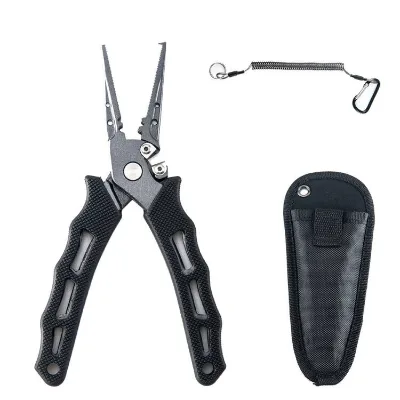
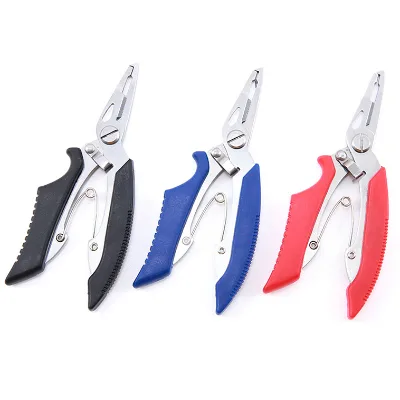
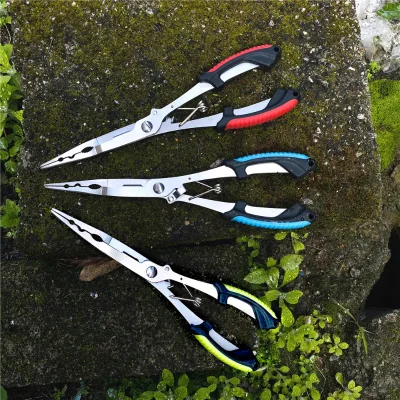
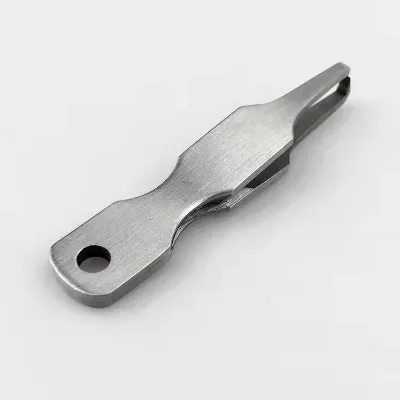


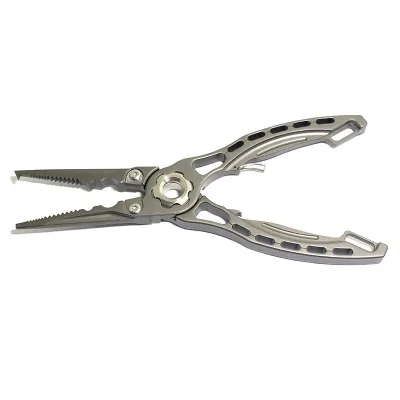
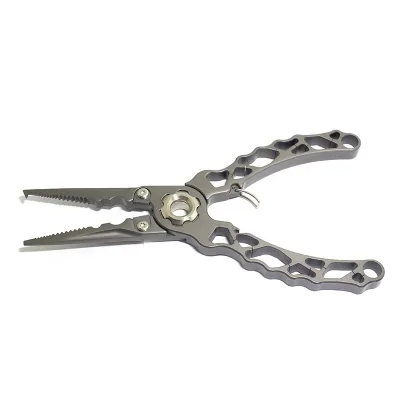
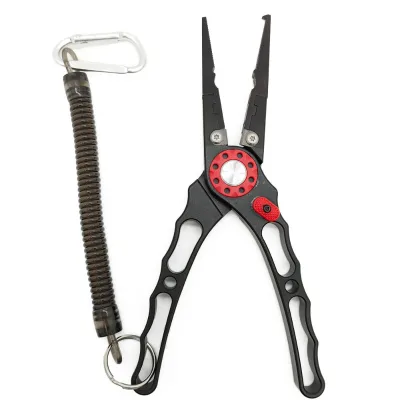
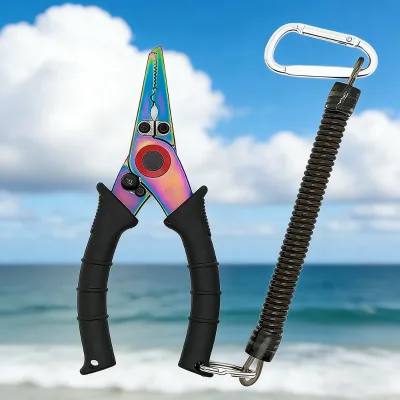
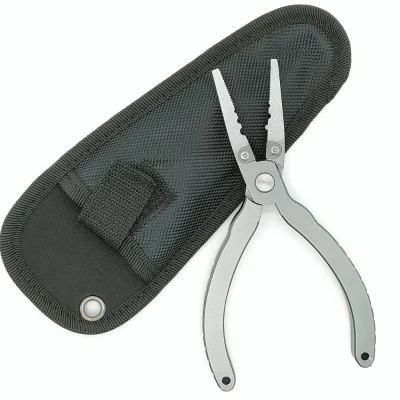

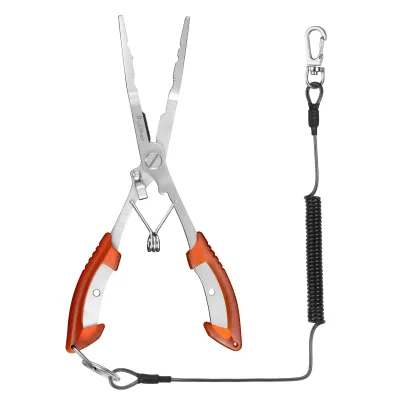
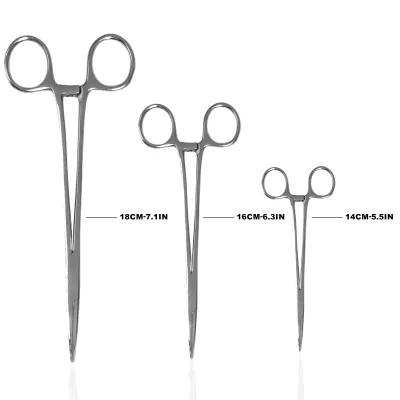
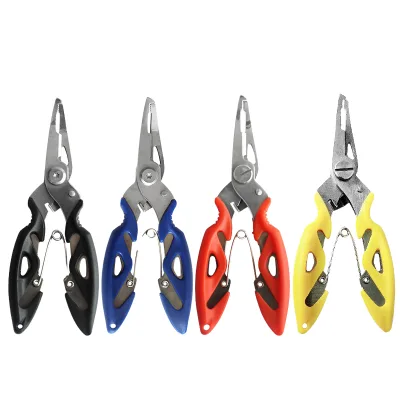
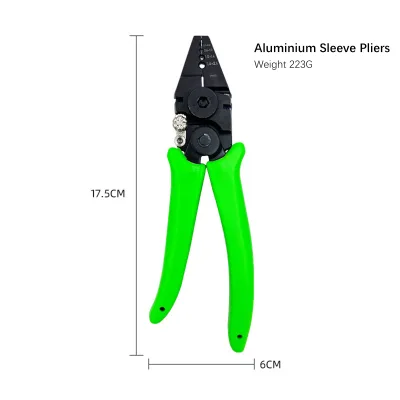
7.5-inch Fishing Crimping Tool Pliers Wire Pliers Crimping Tool Fishing Tool
$6.75 - $6.95
MOQ: 500 pieces


Comprehensive Sourcing Guide
Strategic Sourcing Guide for Stainless Steel Spring Fishing Pliers
Understanding Product Specifications and Technical Variations
When sourcing Stainless Steel Spring Fishing Pliers, buyers must first navigate a landscape of diverse technical specifications that directly influence utility and durability. The core keyword implies a tool designed for aquatic environments, yet the actual product data reveals significant variation in dimensions, materials, and functional capabilities. For instance, observed product models include specific identifiers such as JH-AFSC-8IN and JH-071SC-6.5inch, indicating that "spring" functionality may be integrated into various handle lengths and jaw configurations. The physical dimensions are not uniform; while one specification lists a length of 128mm, another notes a size of 21.5*6cm, and a third mentions an 18cm profile. These variations suggest that procurement strategies must be tailored to specific fishing scenarios, whether for small-scale river fishing or heavy-duty ocean rock fishing.
Material composition is a critical differentiator. The supplied facts confirm that stainless steel is the primary material for the working components, often paired with plastic molded handles or a combination of stainless steel and PP (polypropylene). This material pairing is essential for balancing corrosion resistance with ergonomic grip. The maximum opening capacity is another vital technical metric, with one observed specification noting a capacity of 1/4 inch. Buyers should verify this metric against their specific needs, as pliers designed for breaking steel wires or controlling large fish require a wider jaw opening than those intended for delicate hook removal. Furthermore, surface treatments like "Fine Polished" are noted, which can affect both the aesthetic finish and the ease of cleaning saltwater residue. The presence of a laser logo capability suggests that branding can be applied directly to the metal, a feature often required for corporate or team-specific equipment.
Compliance, Certification, and Origin Verification
In the B2B procurement of fishing tools, verifying the origin and compliance status is paramount for ensuring supply chain integrity and product safety. The provided data indicates that products originate from specific manufacturing hubs, notably Shenzhen and Shandong, China. While these locations are recognized centers for hardware manufacturing, buyers must independently verify that the specific supplier adheres to international safety and environmental standards. The data does not explicitly list certifications such as ISO 9001 or specific material compliance certificates (e.g., REACH or RoHS), so procurement teams must treat the absence of listed certifications as a verification gap rather than a confirmation of compliance.
The "Made in Shenzhen" and "Place of Origin: Shandong, China" attributes highlight the geographic concentration of the supply base. Buyers should request documentation proving that the stainless steel used meets grade standards suitable for marine environments, such as 304 or 316 stainless steel, to prevent rapid corrosion. Although the product facts mention "High quality household fishing cutting plier stainless steel," this is a descriptive attribute rather than a certified claim. Therefore, a robust sourcing strategy involves requesting mill test reports or material certificates from the supplier to confirm the alloy composition. Additionally, the "Customized support" attributes, including OBM, ODM, and OEM, indicate that many suppliers are capable of modifying products to meet specific regulatory requirements of the target market. Buyers should explicitly ask for proof of compliance with the destination country's import regulations regarding metal tools and fishing equipment before finalizing orders.
Cost Drivers and Pricing Structure Analysis
The pricing structure for Stainless Steel Spring Fishing Pliers is influenced by a complex interplay of customization, material costs, and order volume. The observed price range in the market spans from $0.57 to $20.76 USD, a wide variance that reflects differences in manufacturing complexity, material grade, and branding requirements. Several key factors drive these costs. First, the customization level significantly impacts the final price. Products offering laser logo engraving, custom colors (red, blue, black), or specialized handle molds incur higher production costs compared to standard off-the-shelf items. The "Customization: Available" attribute suggests that buyers can negotiate for unique specifications, but this will likely move the unit price toward the higher end of the observed spectrum.
Second, the Minimum Order Quantity (MOQ) acts as a primary cost driver. The data shows a broad MOQ range from 1 piece to 1000 pieces, with specific instances of 20pcs, 500pcs, and 1pc. Suppliers offering low MOQs (e.g., 1pc or 20pcs) often charge a premium per unit to cover setup and handling costs, whereas bulk orders of 500 pieces or more typically benefit from economies of scale. Buyers must calculate the total landed cost, including shipping and duties, rather than focusing solely on the unit price. For instance, a supplier with a $0.57 unit price might have a high shipping cost for small batches, whereas a $20.76 unit price might include premium packaging and faster delivery. The "Payment: T/T" term is standard, but buyers should negotiate payment schedules that align with production milestones to mitigate financial risk. Understanding these cost drivers allows procurement teams to balance budget constraints with the need for high-quality, customized tools.
Typical Applications and Functional Versatility
The functional versatility of Stainless Steel Spring Fishing Pliers is evident in the diverse applications listed in the product data. These tools are not limited to a single use case but are designed to serve multiple roles across various fishing environments. The "Position" attribute lists a comprehensive range of settings, including Ocean Boat Fishing, River, Lake, Ocean Beach Fishing, Reservoir Pond, Ocean Rock Fishing, and STREAM. This indicates that the pliers must be robust enough to withstand the harsh conditions of saltwater environments while remaining precise enough for delicate tasks in freshwater streams.
The specific usage scenarios further define the tool's utility. The data highlights functions such as taking hooks, controlling fish, using fish scissors, breaking steel wires, biting lead, and clamping lines. This multifunctionality is crucial for anglers who need a single tool to handle various tasks without switching equipment. For example, the ability to break steel wires is essential for deep-sea fishing where heavy monofilament or wire leaders are common, while the "fish scissors" function aids in trimming lines or removing parasites. The "Function: Fishing Pliers Multifunctional" attribute underscores this versatility. Buyers should evaluate the specific needs of their target customer base to determine which features are most critical. A supplier offering pliers with a 1/4 inch max opening capacity is better suited for heavy-duty applications, whereas a model with a 128mm length might be preferred for portability in river fishing. Understanding these applications ensures that the sourced products align with the practical demands of the end-user.
Supplier Evaluation and Customization Capabilities
Evaluating suppliers for Stainless Steel Spring Fishing Pliers requires a deep dive into their customization capabilities and production flexibility. The data confirms that "Customized support" is available, with suppliers offering OBM (Original Brand Manufacturing), ODM (Original Design Manufacturing), and OEM (Original Equipment Manufacturing) services. This means buyers can work with suppliers to develop unique products, from custom colors and laser logos to specific handle materials and packaging solutions. The "Logo: laser logo" attribute indicates that branding can be integrated directly into the product, which is a significant value-add for companies looking to build brand recognition.
However, the availability of customization does not guarantee uniform quality across all suppliers. Buyers must assess the supplier's ability to maintain consistency when producing customized orders. The "Single volume" and "Single gross weight" attributes, which show values of 0 cm³ and 0.0 kg in some entries, suggest that data entry inconsistencies can occur. This highlights the need for buyers to verify all product specifications directly with the supplier rather than relying solely on listing data. Additionally, the "Packaging Details" mention "1pcs per bOX" and "customs packaging are available," indicating that suppliers can tailor packaging for retail or bulk shipping. When evaluating suppliers, buyers should request samples of customized products to verify the quality of the laser engraving, the durability of the plastic molded handles, and the accuracy of the dimensions. A supplier's willingness to accommodate small MOQs, such as 1pc or 20pcs, can also be a positive indicator of flexibility and customer service orientation.
Quality Control and Long-Term Procurement Considerations
Ensuring long-term quality and reliability is essential for successful procurement of fishing pliers. The "Surface treatment: Fine Polished" attribute suggests a focus on finish quality, which is critical for preventing rust and ensuring smooth operation in wet environments. However, buyers must implement rigorous quality control measures to verify that this finish is consistent across all units. The "Weight" attribute, listing values like 52g and 0.1 kg, provides a benchmark for checking product consistency. Significant deviations from these weights could indicate material defects or incomplete assembly.
Long-term procurement considerations also involve supply chain stability and lead times. The "Delivery time: 5 days" is a specific data point, but buyers should be aware that this may vary based on order volume and customization requirements. For large orders, lead times will likely extend beyond the standard 5 days. Buyers should establish clear communication channels with suppliers to monitor production progress and ensure timely delivery. Furthermore, the "Payment: T/T" term requires careful financial planning. Buyers should consider the risks associated with advance payments and negotiate terms that protect their interests, such as partial payments upon shipment. Finally, the "Package: bag" and "Plastic bage" attributes indicate that packaging is a key component of the product. Buyers should ensure that the packaging is durable enough to protect the pliers during transit and suitable for retail display. By focusing on these quality control and long-term factors, buyers can build a sustainable supply chain that delivers high-quality Stainless Steel Spring Fishing Pliers to their customers.
FAQs
Can I customize the logo and color of these pliers?
Yes, customization is available for laser logos and colors like red, blue, or black. Suppliers support OEM and ODM services to meet specific branding needs while maintaining the stainless steel construction.
What is the minimum order quantity for these fishing pliers?
The minimum order quantity varies significantly depending on the supplier, ranging from as low as 1 piece to 1000 pieces. Some vendors offer small batches of 20 pieces, while others require bulk orders of 500 pieces.
Where are these stainless steel pliers manufactured?
Products originate from manufacturing hubs in Shenzhen and Shandong, China. Buyers should verify specific factory locations to ensure they align with their logistics and quality control requirements for marine-grade tools.
How long is the delivery time for these pliers?
Standard delivery time is reported as 5 days for some suppliers. However, this timeline may extend based on order volume, customization requirements, and current production schedules at the factory.
What materials are used for the handles and body?
The body is made of stainless steel for corrosion resistance, while handles are typically plastic molded or a combination of stainless steel and PP. This design balances durability with a comfortable grip for fishing tasks.
What is the maximum jaw opening capacity of these tools?
One observed specification lists a maximum opening capacity of 1/4 inch. This dimension is critical for buyers needing to break steel wires or control larger fish in various fishing environments.
Are these pliers suitable for ocean and river fishing?
Yes, they are designed for multiple positions including ocean boat fishing, river, lake, and stream environments. Their multifunctional use includes taking hooks, controlling fish, and breaking steel wires effectively.