Source Starter Motor for Engines, Vehicles, and Machinery
Find 30 Starter Motor options from verified suppliers in China. Compare specifications, certifications, and prices for automotive and industrial applications to ensure reliable replacement or repair.
Key considerations
Products List


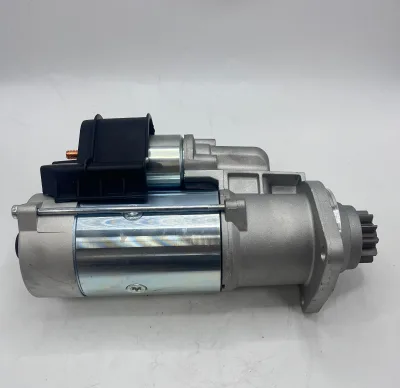


$90.00 - $110.00
MOQ: 20 Pieces

$90.00 - $110.00
MOQ: 20 Pieces

$90.00 - $110.00
MOQ: 20 Pieces

$90.00 - $110.00
MOQ: 20 Pieces

$90.00 - $110.00
MOQ: 20 Pieces

$90.00 - $110.00
MOQ: 20 Pieces


Comprehensive Sourcing Guide
Strategic Sourcing Guide for Starter Motors in B2B Procurement
Procuring starter motors for industrial, agricultural, or automotive applications requires a disciplined approach that balances technical compatibility with supply chain reliability. The market for these critical components is diverse, ranging from single-item purchases to large-scale industrial contracts. Buyers must navigate a landscape where specifications vary significantly between manufacturers, and where the distinction between original equipment and aftermarket replacements is crucial for operational continuity. This guide outlines the essential factors for sourcing starter motors, drawing on observed market data to inform decision-making without relying on unverified claims.
Technical Specifications and Mathematical Models
The first step in any sourcing process is a rigorous review of technical specifications. Starter motors are not interchangeable by default; their performance is dictated by specific electrical and mechanical parameters. In the current market, buyers encounter two distinct mathematical models for these components: linear and non-linear. The linear model typically implies a direct relationship between input voltage and output torque, which is often preferred for applications requiring predictable startup performance under consistent load conditions. Conversely, the non-linear model suggests a more complex interaction, potentially involving variable resistance or magnetic saturation effects that must be accounted for in the system design.
Voltage is another critical specification. Observed data indicates that many units operate on a DC12V standard, which is common in light to medium-duty applications. However, the nature of the motor also varies; for instance, the DC Form Permanent Magnet Starter Motor is a specific configuration that offers high efficiency and compact size. Buyers must verify if their machinery requires this specific form factor or if a different configuration is necessary. The signal type is another technical attribute to consider, with continuous signals being a common requirement for automated control systems. If the application involves automatic control or protection functions, the motor must be compatible with these signal types to ensure seamless integration.
Compliance, Certification, and Standards Verification
Compliance is a non-negotiable aspect of B2B procurement, particularly when dealing with electrical components. The market data reveals a complex landscape of certifications, including RoHS, CCC, CE, ISO, and SGS. It is important to note that different products may carry different subsets of these certifications. For example, one listing might highlight RoHS, CCC, and ISO: SGS, while another emphasizes CCC and ISO: CE. Buyers should not assume that a single supplier provides all certifications for every product line. Instead, the procurement strategy must involve verifying that the specific batch of starter motors intended for purchase carries the certifications required by the destination market.
The CE mark is frequently cited as a product standard, alongside SGS and ISO9001. These standards indicate adherence to safety, health, and environmental protection requirements. However, the presence of a standard like "Universal" in some product descriptions suggests that certain components may be designed for broad compatibility rather than specific regulatory compliance. Buyers must distinguish between products that are universally compatible and those that meet specific regional or industry standards. When sourcing from origins such as Shanghai, Guangdong, or Fujian in China, verifying the specific certification documentation for the exact model number is essential to avoid customs delays or regulatory penalties.
Cost Drivers and Pricing Structures
Understanding the cost drivers for starter motors is vital for budgeting and negotiation. The observed price range in the market is extensive, spanning from $1 to $6,500 USD. This wide variance is not arbitrary; it reflects differences in material quality, manufacturing complexity, and brand positioning. The material composition, such as stainless steel, can significantly influence the cost, offering durability in harsh environments but at a higher price point. Additionally, the distinction between "Original" and "Copy" quality grades is a major cost factor. Original components typically command a premium due to guaranteed compatibility and performance, whereas copy versions offer a lower-cost alternative that may require more rigorous quality testing.
Minimum Order Quantity (MOQ) also plays a significant role in the total cost of ownership. The observed MOQ range is between 1 and 500 units. For small-scale projects or replacement needs, buyers can source single items, but this often results in a higher unit price. Conversely, bulk orders within the 500-unit range may unlock volume discounts. The supply ability of suppliers, observed at up to 50,000 pieces per month, indicates that high-volume buyers have access to robust supply chains. However, buyers should be aware that packaging details, such as individual cartons versus palletized shipments, can affect logistics costs. A single gross weight of 5.000kg per unit is a key figure for calculating freight charges, especially when shipping from locations like Fujian or Guangdong.
Typical Applications and Compatibility
Starter motors are utilized across a wide array of industries, from agriculture to heavy machinery. The observed data highlights specific applications, such as use with Briggs Stratton engines and compatibility with CNH brands. These specific references indicate that the market includes components designed for precise replacement or repair purposes. The product purpose is often explicitly stated as "for Replace/Repair," which underscores the importance of matching the model number exactly. For instance, a Starter Motor with the model number 612600090287 may be intended for a specific engine type, while another with the model 807383 might serve a different application entirely.
The communication protocols are also relevant for modern applications. Some units feature RS485 Modbus communication, which allows for integration into automated control systems. This feature is particularly useful for industrial settings where monitoring and control are automated. The function of the motor may extend beyond simple starting; some units offer protection functions or are designed for adjustment tasks. When selecting a Starter Motor, buyers must ensure that the product's function aligns with the operational requirements of the machinery. For example, a motor with an automatic control function is essential for systems that require remote or automated starting capabilities.
Supplier Evaluation and Quality Assurance
Evaluating suppliers requires a focus on their ability to deliver consistent quality and meet logistical demands. The market shows that suppliers offer various packing options, including cartons, wooden boxes, and palletized shipments. The condition of the product is consistently listed as "New" or "Brand New," but buyers should verify this through inspection protocols. One notable feature in the market is the provision of video outgoing-inspection, which allows buyers to visually verify the quality of the product before shipment. This is a valuable tool for mitigating the risk of receiving defective units.
Quality is often categorized as "Original" or "Copy," and this distinction must be managed carefully. While copy products may be cheaper, they may not meet the same durability standards as original parts. Buyers should request detailed quality assurance documentation, including test results and material certifications. The warranty period is another critical factor, with a standard 1-year warranty observed in the market. This warranty provides a safety net for buyers, ensuring that any manufacturing defects are addressed. Additionally, the customization availability should be assessed; while some products are non-customized, others offer customization options that may be necessary for specific industrial applications.
Long-Term Procurement Considerations
Sourcing starter motors is not a one-time transaction but a long-term relationship that impacts operational efficiency. Buyers should consider the lead times and supply stability of their suppliers. Although specific lead times are not universally defined in the provided data, the supply ability of 50,000 pieces per month suggests that suppliers with high capacity can handle large orders. However, buyers must confirm lead times for their specific order volume to avoid production delays. The origin of the product, whether from Shanghai, Guangdong, or Fujian, can also influence shipping times and costs.
Future-proofing the procurement strategy involves staying informed about technological advancements and regulatory changes. As industries move towards more automated and environmentally friendly solutions, the demand for starter motors with advanced communication protocols and high-efficiency materials will likely increase. Buyers should maintain a flexible sourcing strategy that allows them to adapt to these changes. Regular audits of supplier performance, including adherence to standards like ISO9001 and SGS, will help ensure that the supply chain remains robust and compliant. By focusing on these long-term considerations, buyers can secure a reliable supply of starter motors that support their operational goals for years to come.
Comparative Analysis of Product Attributes
To facilitate decision-making, the following table summarizes key attributes observed in the market for starter motors. This comparison highlights the variability in specifications and helps buyers identify the most suitable options for their specific needs.
| Attribute | Observation A | Observation B | Observation C |
|---|---|---|---|
| Mathematical Model | Linear | Non-Linear | N/A |
| Certification | RoHS, CCC, ISO: SGS | CCC, ISO: CE | RoHS, CCC, ISO: CE |
| Material | Stainless Steel | N/A | N/A |
| Voltage | DC12V | N/A | N/A |
| Function | Automatic Control | Protection | N/A |
| Communication | RS485 Modbus | N/A | N/A |
| Origin | Shanghai | Guangdong, China | Fujian, China |
| Warranty | 1 Year | N/A | N/A |
| Quality Grade | Original, Copy | N/A | N/A |
| Packing | Carton, Wooden Box | Carton | Pallet |
This table illustrates that no single product profile dominates the market. Buyers must carefully match their requirements against these attributes. For instance, if a project requires a linear model with RS485 communication, only specific listings will suffice. Similarly, if the destination market requires RoHS and CE certifications, the buyer must select a product that explicitly lists both. The diversity of options underscores the need for a meticulous selection process to ensure that the purchased starter motors meet all technical and regulatory requirements.
FAQs
What certifications do starter motors typically have?
Starter motors commonly carry RoHS, CCC, CE, ISO, and SGS certifications. Buyers must verify that the specific batch intended for purchase includes the exact certifications required by their destination market to avoid regulatory issues.
Which mathematical models are available for starter motors?
The market offers both linear and non-linear mathematical models for starter motors. Linear models provide predictable startup performance, while non-linear models involve complex interactions that require careful system design consideration.
Can I find starter motors with RS485 Modbus communication?
Yes, some starter motors feature RS485 Modbus communication for automated control systems. This feature is essential for industrial settings where monitoring and control require seamless integration with existing automated infrastructure.
What is the typical price range for starter motors?
The observed price range spans from 1 to 6500 USD depending on quality and specifications. Costs vary significantly based on material composition, such as stainless steel, and whether the unit is original or copy grade.
How does the warranty period affect Starter Motor selection?
A standard 1-year warranty is commonly observed for starter motors in the market. This warranty provides a safety net for buyers, ensuring that any manufacturing defects are addressed within the specified period.
Which supplier locations are common for Starter Motor production?
Starter motors are frequently sourced from Shanghai, Guangdong, and Fujian in China. Buyers should verify the specific origin of the product to accurately calculate shipping times and potential customs requirements.
What is the minimum order quantity for starter motors?
The minimum order quantity ranges from 1 to 500 units depending on the supplier. Small-scale projects can source single items, while bulk orders may unlock volume discounts and better logistics rates.