Source Stitched Binding Customized Bible for Gifts, Schools, and Churches
Explore 30 listings for Stitched Binding Customized Bible options featuring sewing thread binding and customizable sizes like A4. Buyers can compare paper types, finishing methods, and MOQs from verified suppliers in Guangdong, China.
Key considerations
Products List



Comprehensive Sourcing Guide
Strategic Sourcing Guide for Stitched Binding Customized Bibles
The procurement of specialized religious texts, specifically customized bibles with stitched binding, requires a nuanced understanding of manufacturing capabilities, material integrity, and supply chain logistics. In the global B2B market, buyers often seek products that balance durability with aesthetic customization. The core keyword "Stitched Binding Customized Bible" points to a specific intersection of traditional bookbinding techniques and modern digital or offset printing capabilities. This guide synthesizes available product attributes and industry standards to provide a framework for evaluating suppliers and defining technical requirements without relying on unverified claims or specific supplier endorsements.
Technical Specifications and Material Composition
The foundation of a high-quality customized bible lies in the selection of materials and the precision of the binding process. Based on observed product attributes, the primary material for these items is consistently identified as Paper & Paperboard, with specific variations including Art Paper, Cardboard, Coated Paper, Fancy Paper, Kraft Paper, and Offset Paper. The choice of paper type directly influences the tactile experience and the longevity of the text block. For instance, Art Paper and Coated Paper are frequently selected for their smooth finish and color reproduction capabilities, while Kraft Paper may be utilized for specific eco-conscious or rustic design aesthetics.
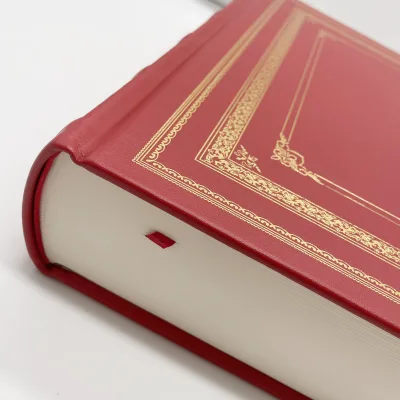
The binding method is a critical differentiator. The term "stitched binding" in this context aligns with observed attributes such as "Sewing Binding" and "Sewing Thread." This technique involves sewing the signatures (groups of folded pages) together with thread before attaching them to the cover. This is distinct from perfect binding or glue binding and offers superior durability, allowing the book to lay flat when open—a crucial feature for reference texts like bibles. The observed product data also notes "Hard Cover" and "Soft Cover" options, indicating that the stitching process must be compatible with various cover constructions. Hard covers typically utilize "Hard Paper" or cardboard cores, providing structural rigidity, while soft covers rely on flexible paperboard.
Printing specifications further define the product. The observed data lists both "Offset Printing" and "Flexographic Printing" as available methods. Offset printing is generally preferred for high-volume runs requiring high fidelity and color accuracy, utilizing CMYK or Pantone color systems. Flexographic printing is often used for specific packaging or shorter runs with simpler color requirements. The surface finish is equally important, with options including glossy or matte lamination, embossing, debossing, foil stamping, UV coating, and hot stamping. These processes add a layer of protection and aesthetic value, with film lamination and varnishing serving as common protective measures against wear and tear.
Customization Parameters and Production Standards
Customization is the primary driver for this product category. Buyers must navigate a range of adjustable parameters to meet specific organizational or personal needs. The "Model Number" and "prod_model" fields in the data suggest that suppliers operate with specific SKUs, such as "20240223D" or "A2075Book," but the "Shape" and "Size" attributes indicate a high degree of flexibility. Sizes are observed to include A3, A4, and A5, with "customized" options available to accommodate unique dimensions. The "prod_standard" field reinforces this, noting that standards can be "customized" or adhere to specific formats like "A4."
The customization extends to the content and layout. Observed attributes mention "Inside Pages Printed: Grid" and "Inner Pages: 40-60 Sheets," suggesting that the internal structure can be tailored. While the specific content (text) is not detailed in the product attributes, the "Item" field explicitly references "bible printing," confirming the intended use. The "Logo: Custom" attribute indicates that branding can be integrated, which is vital for promotional or institutional editions. Furthermore, the "OEM/ODM: Available" status confirms that suppliers are equipped to handle Original Equipment Manufacturer and Original Design Manufacturer requests, allowing for deep customization of the product from cover design to internal layout.
Cost Drivers and Minimum Order Quantities
Understanding the cost structure is essential for budgeting and planning. The observed price range for these products spans from 0.19 to 25 USD, a wide variance that reflects differences in material quality, binding complexity, and order volume. The Minimum Order Quantity (MOQ) is a significant factor in procurement strategy. The data presents a range of MOQs, with specific instances of 100pcs, 1000, and 500pcs. This variability suggests that costs are highly dependent on the scale of the order. Lower MOQs, such as 100 or 500 units, may incur a higher per-unit cost due to the setup time required for stitching and printing. Conversely, larger orders likely benefit from economies of scale.
Other cost drivers include the finishing processes. Techniques like foil stamping, embossing, and UV coating add layers of complexity and material cost. The choice of paper type also impacts the final price; premium papers like Fancy Paper or high-grade Art Paper will cost more than standard Offset Paper. Additionally, the "Selling Units" are listed as "Single item," which implies that the pricing model is per unit rather than per batch, though the MOQ dictates the minimum batch size. Buyers should anticipate that complex customizations, such as specific grid layouts or unique cover shapes, will increase the base price beyond the observed minimum of 0.19 USD.
Supplier Evaluation and Operational Capabilities
When evaluating potential suppliers for stitched binding customized bibles, buyers must verify specific operational capabilities. The "Place of Origin" is consistently noted as "Guangdong, China" or simply "China," indicating a concentration of manufacturing in this region. This geographic concentration often implies a mature supply chain for paper and printing services. However, buyers should verify the specific factory capabilities beyond the general location.
Key evaluation criteria include the supplier's ability to handle the specific binding method. The presence of "Sewing Binding" and "Sewing Thread" in the data confirms that the manufacturing process involves manual or semi-automated stitching. Buyers should request evidence of this capability, such as samples of stitched books, to ensure the thread tension and signature alignment meet their standards. The "Sample time" of 3~5 days is a critical metric for lead time planning. This short turnaround for samples allows for rapid iteration on design and material choices before committing to a full production run.
The "Service" attribute, listed as "OEM," further supports the supplier's ability to work collaboratively on custom projects. Buyers should assess the supplier's communication channels and their responsiveness to design changes. The "prod_packing" options, which include "Carton," "CTN," and "Carton Box," indicate standard packaging methods, but buyers should verify if special packaging is available for fragile or high-value items. Additionally, the "Usage" field lists "Gift" and "Promotion," suggesting that the supplier has experience with products intended for gifting, which often requires higher aesthetic standards and careful handling.
Quality Control and Compliance Verification
Quality control in the production of customized bibles must address both structural integrity and print fidelity. The "Binding" type, specifically "Sewing Binding," is a robust method, but the quality of the thread and the precision of the stitching must be verified. Buyers should inspect samples for loose threads, uneven spacing, or signs of tearing at the spine. The "Cover Material," noted as "Hard Paper," must be checked for warping or delamination, especially if the book is intended for heavy use.
Regarding compliance, the data does not explicitly list specific certifications or standards beyond "customized" or "A4" dimensions. Therefore, buyers must proactively request documentation regarding material safety and environmental compliance. For example, if the paper is intended for children or specific religious groups, there may be requirements regarding ink toxicity or paper sourcing. The "Standard" field mentions "customized," which implies that the supplier may not adhere to a single universal standard but rather meets the buyer's specific requirements. It is crucial to define these requirements clearly in the purchase order.
The "Surface Finish" options, such as "Film Lamination" and "Hot Stamping," also require quality checks. Lamination should be free of bubbles or peeling, and hot stamping should be crisp and aligned. The "Color" attribute, listing "CMYK or Panton color," necessitates a color proofing stage to ensure that the final output matches the intended design. Buyers should insist on a pre-production proof to verify color accuracy and layout before the full run begins.
Long-Term Procurement and Application Strategy
The long-term viability of sourcing customized bibles depends on the alignment of the product with its intended application. The "Usage" attributes of "Gift" and "Promotion" suggest that these items are often used for marketing, religious events, or corporate gifting. In these contexts, the durability of the stitched binding is paramount, as the book may be handled frequently. The "Inner Pages" count of 40-60 sheets indicates a relatively thin volume, which is suitable for pocket bibles or promotional items, but buyers should confirm if thicker versions are available for more substantial texts.
For long-term procurement, establishing a relationship with a supplier who offers "OEM/ODM" services is beneficial. This allows for consistent branding and design evolution over time. The "Model Number" variations suggest that suppliers may update their SKUs frequently; buyers should ensure that their specific design requirements are locked into a stable production process. The "Sample time" of 3~5 days allows for agile adjustments, but buyers should plan for the full lead time of the production run, which is not explicitly stated in the data but is typically longer than the sample time.
In conclusion, sourcing stitched binding customized bibles requires a careful balance of technical specifications, material selection, and supplier capability. By focusing on the observed attributes such as sewing binding, paper types, and customization options, buyers can make informed decisions that ensure high-quality outcomes. The wide range of MOQs and price points offers flexibility, but the complexity of the binding process necessitates rigorous quality control and clear communication with the supplier. Ultimately, the success of the procurement depends on the buyer's ability to define their specific needs and verify the supplier's capacity to meet them through the available customization and production standards.
FAQs
What paper types are available for stitched binding bibles?
Art Paper, Cardboard, Coated Paper, Fancy Paper, Kraft Paper, and Offset Paper are available options. These materials influence the tactile feel and color reproduction quality of the final book.
Can I order custom sizes for these customized bibles?
Yes, sizes like A3, A4, and A5 are standard, but customized dimensions are also available. This flexibility allows buyers to tailor the book format to specific promotional or gift requirements.
What is the minimum order quantity for these products?
The minimum order quantity ranges from 100 to 1000 pieces depending on the specific configuration. Lower quantities may incur higher per-unit costs due to setup requirements for stitching and printing.
How long does it take to receive a sample?
Samples are typically ready within 3 to 5 days. This short turnaround allows buyers to quickly verify material quality and binding integrity before committing to a full production run.
Which printing methods are used for these bibles?
Both Offset Printing and Flexographic Printing are utilized for production. Offset printing is preferred for high-fidelity color accuracy using CMYK or Pantone systems, while flexographic printing suits specific packaging needs.
What surface finishes can be applied to the covers?
Options include glossy or matte lamination, embossing, debossing, foil stamping, UV coating, and hot stamping. These finishes provide protection and enhance the aesthetic appeal for promotional or gift editions.
Are OEM and ODM services available for custom designs?
Yes, OEM and ODM services are available to support original design and manufacturing requests. Buyers can customize logos, layouts, and structural elements to meet specific branding or institutional needs.