Source Surge Protection Extension Socket for Commercial, Industrial, Residential
Compare 30 Surge Protection Extension Socket options from verified Chinese manufacturers. These units support customized features, offer 4 outlets, and meet ISO and CE standards for commercial and industrial applications.
Key considerations
Products List
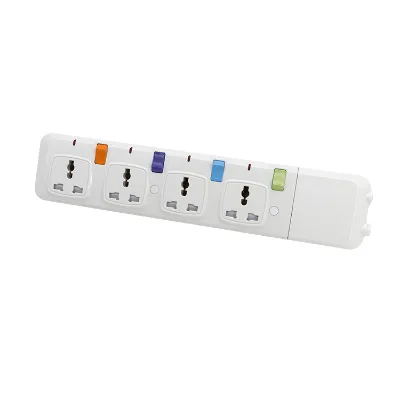


$53.00 - $55.00
MOQ: 50 Pieces


5 Outlet Surge Protector Power Strip
$3.65 - $3.78
MOQ: 1000 Pieces
WANSHUN ELECTRICAL & INTELLIGENT MANUFACTURE (GUANGDONG) CO., LTD.


Comprehensive Sourcing Guide
Strategic Sourcing Guide for Surge Protection Extension Sockets
Understanding Technical Specifications and Core Attributes
When sourcing surge protection extension sockets, buyers must first establish a clear understanding of the technical baseline provided by the market. The product landscape for these items is defined by specific electrical ratings and physical configurations that directly impact safety and compatibility. Based on available market data, the rated voltage for many commercial-grade units typically aligns with 250V, while the rated current can vary significantly between 10A and 16A depending on the specific model and intended load capacity. This variance is critical; a 10A unit may suffice for general office peripherals, whereas a 16A unit is often required for heavier industrial or commercial appliances.
The physical construction of these sockets is predominantly plastic, utilizing materials such as ABS or iron for structural integrity. The standard configuration often includes four AC outlets, though some models may integrate USB sockets for modern device charging. A notable observation in the current supply chain is the presence of units labeled as "Without Switch," which simplifies the design but requires buyers to verify if manual control is a mandatory requirement for their specific operational workflow. Furthermore, the grounding mechanism is a non-negotiable safety feature, with "Standard Grounding" being the prevalent standard for commercial and residential applications.
The application scope for these devices is broad, ranging from general-purpose residential use to specialized environments like hospitals, laboratories, and industrial facilities. This versatility suggests that a single product line may not suffice for all procurement needs. Buyers should scrutinize the specific model numbers, such as the 784M, F14, C020, or LGT series, as these identifiers often correlate with distinct feature sets, including the number of holes, IP ratings, and specific installation modes like table-top usage. The presence of "Porous" hole designs and specific IP ratings indicates that environmental resistance varies, necessitating a careful review of the intended installation site before finalizing a purchase order.
Compliance, Certification, and Regulatory Standards
Navigating the compliance landscape is perhaps the most critical step in securing a reliable supply of surge protection extension sockets. The market data indicates a fragmented certification environment where different models carry varying levels of approval. High-confidence observations confirm that products may hold ISO certifications, alongside specific regional standards like CCC (China Compulsory Certification) and CE (Conformité Européenne). The presence of SGS standards is also noted as a quality benchmark in certain product listings.
However, buyers must exercise extreme caution when interpreting these certifications. The data shows that while some models list both CE and CCC, others may only list CE or ISO. This inconsistency implies that certification status is model-specific rather than a universal attribute of the entire product category. Consequently, a procurement strategy that assumes all listed extension sockets are universally certified is risky. Buyers must verify the specific certification documents for the exact model number they intend to purchase. For instance, a unit intended for export to the European market must possess valid CE documentation, while domestic sales in China may require CCC compliance.
Beyond the listed certifications, the supply chain also references standards such as ABS and Iron for material composition, which indirectly relate to safety and durability standards. While background knowledge often suggests RoHS or REACH compliance for electronic components, the provided data does not explicitly confirm these for every unit. Therefore, the procurement process should include a mandatory request for current test reports and certification certificates from the supplier for the specific batch being ordered. Relying on general market claims without verifying the specific documentation for the selected model can lead to regulatory non-compliance and potential safety hazards.
Cost Drivers and Pricing Dynamics
The pricing structure for surge protection extension sockets is influenced by a complex interplay of factors, including material costs, certification levels, and customization requirements. The observed price range in the market spans from $0.20 to $55.00 USD. This wide disparity is not merely a reflection of brand premium but is driven by fundamental differences in product specifications and order volumes. The lower end of the spectrum typically corresponds to basic, non-customized units with standard plastic construction and minimal certification. In contrast, the higher price points often reflect advanced features, such as integrated USB charging, industrial-grade durability, or specialized customization.
Minimum Order Quantity (MOQ) is another significant driver of unit cost. The market data reveals an MOQ range from 1 to 3,000 units. Buyers purchasing small quantities, such as single units or small batches, will naturally face a higher per-unit cost due to the lack of economies of scale. Conversely, large-volume orders can leverage the lower end of the price spectrum. However, the relationship between price and volume is not linear; the cost reduction curve flattens after a certain threshold.
Customization is a primary cost variable. The availability of "Support customized" and "Customized" options suggests that buyers can tailor product attributes, such as color, branding, or specific electrical configurations. While this adds value, it invariably increases the unit price and may extend lead times. The packaging also plays a role in cost; options range from simple poly bags to complex inner box and outer carton configurations (e.g., 6PCS/Inner Box, 120PCS/Outer Carton). Buyers must balance the need for protective packaging against the added cost, especially for international shipping where damage risks are higher.
Typical Applications and Usage Scenarios
The versatility of surge protection extension sockets allows them to serve a diverse array of applications, from light commercial use to heavy industrial environments. The data explicitly categorizes these products for use in Commercial, Industrial, Residential/General-Purpose, Hospital, and Laboratory settings. This broad applicability means that a single procurement strategy cannot address all potential use cases.
In commercial and residential settings, the focus is often on safety and convenience. Units with four outlets and standard grounding are ideal for office workstations or home entertainment centers. The integration of USB sockets addresses the modern need for charging mobile devices without cluttering the workspace with multiple adapters. However, in industrial and laboratory environments, the requirements shift towards durability and strict safety compliance. The presence of "Terminal Power Distribution Equipment" and "Series Switching Power Supply" attributes in the data suggests that some models are designed for more complex power distribution needs, potentially offering higher surge protection capabilities.
For hospital and laboratory applications, the reliability of the power supply is paramount. The "Self-excited Switching Power Supply" and "Width Modulation Type" voltage regulating modes mentioned in the data indicate that certain models are engineered to maintain stable power delivery, which is crucial for sensitive medical or scientific equipment. Buyers targeting these sectors must prioritize models that explicitly state compliance with the rigorous standards required for medical and laboratory environments. The "Used" condition listed for some items in the data serves as a reminder that the market also includes refurbished or secondary stock, which may be suitable for non-critical applications but should be avoided for sensitive equipment.
Supplier Evaluation and Origin Verification
Evaluating suppliers requires a meticulous approach to verifying origin and production capabilities. The data indicates that products originate from specific regions in China, notably Guangdong and Ningbo, Zhejiang. These regions are known for their manufacturing clusters, but the presence of multiple origin points suggests a fragmented supply chain. Buyers should not assume that all listed products come from the same facility or adhere to the same production standards.
The "OEM surge protector extension socket" branding suggests that many suppliers operate as Original Equipment Manufacturers, producing goods for other brands. This model offers flexibility for buyers seeking private labeling but requires a thorough vetting process to ensure the supplier has the capacity to maintain quality control during the customization process. The "Standard Exporting Package" and specific packing configurations (e.g., 8 pieces in one carton box) are indicators of a supplier's logistical maturity. Suppliers that can provide detailed packing specifications are more likely to have established quality assurance protocols.
When evaluating a supplier, buyers should request proof of the specific certifications mentioned in the product data, such as ISO, CCC, or CE, for the exact model being sourced. The discrepancy between different certification claims for different models underscores the need for direct verification. Additionally, the "Customization" availability should be confirmed with a detailed scope of work to ensure the supplier can meet specific design or functional requirements without compromising safety standards.
Quality Control and Long-Term Procurement Considerations
Implementing a robust quality control (QC) framework is essential for mitigating risks associated with electrical safety. Given the variation in rated currents (10A vs. 16A) and the diverse range of applications, a one-size-fits-all QC approach is insufficient. Buyers should establish a QC protocol that includes pre-production sample testing, in-process inspections, and pre-shipment inspections. The focus should be on verifying the electrical ratings, grounding integrity, and material composition against the agreed-upon specifications.
Long-term procurement considerations involve building a relationship with suppliers who can consistently deliver high-quality products. The "Standard Exporting Package" and consistent model numbers (e.g., LGT-187, LGT-804) suggest that some suppliers have stable product lines. However, buyers must remain vigilant about potential changes in material standards or certification requirements. The market data shows that some products are listed as "Used," which highlights the importance of specifying "New" condition in contracts to avoid receiving refurbished or substandard goods.
Furthermore, the "Support customized" feature offers a strategic advantage for long-term partnerships. By working closely with a supplier to refine product specifications, buyers can develop a unique product line that meets their specific market needs while maintaining high safety standards. This collaborative approach can lead to better pricing and priority production slots. However, it also requires a deep understanding of the technical specifications and a commitment to ongoing quality monitoring.
Comparative Analysis of Key Product Attributes
To facilitate decision-making, the following table summarizes the key attributes observed in the market data, highlighting the variations that buyers must consider.
| Attribute | Observed Value/Range | Procurement Implication |
|---|---|---|
| Rated Voltage | 250V | Standard for most commercial/residential use; verify compatibility with local grid. |
| Rated Current | 10A, 16A | 16A required for heavy loads; 10A for general office use. |
| AC Outlets | 4 Outlets | Standard configuration; verify if more or fewer are needed. |
| Material | Plastic (ABS, Iron) | Durability varies; ABS is common for consumer grade, Iron for industrial. |
| Certifications | ISO, CCC, CE, SGS | Model-specific; must verify exact certificate for the ordered model. |
| Origin | Guangdong, Ningbo (China) | Regional manufacturing hubs; verify specific factory location. |
| MOQ | 1 - 3,000 Units | Low MOQ for sampling; high volume for cost efficiency. |
| Price Range | $0.20 - $55.00 USD | Wide range driven by specs, customization, and volume. |
| Customization | Available | Enables branding and feature tailoring; impacts cost and lead time. |
| Application | Commercial, Industrial, Residential, Hospital | Match product specs to the specific environment (e.g., lab vs. office). |
This comparative view underscores the necessity of a detailed specification sheet for every procurement order. Relying on general market descriptions can lead to mismatches in safety ratings or functional capabilities. By aligning the specific needs of the application with the precise attributes of the product, buyers can ensure a successful and safe sourcing outcome.
FAQs
What are the rated voltage and current specifications?
The rated voltage is 250V and the rated current varies between 10A and 16A depending on the specific model. Buyers must verify the exact rating for their intended load, as 10A units suit general office use while 16A units handle heavier industrial appliances.
Which certifications are available for these extension sockets?
Certifications include ISO, CCC, and CE, but these vary by model rather than applying universally to all products. Buyers should request specific certification documents for the exact model number to ensure compliance with regional safety standards before purchasing.
Can I customize the color and packaging for bulk orders?
Yes, customization is available for color, branding, and packaging configurations like inner boxes or outer cartons. While this adds value, it typically increases the unit price and may extend lead times compared to standard export packages.
Where are the manufacturers located for these products?
Products originate from manufacturing clusters in Guangdong and Ningbo, Zhejiang, China. Buyers should verify the specific origin for each supplier, as the supply chain is fragmented and different facilities may adhere to varying production standards.
What is the minimum order quantity for these sockets?
The minimum order quantity ranges from 1 to 3000 units depending on the supplier and customization requirements. Smaller orders face higher per-unit costs, while large-volume orders can leverage the lower end of the observed price spectrum.
Which models support USB charging capabilities?
Some models integrate USB sockets alongside standard AC outlets, while others are designed as ordinary sockets without this feature. Buyers must check the specific product attributes for each model number to confirm if USB charging is included in the configuration.