Source Sustainable Melamine Egg Separator for bakeries, kitchens, and processing plants
Compare 30 verified listings for the Sustainable Melamine Egg Separator designed for high-volume separation of egg shells from liquid. Buyers can evaluate automatic grades, hourly capacities up to 8000 pcs, and material specifications like 304 stainless steel for efficient biscuit and donut production.
Key considerations
Products List

Stainless Steel Egg Shell Egg Liquid Separator High Efficiency Egg Breaker Separator Machine
$2250.00 - $2450.00
MOQ: 1 Pieces

304 Stainless Steel Egg White Yolk Separator Machine Egg Processing Machine
$2160.00 - $2350.00
MOQ: 1 Pieces

High Quality Egg Yolk White Separator Machine Advanced Egg Processing Machine
$2160.00 - $2350.00
MOQ: 1 Pieces

High Efficiency Egg Liquid and Eggshell Separator Machine / Egg Breaker Separator
$1089.00 - $1539.00
MOQ: 1 Sets


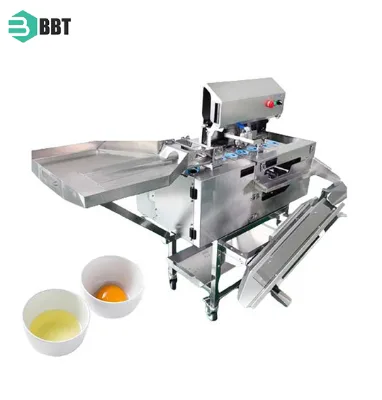
$3740.98 - $6151.83
MOQ: 1 Minimum
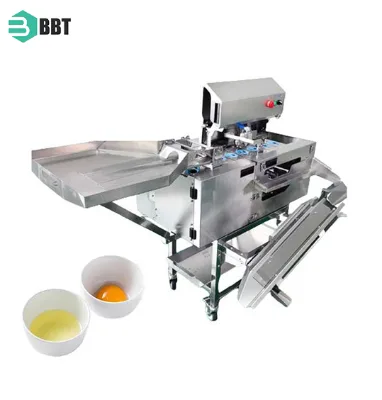


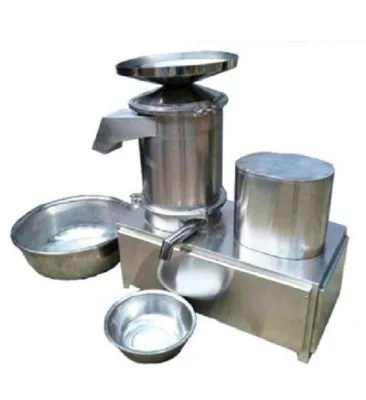
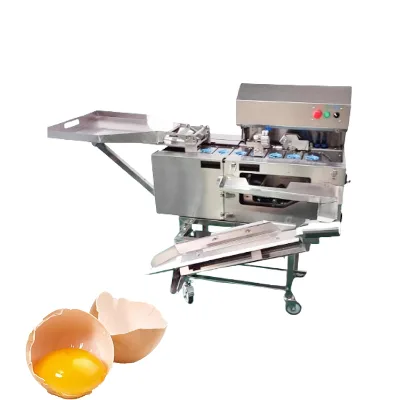
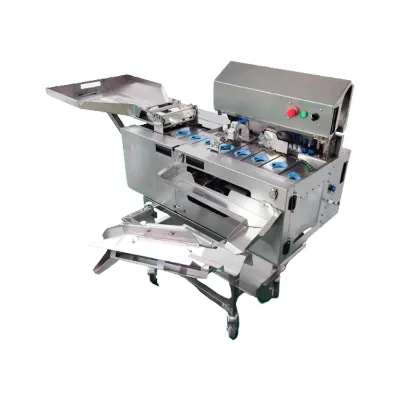


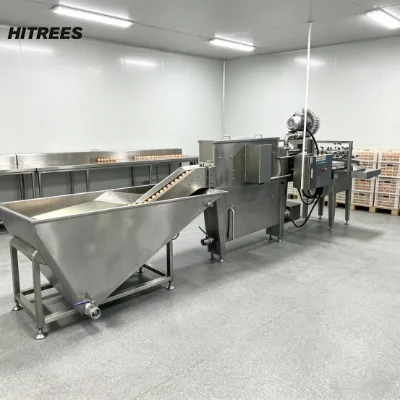
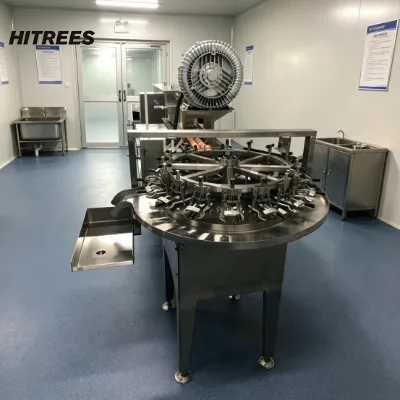


High Automation Egg Separating Machine / Egg Yolk Separator Machine Price
$2289.00 - $3389.00
MOQ: 1 Sets
Comprehensive Sourcing Guide
Strategic Sourcing Guide for Sustainable Melamine Egg Separators
Understanding the Technical Landscape of Egg Separation Equipment
When evaluating the market for egg separation machinery, buyers must first distinguish between the material composition of the equipment and the raw material it processes. The core keyword "Sustainable Melamine Egg Separator" presents a specific technical challenge because the provided market data indicates that the dominant construction material for high-capacity units is stainless steel, specifically grades 304 and 201. In the observed product listings, the internal processing chambers are consistently constructed from 304 stainless steel, while external frames often utilize 201 stainless steel. This distinction is critical for procurement because 304 stainless steel offers superior corrosion resistance and hygiene, which are non-negotiable for food processing applications involving eggs, duck eggs, and goose eggs.
The functionality of these machines is defined by their ability to separate egg shells from egg liquid efficiently. The observed specifications highlight a "Big Processing Capacity" and "Fully Automatic" operation as primary features. For instance, specific models like the EG-2 and HT-EG5000L demonstrate capacities ranging from 600 pieces per hour to over 5,400 pieces per hour. The power requirements vary significantly based on the automation level and throughput; observed power ratings include 0.3kw, 2.2kw, and 2.4kw units. Voltage configurations are flexible, with many units supporting 380V, 220V, or dual voltage options (220/380V), often with customization available to match local grid standards.
It is important to note that while the search term includes "melamine," the supplied product facts do not confirm melamine as a structural material for the separator mechanism itself. Melamine is typically a resin used in tableware, whereas food processing machinery requires materials that can withstand continuous mechanical stress and rigorous cleaning. Buyers should verify if the term "melamine" in their search refers to a specific coating, a component of the separation tray, or a misinterpretation of the material grade. The safest procurement path relies on the verified data: stainless steel construction (304 inside, 201 outside) ensures durability and food safety compliance. The physical dimensions of these units also vary, with packing sizes observed around 1100980630mm and standard footprints like 9005001000mm, necessitating careful planning for factory floor layout.
Compliance, Certification, and Material Verification
Navigating the compliance landscape for industrial food machinery requires a rigorous approach to verifying certifications and material standards. The observed market data indicates that suppliers are "Providing" certifications, with specific mentions of CE marking and ISO-related standards. The CE certification is a critical baseline for machinery operating within European markets, ensuring that the equipment meets health, safety, and environmental protection requirements. However, the data also lists "ISOCustomized:Customized," which suggests that ISO certification status may vary by supplier or require specific customization requests. Buyers must not assume that every unit listed automatically carries ISO 9001 or FSC certification; these should be treated as attributes to be explicitly requested and verified rather than inherent features.
Material verification is the cornerstone of sustainability and safety in this sector. The supplied facts explicitly state that the raw material for the machine's construction is "304 Stainless Steel" for internal components and "201 Stainless Steel" for external parts. This distinction is vital because 304 steel is the industry standard for food contact surfaces due to its resistance to acidic foods and ease of cleaning. If a buyer is specifically seeking "melamine" components, they must clarify if this refers to a specific part of the separation mechanism or if they are actually looking for a different type of equipment entirely. The observed data suggests that the primary sustainable attribute comes from the longevity and recyclability of the stainless steel construction rather than the use of melamine resins.
Furthermore, the sourcing guide must address the "Automatic Grade" of the machinery. The market offers both "Automatic" and "Semi-Automatic" grades. The fully automatic units, such as the HT-DKFL600, are designed for high-volume production lines, whereas semi-automatic options may suit smaller operations. The certification status for these different grades may differ. Buyers should request a certificate of conformity for the specific model they intend to purchase, ensuring that the material grade (304 vs. 201) matches the contractual agreement. The "Mild Processing" classification observed in some listings suggests that the machinery is designed for gentle handling of the eggs, which is essential for maintaining the integrity of the egg liquid and minimizing shell fragments.
Cost Drivers and Pricing Structures in the Market
The financial landscape for purchasing egg separation equipment is influenced by several distinct cost drivers, primarily related to capacity, automation level, and material composition. The observed price range in the market spans from $899 to $15,000 USD. This wide variance is not arbitrary; it correlates directly with the machine's throughput capabilities and the complexity of its engineering. Lower-priced units, likely in the $899 to $2,000 range, typically correspond to smaller capacity models with lower power consumption (e.g., 0.3kw) and potentially semi-automatic operation. In contrast, the upper end of the price spectrum, approaching $15,000, aligns with high-capacity fully automatic systems capable of processing 5,000 to 8,000 pieces per hour, featuring robust 304 stainless steel construction and advanced control systems.
Power consumption is a significant operational cost driver. The data shows power ratings ranging from 0.3kw to 2.4kw. While a 0.3kw unit is energy-efficient for small batches, a 2.4kw unit offers significantly higher throughput. Buyers must calculate the total cost of ownership (TCO) by factoring in electricity costs against the volume of eggs processed. A machine with a higher upfront cost but greater efficiency and speed may yield a lower cost per unit of processed egg over time. Additionally, the "Customized" nature of the voltage and power source can impact the final price. Units requiring specific voltage adaptations (e.g., converting 380V to 220V or vice versa) or custom power configurations may incur additional engineering fees.
The Minimum Order Quantity (MOQ) is another critical financial factor. The observed data indicates a highly flexible MOQ of 1 set for all listed models. This low barrier to entry allows small and medium-sized enterprises (SMEs) to enter the market without committing to large inventory volumes. However, buyers should be aware that while the MOQ is low, the "Delivery Time" ranges from 3 to 10 working days, which can affect cash flow and production planning. The packaging type, described as "Export Wooden Case Packing" or "Fumigation-Free Wooden Case," also adds to the logistics cost. Fumigation-free packaging is often preferred for international shipping to avoid customs delays, but it may come at a premium compared to standard wooden cases.
Typical Applications and Production Scenarios
The versatility of egg separation equipment extends across various food production sectors, though the primary application remains the separation of egg shells from egg liquid for further processing. The observed product data explicitly lists applications for "Biscuit" and "Donut" production, indicating that these machines are integral to the manufacturing of baked goods that require large quantities of egg liquid. Beyond these specific items, the machinery is designed to handle "Eggs/Duck Eggs/Goose Eggs," making it suitable for a diverse range of poultry products. This versatility is particularly valuable for suppliers who process multiple types of eggs or who operate in regions where duck and goose eggs are common culinary staples.
The capacity of the machine dictates its suitability for different production scenarios. For small-scale operations, such as artisanal bakeries or local food processing plants, a unit with a capacity of 600 pieces per hour (like the EG-2 model) may be sufficient. This capacity allows for a steady, manageable flow of egg liquid without the need for massive storage or complex downstream processing. Conversely, large-scale industrial facilities require the high-throughput capabilities of models like the HT-EG5000L, which can process up to 5,400 to 8,000 pieces per hour. These high-capacity units are essential for commercial egg processing plants that supply large retail chains or food service distributors.
The "Mild Processing" feature observed in the specifications is particularly relevant for applications where the quality of the egg liquid is paramount. In the production of delicate confectioneries or high-end baked goods, the integrity of the egg white and yolk is crucial. A machine that separates shells gently without breaking the yolk or introducing shell fragments ensures a higher quality end product. The fully automatic nature of these machines also reduces the risk of human error and contamination, which is a significant advantage in large-scale production environments. Buyers should match the machine's capacity and processing style to their specific production volume and quality requirements to ensure optimal performance.
Supplier Evaluation and Operational Due Diligence
Evaluating suppliers for egg separation equipment requires a focus on technical competence, logistical reliability, and transparency regarding product specifications. The observed data indicates that the majority of suppliers are located in Henan, China (Mainland), a region known for its manufacturing base. While this provides access to a wide range of options, buyers must conduct thorough due diligence to ensure the supplier can meet their specific needs. Key evaluation criteria include the ability to provide detailed technical drawings, the clarity of the "Customized" options offered, and the transparency of the certification process.
One of the most critical aspects of supplier evaluation is the verification of the "Customized" attributes. The data shows that voltage, power, and even the mold type (e.g., Eg-2) can be customized. Buyers should request a detailed specification sheet that outlines exactly what can be customized and what the lead time implications are. The "Delivery Time" of 3-10 working days is a strong indicator of a responsive supply chain, but buyers must confirm if this timeline applies to customized orders or standard stock items. Additionally, the "Net Weight" and "Packing Size" of the units (e.g., 160 Kg, 1100980630mm) are essential for logistics planning. Buyers should verify that the supplier can provide accurate shipping dimensions and weight to avoid unexpected freight costs.
The "Automatic Grade" and "Power Source" are also key indicators of a supplier's technical maturity. A supplier offering both "Automatic" and "Semi-Automatic" options demonstrates a broader range of expertise. Buyers should inquire about the after-sales support structure, including the availability of spare parts and technical assistance. The "Fumigation-Free Wooden Case" packaging is a positive sign of a supplier's attention to international trade standards, but buyers should confirm that this packaging meets the specific import regulations of their destination country. Finally, the "Certification" status should be verified directly with the supplier, ensuring that the CE marking and any other claimed standards are valid and applicable to the specific model being purchased.
Long-Term Procurement and Quality Assurance Strategies
Sustainable procurement of egg separation equipment extends beyond the initial purchase to encompass long-term operational efficiency and quality assurance. The use of 304 stainless steel for internal components is a strong indicator of long-term durability, as this material resists corrosion and is easy to sanitize. However, buyers must implement a robust quality control (QC) protocol to ensure that the equipment maintains its performance over time. This includes regular inspections of the separation mechanism, verification of the "Big Processing Capacity" claims, and monitoring of the "Power" consumption to detect any inefficiencies.
The "Customized" nature of the equipment means that long-term maintenance may require specific spare parts. Buyers should negotiate a maintenance agreement with the supplier that includes the supply of critical components, such as seals, motors, and separation trays. The "Mold" type (e.g., Eg-2) should be documented clearly to ensure compatibility with future replacements. Additionally, the "Automatic Grade" of the machine will influence the frequency of maintenance; fully automatic systems may require more frequent software updates and calibration checks compared to semi-automatic models.
Sustainability in the long term also involves energy efficiency and waste reduction. The observed power ratings (0.3kw to 2.4kw) suggest that energy consumption is a variable cost. Buyers should monitor the actual power usage against the rated power to ensure the machine is operating efficiently. Any deviation could indicate a need for maintenance or a potential issue with the "Power Source" connection. Furthermore, the "Seperating Egg Shell From Egg Liquid" function should be optimized to minimize waste. A well-maintained machine will ensure that the maximum amount of egg liquid is recovered, reducing the overall cost of production and minimizing environmental impact.
In conclusion, sourcing a sustainable egg separator requires a careful balance of technical verification, cost analysis, and supplier evaluation. By focusing on the verified attributes of stainless steel construction, clear certification standards, and flexible customization options, buyers can make informed decisions that align with their production goals and sustainability objectives. The wide range of capacities and power options available in the market ensures that there is a suitable solution for every scale of operation, from small artisanal bakeries to large industrial processing plants.
FAQs
What material is used for the internal processing chamber?
The internal processing chamber is constructed from 304 stainless steel to ensure superior corrosion resistance and hygiene. External frames typically use 201 stainless steel, and buyers should verify the specific grade for food contact surfaces before purchase.
Can the voltage be customized for local power grids?
Yes, voltage customization is acceptable for this equipment to match local standards. The units commonly support 380V or 220V, and buyers should confirm specific voltage requirements with the supplier to ensure compatibility with their facility.
What is the typical delivery time for these machines?
The standard delivery time ranges from 3 to 10 working days for most models. This timeline applies to standard configurations, though customized orders may require additional processing time depending on the specific modifications requested.
Which certification is provided for these egg separators?
CE certification is provided for these machines to ensure compliance with health and safety standards. While ISO certification is mentioned as available, buyers must explicitly request and verify the specific certification status for their chosen model.
How much does a fully automatic unit typically cost?
Prices for these units range from 899 to 15,000 USD depending on capacity and automation level. Higher-priced models offer greater throughput and fully automatic operation, while lower-cost options may have reduced capacity or semi-automatic features.
What is the minimum order quantity for these separators?
The minimum order quantity is one set for all listed models, allowing small businesses to purchase without bulk commitments. This low barrier to entry supports flexible procurement for various production scales without requiring large inventory investments.
Can the machine process duck eggs and goose eggs?
Yes, the equipment is designed to handle eggs, duck eggs, and goose eggs as raw materials. This versatility makes the machine suitable for diverse poultry processing operations that require separation of different egg types efficiently.