Source Sustainable Mica Powder for Coating, Paint, and Rubber
Compare 30 listings of Sustainable Mica Powder from verified Chinese suppliers. Buyers can evaluate specifications like mesh size, chemical composition, and packaging options for applications in building materials, paints, and coatings; compare the available evidence and request quotations based on your requirements.
Key considerations
Products List




Comprehensive Sourcing Guide
Sustainable Mica Powder Sourcing Guide
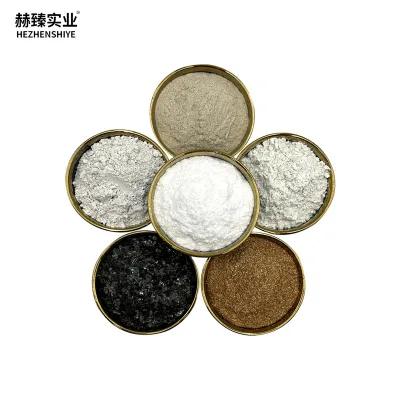
Procuring Sustainable Mica Powder requires a strategic approach that balances technical performance with ethical sourcing standards. Buyers must first define the specific application, whether it involves coatings, plastics, painting, or rubber manufacturing, as these sectors have distinct material requirements. The observed market signals indicate a wide range of customization options, including color variations such as black, white, and gold, which allows for tailored aesthetic and functional outcomes. Understanding these application-specific needs is the foundational step in selecting the right grade of muscovite mica.
Furthermore, the supply chain for mica powder often involves complex logistics, with observed delivery times ranging from five to twelve days and shipping durations extending up to twenty days. Buyers should account for these variables when planning production schedules. The product origin is predominantly China, with specific regions like Hebei being notable sources. This geographic concentration can influence both the availability of raw materials and the consistency of the final powder product, making it essential for procurement teams to evaluate regional supplier capabilities and logistical reliability.
Product Scope and Observed Listing Signals
The current market landscape for mica powder reveals a diverse array of product specifications tailored to industrial needs. Listings frequently highlight mesh sizes ranging from 325 to 1250, which directly impacts the fineness and dispersion properties of the powder in various formulations. Buyers will encounter products labeled with specific model numbers such as HZ-320147MICA and HZ-MI0013, indicating standardized industrial grades. These identifiers help in tracking batch consistency and ensuring that the purchased material meets the precise particle size requirements for high-quality end products.
Packaging and minimum order quantities (MOQ) are also critical signals in the sourcing process. Standard packaging often involves 25kg bags, though customizable options are available to suit different handling and storage needs. The observed MOQs start as low as 1kg, providing flexibility for small-scale testing or specialized projects. This variability allows buyers to scale their orders efficiently without committing to excessive inventory. Additionally, the availability of customization in both packaging and product attributes underscores the adaptability of suppliers to meet unique client specifications.
Technical Specifications to Verify
Verifying the chemical composition of mica powder is essential for ensuring product performance and safety. Key components such as SiO2, Al2O3, K2O, MgO, and Fe2O3 content must be confirmed through supplier documentation. For instance, observed data points to specific percentages for these oxides, which influence the powder's stability and reactivity. Buyers should request detailed chemical analysis reports to verify that the material meets their technical requirements, particularly for applications sensitive to impurities or specific elemental ratios.
Particle size distribution is another critical technical parameter that affects the final product's texture and finish. The standard mesh sizes of 325 to 1250 offer a range of fineness levels, but buyers must verify the exact distribution for their specific use case. Oil absorption rates, which depend on particle size, are also important for formulators working with coatings and paints. Ensuring that the powder's physical properties align with formulation needs prevents issues such as poor dispersion or inconsistent coloration in the final application.
Compliance and Safety Documentation
Compliance with international standards is a non-negotiable aspect of sourcing mica powder, particularly for applications in consumer goods and building materials. Buyers must ensure that suppliers provide relevant safety data sheets (SDS) and compliance certificates that attest to the material's safety profile. While some listings mention reach compliance, buyers should verify the current status and scope of such certifications to ensure they meet the regulatory requirements of their target markets. This due diligence helps mitigate legal risks and ensures that the product can be legally sold and used.
Additionally, the sustainability aspect of mica sourcing is increasingly important. Buyers should inquire about the ethical sourcing practices of their suppliers, including labor conditions and environmental impact. Although specific certifications may not be explicitly listed, understanding the supplier's commitment to sustainable practices is crucial. This includes verifying that the mica is sourced from responsible mines that adhere to environmental regulations and fair labor standards, thereby supporting the broader goal of sustainable procurement.
Cost Drivers and Commercial Terms
Several factors influence the cost of mica powder, including raw material quality, particle size, and customization requirements. Higher mesh sizes and specific color variations, such as gold or black, may command premium prices due to the additional processing involved. Buyers should also consider the impact of packaging and shipping costs on the total landed cost. Customizable packaging options, while convenient, may incur additional fees, so it is important to balance these needs with budget constraints.
Commercial terms such as MOQ and delivery times also play a significant role in cost management. Lower MOQs offer flexibility but may come with higher per-unit costs, while larger orders can benefit from economies of scale. Delivery times, ranging from five to twelve days, affect inventory management and cash flow. Buyers should negotiate favorable terms that align with their production schedules and financial planning, ensuring that they can maintain a steady supply without excessive stockpiling or production delays.
Supplier Qualification and Quality Control
Qualifying suppliers involves a thorough assessment of their production capabilities and quality control processes. Buyers should verify the supplier's ability to maintain consistent product quality across batches, particularly regarding particle size and chemical composition. Requesting samples for testing is a crucial step in this process, allowing buyers to evaluate the material's performance in their specific applications. Suppliers with a reputation for high-quality production and fast turnaround times are preferable, as they can support agile manufacturing processes.
Quality control measures should also include regular audits and inspections to ensure ongoing compliance with agreed-upon standards. Buyers should establish clear communication channels with suppliers to address any quality issues promptly. Additionally, understanding the supplier's port of shipment, such as Tianjin, can help in planning logistics and reducing transit times. By selecting suppliers with robust quality control systems, buyers can minimize the risk of receiving substandard materials and ensure the reliability of their supply chain.
Long-Term Procurement Checks
Establishing long-term procurement relationships requires continuous monitoring and evaluation of supplier performance. Buyers should regularly review key performance indicators such as delivery reliability, product consistency, and responsiveness to issues. This ongoing assessment helps identify potential risks and opportunities for improvement in the supply chain. By maintaining open communication and fostering collaborative relationships, buyers can work with suppliers to address challenges and enhance overall supply chain resilience.
Furthermore, staying informed about market trends and regulatory changes is essential for long-term success. Buyers should periodically reassess their sourcing strategies to ensure they align with evolving sustainability standards and market demands. This includes exploring new suppliers or alternative materials that may offer better value or compliance benefits. By adopting a proactive approach to procurement, buyers can secure a stable and sustainable supply of mica powder that supports their business objectives and contributes to their overall sustainability goals.
FAQs
What mesh sizes are available for Sustainable Mica Powder?
Sustainable Mica Powder is supplied in fineness grades ranging from 325 mesh to 1250 mesh, so buyers can match particle size to coating, plastics, painting, or rubber applications. Finer grades near 1250 mesh suit smooth finishes and pearlescent effects, while 325 mesh works well for fillers, bricks, and general building material uses where economy matters more than texture.
How is the mica powder packed for shipment?
Standard packing is 25 kg per bag, with plastic bag options available, and packaging can be customized to your requirements. Because bags are shipped from Tianjin, China, buyers should factor port logistics into planning. Delivery typically takes 5 to 12 days, and larger orders are palletized, with a listed single package size of 64X58X60 cm.
What is the minimum order quantity for mica powder?
The minimum order quantity is 1 kg, which lets buyers test color, mesh grade, and performance before committing to larger volumes. Small trial quantities are priced higher per kilogram, while bulk purchases improve unit economics. Once a grade is approved, orders move to standard 25 kg bag packing or customized packaging as agreed with the supplier.
Which chemical composition details should buyers verify before ordering?
Review the oxide composition listed for the grade you need: SiO2 at 37.8%, Al2O3 at 37.7%, K2O at 9.4%, MgO at 4.8%, Fe2O3 at 3.6%, and CaO at 1.2%. These figures indicate whiteness, heat resistance, and suitability for coatings or plastics. Confirm that the batch you purchase matches the specification sheet for your application.
Can mica powder be customized in color and packing?
Yes, customization is available. Colors include black, white, gold, and additional pigmented shades such as violet, yellow, orange, blue, red, green, and brown. Packing can also be tailored, from standard 25 kg bags to plastic bag formats suited to your filling line. Discuss color matching and packaging details with the supplier before placing a bulk order.
How fast can Sustainable Mica Powder orders be delivered?
Listed delivery time is 5 to 12 days depending on order size and customization level, with shipping noted at around 20 days for some arrangements and production described as very fast. Confirm the schedule when ordering, since custom colors or non-standard packing may add processing time. Plan arrival at Tianjin port into your inbound logistics timeline.
Which applications is this muscovite mica powder suitable for?
This muscovite-type mica powder is applied in coatings, plastics, painting, and rubber, and is also used as a building material additive in bricks and paint. Particle size determines oil absorption, so finer meshes demand more binder in formulations. Choose 325 to 1250 mesh grades based on whether your process prioritizes reinforcement, barrier properties, or decorative effect.
What model numbers and standards identify listed mica powder products?
Listed products carry model numbers such as HZ-320147MICA, HZ-MI0013, and HZ-11254MP under the HZ brand, with particle size standards from 325 to 1250 mesh. Origin is Hebei, China, with shipment through Tianjin port. When requesting quotations, reference the model number and mesh grade together so suppliers quote the exact specification your formulation requires.