Source Swimming Pool Sand Filter with 2-Speed Pump for Home, Villa, Spa
Compare 30 swimming pool sand filter with 2-speed pump options from verified suppliers. Browse specifications including flow rates, tank volumes, and pressure ratings for commercial and residential applications.
Key considerations
Products List


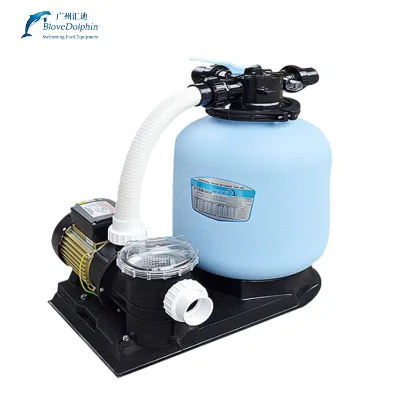


Factory Price Swimming Pool Sand Filter Pump Wholesale Swimming Pool Pump
$65.80 - $67.80
MOQ: 50 Pieces


Comprehensive Sourcing Guide
Strategic Sourcing Guide for Swimming Pool Sand Filters with Integrated Pump Systems
Understanding Technical Specifications and Performance Parameters
When sourcing a swimming pool sand filter equipped with a 2-speed pump, the primary objective is to align technical specifications with the specific hydraulic requirements of the target application. The market offers a diverse range of configurations, but the core component remains the sand filtration unit, which relies on physical treatment methods to purify water. The supplied data indicates that these units are predominantly constructed from High Density Polyethylene (HDPE), a material chosen for its durability and resistance to chemical corrosion in pool environments.
The filtration capacity is a critical variable that buyers must verify against their pool volume. The observed product attributes reveal a range of filter areas, specifically noted as 0.10, 0.13, 0.16, 0.23, 0.32, 0.40, and 0.50 square meters. These variations directly correlate with the design flow rates, which span from 4.50 to 25.00 cubic meters per hour. For a buyer, this means selecting a unit where the design flow matches the required turnover rate of the pool water. The sand weight required for optimal filtration is also a key specification, with observed ranges of 25kg up to 220kg depending on the model size, typically utilizing sand grain sizes between 0.5mm and 0.8mm.
The integration of the pump system introduces additional technical constraints. The observed pump options include motor-driven units with power ratings of 0.75HP, 1.0HP, 1.5HP, and 2.0HP. The 2-speed functionality is essential for energy efficiency, allowing for high-speed operation during the cleaning cycle and low-speed operation for continuous circulation. The maximum head pressure for these systems is observed to be less than 10 meters, which is a standard constraint for residential and light commercial applications. Furthermore, the operating environment is defined by a maximum working pressure of 36psi (2.5kg/cm²) and a maximum testing pressure of 58psi (4.0kg/cm²). It is vital to ensure that the selected pump and filter combination does not exceed these pressure limits, as exceeding the maximum working pressure can compromise the structural integrity of the HDPE tank and the valve assembly.
Compliance, Certification, and Safety Standards
Navigating the compliance landscape is a non-negotiable aspect of B2B procurement for pool equipment. The supplied context highlights specific certifications and standards that serve as markers of quality and safety. Buyers should prioritize suppliers who can provide documentation for CE certification, which is explicitly mentioned in the product attributes. Additionally, ISO certification is noted as a relevant standard, indicating adherence to international management system requirements.
The product standards observed in the data range from 450 to 700, though the specific nature of these numerical standards requires verification from the supplier. In the absence of a specific standard number in the general description, buyers must request the exact standard codes applicable to the specific model (e.g., WL-GB, P-CG, or WL-GMT/MMT/DMT series). The electrical components, specifically the pumps, operate on a voltage range of 220-240V. This is a standard frequency for many international markets, but buyers must confirm that the voltage rating matches the local grid infrastructure to prevent equipment failure or safety hazards.
Safety is further reinforced by the maximum operating water temperature limit, which is consistently listed as less than or equal to 50 degrees Celsius. This specification ensures that the HDPE material and the plastic clamp mechanisms used in the valve assembly do not degrade under thermal stress. When evaluating a supplier, procurement teams should verify that the product documentation explicitly states compliance with these temperature and pressure limits. Any deviation from these observed parameters should be treated as a red flag requiring immediate clarification. The presence of CE and ISO certifications suggests a baseline of quality control, but these should be validated against the specific batch of goods being purchased to ensure authenticity.
Cost Drivers and Pricing Structure Analysis
The pricing structure for swimming pool sand filters with 2-speed pumps is influenced by several distinct factors, primarily driven by the physical specifications of the unit. The observed price range in the market spans from 1 USD to 2400 USD, a vast disparity that reflects differences in capacity, material quality, and included accessories. The primary cost driver is the filter area and the corresponding tank volume. Larger units, such as those with a filter area of 0.50 square meters and a tank volume of 0.42 cubic meters, naturally command a higher price point than smaller residential models with 0.10 square meters of filter area.
The inclusion of the pump is another significant cost component. The motor power, ranging from 0.75HP to 2.0HP, directly impacts the manufacturing cost and, consequently, the final price. A 2.0HP pump with 2-speed capabilities is more complex and expensive than a basic single-speed unit. Additionally, the weight of the tank and the valve assembly contributes to shipping costs, which are often factored into the final landed cost. The observed tank weights range from 4.5kg to 18kg, while the valve weight is consistently noted around 3kg.
The packaging method also plays a role in cost and logistics. The data indicates three distinct packaging types: standard package, carton, and plywood. Plywood packaging is typically used for larger, heavier units to prevent damage during long-distance shipping, adding to the overall cost. The minimum order quantity (MOQ) observed ranges from 1 to 100 units. Buyers purchasing in bulk may negotiate better pricing, but the base unit cost will still be dictated by the specifications mentioned above. It is crucial for buyers to understand that the lowest price in the observed range likely corresponds to the smallest, most basic configuration, while the upper end of the range reflects high-capacity commercial-grade systems with robust pumps and specialized packaging.
Typical Applications and Usage Scenarios
The versatility of sand filter systems allows them to be deployed across a wide spectrum of applications. The product attributes explicitly list suitability for Game Pools, Commercial Pools, Spa Pools, and Inflatable Pools. This indicates that the technology is scalable from small, temporary setups to large, permanent installations. For residential users, the usage is often categorized as "Home" or "Villa," where the primary goal is maintaining water clarity and hygiene in a private setting. The compact nature of smaller models, with tank volumes as low as 0.06 cubic meters, makes them ideal for these environments.
In the commercial sector, the requirements shift towards higher flow rates and durability. The observed design flows of up to 25 cubic meters per hour are suitable for larger commercial pools where rapid water turnover is necessary to handle high bather loads. The "Commercial Pool" designation in the attributes suggests that these units are engineered to withstand continuous operation. Furthermore, the usage for "Purifying Water" is a universal requirement, but the scale of purification varies. For spa pools, the filtration system must be compact yet efficient, often utilizing the smaller filter areas and lower flow rates observed in the data.
The installation method is another factor influencing application suitability. The data shows both Top-Mount and Side-Mount configurations. Top-Mount units are generally easier to install in above-ground pools or locations with limited vertical clearance, while Side-Mount units might be preferred for in-ground pools where space constraints dictate a different orientation. The ability to customize the product is also highlighted, allowing suppliers to tailor the system to specific pool geometries or user requirements. Buyers should match the application type with the specific model series (e.g., WL-GB for general use, P-CG for specific configurations) to ensure optimal performance.
Supplier Evaluation and Quality Control Protocols
Selecting the right supplier requires a rigorous evaluation process that goes beyond the initial product listing. Since the product origin is identified as China, buyers must implement robust quality control measures to ensure consistency. The first step is to verify the supplier's ability to provide the documented certifications, specifically CE and ISO. Buyers should request copies of these certificates and verify their validity with the issuing bodies. The presence of a "Customized: Yes" attribute suggests that the supplier has the flexibility to modify products, but this flexibility must be managed through clear quality agreements.
Quality control should focus on the critical components: the HDPE tank, the multi-port valve, and the 2-speed pump. Buyers should request test reports that confirm the maximum working pressure of 36psi and the maximum testing pressure of 58psi. These tests are essential to prevent leaks or catastrophic failures during operation. The pipe size, consistently noted as 1.5 inches, must be verified to ensure compatibility with existing pool plumbing. Any deviation in pipe size can lead to installation issues and reduced flow efficiency.
The supplier's ability to handle the specific packaging requirements is also a quality indicator. For larger units requiring plywood packaging, the supplier must demonstrate experience in securing heavy items to prevent damage during transit. The observed tank weights and dimensions (e.g., 13201340985mm) require precise handling. Buyers should ask for photos of previous shipments and packaging examples to assess the supplier's logistical capabilities. Additionally, the "Customization" feature should be accompanied by a clear process for design approval and prototyping to ensure that any modifications meet the buyer's specifications without compromising the structural integrity of the unit.
Long-Term Procurement and Operational Considerations
Sourcing a swimming pool sand filter with a 2-speed pump is not just a one-time transaction but the beginning of a long-term operational relationship. The durability of the HDPE material and the reliability of the 2-speed pump are critical for minimizing maintenance costs over the lifespan of the equipment. The maximum operating water temperature of 50 degrees Celsius is a key parameter that buyers must consider in their operational planning. In regions with high ambient temperatures or heated pools, this limit must be strictly monitored to prevent material degradation.
The 2-speed pump offers significant long-term benefits in terms of energy efficiency. By allowing the pump to run at a lower speed for circulation, buyers can reduce electricity consumption compared to single-speed systems. However, this benefit is contingent on the pump's reliability. Buyers should inquire about the expected lifespan of the motor and the availability of replacement parts. The "Motive Force: Pressure" attribute indicates that the system relies on the pump to drive water through the filter, making the pump's performance central to the system's success.
Inventory management is another long-term consideration. The MOQ range of 1 to 100 units allows for flexibility, but buyers should plan for spare parts, such as valves and sand, to ensure continuity of operation. The valve weight of 3kg and the tank weights ranging up to 18kg suggest that replacement parts are substantial and may require specific shipping arrangements. Buyers should establish a relationship with the supplier for a steady supply of consumables and spare parts to avoid downtime. Finally, the "Customization" aspect should be leveraged for future expansions or modifications, ensuring that the procurement strategy remains adaptable to changing pool requirements or regulatory standards. By focusing on these long-term factors, buyers can secure a reliable and cost-effective filtration solution that meets their operational needs for years to come.
FAQs
What is the maximum working pressure for these filters?
The maximum working pressure is 36psi or 2.5kg/cm2. This limit applies to the plastic clamp assembly and ensures the High Density Polyethylene tank remains structurally sound during operation without risking leaks or failure.
Which pipe size is standard for these sand filter units?
The standard pipe size is 1.5 inches. This dimension is consistent across the WL-GB and P-CG series models to ensure compatibility with typical pool plumbing systems and maintain optimal water flow rates.
Can I find customized options for these pool filtration systems?
Yes, customization is available for these sand filter units. Suppliers can adjust specifications to meet specific requirements, allowing buyers to tailor the product for different pool types like commercial or residential applications.
What certifications are required for these pool filter products?
These products typically hold CE and ISO certifications. Buyers should verify that the specific batch includes valid documentation for these standards to ensure compliance with international safety and quality management requirements.
How does the pump power affect the design flow rate?
Pump power ranging from 0.75HP to 2.0HP directly influences the design flow rate. Higher horsepower motors enable flow rates up to 25 cubic meters per hour, matching the needs of larger commercial or villa pools.
What is the maximum operating water temperature limit?
The maximum operating water temperature is 50 degrees Celsius. Exceeding this limit may degrade the High Density Polyethylene material or compromise the plastic clamp mechanisms used in the valve assembly.
Which installation types are available for these sand filters?
Both Top-Mount and Side-Mount installation types are available. Buyers should select the configuration that best fits their pool geometry, with top-mount units often preferred for above-ground setups and side-mount for in-ground pools.