Source Table Cloth Options for Hotels, Homes, and Events
Explore 30 Table Cloth listings from Chinese manufacturers. Compare features like waterproofing, material types including polyester and cotton, and customization options for hotel, home, and outdoor use. Request samples and quotes for bulk orders; compare the available evidence and request quotations based on your requirements.
Key considerations
Products List


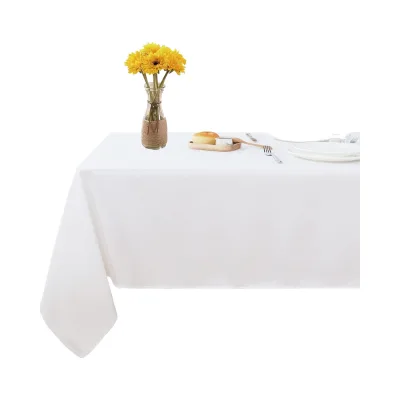
Modern Style Tablecloth Woven Polyester Tablecloth Rectangular Tablecloth
$1.86 - $2.07
MOQ: 1000 pieces


Comprehensive Sourcing Guide
Table Cloth Sourcing Guide
Buyers must first distinguish between disposable and reusable tablecloth categories, as the supplied data reveals a split market offering both single-use and durable options. The observed product attributes indicate materials ranging from polyester to cotton, with specific listings noting features like waterproofing, high-temperature resistance, and anti-static properties. This distinction is critical because a disposable item designed for a single event differs fundamentally in cost structure and performance from a reusable textile intended for repeated machine washing or dry cleaning.
Procurement strategies should also account for the wide variance in customization capabilities observed in the listings. While some products offer standard dimensions like 90 inches by 60 inches, others support fully customized sizes and designs based on customer requests. Buyers need to verify if the supplier can accommodate specific edge treatments such as binding, hemming, or overlocking, as these finishing details significantly impact the final aesthetic and durability of the tablecloth for high-end hotel or wedding applications.
Product Scope and Observed Listing Signals
The market signals indicate a broad spectrum of applications, including home use, hotel dining, outdoor events, and even specialized uses like car covers or travel accessories. Listings explicitly mention usage scenarios ranging from weddings and parties to office environments and sports events, suggesting that the product scope extends beyond simple dining surfaces. Buyers should carefully map their specific operational needs against these observed applications to ensure the selected tablecloth meets the environmental demands of the intended venue, whether it requires oilproofing for restaurants or weather resistance for outdoor gatherings.
Price and minimum order quantity (MOQ) data show significant volatility, with observed prices ranging from $0.06 to $1550 and MOQs varying from 1 to 22,000 pieces. This wide range suggests that buyers can source either low-volume, high-value custom items or high-volume, low-cost standard goods. It is essential to analyze the relationship between the listed price and the material composition, such as the 20-260 GSM weight range, to understand the value proposition. A lower price point often correlates with lighter weights or disposable nature, whereas higher costs may reflect heavier cotton blends or complex customization features.
Technical Specifications to Verify
Technical verification must begin with material composition, as the data presents conflicting attributes where some items are polyester while others are cotton. Buyers should explicitly confirm the fiber content to ensure compatibility with their cleaning protocols, as the listings include contradictory cleaning methods like "water wash" alongside "disposable" usage. Verifying the gram weight is equally important, with observed ranges from 50-150g/PCS to 20-260GSM, as this directly influences the drape, opacity, and perceived quality of the fabric for the specific event type.
Buyers must also scrutinize the technical features listed, such as waterproofing, heat resistance, and anti-static properties, as these are not universally present across all listings. Some products are explicitly marked as "Not Waterproof" while others claim high-temperature resistance, creating a potential risk if the specification is not clearly defined in the purchase order. Additionally, the production techniques, including printed versus knitted methods, and the layer count, which is noted as 1 Ply, must be confirmed to ensure the product meets the functional requirements for the intended application.
Compliance and Safety Documentation
While the provided data mentions low-confidence background standards like OEKO-TEX and REACH, buyers cannot assume these certifications are present without explicit verification. The absence of confirmed certification status in the high-confidence facts means that procurement teams must request current test reports to validate that the textiles are free from harmful substances, particularly for products intended for food contact or close human interaction. Relying on general market knowledge is insufficient; specific documentation proving compliance with local safety regulations is mandatory before finalizing any order.
Safety documentation should also address the specific features claimed, such as the "Eco-friendly" designation or "Disposable" nature of certain items. Buyers need to ensure that the materials used, whether polyester or cotton, align with the environmental claims made by the supplier, especially if the product is marketed as a sustainable solution. For disposable items, verifying the biodegradability or recyclability of the packaging and the material itself is crucial to meet corporate sustainability goals and avoid potential regulatory issues regarding waste disposal.
Cost Drivers and Commercial Terms
Cost structures are heavily influenced by the level of customization and the complexity of the production lead times observed in the data. Listings indicate a sampling lead time of 7 days and a production lead time of 25-30 days, which can impact the overall project timeline and inventory planning. Buyers should factor in the costs associated with custom designs, logos, and specific sizes, as these variables often drive up the unit price compared to standard, off-the-shelf items with fixed dimensions like 90 inches by 60 inches.
Commercial terms must also account for the wide range of MOQs, which can start as low as 1 piece or go up to 22,000 pieces. This variability allows for flexibility but requires careful negotiation to balance inventory costs with unit pricing. Buyers should clarify whether the supplier offers free samples, as noted in the data, and understand the cost implications of different packing methods, such as standard export packing versus OPP bags. Understanding these terms is essential for calculating the total landed cost and ensuring the order fits within the budget constraints.
Supplier Qualification and Quality Control
Supplier qualification should focus on their ability to handle the diverse customization requests observed, such as OEM services and logo printing. The data confirms that OEM is welcome and samples are available, which are positive indicators of a supplier's flexibility. However, buyers must verify the supplier's capacity to maintain consistency across large orders, especially given the wide range of observed MOQs and the potential for varying quality in different material types like cotton versus polyester.
Quality control protocols must be established to address the conflicting attributes found in the listings, such as items marked as both "Waterproof" and "Not Waterproof." Buyers should implement a rigorous inspection process that includes checking the edge treatments, verifying the gram weight, and testing the claimed features like heat resistance and oilproofing. Establishing clear acceptance criteria based on the specific product model and technical specifications is vital to prevent receiving goods that do not meet the operational requirements of the intended use case.
Long-Term Procurement Checks
Long-term procurement success depends on maintaining a consistent supply chain that can adapt to changing market demands and product specifications. Buyers should monitor the supplier's ability to deliver on the stated production lead times of 25-30 days and ensure that the quality remains stable over multiple orders. Regular audits of the production process and material sourcing are necessary to verify that the supplier continues to meet the required standards for safety, durability, and customization capabilities.
It is also critical to track the evolution of product attributes and market trends to ensure the tablecloths remain relevant for future applications. As the market offers products for various seasons and age groups, buyers should periodically review the product range to ensure it aligns with current consumer preferences and operational needs. Building a strong relationship with the supplier allows for better communication regarding potential changes in material availability, pricing, or regulatory requirements, ensuring a resilient and responsive supply chain.
FAQs
What materials are available for table cloths?
Table cloths are available in polyester and cotton materials. These options support various customization needs and feature properties like waterproofing or oilproofing depending on the specific product model selected for your requirements.
Can I customize the size and design of table cloths?
Yes, customization is available for size, design, and logo. You can request specific dimensions like 90 inches by 60 inches or choose from various colors and patterns to match your event or business branding needs.
What are the lead times for sampling and production?
Sampling lead time is typically 7 days, while production lead time ranges from 25 to 30 days. These timelines apply to orders where customization is requested and depend on the specific product model and order volume.
Which features do these table cloths offer?
Features include waterproof, high temperature-resistant, anti-static, and oilproof properties. Some models are disposable while others are reusable with cleaning methods like machine wash or dry clean, suitable for home, hotel, or outdoor use.
What is the minimum order quantity for table cloths?
The minimum order quantity varies by product, ranging from 1 piece up to 22,000 pieces. Specific models may require a minimum of 1,000 pieces, so check the individual product specifications for exact MOQ requirements.
Are free samples available for table cloths?
Free samples are available for many Table Cloth products. This allows buyers to verify quality and features before placing a larger order, provided the specific product listing includes this option for sampling purposes.
Where are these table cloths manufactured?
These table cloths originate from China. The products are manufactured by various suppliers who offer OEM services and can provide standard export packing for international shipping to meet global demand.