Source Taiwan Jacquard Lace Fabric for Clothing Home Textiles Garments
Explore 30 listings of Taiwan Jacquard Lace Fabric suitable for clothing, home textiles, and garments. Buyers can compare specifications like width, material, and packing options to find the right supply.
Key considerations
Products List


Lace Fabric with Embroidered Pattern and Flower for Garment Women Dress
$1.87 - $1.95
MOQ: 1000 Meters


Yigao Textile Clothing Wedding Dress Textile Fabric Sequined Lace Fabric
$2.20 - $2.35
MOQ: 200 Meters


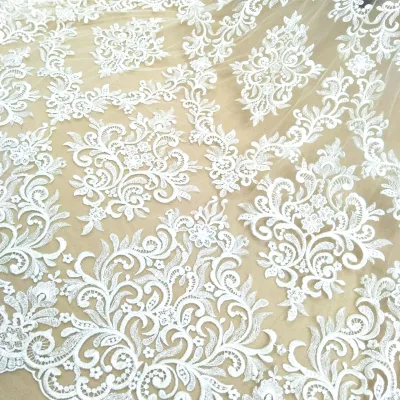
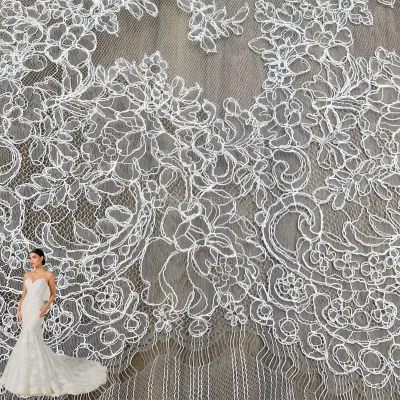


$2.00 - $5.00
MOQ: 50 Meters


Comprehensive Sourcing Guide
Strategic Sourcing Guide for Taiwan Jacquard Lace Fabric
Understanding the Technical Landscape of Jacquard Lace
When sourcing jacquard lace fabric, buyers must first distinguish between the specific weaving technologies that define the material's structure and aesthetic. The market offers a diverse range of lace types, including warp knitting lace, knitted lace, and traditional jacquard fabrics. In the context of high-volume procurement, the distinction between "Embroidered Lace" and "Knitted Lace" is critical, as each serves different structural needs. Embroidered lace often features raised patterns created through stitching, while knitted lace is formed by interlocking loops, offering distinct elasticity and drape characteristics.
The core keyword "Taiwan Jacquard Lace Fabric" implies a specific origin and manufacturing capability, yet the available data reveals a complex mix of production origins, including China and Zhejiang. Buyers should verify the actual manufacturing location against the branding, as "Taiwan" in a search query may refer to the style or the trading entity rather than the physical production site. The technical specifications observed in the market include widths ranging from 58/60 inches to 148cm, with some standard widths listed as 150cm or 160cm. The fabric weight is another vital technical parameter, with observed ranges spanning from 10 to 200 GSM. This wide variance indicates that the market supplies everything from lightweight, sheer applications to heavier, structural textiles.
Material composition is equally significant. While the search term focuses on lace, the underlying fibers vary. Data indicates the presence of Polyester and Nylon as primary materials. Polyester is often favored for its durability and colorfastness, while Nylon provides superior elasticity and a softer hand feel. The production method also dictates the final finish; "Dyed" and "Yarn Dyed" processes are common, with some products listed as "Plain Dyed" or "Custon-Made" (Custom-Made). The pattern styles observed include Floral, Plain, and Jacquard designs, with customization available for specific client requirements. Understanding these technical variables is the first step in aligning supplier capabilities with product design needs.
Compliance, Certification, and Quality Verification
In the B2B textile sector, compliance is not merely a formality but a prerequisite for market access, particularly in regions with strict environmental and safety regulations. While the supplied context mentions high-confidence facts regarding product attributes, it also lists low-confidence background items such as CE certification, ISO9001:2000, and OEKO-TEX standards. Buyers must exercise caution when interpreting these mentions. The presence of these terms in general background data does not guarantee that every specific lot of fabric holds current certification.
Buyers should treat these certifications as verification targets rather than assumed attributes. For instance, OEKO-TEX is a globally recognized standard for testing textiles for harmful substances. If a buyer requires OEKO-TEX certification, they must request the specific test report for the batch in question, rather than relying on a general supplier claim. Similarly, ISO9001:2000 is a quality management standard; however, the "2000" version is outdated, and modern suppliers should ideally hold the ISO9001:2015 or newer iteration. The CE mark, while relevant for certain product categories, is less common for raw fabric unless it is intended for specific end-products like personal protective equipment.
The verification process should involve a rigorous audit of the supplier's quality management system. Buyers should request documentation that links the specific product model, such as F-M007266B or LF-117, to its corresponding test results. The data indicates that "Manual Process" steps exist, such as "Around," "Results," and "Code," which suggests human intervention in the finishing stages. This manual element can introduce variability, making consistent quality control essential. Buyers should establish clear acceptance criteria for color consistency, pattern alignment, and fabric integrity before placing orders.
Cost Drivers and Pricing Dynamics
The pricing structure for jacquard lace fabric is influenced by a combination of material costs, production complexity, and order volume. The observed price range in the market spans from $0.45 to $12 per unit, a significant variance that reflects differences in material quality, design intricacy, and production scale. The lower end of the spectrum likely corresponds to basic polyester or nylon fabrics with simple plain or standard jacquard patterns, produced in high volumes. The higher end of the price range typically involves custom designs, specialized yarn-dyed techniques, or fabrics with complex embroidery and lace crafts.
Minimum Order Quantity (MOQ) is a primary driver of unit cost. The observed MOQ range is broad, extending from 1 to 3,000 units. Suppliers offering an MOQ of 1 are likely catering to sample buyers or small-batch customizers, which inherently carries a higher per-unit cost due to setup inefficiencies. Conversely, orders approaching the 3,000-unit threshold benefit from economies of scale, allowing the supplier to amortize setup costs over a larger volume. Buyers must balance their inventory needs against their cash flow; ordering small quantities to test the market may result in higher unit costs, while committing to large volumes secures better pricing but increases inventory risk.
Additional cost factors include the customization level and packaging requirements. The data shows that packing can vary from "30-45yds/Roll" to "Plastic Membrane," "Woven Bag," or "5yds/Card." Custom packaging requests often incur additional charges. Furthermore, the "Custom-Made" color and design options add to the production complexity and cost. Buyers should request a detailed cost breakdown that separates material costs, labor, and overhead to understand the true value proposition of a supplier.
Typical Applications and End-Use Scenarios
Jacquard lace fabric serves a versatile array of applications, primarily falling into the categories of Clothing and Home Textiles. The specific application dictates the required technical properties, such as weight, elasticity, and pattern density. In the garment industry, the fabric is used for dresses, blouses, and lingerie, where the "Floral" and "Jacquard" patterns are particularly popular. The "Knitted Lace" and "Warp Knitting Lace" varieties are favored for their stretch and comfort, making them ideal for fitted garments. The "Embroidered Lace" option adds a decorative element suitable for high-end fashion or bridal wear.
For home textiles, the applications shift towards items like curtains, tablecloths, and upholstery. The "Plain" and "Jacquard" patterns are common in this sector, where durability and aesthetic consistency are paramount. The observed width of 58/60 inches is standard for garment applications, while widths up to 160cm may be required for larger home textile projects. The material choice also influences the application; Nylon is often preferred for its softness in intimate apparel, while Polyester is chosen for its resistance to wear in home furnishings.
The "Usage" field in the data explicitly lists "Garment," confirming the primary focus of the market. However, the "Applications" field also includes "Home Textiles," indicating a dual-purpose market. Buyers should ensure that the selected fabric meets the specific performance requirements of the end product. For example, a fabric intended for heavy-use upholstery must have a higher GSM and stronger weave than one intended for a summer dress. The "Style" of the fabric, such as "Yarn Dyed" or "Plain Dyed," also affects the final look and suitability for different design themes.
Supplier Evaluation and Selection Criteria
Selecting the right supplier for jacquard lace fabric requires a multi-faceted evaluation process that goes beyond price and basic specifications. Buyers should prioritize suppliers who demonstrate transparency in their production capabilities and supply chain. The data indicates that production origins vary, with "China" and "Zhejiang" listed as key locations. While the search term mentions "Taiwan," the actual manufacturing may be located elsewhere. Buyers must verify the origin of the goods to ensure it aligns with their sourcing strategy and any trade compliance requirements.
Supplier reliability is another critical factor. The "Delivery Time" observed in the market ranges from 15 to 20 days, which is a standard lead time for textile production. However, this can vary based on order complexity and customization. Buyers should assess the supplier's ability to meet these timelines consistently, especially for rush orders. The "Manual Process" steps mentioned in the data suggest that human labor is involved in critical stages, which can lead to variability. A supplier with robust quality control measures and standardized manual processes will be better equipped to maintain consistency.
The supplier's flexibility in handling customization is also important. The data confirms that "Customization" is available, with options for custom colors, patterns, and packing. Buyers should evaluate the supplier's capacity to handle these requests efficiently. A supplier that offers a wide range of "Designs" and "Many" options may be better suited for clients with diverse needs. Additionally, the supplier's response to inquiries and their willingness to provide samples, such as the "White Sample" mentioned, are indicators of their customer service quality.
Quality Control and Long-Term Procurement Strategy
Implementing a robust quality control (QC) strategy is essential for maintaining product integrity in the long term. Given the manual processes involved, such as "Around," "Results," and "Code," buyers should establish clear QC checkpoints. These should include visual inspections for pattern alignment, color consistency, and fabric defects. The "Weight" range of 10-200 GSM requires precise measurement to ensure the fabric meets the specified requirements. Buyers should request pre-shipment inspections or utilize third-party inspection services to verify that the delivered goods match the agreed-upon specifications.
Long-term procurement considerations involve building a strategic partnership with the supplier. This includes negotiating favorable terms for volume discounts, securing priority production slots, and establishing clear communication channels. The "prod_standard" being "customized" suggests that the supplier is willing to adapt to specific client needs, which is a positive sign for long-term collaboration. Buyers should also consider the environmental impact of their sourcing decisions, especially if they aim to meet sustainability goals. While the data mentions low-confidence certifications like OEKO-TEX, buyers should actively seek suppliers who can provide verified eco-friendly credentials.
The "prod_packing" options, ranging from "Roll Packing" to "Woven Bag," should be standardized to minimize damage during transit. Consistent packaging ensures that the fabric arrives in optimal condition, reducing waste and rework. Finally, buyers should maintain a diverse supplier base to mitigate risks associated with supply chain disruptions. By diversifying sourcing channels and maintaining strong relationships with multiple suppliers, buyers can ensure a steady flow of high-quality jacquard lace fabric for their operations.
Comparative Analysis of Fabric Specifications
To assist buyers in making informed decisions, the following table summarizes the key technical specifications observed in the market. This comparison highlights the variability in product models, materials, and standards, providing a clear reference for procurement planning.
| Specification Category | Observed Range / Options | Notes for Buyers |
|---|---|---|
| Product Models | F-M007266B, LF-117, LM-066, LM-117, LF-156, LF-045 | Verify specific model numbers for design accuracy. |
| Material Composition | Polyester, Nylon | Nylon offers elasticity; Polyester offers durability. |
| Fabric Width | 58/60", 58/59", 148cm, 150cm, 160cm | Confirm width requirements for pattern matching. |
| Weight (GSM) | 10-200 GSM | Select based on end-use (sheer vs. structural). |
| Pattern Styles | Floral, Plain, Jacquard | Ensure pattern repeats align with design needs. |
| Color Production | Dyed, Yarn Dyed, Plain Dyed, Custom-Made | Verify colorfastness for dyed options. |
| Lace Craft | Embroidery Lace, Knitted Lace, Warp Knitting | Choose based on desired texture and stretch. |
| Packing Standards | 30-45yds/Roll, Plastic Membrane, Woven Bag, 5yds/Card | Custom packing may incur extra costs. |
| Lead Time | 15-20 Days | Standard range; confirm for custom orders. |
| MOQ | 1 - 3,000 Units | Lower MOQs increase unit cost; higher MOQs reduce it. |
This table serves as a foundational reference for buyers to navigate the complex landscape of jacquard lace fabric sourcing. By carefully evaluating these specifications against their specific project requirements, buyers can optimize their procurement strategy and ensure the delivery of high-quality products.
FAQs
What materials are used for Taiwan Jacquard Lace Fabric?
The fabric is primarily made from Polyester and Nylon. Polyester offers durability and colorfastness, while Nylon provides superior elasticity and a softer hand feel for intimate apparel.
Which patterns are available for Taiwan Jacquard Lace Fabric?
Available patterns include Floral, Plain, and Jacquard designs. Customization is available for specific client requirements, allowing buyers to select from many designs or request unique patterns.
Can Taiwan Jacquard Lace Fabric be customized for orders?
Yes, customization is available for colors, patterns, and packaging. Buyers can request custom-made colors and specific packing methods like rolls or woven bags to meet their unique needs.
What is the typical delivery time for Taiwan Jacquard Lace Fabric?
The standard delivery time ranges from 15 to 20 days. This lead time applies to production and shipping, though it may vary based on order complexity and customization levels.
How is Taiwan Jacquard Lace Fabric packed for shipment?
Packing options include 30-45 yards per roll, plastic membrane, woven bags, or 5 yards per card. Specific packing requests can be accommodated as per the customer's requirements.
What is the width range for Taiwan Jacquard Lace Fabric?
Widths typically range from 58 to 60 inches, with some standards reaching 148cm, 150cm, or 160cm. The specific width depends on the product model and intended application.