Source Telescopic Standing Christmas Plush Dolls for Retail, Gifts, and Events
Compare 30 listings for Telescopic Standing Christmas Plush Dolls designed for retail, corporate gifts, and holiday events. Buyers can review customization options, sample times, and shipping methods to find suitable manufacturers.
Key considerations
Products List


Wholesale High Quality Christmas Gift Santa Claus Plush Doll for Decoration
$0.37 - $2.37
MOQ: 500 Pieces
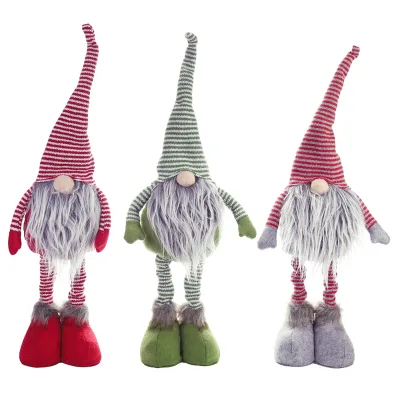


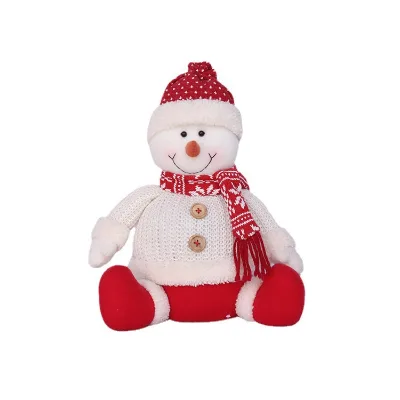


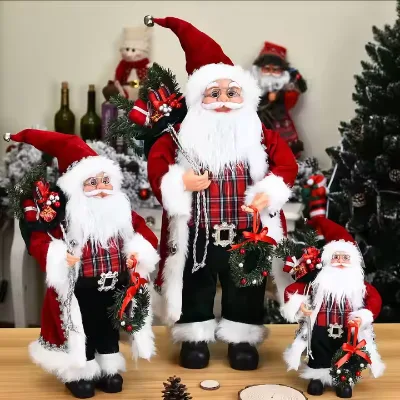
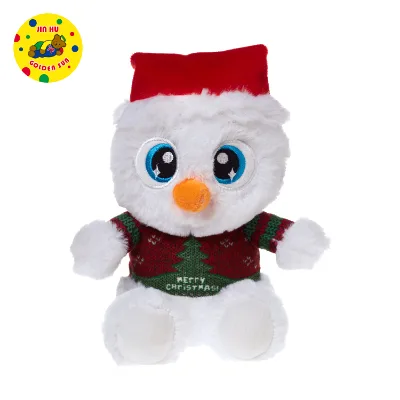

Best Seller Knitted Santa Standing Decorations Green Furrier Plush Toy Christmas Dolls
$2.96 - $3.19
MOQ: 310 Pieces


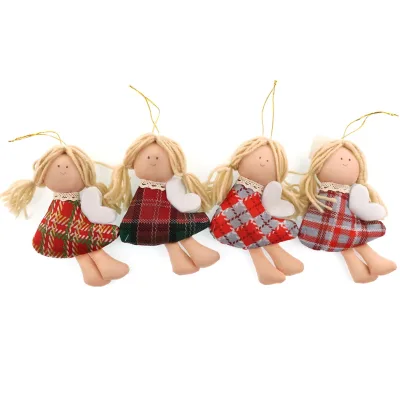


Logo Custom Christmas Decoration Retractable Long-Legged Plush Stuffed Toys Doll
$0.80 - $5.99
MOQ: 1000 Pieces
Comprehensive Sourcing Guide
Strategic Sourcing Guide for Telescopic Standing Christmas Plush Dolls
Understanding Product Architecture and Technical Specifications
The procurement of Telescopic Standing Christmas Plush Dolls requires a precise understanding of the underlying construction that enables their unique display capabilities. Unlike traditional soft toys, these items are engineered to maintain an upright posture without external support, often utilizing internal structural elements that allow for height adjustment or stability. Based on available product data, the core construction involves specific material combinations, such as knitted fabric and non-woven fabric, which provide the necessary durability and tactile appeal for seasonal merchandise. The "telescopic" nature implies a mechanism that may involve extendable limbs or a segmented body design, allowing the doll to stand at varying heights or fit into compact packaging before expansion.
When evaluating technical specifications, buyers must look for specific model identifiers that denote the standing configuration. Data indicates the existence of models such as LOK-CM041006, LOK-285, LOK-356, LOK-211, LOK-355, and LOK-OT052402, each potentially representing different variations in size, design, or structural integrity. The physical dimensions are critical for logistics planning; for instance, single package sizes have been observed at approximately 57.6 cm in length, 23.4 cm in width, and 6.5 cm in depth, with a gross weight of 1.200 kg per unit. These metrics are essential for calculating shipping costs and warehouse storage requirements. The "Plush Length" specification varies between "Plush Toys" and "Short Plush Toys," suggesting that the telescopic feature may alter the effective length of the final product compared to the compressed state.
Furthermore, the design source is frequently derived from cartoon characters, which influences the aesthetic appeal and target demographic. The product type is consistently categorized as "Standing Doll" or "Doll," with some variations classified as "Ornaments" or "Gifts." The gender classification is typically "Unisex," and the age recommendation spans from "All Ages" to specific ranges like "3-8 Years," necessitating careful alignment with safety standards for the intended market. The manufacturing process is noted as "Hand-Made," which can introduce variability in quality that must be managed through rigorous inspection protocols. The origin of these products is primarily traced to regions in China, including Dongguan and Shandong, which are known hubs for plush toy manufacturing.
Compliance Framework and Certification Verification
Safety compliance is the non-negotiable foundation of sourcing Christmas plush dolls, particularly given the "All Ages" and "3-8 Years" age ranges associated with these products. The market data explicitly lists several critical certifications that suppliers should possess to ensure market access and consumer safety. These include CE, EN71, ASTM, and Cpsia. It is imperative for buyers to verify that the specific batch of telescopic dolls carries valid documentation for these standards, as they represent the primary regulatory requirements for the European and North American markets.
The EN71 standard is particularly relevant for the European Union, covering mechanical and physical properties, flammability, and chemical safety. Similarly, ASTM F963 is the standard consumer safety specification for toy safety in the United States, while Cpsia (Consumer Product Safety Improvement Act) mandates lead and phthalate testing. The presence of these certifications in the product attributes suggests a baseline of compliance, but buyers must not assume that every listed product automatically satisfies every standard. Instead, the procurement strategy should involve requesting current test reports from the supplier for the specific model number being ordered.
Buyers should also be aware of the "Custom Made" standard mentioned in the product data. This indicates that the toys are often produced to specific client requests, which can complicate certification if the customization alters the material composition or structural design. For instance, changing the stuffing density or adding new decorative elements could impact flammability ratings or mechanical safety. Therefore, the verification process must include a review of the "Sample Revised Time," which is listed as "Unlimited," allowing for iterative testing and adjustment until the product meets all compliance criteria. The "Quality Guarantee" attribute, stating "Fully Responsible on Bad Feedbacks," further underscores the supplier's commitment to resolving compliance issues, though this should be formalized in the contract rather than relied upon as a sole safeguard.
Cost Drivers and Pricing Dynamics
The pricing structure for Telescopic Standing Christmas Plush Dolls is influenced by a complex interplay of customization, material costs, and order volume. The observed price range in the market spans from $0.10 to $18.00 USD, a wide variance that reflects differences in size, complexity, and the degree of customization required. The lower end of the spectrum likely corresponds to standard, mass-produced models with minimal customization, while the higher end reflects bespoke designs, larger sizes, or premium materials like high-grade knitted fabrics.
A significant cost driver is the "Customization" attribute, which is available for these products. Customization involves the "Toy Design" being "Custom Made," which necessitates additional R&D time. The "Sample R&D Time" is estimated at 5 to 8 days, and the "Sample Revised Time" is unlimited, meaning that the iterative design process can extend the timeline and increase costs if multiple revisions are required. The "Production Time" is listed as 25 to 35 days, which is a standard lead time for hand-made items but can be extended by the complexity of the telescopic mechanism.
Minimum Order Quantity (MOQ) is another critical factor affecting unit cost. The observed MOQ range is between 1 and 2000 units. For buyers seeking to minimize risk or test the market, an MOQ of 1 is advantageous, though the unit price will be significantly higher. Conversely, ordering at the upper end of the MOQ range can drive down the per-unit cost, making it more competitive for large retail chains. The "Packing" method, which is "Per Toy Size and Request From Client," also impacts costs; custom packaging solutions, such as specific carton requirements or branded inserts, will add to the overall expense. Additionally, the "Shipping" options, including Ocean and Air freight, and the availability of "Door to Door Service," must be factored into the total landed cost. Air freight offers speed but at a premium, while ocean freight is cost-effective for large volumes but requires longer lead times.
Typical Applications and Market Deployment
The versatility of Telescopic Standing Christmas Plush Dolls makes them suitable for a diverse range of applications across the retail and corporate sectors. The primary use case is as seasonal merchandise for "Toys Retail," where their standing feature allows them to be displayed prominently on shelves, creating an eye-catching focal point for holiday shoppers. The "Ornaments" classification suggests they can also be used as large-scale decorative items for retail environments, hotels, and public spaces, where their height and stability add to the festive atmosphere.
Beyond retail, these dolls serve as promotional gifts for "Studios/Company" and "Distributors." The "Gifts" attribute highlights their utility in corporate gifting programs, where a unique, high-quality plush toy can serve as a memorable brand ambassador. The "Names of Animals" listed as "Santa" and "Santas" indicate a strong thematic connection to Christmas, making them ideal for holiday-specific marketing campaigns. The "Room Type" specification of "Living Room" further supports their use as home decor, appealing to consumers looking to enhance their domestic holiday displays.
The "Usage" is specified as "Indoor," which is a crucial constraint for buyers. While these dolls are designed for indoor display, they may not be suitable for outdoor environments unless specifically treated for weather resistance. The "Service to" attribute confirms that the target audience includes a broad spectrum of business clients, from small retailers to large distributors. The "OEM/ODM" capability allows companies to brand these dolls with their own logos or designs, enhancing their value as custom marketing tools. The "Hand-Made" nature of the production adds a premium feel, which can be leveraged in marketing materials to justify higher price points and appeal to consumers seeking artisanal quality.
Supplier Evaluation and Operational Reliability
Selecting the right supplier for Telescopic Standing Christmas Plush Dolls requires a thorough evaluation of their operational capabilities and reliability. The "Production Time" of 25 to 35 days and "Sample Time" of 5 to 8 days are key performance indicators that must be met consistently. Buyers should verify the supplier's ability to meet these timelines, especially during peak holiday seasons when capacity may be constrained. The "Sample Revised Time" being "Unlimited" is a positive sign, indicating a willingness to iterate until the product meets the buyer's exact specifications, but it also requires clear communication to avoid endless revision cycles.
The "Delivery" service, described as "Door to Door Service Available," simplifies logistics for the buyer by consolidating shipping and customs clearance. However, the "Shipping Options" of "Air / Ocean" mean that the buyer must decide on the most appropriate method based on urgency and budget. The "Packing" method, which is "Per The Toy Size and Request From Client," suggests flexibility but also requires detailed instructions to ensure the product arrives in optimal condition. The "Quality Guarantee" of being "Fully Responsible on Bad Feedbacks" is a strong statement of accountability, but it should be backed by a clear return or replacement policy in the contract.
Geographic location is another factor to consider. The "prod_origin" is listed as "China," with specific mentions of "Dongguan" and "Shandong." These regions are known for their manufacturing expertise, but buyers should assess the specific factory's capacity and infrastructure. The "brand name" is listed as "OEM," indicating that the supplier is capable of producing private-label goods. Buyers should verify the supplier's experience with OEM projects, including their ability to protect intellectual property and maintain confidentiality. The "Technical" attribute of "Hand-Made" implies a reliance on skilled labor, which can be a strength in terms of quality but a risk in terms of consistency and scalability.
Quality Control and Long-Term Procurement Strategy
Implementing a robust quality control (QC) strategy is essential for ensuring the consistency and safety of Telescopic Standing Christmas Plush Dolls. Given the "Hand-Made" nature of the production, variability is inherent, and QC protocols must be stringent. Buyers should establish clear acceptance criteria based on the "specification" data, such as the "Plush Length" and "Single package size." Regular inspections during the production process, including pre-production, in-line, and final random inspections, are recommended to catch defects early.
The "Certification" requirements, including CE, EN71, ASTM, and Cpsia, must be verified for every batch. Buyers should request third-party test reports to confirm compliance, rather than relying solely on the supplier's self-declaration. The "Custom Made" standard means that each order may have unique requirements, so the QC plan must be adaptable to these variations. The "Quality Guarantee" clause should be explicitly included in the purchase agreement, outlining the consequences of non-compliance or defective products.
For long-term procurement, buyers should consider building a strategic partnership with a supplier that demonstrates reliability and flexibility. The "Unlimited" sample revision time is a valuable asset for developing a unique product line, but it requires a structured approach to manage time and costs. The "Production Time" of 25 to 35 days should be factored into the supply chain planning to avoid stockouts during the holiday season. The "Shipping" options and "Door to Door" service should be leveraged to streamline logistics and reduce administrative burdens. Finally, the "Service to" categories, including "Toys Retail," "Studios/Company," and "Distributor," suggest that the supplier has experience serving diverse markets, which is a positive indicator of their adaptability and market understanding. By maintaining a focus on quality, compliance, and operational efficiency, buyers can secure a reliable supply of high-quality Telescopic Standing Christmas Plush Dolls for their specific needs.
FAQs
Can I customize the design of these standing Christmas plush dolls?
Yes, customization is available for these products as they are custom-made toys. The sample R&D time takes 5 to 8 days, and you can request unlimited revisions until the design meets your specific requirements for the final production run.
What certifications do these dolls meet for safety compliance?
The products carry CE, EN71, ASTM, and Cpsia certifications to ensure safety for children. These standards cover mechanical properties and chemical safety, which are essential for selling to markets in Europe and North America.
How long does it take to produce a custom order of these dolls?
Production time ranges from 25 to 35 days after the sample is approved. This timeline applies to hand-made items and may vary depending on the complexity of the telescopic mechanism and the specific customization requested by the client.
Which shipping options are available for delivery to my location?
Ocean and air shipping options are available for these standing dolls. Door-to-door delivery service is offered, allowing you to choose between cost-effective ocean freight for large volumes or faster air freight for urgent orders.
What is the minimum order quantity for these custom plush toys?
The minimum order quantity ranges from 1 to 2000 units depending on the supplier and product model. Lower MOQs allow for market testing, while larger orders typically result in better per-unit pricing for bulk retail distribution.
Where are these telescopic standing Christmas dolls manufactured?
These products originate from manufacturing hubs in China, specifically regions like Dongguan and Shandong. Factories in these areas specialize in hand-made plush toys and offer OEM services for various international clients.
What are the typical dimensions and weight of a single package?
A single package size is approximately 57.6 cm by 23.4 cm by 6.5 cm with a gross weight of 1.200 kg. These dimensions are critical for planning logistics and calculating shipping costs for ocean or air transport.