Source Telescopic White Surveying Staff for Construction, Mapping, and Leveling
Find and compare 30 Telescopic White Surveying Staff options from verified suppliers. Evaluate models ranging from 3m to 7m, featuring aluminum alloy construction, precise accuracy, and customizable designs for professional surveying and leveling applications.
Key considerations
Products List






Comprehensive Sourcing Guide
Telescopic White Surveying Staff Sourcing Guide
Sourcing telescopic white surveying staffs requires a nuanced understanding of the distinction between traditional leveling rods and modern electronic or laser-assisted systems. The core keyword often bridges two distinct product categories: the classic aluminum leveling staff used with optical levels and the advanced laser leveling staffs designed for robotic total stations. Buyers must first clarify whether the procurement need is for manual field measurement or automated data capture, as this decision dictates the technical specifications, material requirements, and supplier qualifications. The observed market data indicates a diverse range of models, from simple 3-meter extendable rods to complex 7-meter systems with integrated angle encoders, necessitating a careful review of product attributes before initiating supplier negotiations.
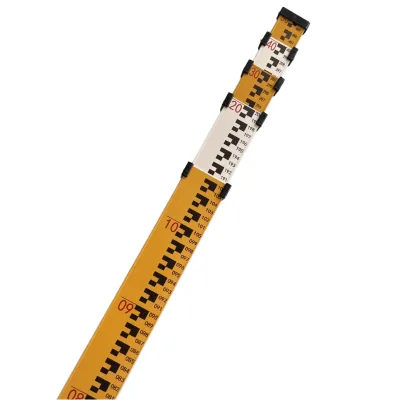
The visual and physical characteristics of these tools are critical for field durability and readability. While the term "white" is common in search queries, the supplied facts highlight a prevalence of yellow-and-white color schemes, which are standard for high-visibility surveying equipment. The material composition is predominantly aluminum alloy, chosen for its lightweight nature and resistance to corrosion in outdoor environments. Buyers should verify the specific alloy grade and wall thickness of the telescopic sections, as these factors directly influence the staff’s rigidity and resistance to bending under load. Understanding these physical attributes is the first step in ensuring the equipment meets the rigorous demands of topographic and construction surveying.
Product Scope and Observed Listing Signals
The current market landscape for telescopic surveying staffs reveals a wide spectrum of capabilities, ranging from basic manual leveling tools to sophisticated electronic devices. Observed listings indicate a product count of 30 distinct items, with prices varying significantly from $8 to $1,850 USD. This broad price range suggests that the category includes both simple, non-electronic aluminum rods and complex systems featuring digital displays, absolute angle encoders, and laser targeting capabilities. Buyers should interpret this variance as an indicator that the "Telescopic White Surveying Staff" keyword captures multiple tiers of technology, requiring precise specification matching to avoid overpaying for unnecessary features or under-specifying for critical tasks.
Key product attributes observed in the market include customizable lengths, with model numbers suggesting capabilities from 3 meters up to 7 meters. Some listings specify a measuring range of 1-3 meters, while others describe extendible lengths of up to 2.15 meters or 2.5 meters, with retracted lengths designed for portability. The presence of specific model identifiers such as "GLS11-R," "ALS5-5," and "R2" points to specialized designs, potentially including robotic total station-compatible staffs. Additionally, features like "laser leveling" and "optical vertical lines" indicate that many modern staffs are designed to enhance visibility and accuracy for both human operators and automated instruments. Buyers must carefully cross-reference these observed signals with their specific project requirements to ensure compatibility.
Technical Specifications to Verify
When evaluating technical specifications, the accuracy of the staff is paramount, though it is often conflated with the accuracy of the instrument it is used with. The supplied facts list accuracy values of 1mm and 2", which likely refer to different aspects of the system, such as the graduation precision of the staff versus the angular accuracy of an integrated encoder. Buyers must clarify whether the 1mm accuracy applies to the linear measurement markings or the electronic reading system. Furthermore, the magnification and objective aperture specifications, such as 30X magnification and a 45mm aperture, are typically associated with the viewing telescope of a total station or level, not the staff itself. Procurement teams must ensure they are not attributing instrument specifications to the staff, as this can lead to confusion in technical documentation and performance expectations.
The physical dimensions and material properties of the telescopic sections require rigorous verification. Specifications such as an aluminum cannulation thickness of 1.5mm and a diameter of 30mm provide insight into the structural integrity of the staff. Buyers should request detailed drawings or technical sheets that confirm these dimensions for each telescopic segment, as variations can affect the smoothness of extension and the overall stability of the staff. Additionally, the weight of the unit, observed at 5.4kgs for some models and 1.55kg for others, is a critical factor for field ergonomics. Heavier staffs may offer greater stability but can cause fatigue during long surveying sessions, while lighter models must be balanced against durability concerns. Verifying the retracted and extended lengths, such as 1.3m to 2.15m or 1.5m to 2.5m, ensures the staff fits within logistical constraints and meets the height requirements of the surveying task.
Compliance and Safety Documentation
Compliance and safety documentation for surveying equipment often involve material safety data sheets and manufacturing standards rather than electrical safety certifications, unless the staff includes active electronic components. The observed facts mention "SGS" as a standard, which typically refers to third-party inspection and certification services rather than a specific regulatory standard. Buyers should verify what specific SGS tests were conducted, such as material composition analysis or dimensional accuracy checks, to ensure the aluminum alloy meets industry expectations for strength and corrosion resistance. Additionally, the mention of "Aluminium Alloy" as a standard suggests that the material composition should be documented to ensure it is suitable for the environmental conditions of the survey site, particularly in coastal or industrial areas where corrosion resistance is vital.
Safety considerations also extend to the usability and visibility of the staff in the field. The color scheme, often yellow and white, is designed to maximize contrast against various backgrounds, reducing the risk of misreading measurements. Buyers should ensure that the graduation markings are clear, durable, and resistant to fading or wear, as illegible markings can lead to significant surveying errors. For staffs with electronic components, such as those with absolute angle encoder systems, buyers should request information on battery safety and data integrity. Although no specific electrical standards are listed, verifying that any electronic modules are protected against dust and water ingress is essential for field durability. Documentation should also include clear instructions for handling and maintenance to prevent damage to the telescopic mechanisms.
Cost Drivers and Commercial Terms
The cost of telescopic surveying staffs is driven by several key factors, including the complexity of the telescopic mechanism, the quality of the aluminum alloy, and the inclusion of electronic components. Simple manual staffs with basic graduations will be at the lower end of the price spectrum, while staffs with integrated lasers, encoders, and high-precision markings will command higher prices. The observed price range of $8 to $1,850 USD reflects this disparity. Buyers should analyze the cost structure by breaking down the price into material costs, manufacturing complexity, and technology integration. Understanding these drivers allows for more effective negotiation and ensures that the budget aligns with the required performance level.
Commercial terms such as minimum order quantity (MOQ) and packaging also impact the total cost of ownership. The observed MOQ range of 1-10 units suggests flexibility for small-scale purchases, but bulk orders may offer better pricing. Packaging details, such as "10PCS/Carton" or "Individual Package," influence shipping costs and the risk of damage during transit. Buyers should consider the logistics of receiving and storing the staffs, as improper packaging can lead to bent telescopic sections or damaged graduations. Additionally, after-sales service terms, such as the "1 Year" warranty observed in some listings, provide a safety net for manufacturing defects. Buyers should clarify the scope of this warranty, including whether it covers accidental damage or only material and workmanship issues, to assess the long-term value of the procurement.
Supplier Qualification and Quality Control
Supplier qualification for surveying equipment requires a focus on manufacturing capability and quality control processes. The observed origins of the products, including Jiangxi and Jiangsu in China, indicate a concentration of manufacturing hubs for this type of equipment. Buyers should verify the supplier’s production capacity and experience in manufacturing aluminum telescopic staffs. Requesting samples for physical inspection is a critical step to evaluate the smoothness of the telescopic action, the clarity of the graduations, and the overall build quality. Suppliers who offer customization, as indicated by the "Custom Made Processing: Yes" attribute, may be better suited for specialized requirements, but buyers must ensure that the customization process does not compromise the structural integrity of the staff.
Quality control measures should include dimensional accuracy checks and material testing. Buyers should ask for quality control reports that verify the aluminum cannulation thickness and diameter, as well as the accuracy of the graduations. For electronic staffs, functional testing of the angle encoder and data transmission capabilities is essential. Suppliers should also provide documentation on their quality management systems, such as ISO certifications, to ensure consistent production standards. Additionally, buyers should inquire about the supplier’s process for handling defects and returns, as this can impact the reliability of the supply chain. Establishing a clear quality agreement with the supplier helps to mitigate risks and ensures that the delivered products meet the specified technical requirements.
Long-Term Procurement Checks
Long-term procurement success depends on establishing a robust relationship with suppliers who can provide consistent quality and support. Buyers should conduct periodic audits of the supplier’s quality control processes and review performance metrics such as defect rates and delivery times. The "1 Year" after-sales service observed in some listings should be monitored for responsiveness and effectiveness. Buyers should also stay informed about technological advancements in surveying equipment, as the industry is rapidly evolving with the integration of digital and laser technologies. This awareness allows for proactive updates to procurement specifications and ensures that the organization remains competitive in its surveying capabilities.
Sustainability and environmental considerations are increasingly important in procurement decisions. Buyers should inquire about the environmental impact of the aluminum production process and the recyclability of the staffs. Suppliers who adhere to environmental standards and offer eco-friendly packaging options may be preferred by organizations with sustainability goals. Additionally, buyers should consider the lifecycle cost of the equipment, including maintenance, repair, and eventual disposal. By focusing on long-term value rather than just initial price, buyers can secure a reliable supply of high-quality telescopic surveying staffs that support their operational needs and align with their strategic objectives.
FAQs
What is the accuracy of the leveling staff?
The leveling staff offers an accuracy of 1mm for standard models and 2 arcseconds for optical telescope variants. This precision supports reliable surveying operations across various field conditions.
Can the staff be customized for specific needs?
Yes, customization is available for these aluminum leveling staffs. Buyers can request specific modifications to meet unique project requirements while maintaining the core structural integrity of the product.
What materials are used to construct the staff?
The staff is constructed from high-quality aluminum alloy to ensure durability and lightweight handling. This material choice provides resistance to corrosion while maintaining the necessary rigidity for accurate measurements.
How long is the lead time for orders?
Lead times vary based on order volume and customization requirements. Standard orders typically ship quickly, while custom requests may require additional processing time to ensure quality standards are met.
What is the minimum order quantity for purchase?
The minimum order quantity ranges from 1 to 10 pieces depending on the specific model selected. This flexible MOQ allows buyers to procure small batches for testing or larger quantities for projects.
Which models are available in different lengths?
Available models include 3m, 4m, 5m, and 7m lengths to suit various surveying applications. Buyers can select the appropriate size based on the specific height requirements of their measurement tasks.
What is the packaging configuration for bulk orders?
Products are typically packed in cartons containing 10 pieces per carton for efficient shipping. Individual packages are also available to protect the staff during transit and storage before installation.
Where are these surveying staffs manufactured?
These aluminum leveling staffs are manufactured in Jiangxi and Jiangsu provinces in China. The production facilities adhere to specific standards to ensure consistent quality across all exported units.