Source Touch Screen Mini Checkweigher for Sauce, Tea, and Materials
Find and compare 30 Touch Screen Mini Checkweigher models from verified Chinese suppliers. Buyers can evaluate accuracy, speed, and customization options for sauce packets, health tea, and small material applications.
Key considerations
Products List


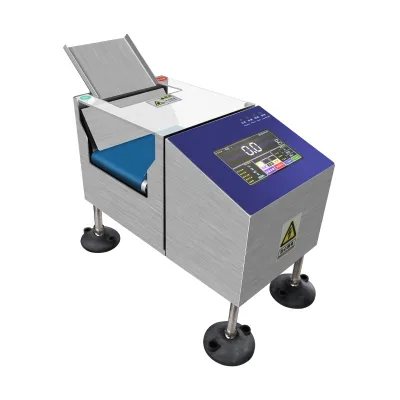


High Precision Food Checkweigher/Check Weigher/Weight Checker
$3350.00 - $5680.00
MOQ: 1 Pieces
Qingdao Zhongkang Printing and Packaging Machinery Co., Ltd.

Automatic Online Check Weigher Machine/Weight Checker with Rejector
$3350.00 - $5680.00
MOQ: 1 Pieces
Qingdao Zhongkang Printing and Packaging Machinery Co., Ltd.

High-Performance High-Speed Weight Checker Check Weigher
$3350.00 - $5680.00
MOQ: 1 Pieces
Qingdao Zhongkang Printing and Packaging Machinery Co., Ltd.

High-Performance High-Speed Check Weigher
$3350.00 - $5680.00
MOQ: 1 Pieces
Qingdao Zhongkang Printing and Packaging Machinery Co., Ltd.


High Quality Industry Online Check Weigher Checking Weigher with Rejector
$2600.00 - $4500.00
MOQ: 1 Pieces


Check Weighers Checkweigher Scale Check Weigher for Food Check Weight Machine
$3000.00 - $5000.00
MOQ: 1 Pieces


High Performance Checkweigher/High Accuracy Sorting Checking Weigher
$2000.00 - $8000.00
MOQ: 1 Pieces


High Accuracy Checkweigher/Box Checking Weigher/Package Weight Checker
$2000.00 - $8000.00
MOQ: 1 Sets

$3500.00 - $8500.00
MOQ: 1 Pieces


Comprehensive Sourcing Guide
Strategic Sourcing Guide for Touch Screen Mini Checkweighers
Understanding the Technical Landscape of Mini Checkweighers
The modern industrial landscape demands precision in packaging, particularly within the food and beverage sector where regulatory compliance and waste reduction are paramount. A Touch Screen Mini Checkweigher represents a specialized class of industrial weighing equipment designed to verify the net weight of packaged goods against predefined limits. These devices are distinct from standard scales by their integration of automated sorting mechanisms and real-time data processing capabilities. The core functionality involves weighing individual items, such as sauce packets, health tea sachets, or small materials, and immediately rejecting those that fall outside the acceptable tolerance range.
The defining characteristic of this equipment is the human-machine interface (HMI). Modern units frequently utilize a 7-inch touch screen display, which allows operators to configure parameters, view real-time statistics, and manage sorting logic without the need for external computers. This interface is critical for minimizing downtime and simplifying the training process for plant floor personnel. The technical architecture typically includes a high-sensitivity load cell system capable of resolving weights down to 0.01g, ensuring that even minor deviations in fill volume are detected. The speed of operation is a crucial metric, with observed performance ranges varying from 25 to 50 pieces per minute depending on the specific model and the nature of the product being weighed.
Material construction is another vital technical consideration. To meet the hygiene standards required in food processing, the structural components and weighing platforms are predominantly manufactured from 304 stainless steel. This material choice provides resistance to corrosion, facilitates easy cleaning, and ensures durability in environments where moisture and chemical exposure are common. The weighing platform dimensions are often standardized to accommodate specific packaging sizes, with common configurations including platforms measuring 250 mm by 160 mm or conveyor belts sized at 220 mm by 160 mm. The height of the weighing platform is also a critical installation parameter, often adjustable or fixed around 232 mm to ensure ergonomic integration with upstream and downstream machinery.
Compliance, Certification, and Regulatory Verification
When sourcing industrial weighing equipment, buyers must navigate a complex web of compliance requirements that vary by region and industry application. While specific certification documents are not universally mandated for all models, the equipment must adhere to the safety and performance standards of the destination market. For instance, the origin of the manufacturing facility, often located in industrial hubs like Zhejiang or Guangdong in China, can influence the baseline quality control processes and the availability of international compliance documentation.
Buyers should verify that the supplier can provide evidence of adherence to relevant electrical safety standards, particularly regarding the power consumption and voltage requirements of the device. The observed power rating for these units is typically low, around 50W, which suggests energy efficiency but also necessitates verification of the electrical compatibility with the local grid. Furthermore, the accuracy claims, such as ±0.5g or ±0.1g, must be supported by traceable calibration certificates. These certificates should be issued by accredited bodies and demonstrate that the device meets the stated accuracy specifications under controlled conditions.
In the food and beverage industry, the material composition of the machine is a compliance issue in itself. The use of 304 stainless steel is a standard requirement to prevent contamination and ensure food safety. Buyers must confirm that the "stainless steel" designation refers to the specific grade (304) and not a lower-grade alternative that might corrode or leach harmful substances. Additionally, the sorting method employed, such as a slide mechanism, must be designed to prevent product damage or cross-contamination, which is a critical consideration for health and safety regulations.
Cost Drivers and Pricing Dynamics
The pricing of touch screen mini checkweighers is influenced by a combination of technical specifications, material quality, and the level of customization required. The observed market price range for these units spans from $600 to $10,000, reflecting the diversity in capabilities and build quality. The lower end of this spectrum typically corresponds to basic models with standard accuracy and limited customization options, while the higher end includes units with advanced features, higher precision, and robust industrial-grade construction.
Material costs are a significant driver of the final price. The extensive use of 304 stainless steel for the frame, weighing platform, and conveyor components adds to the manufacturing cost but is essential for longevity and hygiene. The inclusion of a high-resolution touch screen display and sensitive load cells also contributes to the overall cost. Buyers should be aware that the "Low Cost" feature often cited in product descriptions may refer to the operational efficiency or initial purchase price relative to larger systems, rather than a compromise in quality.
Customization is another major factor affecting cost. Many suppliers offer OEM, ODM, and OBM support, allowing buyers to tailor the machine to their specific production lines. This can include modifications to the conveyor belt size, the height of the weighing platform, or the integration of specific software features. The level of customization required will directly impact the lead time and the final unit price. Additionally, the packaging method, often a wooden case for export, adds to the shipping weight and cost, which should be factored into the total landed cost calculation.
Typical Applications and Operational Scenarios
The primary application area for touch screen mini checkweighers is the food and beverage industry, where precise weight control is essential for regulatory compliance and cost management. These machines are particularly effective for weighing small, lightweight packages such as sauce packets, health tea sachets, and other small materials. The ability to handle a wide range of product types, from liquid-filled pouches to dry powders, makes them versatile assets for diverse production lines.
The speed of the machine, typically ranging from 25 to 50 pieces per minute, aligns well with the throughput requirements of small to medium-sized packaging operations. This speed ensures that the checkweigher does not become a bottleneck in the production line while maintaining high accuracy. The sorting method, often utilizing a slide mechanism, allows for the efficient removal of underweight or overweight products, ensuring that only compliant items proceed to the next stage of packaging or distribution.
In addition to food and beverage, these machines can be adapted for other industries requiring precise weight verification, such as pharmaceuticals or cosmetics. The high precision of 0.01g resolution makes them suitable for applications where even minor weight variations can impact product quality or regulatory compliance. The compact design and low power consumption of 50W make these units ideal for facilities with limited space or energy capacity.
Supplier Evaluation and Selection Criteria
Selecting the right supplier for a Touch Screen Mini Checkweigher requires a thorough evaluation of their technical capabilities, production capacity, and after-sales support. Buyers should prioritize suppliers who demonstrate a clear understanding of the specific requirements of the food and beverage industry, including the use of food-grade materials and the ability to meet strict hygiene standards. The presence of customization support, such as OEM, ODM, and OBM services, indicates a supplier's flexibility and willingness to adapt their products to the buyer's unique needs.
The reputation of the supplier in the market is another critical factor. While specific supplier names should not be recommended, buyers should look for evidence of a strong track record in delivering reliable equipment. This can be assessed through customer testimonials, case studies, and references from other clients in the same industry. The location of the manufacturing facility, such as Zhejiang or Guangdong, can also provide insights into the supplier's supply chain efficiency and logistical capabilities.
After-sales support is a vital component of the supplier evaluation process. Buyers should inquire about the warranty period, which is typically one year for these units, and the availability of technical support and spare parts. A supplier that offers comprehensive training and maintenance services can significantly reduce the total cost of ownership and ensure the long-term reliability of the equipment. The ability to provide calibration services and technical documentation is also a key indicator of a supplier's professionalism and commitment to quality.
Quality Control and Long-Term Procurement Considerations
Ensuring the quality of a Touch Screen Mini Checkweigher involves a rigorous quality control process that spans from raw material selection to final assembly. Buyers should verify that the supplier implements strict quality assurance protocols, including regular inspections of the stainless steel components, load cell calibration, and functional testing of the touch screen interface. The resolution of 0.01g and the accuracy of ±0.1g or ±0.5g must be consistently maintained across all units produced.
Long-term procurement considerations extend beyond the initial purchase price to include the total cost of ownership. This encompasses maintenance costs, energy consumption, and the potential for downtime due to equipment failure. The durability of the 304 stainless steel construction and the reliability of the touch screen interface are key factors in minimizing these costs. Buyers should also consider the scalability of the equipment, ensuring that it can be easily integrated with future production line expansions or upgrades.
The environmental impact of the equipment is another growing concern for modern procurement strategies. The low power consumption of 50W and the use of recyclable materials, such as stainless steel and wooden packaging, contribute to a more sustainable operation. Buyers should evaluate the supplier's commitment to environmental responsibility and their ability to provide equipment that aligns with their corporate sustainability goals.
Final Procurement Strategy and Implementation
Successfully sourcing a Touch Screen Mini Checkweigher requires a strategic approach that balances technical requirements, cost considerations, and supplier reliability. Buyers should begin by clearly defining their specific needs, including the type of products to be weighed, the required speed, and the accuracy standards. This information will guide the selection of the appropriate model and the evaluation of potential suppliers.
Once the requirements are established, buyers should engage in a detailed comparison of available options, focusing on the technical specifications, material quality, and customization capabilities. The use of standard Markdown tables can facilitate this comparison, allowing for a side-by-side analysis of key features such as accuracy, speed, and dimensions. It is essential to verify all claims regarding accuracy and performance through independent testing or certification before making a final decision.
Finally, buyers should establish a clear communication channel with the selected supplier to ensure a smooth implementation process. This includes coordinating the delivery schedule, arranging for installation and training, and setting up a maintenance plan. By following a disciplined and evidence-based approach, buyers can secure a high-quality Touch Screen Mini Checkweigher that meets their operational needs and delivers long-term value.
FAQs
What is the accuracy of the Touch Screen Mini Checkweigher?
The accuracy is typically ±0.1g or ±0.5g depending on the specific model configuration. This precision allows for reliable detection of weight deviations in small packages like sauce packets and health tea sachets within the food and beverage industry.
Can the machine handle sauce packets and health tea sachets?
Yes, the device is specifically designed for applications involving sauce packets, health tea, and small materials. It features a slide sorting method to efficiently reject items that fall outside the acceptable weight range during operation.
What is the maximum weighing capacity for this equipment?
The maximum weighing capacity is 500g with a check weight range of 1 to 999g. This capacity is suitable for verifying the net weight of small, lightweight packaged goods commonly found in food processing lines.
How fast can the Touch Screen Mini Checkweigher operate?
The operating speed ranges from 25 to 50 pieces per minute depending on the model and product type. This throughput ensures efficient processing without becoming a bottleneck for small to medium-sized packaging operations.
Is customization available for the Touch Screen Mini Checkweigher?
Customization is available with support for OEM, ODM, and OBM services. Buyers can request specific modifications to meet unique production line requirements while maintaining the standard 304 stainless steel construction for hygiene.
What material is used to construct the weighing platform?
The weighing platform and structural components are made from 304 stainless steel. This material choice ensures resistance to corrosion and facilitates easy cleaning to meet strict food safety and hygiene standards.