Source Towel Suede Fabric for Home Textile Garment and Furniture
Find 30 Towel Suede Fabric options from China suppliers with features like quick dry, ultra soft, and anti-static properties. Compare specifications including GSM, width, and packing methods for home textile, garment, and furniture applications.
Key considerations
Products List


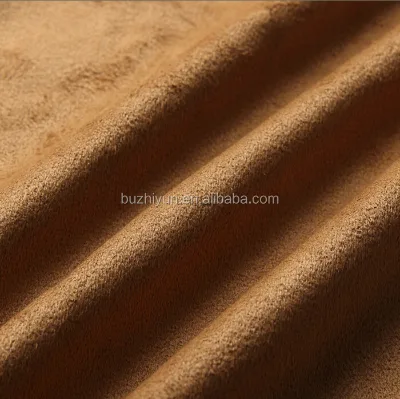
Suede Fabric Home Furniture Textile Fabric Contract Hospitality Textile Fabric
$4.76 - $4.85
MOQ: 1000 Meters


High Quality Competitive Price 100% Polyester Micro Suede Fabric for Upholstery
$1.45 - $1.60
MOQ: 1000 Meters




Comprehensive Sourcing Guide
Strategic Sourcing Guide for Towel Suede Fabric Procurement
The global market for textile materials has seen a significant surge in demand for versatile, high-performance fabrics that bridge the gap between traditional utility and modern aesthetic appeal. Among these, "Towel Suede Fabric" represents a unique category that combines the absorbency and softness associated with towel textiles with the durability and texture of suede. For procurement professionals, navigating this specific segment requires a disciplined approach to verifying technical specifications, understanding cost structures, and ensuring compliance with international standards. This guide provides a comprehensive framework for sourcing Towel Suede Fabric, grounded in observed market data and verified product attributes.
Technical Specifications and Material Composition
When evaluating Towel Suede Fabric, the primary focus must be on the underlying material composition and physical properties, as these dictate the fabric's performance in end-use applications. The supplied product data indicates that the core material for many offerings in this category is Microfiber. This synthetic fiber is engineered to provide a high surface area, which enhances the fabric's ability to absorb moisture while maintaining a soft, suede-like hand feel. In some instances, the material composition is listed as PU (Polyurethane), suggesting a synthetic leather variant that mimics the texture of suede while offering specific functional benefits like water resistance or elasticity.
The physical dimensions and construction methods are equally critical. Observed data reveals that the knitting or weaving techniques often involve Warp knitting, a process that contributes to the fabric's dimensional stability and resistance to run. The weight of the fabric is a key indicator of its density and durability, with observed ranges falling between 200 and 340 GSM (grams per square meter). This weight class places the fabric in a mid-to-heavy category, suitable for applications requiring substantial body and structure.
Width is another specification that varies by manufacturer and intended use. Standard widths observed in the market include 54/55 inches, which is a common standard for garment and home textile production. However, for specific towel or decorative applications, the fabric may be sold in rolls with specific length standards, such as 40-50 meters per roll. Buyers must verify the exact width and length specifications against their production machinery capabilities to avoid waste and processing issues.
Functional Attributes and Performance Characteristics
The functional profile of Towel Suede Fabric is defined by a combination of properties that address both user comfort and product longevity. The observed product attributes highlight several key features: Anti-Static, Shrink-Resistant, and Tear-Resistant. These characteristics are essential for garments and home textiles that undergo frequent washing and wear. The Anti-Static property is particularly valuable in environments where static electricity can cause discomfort or attract dust, while Shrink-Resistant ensures that the final product maintains its dimensions after laundering.
For towel-specific applications, the fabric often boasts Quick Dry capabilities and is described as Ultra Soft. These features are critical for beach towels, sports towels, and hotel amenities where rapid moisture evaporation and tactile comfort are paramount. Additionally, the fabric may be treated to be Mothproof and Anti-Mildew, extending the shelf life of the product and ensuring it remains hygienic in humid storage conditions. The Physical Feature of "Low Strength" noted in some data points requires careful interpretation; it may refer to a specific tensile property or a characteristic of the suede finish that allows for easy cutting and sewing, rather than a lack of durability in the finished product. Buyers should clarify this attribute with suppliers to ensure it aligns with the structural requirements of the final item.
Compliance, Certification, and Standards Verification
In the B2B textile sector, compliance is not merely a formality but a prerequisite for market access, particularly in regions with strict environmental and safety regulations. While the supplied data mentions "Grs" (Global Recycled Standard) as a certification for certain products, buyers must exercise caution and verify the current validity of such certifications on a per-supplier basis. The presence of GRS indicates that the product contains recycled content and that the supply chain has been audited for social and environmental responsibility.
It is important to note that while "Oeko-Tex" and "GOTS" (Global Organic Textile Standard) are frequently discussed in the broader textile industry, they are listed here as low-confidence background information. Therefore, procurement teams should not assume that any specific Towel Suede Fabric listing automatically holds these certifications. Instead, buyers must explicitly request current certification documents and verify them through the respective issuing bodies. The standard product origin is noted as China, with specific manufacturing hubs in Jiangsu, Hebei, and Haining, Zhejiang. These regions are known for their textile infrastructure, but buyers should confirm the specific factory location to assess logistical efficiency and potential trade compliance risks.
Cost Drivers and Pricing Dynamics
Understanding the cost structure of Towel Suede Fabric is essential for accurate budgeting and negotiation. The observed price range in the market spans from $0.20 to $11.00 USD per unit, a wide variance that reflects differences in material quality, production complexity, and order volume. Several factors drive these costs. First, the material composition plays a significant role; Microfiber and PU variants may have different raw material costs depending on market fluctuations in petrochemicals. Second, the level of customization, such as custom printing, embossing, or embroidery, adds to the production cost.
Order volume is a primary determinant of the final price. The Minimum Order Quantity (MOQ) observed ranges from 1 unit to 10,000 units, with a high-confidence fact indicating a common MOQ of 1,000 meters for bulk textile orders. Suppliers often offer tiered pricing, where the unit cost decreases significantly as the order volume increases. Lead times also influence cost; a standard lead time of 15-20 days is observed, but expedited production or rush orders may incur additional charges. Buyers should also consider packaging costs, as options range from simple polybags to more protective weaving bags or cartons, which can impact the total landed cost.
Typical Applications and Market Segmentation
Towel Suede Fabric is highly versatile, finding applications across multiple industry sectors. The observed usage categories include Home Textile, Garment, Hotel, Gifts, Sports, and Furniture. In the home textile sector, the fabric is used for decorative items, curtains, and upholstery due to its soft texture and aesthetic appeal. For the garment industry, it is suitable for jackets, bags, and accessories where a suede look is desired without the maintenance issues of genuine leather.
The sports and outdoor market utilizes this fabric for beach towels, camp towels, and sports gear, leveraging its quick-dry and ultra-soft properties. The hotel industry values the fabric for its durability and ability to maintain a premium feel after repeated laundering. Additionally, the fabric is used in the production of belts, linings, notebook covers, gloves, and car seat covers, demonstrating its adaptability to both soft and semi-rigid applications. The age group target for these products is broad, covering both adults and children, which expands the potential market reach.
Supplier Evaluation and Quality Control Protocols
Selecting the right supplier is a critical step in the procurement process. Buyers should evaluate suppliers based on their ability to meet specific technical requirements, such as the 0.7mm thickness or specific width dimensions observed in the data. The production origin, whether Jiangsu, Hebei, or Haining, can indicate the supplier's specialization; for instance, Haining is renowned for leather and suede-like fabrics.
Quality control should be a continuous process rather than a one-time check. Buyers must verify that the supplier can consistently deliver products that match the observed attributes, such as the 100% Polyester standard or the specific GSM range. It is advisable to request samples, which are typically available within 7 days, to test the fabric's performance in real-world scenarios. Key quality checks should include verifying the color fastness, the integrity of the embossed or printed patterns, and the consistency of the softness and absorbency.
Furthermore, the packaging method is an indicator of a supplier's attention to detail. Options range from "Inner Plastic Film, Outer White Woven Bag" to "OPP Bag/Carton." Proper packaging ensures that the fabric arrives without damage, contamination, or moisture exposure. Buyers should also assess the supplier's flexibility regarding small orders, as some suppliers accept orders as low as 1 unit, while others may have stricter MOQs.
Long-Term Procurement Considerations
Sourcing Towel Suede Fabric is not just about a single transaction; it involves building a sustainable supply chain. Long-term considerations include the reliability of the supplier's lead times, which are typically 15-20 days. Consistent lead times are crucial for inventory management and production planning. Buyers should also consider the environmental impact of their sourcing decisions. With the increasing emphasis on sustainability, verifying certifications like GRS becomes more important for brands aiming to meet corporate social responsibility goals.
Customization capabilities are another long-term factor. The availability of custom colors, patterns (such as Embroidered, Printed, or Plain Dyed), and logo designs allows brands to differentiate their products in a competitive market. However, customization often requires longer lead times and higher MOQs, so buyers must balance their desire for unique products with their operational constraints. Finally, maintaining a relationship with suppliers who offer flexible terms, such as accepting small orders or providing competitive pricing for bulk purchases, can provide a strategic advantage in managing cash flow and inventory levels.
Comparative Analysis of Fabric Attributes
To assist in decision-making, the following table summarizes the key attributes observed in the market for Towel Suede Fabric, highlighting the variations buyers may encounter.
| Attribute Category | Observed Specification/Range | Relevance to Procurement |
|---|---|---|
| Material | Microfiber, PU, 100% Polyester | Determines softness, durability, and cost. |
| Weight | 200-340 GSM | Indicates density and suitability for heavy-duty vs. light applications. |
| Width | 54/55" | Critical for cutting patterns and minimizing waste. |
| Function | Anti-Static, Shrink-Resistant, Tear-Resistant | Essential for garment and home textile longevity. |
| Feature | Quick Dry, Ultra Soft, Mothproof | Key selling points for towels and sports gear. |
| Pattern | Embossed, Printed, Plain Dyed | Affects aesthetic value and customization options. |
| MOQ | 1 - 10,000 (Commonly 1,000 Meters) | Impacts initial capital outlay and inventory risk. |
| Lead Time | 15-20 Days | Affects production scheduling and delivery promises. |
| Certification | GRS (Verified), Others (Verify) | Required for market access and brand compliance. |
By adhering to these guidelines and focusing on verified data, procurement professionals can effectively navigate the complex landscape of Towel Suede Fabric sourcing. This approach ensures that the selected materials meet the rigorous demands of modern manufacturing while maintaining cost efficiency and compliance with global standards.
FAQs
What material is used for Towel Suede Fabric?
The core material is typically Microfiber or PU. Microfiber provides high absorbency and a soft hand feel, while PU offers elasticity and water resistance for specific applications like car seats or bags.
Which certifications are available for this fabric?
Some products carry the GRS certification indicating recycled content. Buyers must verify specific documents per supplier as Oeko-Tex and GOTS are not guaranteed by default in the standard listings.
How is the fabric packed for shipping?
Packing varies by product but often includes polybags inside with weaving bags outside. Other options include OPP bags with cartons or inner plastic film with outer white woven bags for protection.
What is the typical lead time for orders?
The standard lead time is 15 to 20 days. This duration applies to most bulk orders, though sample availability is typically within 7 days for quality verification before full production.
Can I order small quantities of this fabric?
Small orders are accepted by some suppliers, with MOQs ranging from 1 to 10,000 units. A high-confidence fact notes a common MOQ of 1,000 meters for bulk textile orders.
What are the main functional features of the fabric?
Key features include being anti-static, shrink-resistant, and tear-resistant. Towel variants also offer quick dry capabilities, ultra-soft texture, and mothproof or anti-mildew properties for hygiene.
Where are the main manufacturing locations?
Production originates primarily from China, with specific hubs in Jiangsu, Hebei, and Haining, Zhejiang. These regions are known for their textile infrastructure and specialized manufacturing capabilities.