Source Tower Server for Enterprise, Industrial, and Desktop Workstation
Compare 30 Tower Server listings with varying specifications including X86 architecture, Intel Xeon processors, and RAID controllers. Buyers can evaluate options for enterprise, industrial, and desktop workstation applications with prices ranging from 425 to 15000 USD.
Key considerations
Products List


$10000.00 - $15000.00
MOQ: 1 Pieces

Good Service Thinksystem St550 Tower Server 4u Tower Server Storage Server
$10000.00 - $15000.00
MOQ: 1 Pieces


Tower Server Workstation Computer Server Featuring Intel Xeon Processor
$450.00 - $699.00
MOQ: 1 Pieces


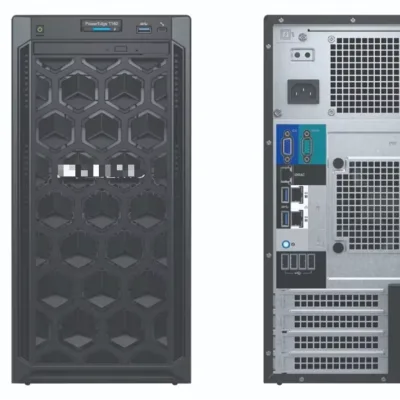


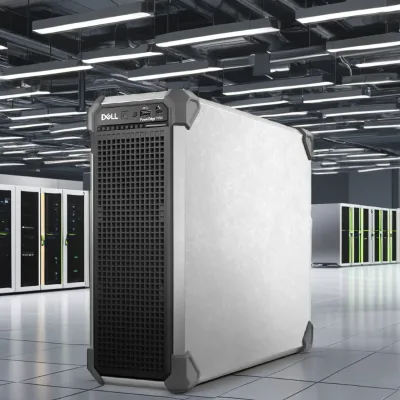
PowerEdge T160/T550/T560 Small Tower Server Desktop PC Network Storage Server
$508.20 - $1229.84
MOQ: 1 pieces
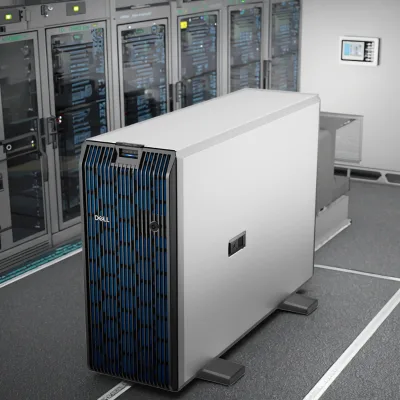
Comprehensive Sourcing Guide
Tower Server Sourcing Guide
Tower servers represent a critical infrastructure component for enterprises seeking scalable, high-performance computing within a compact footprint. Unlike rack-mounted alternatives, tower configurations offer flexibility in deployment environments where space constraints or noise sensitivity are primary concerns. This guide synthesizes observed market data and technical attributes to help procurement professionals navigate the selection process effectively. By focusing on verified specifications and commercial realities, buyers can mitigate risk and ensure alignment with organizational IT strategies.
The current market landscape for tower servers is characterized by a diverse range of models, from entry-level workstations to robust enterprise-grade systems. Observed listings indicate a product count of thirty distinct items, with prices ranging significantly from $425 to $15,000 USD. This wide variance reflects differences in processing power, memory capacity, and storage configurations. Understanding these distinctions is essential for aligning procurement budgets with specific operational needs, whether for industrial automation, enterprise data processing, or specialized workstation tasks.
Product Scope and Observed Listing Signals
The observed product catalog reveals a mix of server types, primarily categorized as tower servers and desktop workstations, with some entries labeled as industrial PCs (IPC). Models such as the Dell PowerEdge T640, T350, T150, T160, and T100c are frequently cited, indicating a strong presence of established OEM lines in the supply chain. These models span various application domains, including enterprise-level operations and industrial settings. Buyers should note that while many listings emphasize enterprise applications, others target industrial or mobile workstation use cases, requiring careful verification of the intended deployment environment.
Price points in the observed data vary widely, suggesting that cost is heavily influenced by configuration rather than base model alone. The lower end of the spectrum, around $425, likely corresponds to basic configurations or older generation hardware, while prices approaching $15,000 reflect high-end systems with advanced processors and extensive memory. Minimum Order Quantities (MOQ) are generally low, ranging from 1 to 2 units, which facilitates pilot deployments or small-scale upgrades. However, buyers must verify if these MOQs apply to customized configurations or standard stock items, as customization availability is explicitly noted in several listings.
Technical Specifications to Verify
Processor architecture and frequency are pivotal in determining server performance. Observed data highlights systems based on the X86 server architecture, with specific mention of Intel Xeon E-2400 processors. Main frequencies observed range from 2.1GHz to 3.2GHz, indicating a variety of performance tiers. Buyers must verify the exact CPU model and core count, as performance scales non-linearly with frequency and thread count. Some listings mention up to 20 CPU threads, which is crucial for virtualization and multi-threaded workloads. It is essential to confirm that the processor matches the workload requirements, whether for high-frequency trading, data analytics, or general enterprise applications.
Memory and storage configurations also vary significantly across the observed listings. Memory capacities range from 8GB to 128GB, with specific models supporting up to 128GB of RAM. Storage options include 1TB hard drives, but buyers should verify the type of storage (HDD vs. SSD) and RAID capabilities. RAID controllers such as H330, H345, and H355 are mentioned, which are critical for data redundancy and performance. For industrial or enterprise applications, ensuring the correct RAID level and controller compatibility is vital to prevent data loss and maintain system uptime. Additionally, verify the maximum supported memory capacity to ensure future scalability.
Compliance and Safety Documentation
While specific certification details are not uniformly provided in the observed data, buyers must ensure that all tower servers comply with relevant international safety and electromagnetic compatibility standards. Standard compliance is mentioned in some listings, but the specific standards (e.g., CE, FCC, UL) must be verified for the target market. This is particularly important for industrial applications where environmental conditions may impose stricter requirements. Buyers should request certification documents from suppliers to ensure that the hardware meets local regulatory requirements, avoiding potential legal and operational hurdles during deployment.
Warranty and support terms are critical components of the procurement process. Observed listings frequently mention a 3-year warranty, which is a standard offering for enterprise hardware. However, buyers must clarify the scope of this warranty, including whether it covers parts, labor, and on-site service. Some listings mention "Smartnet" services, which may indicate extended support options. It is advisable to negotiate clear service level agreements (SLAs) that define response times and resolution procedures. Understanding the warranty terms helps in planning for long-term maintenance costs and minimizing downtime in case of hardware failure.
Cost Drivers and Commercial Terms
The cost of tower servers is driven by several factors, including processor performance, memory capacity, storage type, and RAID configuration. The observed price range of $425 to $15,000 USD reflects these variations. Buyers should analyze the total cost of ownership (TCO), which includes not only the initial purchase price but also energy consumption, maintenance, and potential upgrades. High-performance systems with 128GB RAM and advanced RAID controllers will naturally command higher prices but may offer better long-term value through improved efficiency and reliability.
Commercial terms such as shipping, payment, and lead times also impact the overall cost. Observed data indicates lead times of 1-2 days after payment for some items, suggesting that stock availability is a key factor. Shipping terms like FOB (Free on Board) are mentioned, which affects who bears the risk and cost during transit. Buyers should clarify the delivery port, which is noted as Beijing in some listings, and choose appropriate shipping methods such as DHL, FedEx, or UPS. Understanding these terms helps in budgeting for logistics and ensuring timely delivery, which is crucial for maintaining project schedules.
Supplier Qualification and Quality Control
Supplier qualification is essential to ensure the reliability and authenticity of the tower servers. Buyers should verify the supplier's reputation, experience, and ability to provide genuine OEM products. The observed data mentions products originating from Beijing, China, which is a major hub for electronics manufacturing. However, buyers must conduct due diligence to confirm that the supplier is authorized or has a strong track record in distributing these specific models. Requesting references or case studies can provide insights into the supplier's reliability and customer service quality.
Quality control measures should be established to ensure that the delivered servers meet the specified technical requirements. This includes verifying the physical condition of the hardware, checking for any signs of damage or tampering, and testing the system upon receipt. Some listings mention packing in wooden cases or cartons, which should be inspected for integrity. Buyers should also verify the serial numbers and warranty registration details to ensure that the products are new and not refurbished. Establishing a clear quality acceptance criteria helps in rejecting non-conforming goods and holding suppliers accountable.
Long-Term Procurement Checks
Long-term procurement success depends on the ability to scale and maintain the server infrastructure. Buyers should consider the upgrade paths available for the selected tower servers, including the maximum supported memory and storage capacities. The observed data indicates that some models support up to 128GB of RAM, which provides room for future expansion. Additionally, verifying the compatibility of future components with the existing system architecture is crucial to avoid costly replacements. Planning for scalability ensures that the investment remains relevant as business needs evolve.
Regular maintenance and monitoring are also key to long-term procurement checks. Buyers should establish a routine for firmware updates, security patches, and hardware inspections. The observed 3-year warranty provides a baseline for support, but buyers may need to consider extended support contracts for critical systems. Monitoring system performance and health metrics can help in predicting potential failures and scheduling proactive maintenance. By integrating these long-term checks into the procurement strategy, buyers can maximize the lifespan and performance of their Tower Server investments.
FAQs
What is the maximum memory capacity for these tower servers?
The maximum memory capacity observed is 128GB for specific models like the T150. Some configurations support up to 64GB, while others are listed with 16GB or 8GB depending on the workstation type and application requirements.
Which RAID controllers are available for these tower servers?
Available RAID controllers include the H330, H345, and H355 models. These controllers are integrated into the X86 server architecture to ensure data redundancy and performance for enterprise and industrial applications.
Can I customize the specifications of these tower servers?
Yes, customization is available for these tower servers. Buyers can request specific configurations to meet enterprise or industrial needs, with options for different processor frequencies and memory capacities.
What is the lead time for delivery after payment?
The lead time is typically 1 to 2 days after payment is received. Delivery ports are located in Beijing, and shipment terms include options like DHL, FedEx, UPS, or air freight.
What warranty is provided for these tower servers?
A 3-year warranty is provided for these tower servers. This coverage applies to the hardware and ensures reliability for both desktop and mobile workstation types used in enterprise environments.
Which processor models are used in these tower servers?
Processor models include Intel Xeon E-2400 with main frequencies of 2.1GHz, 2.8GHz, and 3.2GHz. These processors support X86 server architecture and are suitable for various workstation types.
What are the packaging options for these tower servers?
Packaging options include wooden cases, carton cases, or standard boxes. The net weight is approximately 20kgs, and products are shipped as stock items ready for immediate delivery.