Source Tower Crane Transfer Mast Section for Construction, Hoisting, and Lifting
Find and compare 30 Tower Crane Transfer Mast Section options from China. Evaluate specifications like L68B2 and K type models, check OEM customization, and review quality testing details for your project needs.
Key considerations
Products List


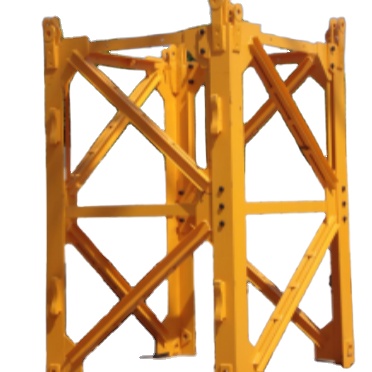


Tower Crane Hoisting Luffing Mast Section Basket Jib Section Tower Section 5t
$50000.00 - $74000.00
MOQ: 1 Pieces

China Manufacturers for Saletower Crane Mast Sectionf42b
$5000.00 - $20000.00
MOQ: 1 Sets
Mingyuan Dazhi Import and Export Trading (Liaoning) Co., Ltd

Cheap Second-Hand Tower Crane Standard Section for Sale
$1000.00 - $1500.00
MOQ: 1 Sets
Mingyuan Dazhi Import and Export Trading (Liaoning) Co., Ltd


Used Tower Crane Standard Section L68b2 for Sale
$1000.00 - $1500.00
MOQ: 1 Sets
Mingyuan Dazhi Import and Export Trading (Liaoning) Co., Ltd


Brand New Mast Section Folding Flattop Highway Bridge Tower Crane Platform
$100000.00 - $200000.00
MOQ: 1 Pieces


Comprehensive Sourcing Guide
Tower Crane Transfer Mast Section Sourcing Guide
The Tower Crane Transfer Mast Section serves as a critical structural component designed to elevate the main tower body during construction projects, enabling the crane to reach significant heights while maintaining stability. These sections are typically fabricated from high-strength angle steel and are engineered to support substantial vertical loads, with observed specifications ranging from standard dimensions like 1.6x1.6x2.5 meters to larger configurations such as 2.0x2.0x3.0 meters. Buyers must recognize that these components are not generic; they are often customized to fit specific crane models, such as the L68B2 or K-type mast sections, ensuring seamless integration with existing hoisting machinery.
Procurement of these sections requires a clear understanding of their operational context, as they are primarily deployed in construction usage scenarios where hydraulic power sources and wire rope sling types are standard. The observed market data indicates that these units are frequently supplied in a new condition, with some listings highlighting a maximum lifting weight capacity of up to 8 tons and tip loads around 1.3 tons. When sourcing, buyers should verify that the specific mast section aligns with the required free-standing height, which can vary from 30 meters to over 120 meters depending on the project's vertical demands and the specific model configuration selected.
Product Scope and Observed Listing Signals
The product scope for tower crane transfer mast sections encompasses a variety of standardized and customizable configurations, including split mast sections and specific model identifiers like L68 and L69. Listings often signal availability through attributes such as customizable logos, colors, and OEM services, indicating that suppliers are prepared to adapt the physical appearance and branding of the unit to match the buyer's corporate identity or project requirements. This flexibility extends to the physical dimensions, with observed models ranging from 2M-1.6M to larger 2x2x3m units, allowing procurement teams to select the exact geometry needed for their specific crane assembly.
Observations of the market reveal a wide range in listing prices, from as low as 1 USD to over 200,000 USD, reflecting the diversity in unit size, material volume, and customization levels. The minimum order quantity (MOQ) is frequently observed to be as low as 1 piece, which is advantageous for projects requiring single replacements or small-scale additions to an existing fleet. However, buyers must be cautious when interpreting these signals, as the price variance often correlates with the specific model standard, such as the L68B2 or 2m-1.6m variants, and the complexity of the required customization, rather than a uniform pricing structure across all listings.
Technical Specifications to Verify
When evaluating technical specifications, the primary focus must be on the dimensional accuracy and structural integrity of the mast section, particularly the cross-sectional size and length. Buyers should verify that the listed dimensions, such as 1.6x1.6x2.5m or 2.0x2.0x3.0m, match the precise requirements of their crane's mast climbing mechanism, as even minor deviations can compromise the stability of the entire tower structure. The material composition is another critical factor, with angle steel being the standard material observed in the supply chain, and it is essential to confirm that the steel grade meets the necessary tensile strength requirements for the intended lifting height and load capacity.
Load-bearing capabilities and performance metrics must be rigorously checked against the specific operational needs of the construction site. Key parameters to verify include the maximum lifting weight, which can reach up to 8 tons, and the tip load capacity, often cited around 1.3 tons, alongside the maximum lifting height which may range from 150 to 200 meters. Additionally, the type of mast section, whether it is a standard mast, a split mast, or a specific model like the L68B2, must be confirmed to ensure compatibility with the crane's jib length, which can extend up to 50 meters in some configurations, and the overall free-standing height requirements of the project.
Compliance and Safety Documentation
Compliance and safety documentation for tower crane transfer mast sections should include verified certifications that attest to the quality and safety standards of the manufacturing process. The observed market data indicates that many suppliers provide CE certification and ISO 9001 certification, which are critical for ensuring that the product meets international safety and quality management requirements. Buyers must request and validate these certificates to confirm that the specific unit being purchased has undergone the necessary testing and quality control procedures, rather than relying on general claims that may not apply to the specific batch or model.
In addition to certifications, safety documentation should encompass detailed inspection reports and quality assurance records that verify the condition of the product as new. The supply chain often highlights that products undergo 100% testing to ensure great performance, a claim that buyers should substantiate by requesting specific test results or inspection videos before finalizing the purchase. It is also important to verify that the packaging, whether described as seaworthy packing, palletized, or nude in a container, meets the logistical requirements to prevent damage during transit, ensuring that the structural integrity of the mast section remains uncompromised upon arrival at the construction site.
Cost Drivers and Commercial Terms
The cost of tower crane transfer mast sections is driven by several factors, including the specific model standard, the volume of material used, and the level of customization required. While the observed price range is vast, from 1 USD to 200,000 USD, the actual cost is heavily influenced by the dimensions of the section, such as the 2x2x3m configuration versus smaller 1.6x1.6x2.5m units, and the inclusion of value-added services like logo customization or specific color finishes. Buyers should analyze the unit price in the context of the total volume and the specific model standard to avoid misinterpreting low-cost listings that may refer to smaller components or different product categories.
Commercial terms regarding shipping and packaging play a significant role in the total cost of ownership, with options ranging from seaworthy packing to palletized delivery or nude container shipping. The observed data suggests that suppliers offer flexible packaging solutions to suit different logistical needs, but buyers must clarify the exact packing method to ensure the product arrives without damage. Furthermore, the minimum order quantity of 1 piece allows for flexible purchasing, but buyers should negotiate terms that account for the potential need for multiple sections to achieve the desired free-standing height, ensuring that the commercial agreement supports the full scope of the project requirements.
Supplier Qualification and Quality Control
Supplier qualification for tower crane transfer mast sections should prioritize manufacturers who demonstrate a robust quality control process, including 100% testing and video outgoing inspection services. The availability of video inspections is a strong indicator of a supplier's transparency and confidence in their product quality, allowing buyers to visually verify the condition and assembly of the mast section before shipment. Buyers should request these video records as part of the pre-shipment verification process to ensure that the product matches the described specifications and is free from defects that could compromise safety during operation.
In addition to inspection capabilities, suppliers should be evaluated based on their ability to provide OEM services and customization options, which are frequently observed in the market. The ability to customize logos and colors, along with the provision of specific model standards like L68B2 or K-type sections, indicates a supplier's flexibility and technical capability to meet unique project needs. Buyers should verify that the supplier has a proven track record in the construction machinery sector, particularly in the production of bearing types and mast sections, to ensure that the product will perform reliably under the demanding conditions of high-rise construction projects.
Long-Term Procurement Checks
Long-term procurement checks for tower crane transfer mast sections should focus on the consistency of product quality and the reliability of the supplier's supply chain over time. Buyers should establish a protocol for periodic re-verification of certifications, such as CE and ISO 9001, to ensure that the supplier maintains their compliance status and continues to adhere to international safety standards. Regular audits of the manufacturing process and quality control records can help identify any potential deviations in production that might affect the performance of the mast sections, ensuring that future orders meet the same high standards as the initial purchase.
Sustainability and lifecycle management are also critical considerations for long-term procurement, as the durability of the angle steel and the effectiveness of the packaging directly impact the longevity of the equipment. Buyers should assess the supplier's ability to provide spare parts or replacement sections that match the original specifications, ensuring that the crane can be maintained and extended throughout its operational life. By maintaining a close relationship with suppliers who offer customizable options and robust quality assurance, buyers can secure a reliable supply of tower crane transfer mast sections that support the long-term success of their construction projects.
FAQs
What specifications are available for tower crane transfer mast sections?
Available specifications include L68B2, 2M-1.6M, K type, and split mast sections. Dimensions vary, with common sizes like 1.6x1.6x2.5m and 2x2x3m. These sections are constructed from angle steel and designed for tower crane applications. Customization is available for logos and colors to meet specific project requirements.
Can tower crane transfer mast sections be customized for specific projects?
Yes, customization is available for logos and colors. OEM services are provided to tailor products to specific needs. The sections are designed for easy assembly and come with customizable branding options. This flexibility allows buyers to align the equipment with their company identity or specific site requirements.
What certifications do tower crane transfer mast sections hold?
Products typically hold CE and ISO9001 certifications. These standards ensure quality and safety compliance for construction usage. The sections are 100% tested for great performance before shipment. Buyers can rely on these certifications to verify that the equipment meets international manufacturing and quality management standards.
How are tower crane transfer mast sections packaged for shipping?
Packaging options include seaworthy packing, nude in container, and palletized shipping. The method depends on the specific product model and order requirements. All packaging ensures safe transit via sea freight. This approach protects the angle steel structure during long-distance transport from the origin in China to the destination.
What is the minimum order quantity for tower crane transfer mast sections?
The minimum order quantity is one piece. This low MOQ allows buyers to purchase single units for testing or small projects. It provides flexibility for sourcing without requiring large bulk commitments. Buyers can order specific models like L68 or K type sections individually to suit their immediate operational needs.
Where are tower crane transfer mast sections manufactured?
These sections are manufactured in Shandong, China. The origin ensures access to established industrial supply chains for heavy machinery components. Products are shipped from this location using sea freight. Buyers can expect consistent production standards and logistical efficiency from this major manufacturing hub in China.