Source Traditional CE Crystal Chandelier for Hotels, Homes, and Restaurants
Find and compare 26 Traditional CE Crystal Chandelier options for hotels, luxury homes, and restaurants. These fixtures feature iron and crystal bodies with E14 lamp holders, offering contemporary or European styles suitable for living rooms and conference rooms.
Key considerations
Products List


CE Certified Crystal Chandelier for Living Room Hotel Dining Room Ceiling Light
$25.00 - $170.00
MOQ: 1 Pieces


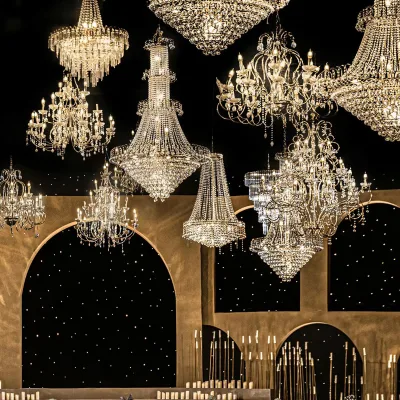
Hotel Wedding Chandelier Decoration Crystal Pendant Lights Luxury Crystal Chandelier
$399.00 - $920.00
MOQ: 2 Pieces


Comprehensive Sourcing Guide
Traditional CE Crystal Chandelier Sourcing Guide
Sourcing traditional crystal chandeliers requires a careful balance between aesthetic fidelity and technical reliability, particularly when targeting markets with strict regulatory frameworks. The term "traditional" in this context often overlaps with contemporary or European design styles, featuring intricate iron structures and high-clarity crystal elements that serve as focal points in luxury residential and commercial spaces. Buyers must navigate a landscape where visual appeal is paramount, yet the underlying electrical components must meet rigorous safety and performance standards. This guide provides a structured approach to evaluating suppliers, verifying technical specifications, and ensuring compliance, ensuring that procurement decisions are grounded in observable data rather than marketing assertions.
The procurement process for these lighting fixtures involves more than selecting a visual style; it requires a deep understanding of the supply chain dynamics centered in manufacturing hubs like Zhongshan, China. Suppliers in this region offer a wide range of customization options, from finish variations to specific crystal configurations, allowing buyers to tailor products to their brand identity. However, this flexibility introduces complexity in quality control and consistency. Buyers need to establish clear communication channels regarding design tolerances and material grades to prevent discrepancies between samples and bulk production. This guide outlines the critical steps to mitigate these risks and secure a reliable supply of high-quality chandeliers.
Product Scope and Observed Listing Signals
The market for crystal chandeliers presents a diverse array of products, with observed price points ranging from approximately $4.90 to $920.00 USD, reflecting significant variations in material quality, size, and complexity. The observed minimum order quantities (MOQs) typically span from 1 to 100 units, indicating that suppliers cater to both small-scale boutique orders and larger commercial projects. This wide range suggests that buyers can find options suitable for various budget constraints and project scales, but it also necessitates careful evaluation of what is included in the base price. Factors such as the type of crystal used, the finish of the metal frame, and the complexity of the lighting circuitry significantly influence the final cost.
Product listings often highlight specific design attributes, such as "European" or "Contemporary" styles, and materials like "Iron+Crystal" or pure "Crystal" bodies. Dimensions vary widely, from compact pendant lights with diameters of 600mm to large, multi-tiered chandeliers with complex structures like D1200+D1000+D800+D600+D400+D200 H340mm. Buyers should pay close attention to these physical specifications to ensure the chandelier fits the intended space both visually and structurally. Additionally, the availability of customization services allows for tailored solutions, but buyers must verify the feasibility and cost implications of such requests early in the sourcing process to avoid delays or unexpected expenses.
Technical Specifications to Verify
Electrical compatibility is a critical technical aspect that buyers must verify before placing orders. Observed input voltage ranges include AC85-265V and 90-260V, indicating that many products are designed for global use with wide voltage tolerance. However, some listings specify a fixed 36V input, which requires a compatible transformer or power supply. Buyers must ensure that the selected chandelier matches the electrical infrastructure of the installation site. Furthermore, the lamp holder types vary, with E14, E12, E26, E27, and E39 being common options, alongside integrated LED strips. Understanding the lighting source, such as E14/E1210PCS Max 40W or E12/E1412PCS Max 40W, is essential for planning bulb procurement and energy consumption estimates.
The optical performance and physical construction of the chandelier also require detailed verification. Beaming angles of 80° and irradiated areas of 10-15m² or ≥30 square meters provide guidance on the lighting coverage. Buyers should assess whether the chandelier is suitable for the intended application, such as living rooms, hotels, restaurants, or conference rooms. The finish, whether polished gold or polished chrome (CH), affects both the aesthetic appeal and the durability of the fixture. Additionally, the use of specific LED chips, such as Bridgelux, may influence light quality and longevity. Buyers should request detailed technical datasheets to confirm these specifications and ensure they align with the project's lighting design requirements.
Compliance and Safety Documentation
Regulatory compliance is non-negotiable for importing lighting products, particularly into markets with stringent safety standards. The European Union, for instance, requires CE marking, which encompasses directives such as EMC (Electromagnetic Compatibility) and LVD (Low Voltage Directive). Buyers must verify that suppliers provide valid CE certificates and test reports from accredited laboratories. Other relevant certifications observed in the market include RoHS (Restriction of Hazardous Substances), which ensures the product is free from certain dangerous materials, and CCC (China Compulsory Certification) for the Chinese market. Buyers should request copies of these certificates and verify their authenticity with the issuing bodies to avoid customs clearance issues.
Beyond CE and RoHS, other certifications may be relevant depending on the target market. For example, the US market may require ETL or FCC certification, while Australia may demand SAA compliance. The presence of certifications like Energy Star, GOST, or PSE indicates adherence to specific regional standards. Buyers should maintain a checklist of required certifications for each destination market and ensure that the supplier can provide the necessary documentation. It is also important to note that certification status can change, so buyers should request updated certificates for each batch of production to ensure ongoing compliance.
Cost Drivers and Commercial Terms
The total cost of procurement extends beyond the unit price of the chandelier. Factors such as packaging, shipping, and insurance significantly impact the final landed cost. Observed packing methods include carton packing with foam inside or wooden packing, which offers varying levels of protection during transit. Wooden packing is generally more robust for large or fragile chandeliers but adds to the shipping weight and cost. Buyers should evaluate the packaging quality to minimize the risk of damage during transit, which can lead to costly replacements and delays. Additionally, the lead time for production, observed to be 25-30 days after the deposit, should be factored into the project timeline.
Commercial terms, including payment methods and warranty policies, are crucial for risk management. A 10-year warranty period is a significant value proposition, but buyers must understand the terms and conditions, such as what is covered and the process for claiming warranty service. The color guarantee of 3 years is another important consideration, ensuring that the finish remains intact over time. Buyers should negotiate clear terms regarding defects, returns, and after-sales support. Understanding the MOQ and price breaks can also help in optimizing order quantities to achieve better unit costs while managing inventory risks.
Supplier Qualification and Quality Control
Evaluating supplier qualifications is essential to ensure a reliable partnership. Buyers should verify the supplier's business license, manufacturing capabilities, and quality management systems. Suppliers located in Zhongshan, China, often have access to a robust supply chain for crystal and metal components, but buyers should assess their ability to maintain consistent quality across large orders. Requesting references from previous clients and conducting factory audits, if feasible, can provide valuable insights into the supplier's operational standards. Additionally, suppliers offering lighting and circuitry design services may have a deeper technical expertise, which can be beneficial for custom projects.
Quality control measures should be established before production begins. Buyers should define clear quality standards, including acceptable tolerances for dimensions, finish, and electrical performance. Implementing pre-production samples and during-production inspections can help identify and rectify issues early. Buyers should also consider third-party inspection services to verify product quality before shipment. Clear communication regarding quality expectations and regular updates from the supplier can help maintain alignment throughout the production process. Establishing a strong quality control framework reduces the risk of receiving substandard products and ensures customer satisfaction.
Long-Term Procurement Checks
Sourcing crystal chandeliers is not a one-time transaction but an ongoing relationship that requires continuous monitoring and evaluation. Buyers should regularly review supplier performance metrics, such as on-time delivery rates, product quality consistency, and responsiveness to issues. Maintaining open communication channels and providing constructive feedback can help strengthen the partnership and drive continuous improvement. Additionally, staying informed about changes in regulatory requirements and market trends is essential to ensure that the sourced products remain compliant and competitive.
Long-term procurement strategies should also include diversification of suppliers to mitigate risks associated with single-source dependency. Building relationships with multiple qualified suppliers can provide flexibility in case of supply chain disruptions or capacity constraints. Buyers should also consider the lifecycle of the products, including availability of spare parts and compatibility with future lighting technologies. By adopting a proactive and strategic approach to procurement, buyers can secure a reliable supply of high-quality crystal chandeliers that meet their aesthetic and functional requirements while minimizing risks and costs.
FAQs
What certifications do these chandeliers hold?
These chandeliers hold multiple certifications including CE, RoHS, CCC, and ETL. Additional certifications like FCC, Energy Star, and VDE are also available depending on the specific model and target market requirements.
Can I customize the design style of the light?
Yes, customization is available for the design style. Buyers can choose between Contemporary, Traditional, or European styles to match their specific interior design needs and project requirements.
What is the lead time for delivery after deposit?
The delivery date is guaranteed to be 25-30 days after the deposit. This timeline ensures that the quality of the iron and crystal materials is maintained throughout the manufacturing process.
Which lamp holders are compatible with this product?
The product supports various lamp holders including E14, E26, E27, and E39. Some models also accommodate LED strips or specific LED configurations like E12 or E14 with a maximum wattage of 40W.
Where are these crystal chandeliers manufactured?
These products originate from Zhongshan, China. This location is a known hub for lighting manufacturing, ensuring access to high-quality materials like iron and crystal for the body construction.
What is the warranty period for the lighting fixture?
The warranty period for this chandelier is 10 years. This long-term coverage applies to the product quality and includes a color guarantee for up to 3 years.
How large an area can this chandelier illuminate?
The irradiated area ranges from 10-15 square meters for smaller models to 30 square meters or more for larger installations. The specific coverage depends on the product dimension and beam angle.