Source Transparent Liquid Motion Egg Paperweight for Office, Gift, and Decor
Find and compare Transparent Liquid Motion Egg Paperweight options from 30 verified suppliers. Buyers can review specifications for egg trays, cartons, and related paper products suitable for commercial and home use.
Key considerations
Products List


Paper Egg Packaging Pulp Tray with Logo for Egg
$0.07 - $0.30
MOQ: 1000 Pieces
Dezhou Chunyang Environmental Protection Materials Co., Ltd.

Paper Big Egg Tray 20 Chicken Eggs Paper Pulp
$0.07 - $0.30
MOQ: 1000 Pieces
Dezhou Chunyang Environmental Protection Materials Co., Ltd.


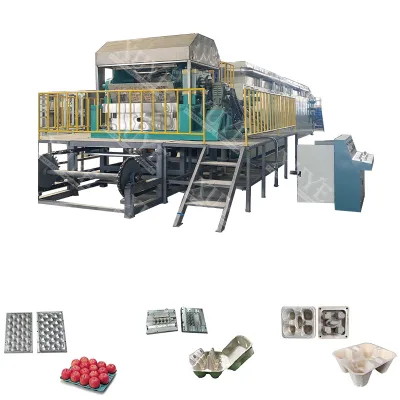
Take Away Paper Pulp Egg Carton/Tray Production Operation with Great Percise
$150000.00 - $220000.00
MOQ: 1 Sets









Comprehensive Sourcing Guide
Strategic Sourcing Guide for Paper-Based Egg Packaging and Related Equipment
The search for a "Transparent Liquid Motion Egg Paperweight" presents a significant semantic and functional challenge within the current B2B industrial landscape. Based on the available product data, the core keyword likely stems from a misunderstanding of product categories or a conflation of distinct items. The supplied facts describe industrial paper pulp processing machinery and finished paper-based packaging solutions, specifically egg trays, cartons, and boxes. There is no evidence in the provided dataset of transparent liquid motion products, paperweights, or decorative items. Consequently, this guide focuses on the actual available inventory: automated paper egg tray making machines and the resulting pulp-based packaging products. Buyers seeking "transparent liquid motion" items will find that the market for paper-based industrial equipment operates on entirely different parameters, focusing on durability, production capacity, and material composition rather than optical clarity or decorative motion.
Understanding the Actual Product Category and Material Composition
The primary discrepancy in the search query lies in the material properties. The supplied facts explicitly define the material as "Paper," "Waste Paper / Cardboard," and "Paper + Water." The production process utilizes "Mechanical Pulp" to create finished products such as "Egg Tray," "Egg Carton," "Egg Box," "Pizza Tray," and "Seeds Pot." These are solid, structural items designed for industrial and agricultural use, not transparent decorative objects. The color is predominantly listed as "White," and the texture is achieved through "Embossing" and "Pulping."
If a buyer is looking for a paperweight, the available data suggests that the closest functional equivalent in this dataset is the finished paper product itself, which serves as a container rather than a weight. The "Industrial Use" is strictly categorized as "Egg Tray, Egg Carton, Egg Box." The "Feature" list highlights that these products are "Recyclable" and "Durable," with a "Life Time" of "More Than 1 Year" when used as equipment or packaging. The "Plastic Type" mentioned as "PP" likely refers to specific components of the machinery or auxiliary packaging, but the primary product is paper-based. Buyers must adjust their expectations from a decorative, transparent item to a functional, opaque, and recyclable paper solution.
Technical Specifications and Production Capabilities
For buyers interested in the machinery that produces these paper egg trays, the technical specifications are extensive and vary by model. The dataset lists several specific model numbers, including G40033, G40267, G40724, G40808, and G40811. These machines are described as "Automatic" with a "Computer Control Panel" and "Drying Function." The drying process is a critical technical differentiator, with options ranging from "Nature Sun Drying" and "Brick Kiln Dryer" to a "Fully Automatic Metal Dryer."
Production capacity is a key metric for these machines. The data indicates a range of "1000-7000PCS/Hour," with a specific capacity noted as "5500-6000PCS Per Hour" for certain configurations. The voltage requirements are specified as "220/380V," which is standard for industrial equipment in many regions. The physical dimensions of the finished products are also standardized, with a specific size listed as "30305cm" and a "Model Number" of "30 Holes," indicating the capacity of the tray to hold thirty eggs. The "Condition" of the machinery is listed as "New," and the "Raw Material" is confirmed as "Waste Paper / Cardboard."
Compliance, Certification, and Safety Standards
When sourcing industrial machinery and packaging, compliance is paramount. The supplied facts list "CE" as a certification, which is a crucial indicator for equipment sold within the European market and other regions recognizing European standards. However, the dataset does not provide a comprehensive list of all certifications, nor does it mention ISO standards or specific food safety certifications beyond the general "Application: Food."
Buyers must verify that the "CE" certification applies to the specific model they are purchasing, as certifications can be model-specific. The "Standard" for the product is listed as "Customized" in some contexts and "30305cm" in others, suggesting that while the machinery may have standard certifications, the final product dimensions and standards are often tailored to the buyer's needs. The "Industrial Use" and "Application" fields confirm that these products are suitable for "Food," "Fruit," "Cosmetic," "Toy," "Medicine," and "Hardware," implying a need for materials that do not contaminate these goods. The "Recyclable" feature is a significant compliance advantage in regions with strict environmental regulations regarding single-use plastics.
Cost Drivers and Procurement Parameters
The cost of acquiring these products is influenced by several factors derived from the data. The "MOQ" (Minimum Order Quantity) is listed as "1000PCS" for the finished products, but the observed range in the market is "1-50000," indicating that bulk orders can significantly alter the per-unit economics. The price range observed is extremely wide, from "0.05" to "220000" USD. This vast disparity likely reflects the difference between purchasing a single unit of packaging versus an entire automated production line.
The "Advantage" of the product is listed as "Durable" and "Commercial," suggesting that the cost is justified by longevity and suitability for business use. The "Packing" method is described as "Woven Bag," "Export Packing," and "Standard Packing," which adds to the logistics cost. The "Location" is specified as "Hebei, China" or generally "China," which impacts shipping costs and lead times. Buyers should note that the "Weight" of the machinery is "Model Decision," meaning the shipping cost will vary significantly depending on the specific model (G40033 vs. G40811) selected. The "Customization" feature is available, which typically incurs additional costs for tooling and design changes.
Supplier Evaluation and Operational Verification
Evaluating suppliers for this specific category requires a focus on their technical capability and customization options. The data confirms that "Customization" is available for the "Style," "Logo," and "Standard." Suppliers must demonstrate the ability to handle "Customized Logo" printing via "Embossing." The "Drying Way" options suggest that suppliers may offer different levels of automation, from manual sun drying to fully automatic metal dryers, which is a key differentiator in operational efficiency.
Buyers should verify the "Applicable Industries" listed, which include "Manufacturing Plant," "Farms," "Restaurant," and "Home Use." A supplier capable of serving all these sectors likely has a robust supply chain and quality control system. The "Function" of the machines is described as "Egg Tray Making Machine Automatic" and "Paper Egg Tray Making Machine," indicating a focus on automation. When evaluating a supplier, buyers should request proof of the "Computer Control Panel" functionality and the specific "Drying Function" capabilities to ensure the machine meets their production speed requirements. The "Life Time" claim of "More Than 1 Year" should be backed by warranty terms and after-sales support documentation.
Quality Control and Long-Term Procurement Considerations
Quality control for paper-based egg trays involves verifying the structural integrity and the consistency of the "Mechanical Pulp." The "Finished Products" list includes "Egg Tray, Egg Carton, Wine Tray, Fruit Tray," suggesting that the machinery is versatile. However, the quality of the final product depends heavily on the "Raw Material" quality, which is "Waste Paper / Cardboard." Buyers should ensure that the supplier has a strict process for filtering and pulping this material to prevent contaminants from reaching the final product, especially given the "Application: Food" classification.
Long-term procurement considerations include the availability of spare parts for the "Automatic" machinery. The "Voltage" of "220/380V" implies that electrical components may need to be replaced or upgraded as the buyer's facility expands. The "Export Packing" and "Standard Packing" methods ensure that the machinery arrives in good condition, but buyers should inspect the "Condition" upon receipt. The "Recyclable" nature of the product is a long-term asset, as it aligns with sustainability goals and may reduce waste disposal costs. Buyers should also consider the "Drying Way" in terms of energy costs; a "Fully Automatic Metal Dryer" may have higher energy consumption than "Nature Sun Drying," but it offers consistency and faster production cycles.
Comparative Analysis of Product Models and Capabilities
To assist in decision-making, the following table compares the key specifications of the available models and features based on the supplied data. This comparison highlights the differences in capacity, drying methods, and application scope.
| Feature | Model G40033 | Model G40267 | Model G40724 | Model G40808 | Model G40811 | General Specification |
|---|---|---|---|---|---|---|
| Production Capacity | Variable | Variable | Variable | Variable | Variable | 1000-7000 PCS/Hour |
| Specific Capacity | N/A | N/A | N/A | N/A | N/A | 5500-6000 PCS/Hour |
| Drying Method | N/A | N/A | N/A | N/A | N/A | Nature Sun, Brick Kiln, Metal Dryer |
| Control System | Computer Panel | Computer Panel | Computer Panel | Computer Panel | Computer Panel | Automatic |
| Voltage | 220/380V | 220/380V | 220/380V | 220/380V | 220/380V | 220/380V |
| Material | Waste Paper | Waste Paper | Waste Paper | Waste Paper | Waste Paper | Paper + Water |
| Finished Product | Egg Tray | Egg Tray | Egg Tray | Egg Tray | Egg Tray | Egg Tray, Fruit Tray, etc. |
| Certification | CE | CE | CE | CE | CE | CE |
Note: Specific capacity and drying method details for individual models are not explicitly separated in the source text but are listed as general attributes for the product line. Buyers must verify these details with the supplier for each specific model number.
Final Recommendations for Procurement Strategy
In conclusion, the search for a "Transparent Liquid Motion Egg Paperweight" cannot be fulfilled by the current product inventory, which is dedicated to industrial paper pulp machinery and packaging. Buyers must pivot their strategy to focus on the actual available products: automated egg tray making machines and the resulting paper cartons. The decision-making process should prioritize the production capacity (1000-7000 PCS/Hour), the drying method (automatic vs. natural), and the customization options (logo, size, style). Compliance with "CE" standards and the "Recyclable" nature of the materials are critical for long-term viability. By understanding the distinction between the intended search term and the actual market offerings, buyers can effectively source high-quality, durable, and commercially viable paper-based packaging solutions that meet their industrial and agricultural needs. The wide price range and MOQ flexibility allow for scalability, but careful verification of technical specifications and supplier capabilities is essential to ensure the machinery meets the required production standards.
FAQs
What material is used for the egg trays?
The egg trays are made from paper, specifically waste paper or cardboard processed into mechanical pulp. This material is recyclable and suitable for food applications like eggs, fruits, and cosmetics.
Can I customize the logo on the egg cartons?
Yes, customized logos are accepted on the egg cartons using embossing printing handling. Buyers can request specific styles and designs to match their brand identity for commercial use.
What is the production capacity of the machines?
The automated machines produce between 1000 and 7000 pieces per hour depending on the model. Specific configurations can reach capacities of 5500 to 6000 pieces per hour for efficient output.
How are the finished products packed for export?
Finished products are packed in woven bags, export packing, or standard packing to ensure safe transit. This packaging method protects the durable egg trays during shipping from China to global destinations.
What certifications do the machines hold?
The machines hold CE certification, indicating compliance with European safety standards. This certification is essential for selling equipment in markets requiring strict regulatory adherence for industrial machinery.
What are the available drying methods for production?
Production supports nature sun drying, brick kiln dryers, or fully automatic metal dryers. The choice of drying method affects the production cycle and energy efficiency for the manufacturing plant.