Find True Tone Recovery Programmer Box for elevator control
Explore 30 listings of True Tone Recovery Programmer Box units designed for elevator maintenance. Compare specifications, model numbers, and packaging details to identify the right controller programmer for your public traffic or industrial lift systems; compare the available evidence and request quotations based on your requirements.
Key considerations
Products List
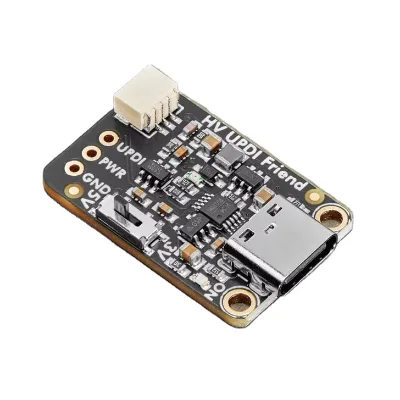
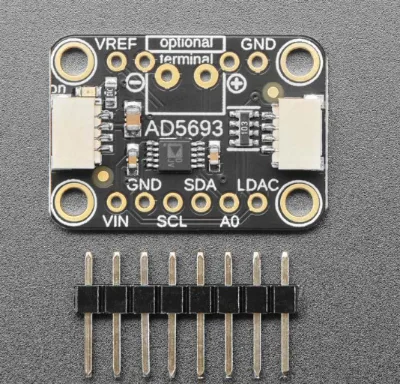
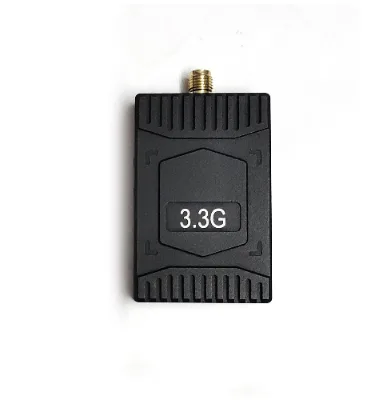


CNC Machine Numerical System Control Box
$1.00 - $550.00
MOQ: 10 Pieces
Qingyun Weijie CNC Machine Tool Accessories Manufacturing Co., Ltd.






Comprehensive Sourcing Guide
True Tone Recovery Programmer Box Sourcing Guide
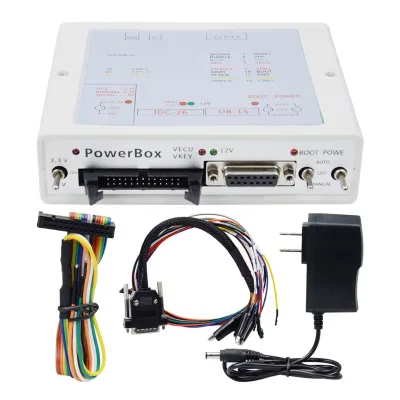
The True Tone Recovery Programmer Box serves as a critical interface for developers and technicians managing serial communication and microcomputer frequency control systems. Based on observed market listings, these units often function as development boards or tools designed for specific hardware integration, such as elevator control systems or general serial data transmission. Buyers should recognize that while some listings describe these items as "Hot Offer" development tools, the core utility lies in their ability to program and recover system states for compatible microcomputer-based devices.
Procurement decisions must account for the diverse range of physical specifications found in current supply chains, including varying package dimensions and weights. The observed data indicates single package sizes ranging from compact 10x10x5 cm units to larger 20x15x15 cm configurations, with weights typically around 0.2 kg. This variance suggests that buyers need to verify the exact physical footprint and weight requirements for their specific installation environment before finalizing an order, as the "true tone recovery" function may be embedded in different form factors depending on the intended application.
Product Scope and Observed Listing Signals
Current market signals indicate a broad spectrum of product descriptions associated with the core keyword, ranging from USB Type-C to Serial adapters to specialized controller programmers. Listings frequently highlight attributes such as "Factory Price" and "High Quality" grades, yet the specific model numbers vary significantly, including identifiers like 5893, 5811, and VRX 3.3G. This inconsistency requires buyers to carefully cross-reference the functional description against the specific model number to ensure the device supports the necessary communication protocols for their specific recovery or programming tasks.
The observed product scope also includes items marketed for elevator parts and public traffic applications, suggesting that some units may be specialized for industrial control environments rather than general consumer electronics. Buyers must distinguish between general development tools and those explicitly designed for high-load capacity scenarios, such as those with a 1000kg load capacity or specific drive modes like manual or telescoping lift mechanisms. Verifying the "Suitable for" field in product descriptions is essential to avoid purchasing a unit that lacks the necessary industrial-grade durability or control logic for heavy-duty applications.
Technical Specifications to Verify
Technical verification must begin with the communication interface and control type, as listings specify attributes like "Microcomputer Frequency Control" and "USB Type-C to Serial" connectivity. Buyers should confirm that the device supports the required baud rates and voltage levels, particularly when dealing with systems that utilize "T Guide" rails or specific lift mechanisms. The presence of a "Controller Programmer" designation implies a need for precise signal handling, making it critical to validate the datasheet availability and ensure the model number aligns with the intended frequency control requirements.
Physical and material specifications also demand rigorous scrutiny, as observed listings include materials ranging from stainless steel to generic high-quality grades with polishing surface treatments. The "Single package size" and "Single gross weight" vary widely, indicating that the internal component density and protective casing differ between models. Procurement teams must verify the "Boom Length" and "Size" parameters if the device is part of a larger mechanical assembly, ensuring that the physical dimensions do not interfere with the operational space of the target equipment, such as elevator inspection boxes or similar confined industrial spaces.
Compliance and Safety Documentation
Documentation requirements for these devices often hinge on the specific application environment, particularly when used in public traffic or elevator systems where safety standards are paramount. While some listings mention "Standard" compliance and "High Quality" grades, buyers must explicitly request evidence of adherence to relevant industry safety protocols before deployment. The absence of specific certification names in general listings necessitates a proactive approach where the buyer demands proof of compliance with local and international safety regulations for industrial control hardware.
The availability of a "Datasheet" is a critical indicator of a supplier's readiness to support technical integration and safety verification. Buyers should ensure that the provided documentation includes detailed electrical schematics, operational limits, and safety warnings specific to the "True Tone Recovery" function. Without comprehensive datasheets, it is difficult to assess the device's compatibility with existing infrastructure or its ability to meet the rigorous safety requirements of public traffic systems, making the request for complete technical documentation a non-negotiable step in the procurement process.
Cost Drivers and Commercial Terms
Cost structures for true tone recovery programmer boxes are influenced by the complexity of the internal components and the specific industrial applications they support. The observed price range of 1 to 550 USD reflects a wide disparity between basic serial adapters and specialized controller programmers designed for high-load capacity systems. Buyers should analyze whether the higher price points correlate with additional features such as "OEM" customization, specific "Control Types," or enhanced durability for industrial environments, rather than assuming a linear relationship between cost and performance.
Commercial terms, including Minimum Order Quantity (MOQ) and lead times, vary significantly across the market, with observed MOQs ranging from 1 piece to 1000 pieces. This flexibility allows small-scale developers to test units with low-volume orders while larger industrial projects may require bulk purchasing to secure "Factory Price" benefits. However, buyers must carefully evaluate the "Selling Units" and "Package" types to ensure that the commercial terms align with their inventory management strategies and that the "Original" status of the product is guaranteed to prevent counterfeit or substandard replacements.
Supplier Qualification and Quality Control
Supplier qualification should focus on the ability to provide consistent "High Quality" products with verifiable "Original" status and reliable "Factory Price" guarantees. The presence of "OEM: Yes" and "Customized: Non-Customized" options indicates that suppliers may offer varying levels of flexibility, but buyers must verify the supplier's track record in delivering genuine components for critical applications like elevator control systems. Trust in the supplier is paramount, especially when the device is intended for use in public traffic or high-load capacity scenarios where failure could have significant safety implications.
Quality control processes must be validated through the supplier's adherence to "Standard" specifications and their ability to provide consistent "Surface Treatment" and material grades. Buyers should request evidence of quality assurance protocols, such as inspection reports or batch testing results, to ensure that every unit meets the required "Grade" and "Material" standards. The variation in "Single package size" and "Single gross weight" across different models suggests that quality control must be applied to each specific SKU to prevent discrepancies in the final delivered product.
Long-Term Procurement Checks
Long-term procurement strategies should prioritize the availability of "Datasheet" updates and ongoing technical support to ensure the devices remain compatible with evolving system requirements. As technology advances, the "Microcomputer Frequency Control" and "USB Type-C" interfaces may require firmware updates or hardware revisions, making it essential to select suppliers who can provide long-term support and documentation maintenance. Buyers should establish a relationship with suppliers who demonstrate a commitment to product longevity and the ability to supply replacement parts or updated models as needed.
Regular audits of the supply chain are necessary to maintain the integrity of the "True Tone Recovery Programmer Box" ecosystem, particularly for applications in public traffic and elevator systems. Buyers must periodically verify that the "Standard" compliance and "Material" quality remain consistent over time, ensuring that the devices continue to meet safety and performance expectations. Establishing a clear protocol for monitoring supplier performance and product consistency will help mitigate risks associated with supply chain disruptions and ensure the reliable operation of critical control systems.
FAQs
What is the minimum order quantity for this development board?
The minimum order quantity is one piece for this development board. This low MOQ allows buyers to test the product before placing larger orders. The item is sold as a single unit with a factory price and comes in a standard box package weighing 0.2 kg.
Which series does the USB Type-C to Serial model belong to?
The product belongs to the USB Type-C to Serial series and the general USB series. It is identified by model numbers such as 5893 and 5811. These development tools are designed for specific communication needs and are marked as hot offers in the current catalog.
Can I find a controller programmer with a black color option?
Yes, a controller programmer is available in black color. This device features microcomputer frequency control and is suitable for elevator applications. It is an original product from Guangdong, China, and is packaged in a wooden box for secure transport.
What is the load capacity for the elevator parts listed?
The listed elevator parts have a load capacity of 1000kg. These components include T guide rails and a telescoping lift mechanism. They are designed for public traffic use and are non-customized standard items with a polishing surface treatment.
How is the product packaged for shipping?
The product is packaged in a standard box or a wooden box depending on the specific item. The single package size varies, with dimensions like 20x15x15 cm or 10x10x5 cm. Each unit has a gross weight of 0.2 kg and is sold as a single item.
Is the product considered original and high quality?
Yes, the product is confirmed as original and is graded as high quality. It includes an available datasheet for reference. The items are manufactured in China and are suitable for various development tools and elevator parts requiring standard specifications.