Source Truck Wiper Blade for City Bus, Coach, and Trucks
Source 30 Truck Wiper Blade options with varying materials, sizes, and customization features. Buyers can compare electrical and vacuum driving types, stainless steel and plastic frames, and sweep angles suitable for city buses, coaches, and engineering vehicles.
Key considerations
Products List




Comprehensive Sourcing Guide
Strategic Sourcing Guide for Truck Wiper Blades
Understanding Technical Specifications and Variability
When sourcing wiper blades for heavy-duty vehicles such as city buses, trucks, and engineering vehicles, the first step is to navigate the complex landscape of technical specifications. The market does not offer a single universal solution; rather, it presents a diverse array of configurations designed to meet specific operational demands. Buyers must distinguish between different driving types, as the mechanical actuation of the wiper significantly influences the blade's design requirements. In the current supply landscape, two primary driving mechanisms are observed: electrical and vacuum systems. Electrical driving types typically integrate with modern vehicle powertrains, offering consistent performance under variable loads, while vacuum-driven systems rely on engine suction, a legacy but still relevant technology in certain fleet applications.
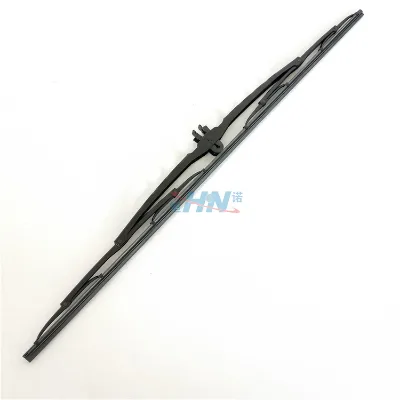
The physical construction of the blade is equally critical. The market features both traditional batch types and specialized designs. A key differentiator is the presence or absence of a "bone" or frame structure. Some products are engineered with a robust metal frame, often described as "strong metal," which provides structural integrity for heavy-duty wiping cycles. Conversely, other models are designed without a bone, utilizing a different structural approach that may offer a more aerodynamic profile or reduced weight. The material composition of the blade itself varies significantly, ranging from natural materials to synthetic rubber compounds. Specifically, rubber with graphite is a common specification, as the graphite additive is intended to enhance durability and reduce friction against the windshield glass. The frame material is typically stainless steel or strong metal, ensuring resistance to corrosion in harsh environments.
The application scope dictates the necessary sweep angle and size. For heavy vehicles like city buses and trucks, sweep angles of 60° are common, though some specialized units may offer wider coverage up to 135°. The standard size range observed in the market spans from 12 inches to 28 inches, with specific models available in discrete increments such as 14, 16, 18, 19, 20, 21, 22, 24, 26, and 28 inches. This granularity is essential for fleet managers who must match the blade length precisely to the wiper arm geometry of their specific vehicle models. Furthermore, the operating temperature range is a vital safety parameter. Products are often rated for extreme conditions, with specifications covering temperatures from -50°C to +100°C, ensuring functionality in both arctic climates and hot desert environments.
Compliance, Standards, and Certification Verification
In the B2B procurement of automotive safety components, verifying compliance with industry standards is non-negotiable. While specific certification bodies are not universally mandated for every listing, buyers must rigorously check the product standards listed by the supplier. In the observed market data, specific length standards are cited, such as 1000mm, which serves as a reference for manufacturing consistency. More commonly, standards are defined by the dimensional range, such as 12"-28" or 14''-28'', indicating the acceptable variance in blade length.
Buyers should not assume that a product listing automatically implies full compliance with international safety regulations. Instead, the procurement process must include a direct request for the specific standard codes the product adheres to. For instance, while some listings mention a standard of 1000mm, others define standards by the inch-based ranges. It is the buyer's responsibility to confirm that these standards align with the regulatory requirements of the destination market. Additionally, the origin of the product plays a role in compliance. Many suppliers list their origin as Ningbo, Zhejiang, or generally China. While these are major manufacturing hubs, the location alone does not guarantee adherence to specific safety protocols.
Verification of OEM (Original Equipment Manufacturer) acceptance is another critical compliance check. Many suppliers indicate that OEM status is acceptable, which suggests they can produce parts that meet the exacting tolerances of vehicle manufacturers. However, this does not equate to being an official OEM partner. Buyers must request documentation proving that the specific model, such as the WB-704 or HY-S12, has been tested and approved for use in the specific vehicle makes and models they operate. This includes verifying the year ranges for compatibility, such as 2012-2016 or 2017-2019, to ensure the wiper blade is mechanically and electrically compatible with the vehicle's wiper system.
Cost Drivers and Pricing Dynamics
The pricing of truck wiper blades is influenced by a complex interplay of material costs, manufacturing complexity, and order volume. The observed price range in the market spans from $0.30 to $25.00 USD. This wide variance is not arbitrary; it reflects the difference between basic, single-unit purchases and high-volume, customized orders. The lower end of the spectrum typically corresponds to standard, off-the-shelf models with minimal customization, while the higher end often includes specialized materials, complex packaging, or bulk orders that include value-added services.
Material composition is a primary cost driver. Blades utilizing stainless steel frames and rubber with graphite compounds generally command a higher price than those made with standard plastic or natural materials. The "strong metal" frames offer superior durability and resistance to corrosion, justifying a premium over plastic alternatives. Additionally, the driving type affects cost; electrical driving mechanisms may involve more complex internal components compared to vacuum-driven systems, influencing the final unit price.
Order volume is the second most significant factor. The Minimum Order Quantity (MOQ) ranges from 1 to 3000 units. Buyers purchasing small quantities, such as single units or small batches, will naturally face a higher per-unit cost. Conversely, large-scale procurement allows for economies of scale. Customization is a major cost variable. Suppliers offer options for customized packaging boxes, with MOQs often starting at 5000 pieces, and customized products at 20000 pieces. Customized logos also require a minimum of 10000 pieces. These customization thresholds significantly impact the total cost of ownership. Buyers must balance the need for branding and specific packaging against the financial impact of meeting these higher volume thresholds.
Typical Applications and Vehicle Compatibility
Truck wiper blades are designed for a specific set of heavy-duty applications where visibility is a critical safety factor. The primary applications identified in the market include city buses, trucks, coaches, engineering vehicles, and general cars. The distinction between these applications is crucial because the environmental conditions and usage patterns vary significantly. For example, city buses operate in dense urban environments with frequent stops and starts, requiring blades that can handle stop-and-go traffic conditions and potential debris. Engineering vehicles, often used in construction or mining, face extreme dust and vibration, necessitating blades with robust frames and high-temperature resistance.
The compatibility of the wiper blade with the vehicle model is determined by the specific part number and the year range of the vehicle. Models such as WB-701, WB-702, and WB-704 are designed for specific vehicle configurations. Similarly, the HY-S12 and HY-73A models serve different segments of the market. The B-series models, including B03406S, B03410, B03802, B03250F, B03901, and B03149S, represent a wide array of compatibility options. Buyers must cross-reference these model numbers with their fleet's specific requirements. The "Double Side" range attribute suggests that some blades are designed to clean both sides of the windshield, a feature particularly useful for large vehicles with dual wiper systems.
The year range compatibility is another vital consideration. Listings often specify years such as 2012-2016, 2008-2016, 2011-2016, and 2017-2019. This indicates that the wiper blade is engineered to fit vehicles manufactured within these specific windows. Using a blade outside its designated year range can lead to poor wiping performance, noise, or even damage to the wiper motor. Therefore, procurement teams must maintain an accurate inventory of their fleet's manufacturing years to ensure they source the correct model numbers.
Supplier Evaluation and Sourcing Strategy
Evaluating suppliers for truck wiper blades requires a multi-faceted approach that goes beyond price comparison. The first step is to verify the supplier's location and production capabilities. Many suppliers are based in Ningbo, Zhejiang, or generally China, which are established manufacturing hubs. However, the physical location should be corroborated with the supplier's ability to meet the buyer's specific quality and delivery requirements. Buyers should request detailed information about the supplier's production lines, specifically their capacity to handle the required order volumes and customization needs.
Customization capabilities are a key differentiator among suppliers. The market shows that customization is available for packaging, product design, and logos, but each comes with specific MOQs. A supplier that can accommodate a 5000-piece customized packaging order is different from one that requires 20000 pieces for product customization. Buyers should assess whether the supplier's customization thresholds align with their procurement strategy. Additionally, the acceptance of OEM status is a strong indicator of a supplier's technical competence. Suppliers that explicitly state "OEM: Acceptable" are likely to have the quality control systems in place to meet the stringent requirements of vehicle manufacturers.
Lead time is another critical factor in supplier evaluation. The observed delivery time for these products ranges from 30 to 35 days. This timeframe should be factored into the buyer's inventory planning. A supplier with a consistent 30-35 day lead time is preferable to one with fluctuating delivery schedules. Buyers should also inquire about the supplier's ability to handle rush orders or expedited shipping, as fleet maintenance often requires immediate replacement of worn-out components.
Quality Control and Long-Term Procurement Considerations
Quality control in the wiper blade industry is paramount due to the safety implications of windshield visibility. Buyers should implement a rigorous quality assurance process that includes pre-shipment inspections and sample testing. The materials used, such as stainless steel frames and rubber with graphite, must be verified for their durability and resistance to environmental factors. The operating temperature range of -50°C to +100°C is a critical specification that must be validated through independent testing or supplier-provided test reports.
Packaging is also a component of quality control. The market offers various packaging options, including paper boxes, blister boxes, cartons, color boxes, and PVC boxes. The choice of packaging can affect the product's condition during transit. For example, blister boxes and color boxes often provide better protection for individual units, while cartons are suitable for bulk shipping. Buyers should ensure that the packaging is robust enough to prevent damage during long-distance shipping, especially for products originating from China to international destinations.
Long-term procurement considerations involve building a sustainable relationship with suppliers. This includes negotiating favorable terms for repeat orders, establishing clear communication channels for technical support, and ensuring a steady supply of replacement parts. The availability of customization options, such as branded packaging and logos, can enhance the buyer's brand identity and customer satisfaction. However, buyers must weigh the benefits of customization against the higher MOQs and potential cost increases.
Finally, buyers should consider the lifecycle of the wiper blade. Products with a "traditional batch type" design may have a different lifespan compared to newer, more advanced models. Understanding the expected service life of the blade helps in planning maintenance schedules and budgeting for replacement costs. By focusing on technical specifications, compliance, cost drivers, applications, supplier evaluation, and quality control, buyers can make informed decisions that ensure the safety and efficiency of their truck fleets.
FAQs
What driving types are available for truck wiper blades?
Truck wiper blades are available in electrical and vacuum driving types. Electrical systems integrate with modern vehicle powertrains, while vacuum systems rely on engine suction. Buyers must select the type compatible with their specific vehicle model and wiper arm geometry.
Which materials are used for the wiper blade frames?
Frames are constructed from stainless steel or strong metal to ensure durability. These materials provide resistance against corrosion in harsh environments. Some models also utilize plastic components, but metal frames are preferred for heavy-duty applications like city buses and trucks.
Can the wiper blades operate in extreme temperatures?
Yes, the blades are rated for temperatures ranging from -50°C to +100°C. This specification ensures functionality in both arctic climates and hot desert environments. Such a wide range is critical for safety in heavy-duty vehicles operating under diverse weather conditions.
What is the minimum order quantity for customized packaging?
The minimum order quantity for customized packaging boxes is 5000 pieces. Buyers must meet this threshold to access branding options. Standard packaging options like paper or blister boxes are available for smaller order volumes without customization requirements.
How long does delivery typically take for these products?
The standard delivery time is 30 to 35 days. This lead time applies to most orders unless expedited shipping is arranged. Buyers should factor this duration into their inventory planning to ensure timely replacement of worn wiper components.
Which vehicle applications are these wiper blades designed for?
These blades are designed for city buses, trucks, coaches, and engineering vehicles. They are also compatible with general cars depending on the model. The double-side range feature is particularly useful for large vehicles requiring comprehensive windshield coverage.