Source two-phase permanent magnet stepping motor for Printing, Power Tools, Industrial
Find and compare 30 two-phase permanent magnet stepping motor options from verified Chinese suppliers. Buyers can evaluate specifications like voltage, speed, and force for applications in printing equipment and power tools.
Key considerations
Products List


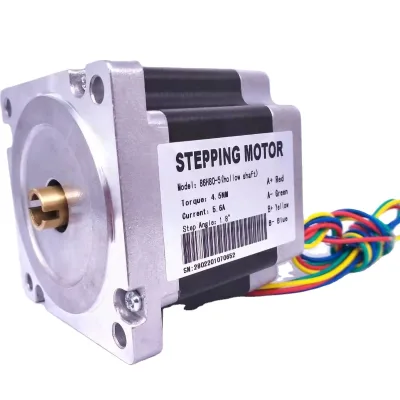
Pm 4 Wire High Torque Stepper Motor 12V Permanent Magnet Stepper Motor
$5.00 - $10.00
MOQ: 1000 Pieces




Comprehensive Sourcing Guide
Strategic Sourcing Guide for Two-Phase Permanent Magnet Stepping Motors
The procurement of two-phase permanent magnet stepping motors requires a disciplined approach that balances technical precision with supply chain reliability. These motors, characterized by their specific excitation modes and structural designs, are critical components in applications ranging from industrial automation to power tools. Buyers must navigate a landscape where product attributes vary significantly between listings, necessitating a rigorous verification process to ensure the selected components meet operational requirements. This guide outlines the essential factors for sourcing these devices, drawing upon observed market data and technical specifications to inform decision-making without relying on unverified claims.
Technical Architecture and Excitation Modes
Understanding the internal architecture of a two-phase permanent magnet stepping motor is the first step in defining procurement requirements. The core of these devices often relies on a permanent magnet excitation mode, which distinguishes them from variable reluctance or hybrid types. In the observed market data, specific models such as the JK86HS series and the 35BYJ variants demonstrate the prevalence of the PM-Permanent Magnet configuration. This design typically features a rotating pole type structure with a fixed armature, a configuration that offers distinct advantages in torque density and control simplicity.
The stator configuration is equally critical. Data indicates that many units in this category utilize a two-phase stator arrangement. This two-phase setup allows for precise step resolution and is often paired with a low-speed operation mode, although some listings also specify constant speed capabilities depending on the driver integration. The magnetic structure is consistently described as permanent magnet-based, which influences the motor's holding torque and detent torque characteristics. When evaluating a potential supplier, buyers should verify the specific number of poles and the stator phase count to ensure compatibility with existing control systems. The distinction between "Driving" and "Control" functions is also noted in product attributes, suggesting that some units are optimized for direct actuation while others are designed for integration into broader control loops.
Compliance, Certification, and Standard Verification
Navigating the compliance landscape for industrial motors requires careful attention to both regional certifications and manufacturing standards. The observed product data highlights the presence of CCC (China Compulsory Certification) as a primary certification for many units, often appearing alongside ISO standards. It is crucial for buyers to verify that the specific model they intend to purchase holds the relevant certifications for their target market. The presence of "CCC, ISO" in product descriptions suggests a dual compliance approach, but the exact scope of the ISO certification must be confirmed with the supplier.
Manufacturing standards also play a pivotal role in defining product quality. Observed specifications include precise mechanical standards, such as mounting hole configurations described as "two long holes TOTAL L: 38mm 1 side L: 9mm." This level of detail indicates that mechanical compatibility is a key standard. Furthermore, packaging standards vary, with some listings specifying "Standard Export Packing" while others detail a more complex logistics chain involving inner packs, poly bags, master cartons, and pallets. Buyers must ensure that the packaging standard aligns with their shipping and storage requirements to prevent damage during transit. The origin of these motors is predominantly listed as China, with specific mentions of Jiangsu Changzhou as a manufacturing hub, which may influence lead times and logistics planning.
Cost Drivers and Pricing Dynamics
The pricing of two-phase permanent magnet stepping motors is influenced by a complex array of factors, including customization levels, technical specifications, and order volume. The observed market data reveals a staggering price range from $0.10 to $300,000 USD. This extreme variance is not indicative of a single product type but rather reflects the diversity of the category, ranging from small, low-power units like the 35BYJ series to large, high-torque industrial drives. The minimum order quantity (MOQ) also fluctuates significantly, ranging from 1 unit to 1,000 units, which directly impacts the unit cost.
Several specific attributes drive the cost within this category. Customization is a major cost factor; listings explicitly state that customization is available for parameters such as shaft design, label printing, and overall length. A motor with a customized shaft or specific labeling will inherently cost more than a standard off-the-shelf unit. Additionally, performance specifications such as inductance accuracy (observed at 20%) and force ratings (e.g., Max Axial Force of 60n, Max Radial Force of 220n) contribute to the final price. Higher precision in these areas typically commands a premium. Buyers should be wary of prices that seem anomalously low, as they may indicate a lack of customization or lower-grade components, while extremely high prices may reflect specialized industrial applications rather than standard two-phase units.
Operational Specifications and Performance Limits
When selecting a motor for a specific application, the operational limits must be strictly adhered to. The thermal performance of these motors is a critical constraint, with observed data indicating a maximum temperature rise of 80 degrees. This limit is essential for preventing insulation breakdown and ensuring long-term reliability, particularly in enclosed environments. The ventilation structure is noted as "Closed" in several listings, which necessitates careful thermal management in the final assembly design.
Mechanical play and tolerance are also vital for precision applications. The data specifies a radial play of 0.02mm maximum under a 450g load and an end play of 0.08mm maximum under the same load. These tight tolerances are indicative of high-precision applications where backlash must be minimized. Electrical specifications, such as a voltage of 5V and a current per phase of 0.5A, are common for smaller units, but these values must be verified against the specific model number. The operating mode is frequently listed as "The Three Single Phase," which may refer to the driving logic or a specific configuration of the three-phase drive system often used with two-phase motors. Buyers must ensure that their driver electronics are compatible with these electrical parameters to avoid performance issues or component failure.
Typical Applications and Functional Requirements
The versatility of two-phase permanent magnet stepping motors allows them to serve a wide range of industries. The observed data points to specific applications such as printing equipment, industrial machinery, and power tools. In printing applications, the precise control offered by these motors is essential for accurate paper feed and print head positioning. The "Driving" and "Control" functions listed in the attributes suggest that these motors are integral to the motion control systems of such equipment.
For industrial and power tool applications, the robustness of the motor is paramount. The "Rotating Pole Type (Armature Fixed)" structure provides a stable platform for high-torque requirements. The ability to operate at low speeds or constant speeds makes these motors suitable for a variety of mechanical loads. The customization options available, such as specific shaft lengths and mounting standards, allow manufacturers to integrate these motors into custom machinery designs. Buyers should assess whether the motor's weight, such as the 50g observed in smaller units, aligns with the weight constraints of their application. The warranty period, often cited as 1 year, is another factor to consider when evaluating the long-term viability of the motor for critical applications.
Supplier Evaluation and Quality Assurance
Evaluating suppliers for two-phase permanent magnet stepping motors requires a focus on transparency and consistency. Given the variation in product attributes across the market, buyers should prioritize suppliers who provide detailed technical datasheets that match the observed specifications. The presence of specific model numbers like JK86HS115, JK86HS155, and 35BYJ indicates a standardized product line, which is a positive indicator of supplier reliability.
Quality control should be a central part of the procurement strategy. Buyers must verify that the supplier adheres to the stated standards, such as the specific mounting hole dimensions and packing requirements. The "Standard Export Packing" and "Inner Pack and Poly and Master Carton and Pallet" options suggest that the supplier has established logistics protocols, which is crucial for maintaining product integrity. It is also important to verify the certification status directly, rather than relying solely on product descriptions. The mention of RoHS in background data suggests that environmental compliance is a consideration, though it should be confirmed as an active certification for the specific batch being purchased.
Long-Term Procurement Considerations
Sourcing these motors is not merely a transactional event but a long-term partnership consideration. The availability of customization, such as custom labels and shaft designs, allows for brand integration and specific application tailoring, which can be vital for product differentiation. However, buyers must ensure that the supplier can maintain these customizations over the life of the product. The lead time and production capacity, while not explicitly detailed in the provided facts, are critical for supply chain stability.
Buyers should also consider the scalability of the supplier. The wide range of MOQs, from 1 to 1,000 units, suggests that suppliers can accommodate both prototyping and mass production. However, the significant price variance implies that economies of scale may play a role in the final cost. Establishing a clear communication channel regarding technical specifications, such as inductance accuracy and temperature rise limits, will help prevent misunderstandings and ensure that the delivered products meet the intended performance criteria. By focusing on these long-term factors, buyers can secure a reliable supply of high-quality two-phase permanent magnet stepping motors that support their operational goals.
FAQs
What certifications do two-phase permanent magnet stepping motors have?
Many units carry CCC and ISO certifications, often listed together as CCC, ISO. Buyers must verify the specific scope of the ISO certification with the supplier to ensure it meets target market requirements.
Which excitation modes are available for these motors?
The observed products primarily use PM-Permanent Magnet excitation modes. Some listings also reference HB-Hybrid modes, so confirming the specific excitation type is essential for compatibility with existing control systems.
Can I customize the shaft and label on these motors?
Customization is available for shafts, labels, and overall length. Buyers should note that customized parameters like shaft design or specific labeling will inherently cost more than standard off-the-shelf units.
What are the maximum temperature rise limits for these motors?
The maximum temperature rise is typically 80 degrees Celsius. This limit is critical for preventing insulation breakdown, especially since many units feature a closed ventilation structure requiring careful thermal management.
How are these motors packaged for export?
Packaging varies from standard export cartons to complex chains involving inner packs, poly bags, master cartons, and pallets. Buyers must ensure the packaging standard aligns with their shipping and storage requirements to prevent damage.
What is the typical origin and location for these motors?
The products originate from China, with specific manufacturing hubs like Jiangsu Changzhou mentioned. This location data influences lead times and logistics planning for international buyers sourcing these components.
Which applications are these motors commonly used for?
These motors are frequently used in printing equipment, industrial machinery, and power tools. Their driving and control functions make them integral to motion control systems in these specific industries.