Find two-wire oil pressure sensor for Industrial, Automotive, and Hydraulic Systems
Source 30 verified two-wire oil pressure sensor options featuring diffusion silicon chips and IP65 ratings. Buyers can compare measuring ranges from -0.1MPa to 100MPa, working temperatures, and connection methods across suppliers in China.
Key considerations
Products List


$3.50 - $4.00
MOQ: 10 Pieces



Comprehensive Sourcing Guide
Strategic Sourcing Guide for Two-Wire Oil Pressure Sensors
Navigating the global market for industrial automation components requires a disciplined approach, particularly when sourcing specialized instrumentation like two-wire oil pressure sensors. These devices are critical for monitoring hydraulic systems, lubrication circuits, and engine performance in heavy machinery and automotive applications. The procurement process must balance technical precision with supply chain reliability. This guide synthesizes observed market data and technical attributes to provide a framework for evaluating potential suppliers and products without relying on unverified claims or speculative market figures.
Technical Architecture and Core Specifications
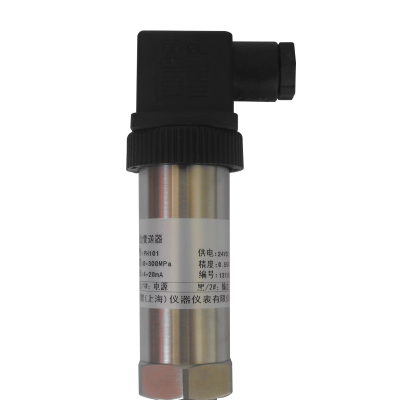
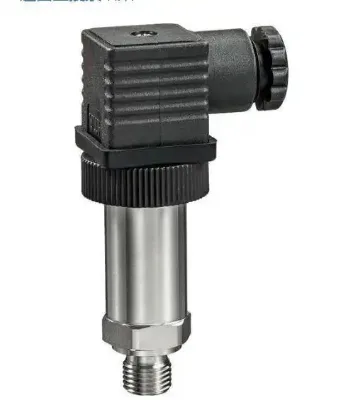
The foundation of a successful procurement strategy lies in understanding the specific technical architecture of the sensor. In the observed market, two-wire oil pressure sensors often utilize a diffusion silicon chip as the measuring core. This technology is preferred for its stability and sensitivity in detecting pressure changes within liquid and gas media. The sensor operates on a two-wire principle, which simplifies installation by combining power supply and signal transmission over a single loop, a feature essential for reducing wiring complexity in industrial control panels.
When evaluating the electrical characteristics, buyers must verify the supply voltage and output parameters. Data indicates that specific models operate within a supply voltage range of 5+/-0.25VDC. The working current for these units is typically designed to be efficient, often remaining less than 10mA to minimize power consumption in continuous operation scenarios. The output signal is generally an analog voltage, with observed ranges spanning from 0.5 to 4.5VDC. This linear output allows for straightforward integration with standard programmable logic controllers (PLCs) and data acquisition systems.
Crucially, the measuring range must align with the specific application's pressure demands. The market presents a wide spectrum of capabilities, with some units covering a range from -0.1 MPa to 100 MPa, while others are specialized for lower pressures, such as up to 10 kPa. The measurement accuracy is a critical differentiator, with observed grades ranging from 0.2% to 0.5%. For high-precision applications, such as those requiring an accuracy grade of 0.2G, the selection of a sensor with a diffusion silicon pressure transmitter structure is advisable. Buyers should also note that the connection methods vary, including direct mounting without brackets, wire connections, threaded interfaces, and copper pipe fittings.
Compliance, Certification, and Safety Standards
In the industrial sector, compliance is not merely a formality but a prerequisite for operational safety and legal liability protection. When sourcing two-wire oil pressure sensors, verifying the certification status of the supplier is paramount. The observed market data highlights the presence of ISO certifications, which indicate a supplier's adherence to international quality management standards. Additionally, CE certification is frequently observed, signifying that the product meets the health, safety, and environmental protection standards for products sold within the European Economic Area.
Safety features are particularly relevant for sensors deployed in environments where flammable gases or liquids are present. Some observed products are classified as explosion-proof pressure transmitters with a flameproof type designation. These units are designed to contain any internal explosion and prevent it from igniting the surrounding atmosphere. For such applications, the protection grade is a vital specification. While some units carry an IP65 rating, indicating protection against dust and low-pressure water jets, others may be rated for specific protection grades like IP54 or Iip54, depending on the environmental exposure.
Buyers must also verify the material standards and construction quality. The standard "K series" is noted in some product listings, suggesting a specific design lineage or manufacturing protocol. Furthermore, the suitability of the sensor for the medium is essential; units are often rated for air, non-combustible, and non-corrosive gases, as well as general liquid media. For oil pressure applications, the sensor must be compatible with the specific chemical properties of the hydraulic fluid to prevent degradation of the sealing elements and the diffusion silicon chip.
Cost Drivers and Economic Factors
The pricing of two-wire oil pressure sensors is influenced by a complex matrix of technical specifications, customization requirements, and supply chain logistics. The observed price range in the market spans from approximately $2.88 to $230 USD. This significant variance is not arbitrary but reflects differences in accuracy, pressure range, material quality, and the level of customization required.
Several key factors drive these costs. First, the accuracy grade is a primary cost driver. Sensors with an accuracy of 0.2% or 0.2G command a premium over those with 0.5% accuracy due to the tighter tolerances and more rigorous calibration processes involved. Second, the pressure range affects the cost; sensors capable of measuring up to 100 MPa require more robust housing and sensing elements than those limited to 10 kPa. Third, customization plays a significant role. While standard models are available, many suppliers offer customization options for dimensions, connection types, and output signals, which can increase the unit price.
The Minimum Order Quantity (MOQ) is another economic factor to consider. The observed MOQ range spans from 1 to 100 units. Suppliers with lower MOQs may be more suitable for prototyping or small-batch production, while those requiring higher MOQs often offer better per-unit pricing for large-scale industrial deployments. Buyers should also account for packaging costs, as some suppliers use standard export packaging, while others offer customized carton packages or specific export-ready configurations that may impact the total landed cost.
Typical Applications and Operational Environments
Understanding the intended application is essential for selecting the correct sensor. The observed market data points to a diverse range of applications, from industrial control systems to automotive sensors. In the industrial sector, these sensors are frequently used in hydraulic power units, lubrication systems, and pressure monitoring stations. The "Power Built-in Type" structure and "Multi Control Switch" capabilities suggest suitability for complex control loops where precise pressure feedback is required for system regulation.
In the automotive sector, the sensors are often integrated into engine management systems to monitor oil pressure, ensuring the engine is adequately lubricated under varying load conditions. Specific models are identified as "Automobile Sensors" or "Auto Oil Pressure Sensors," indicating their specialized design for vehicular environments. These units must withstand vibration, temperature fluctuations, and exposure to various fluids. The working temperature range of -40℃ to 85℃ observed in some models is critical for applications in extreme climates or under heavy thermal loads.
Furthermore, the detection method and structure influence the application scope. While some sensors utilize retro-reflective modes for proximity detection, oil pressure sensors primarily rely on the diffusion silicon chip for direct pressure measurement. The "Normal Pressure Transmitter" and "Explosion-proof Pressure Transmitter" classifications indicate their use in different safety zones. Buyers must match the sensor's protection grade and explosion-proof rating to the specific hazards of the operating environment, whether it is a standard factory floor or a hazardous chemical processing plant.
Supplier Evaluation and Geographic Considerations
When evaluating potential suppliers, geographic origin and logistical capabilities are important considerations. The observed data indicates that manufacturers are located in key industrial hubs in China, such as Changzhou City and Changsha. These regions have established supply chains for electronic components and pressure transmitters. However, buyers should not rely solely on location; instead, they should verify the supplier's ability to meet specific delivery timelines and quality standards.
Supplier evaluation should focus on the consistency of their product attributes. For instance, while some listings mention a "Customized" option, others specify a "Standard Package for Exporting." Buyers must ensure that the supplier can consistently deliver the requested customization, whether it involves specific dimensions, connection methods, or electrical specifications. The "prod_model" field often varies, with examples like "PPM-T232C," "SAC-132-LoRa," and "SAC-H-05," suggesting a diverse product portfolio. Buyers should request detailed datasheets for each specific model to confirm that the attributes match their technical requirements.
Additionally, the supply chain resilience is a critical factor. Buyers should inquire about the supplier's capacity to handle volume fluctuations and their lead times for custom orders. While specific lead times are not provided in the general data, the availability of customization suggests that production schedules may vary. Establishing a clear communication channel with the supplier regarding production capacity and quality assurance processes is essential for mitigating supply chain risks.
Quality Control and Long-Term Procurement Strategy
Ensuring long-term reliability requires a robust quality control (QC) strategy. Buyers should demand evidence of the manufacturing process, including calibration procedures and testing protocols. The "Measurement Accuracy" of 0.3% or 0.5% must be verifiable through third-party testing or in-house QC reports. For critical applications, requesting sample units for testing under actual operating conditions is a prudent step.
Long-term procurement considerations also involve the lifecycle management of the sensors. Buyers should assess the availability of spare parts and the supplier's support for troubleshooting. The "IP Rating" and "Over Pressure Protection" specifications, such as the 16VDC limit observed in some models, indicate the sensor's durability. However, these ratings should be validated against the specific environmental stresses of the application.
Finally, buyers should maintain a clear record of the technical specifications and certifications for each batch of sensors purchased. This documentation is vital for future maintenance, regulatory compliance audits, and troubleshooting. By adhering to a disciplined sourcing process that prioritizes verified technical data and supplier reliability, buyers can secure a steady supply of high-performance two-wire oil pressure sensors that meet the rigorous demands of modern industrial and automotive applications.
FAQs
What is the typical supply voltage for two-wire oil pressure sensors?
The typical supply voltage is 5 +/- 0.25VDC for stable operation. This specific electrical requirement ensures the sensor works correctly with standard industrial control systems without needing additional voltage regulators.
Which certifications are available for these industrial pressure transmitters?
Available certifications include ISO and CE for quality and safety compliance. These marks indicate the product meets international management standards and European safety requirements for hazardous environments.
Can these sensors be customized for specific industrial applications?
Yes, customization is available for dimensions, connections, and output signals. Buyers can request tailored solutions to fit unique mounting requirements or specific pressure ranges like 0.1 to 60 MPa.
What is the minimum order quantity for purchasing these sensors?
The minimum order quantity ranges from 1 to 100 units depending on the supplier. Lower MOQs allow for prototyping while higher volumes may secure better pricing for large industrial deployments.
How accurate are the diffusion silicon pressure transmitters listed?
Measurement accuracy grades range from 0.2G to 0.5% for high precision. This level of accuracy is critical for monitoring hydraulic systems where small pressure changes must be detected reliably.
Which locations host manufacturers of these electronic pressure sensors?
Manufacturers are located in Changzhou City and Changsha, China. These industrial hubs provide established supply chains for electronic components and pressure transmitter production with reliable logistics.
What is the working temperature range for these explosion-proof sensors?
The working temperature range is typically -40°C to 85°C for durability. This wide range ensures the sensor functions correctly in extreme climates or under heavy thermal loads in industrial settings.