Source Under Tile Driveway Heating Mat for homes, hotels, and garages
Compare 30 available Under Tile Driveway Heating Mat options from verified Chinese suppliers. Buyers can evaluate electric heating systems with CE and ROHS certifications, varying voltage ratings, and warranty terms for residential and commercial floor heating applications.
Key considerations
Products List


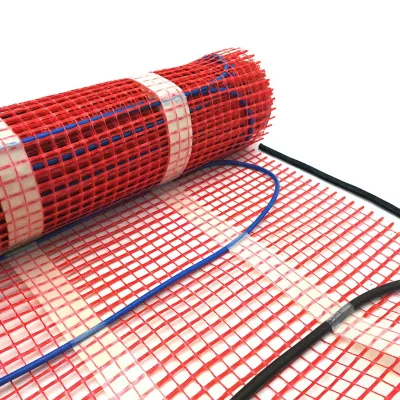
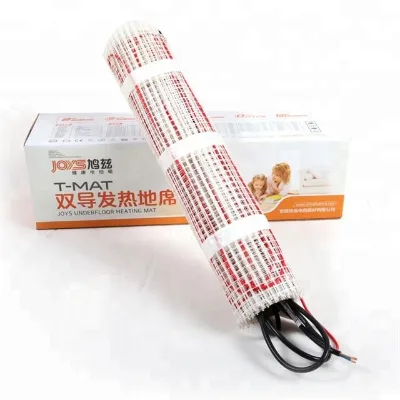
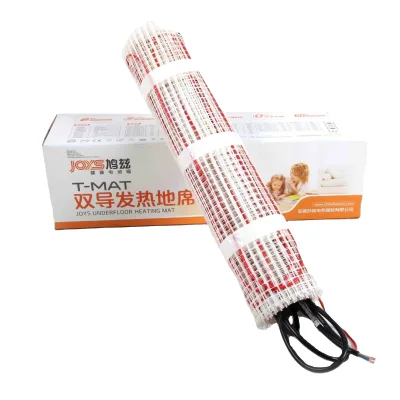
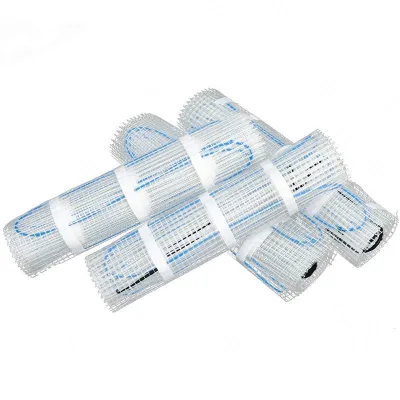


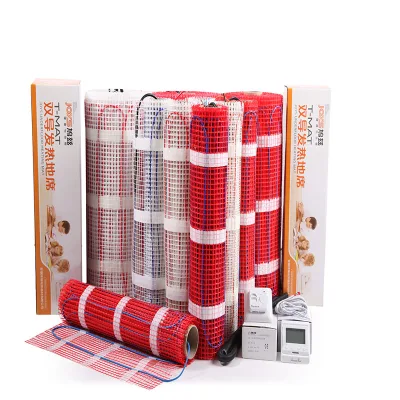
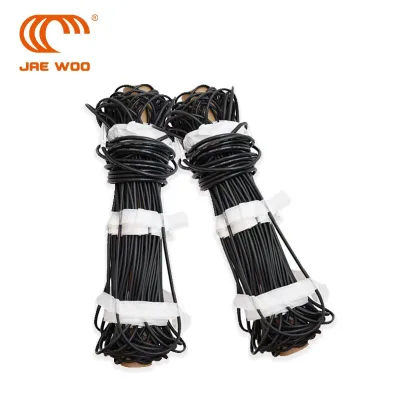
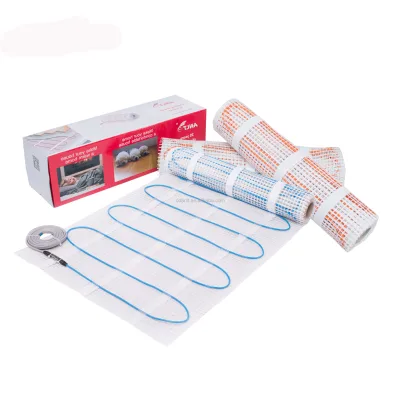
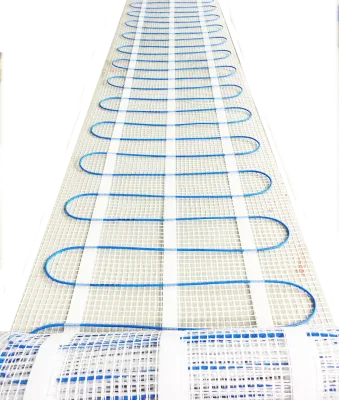
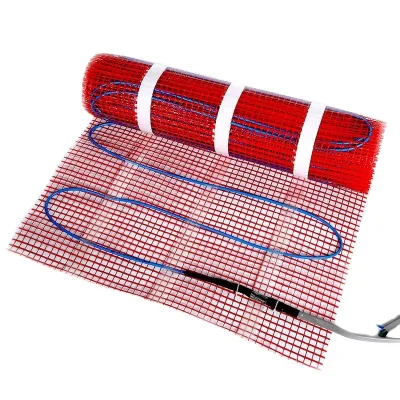
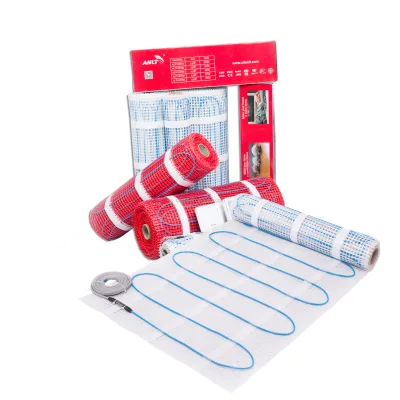
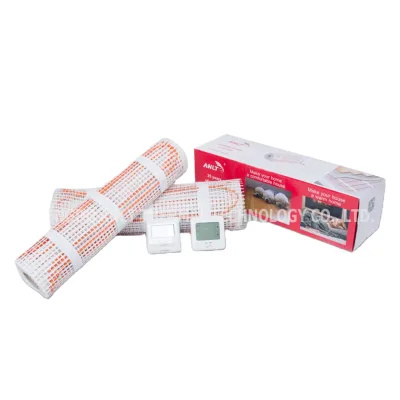
Comprehensive Sourcing Guide
Strategic Sourcing Guide for Under-Tile Driveway Heating Mats
Understanding Product Specifications and Technical Parameters
When sourcing under-tile driveway heating mats, buyers must first distinguish between general floor heating applications and specialized driveway solutions. The core product category often labeled as "heating mat" or "floor heating systems" encompasses a wide range of voltage and power output configurations. Based on available market data, these electric heating systems typically operate within a voltage range of 110V to 220V, with specific models rated at 230V or 220V. This variability is critical for driveway installations, which often require higher power densities to combat snow and ice in colder climates compared to indoor residential flooring.
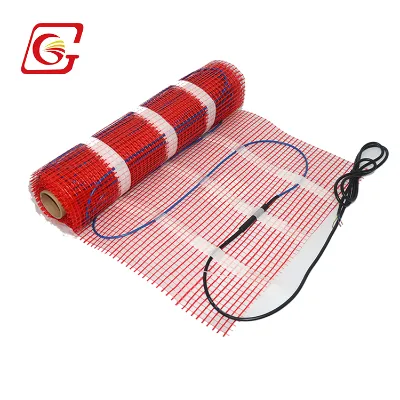
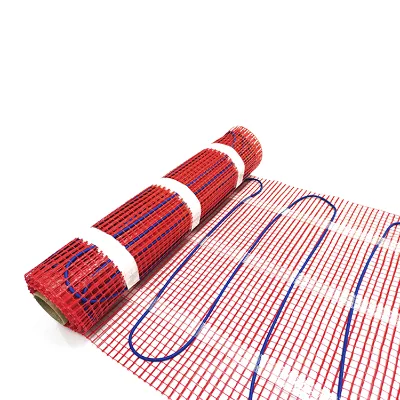
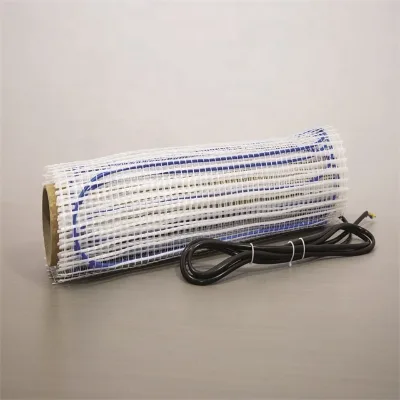
The technical architecture of these mats involves specific conductor materials and insulation properties. The conductor material is frequently identified as copper, which offers high conductivity and durability. The number of conductors can vary from one to two per mat, influencing the electrical resistance and heat distribution uniformity. A key specification for driveway applications is the output capacity. Market observations indicate output ratings such as 8.5 watts per square foot (approximately 28 watts per meter) with a tolerance of plus or minus 10%. This power density is a baseline for thermal performance but must be verified against local climate requirements for driveway de-icing.
Insulation and protection are paramount for outdoor durability. The outer insulation material is often described as rubber or fluoropolymer, providing resistance against moisture, chemicals, and physical abrasion. The bending radius is another critical mechanical specification, with observed values around 38mm, which dictates how tightly the mat can be curved during installation around driveway edges or obstacles. Additionally, the cold lead length, observed at 33 feet (10 meters) in some configurations, determines the distance the mat can be placed from the power source without requiring extension cables, a significant factor in large driveway layouts.
Compliance, Certification, and Safety Standards
Safety compliance is non-negotiable for heating systems installed in driveways, where exposure to water and heavy loads is constant. Buyers must verify that products carry recognized international certifications. The most frequently observed certifications in the market include CE (Conformité Européenne) and ROHS (Restriction of Hazardous Substances), which indicate compliance with European safety and environmental standards. Some listings also reference ISO standards, suggesting adherence to quality management systems, though the specific ISO number (e.g., ISO 9001) should be confirmed with the supplier.
For markets outside the European Union, additional certifications are often required. Data indicates the presence of TUV and EAC (Eurasian Conformity) marks on certain products. The EAC certification is essential for selling or importing into Eurasian Economic Union countries, while TUV often signifies rigorous third-party testing for electrical safety. It is important to note that while some product listings mention "CE, ROHS, ISO, TUV, EAC," this does not guarantee that every single SKU possesses all these marks. Buyers must request specific test reports for the exact model number, such as the FMAT150/220 or T-mat series, to ensure the certification applies to the specific batch being purchased.
Furthermore, the "Product Standard" is often listed as "FYMAT" in some contexts, which may be a manufacturer-specific internal standard rather than an international norm. Buyers should not assume this replaces a recognized standard like UL (Underwriters Laboratories) for North American markets or EN (European Norms) for Europe. The absence of a specific standard name in a listing should trigger a request for the full technical datasheet to verify compliance with local building codes for outdoor heating systems.
Cost Drivers and Pricing Structure Analysis
The pricing for under-tile driveway heating mats is influenced by several distinct factors, creating a wide observed range of 0.35 to 30.58 USD per unit. This broad spectrum reflects differences in mat size, power output, material quality, and packaging. The lower end of the price range likely corresponds to smaller, lower-wattage mats or single-item selling units with minimal packaging, while the higher end may reflect larger mats, specialized outdoor insulation, or bundles including thermostatic mixing valves and control units.
Minimum Order Quantity (MOQ) is a significant cost driver. The market shows an MOQ range from 1 piece to 500 pieces. For a driveway project, the total surface area will dictate the total number of mats required. If a buyer requires a large quantity, negotiating a lower price per unit is possible, but the MOQ constraint must be met. Some suppliers offer an MOQ of just 1 piece, which is beneficial for prototyping or small-scale repairs but may result in a higher unit cost. Conversely, bulk orders often require an MOQ of 500 pieces, which can significantly reduce the per-unit cost but increases the initial capital outlay.
Packaging and logistics also impact the final landed cost. The single package size varies, with observations of dimensions like 52.26 x 13 x 12.51 cm or 50 x 30 x 20 cm. The single gross weight ranges from approximately 1.063 kg to 9.000 kg, depending on the mat size and included accessories like the cold lead. Heavier packages incur higher shipping costs, which can erode the savings gained from a lower unit price. Buyers should calculate the total cost per square meter, including shipping and duties, rather than focusing solely on the unit price listed on the product page.
Typical Applications and Installation Requirements
While the core keyword focuses on "under tile driveway heating," the observed product attributes reveal a diverse range of applications. The primary use setting is the "room floor," but specific listings also highlight "pipe heating trace," "roof & gutter de-icing," and "hotel" applications. This indicates that the same underlying technology can be adapted for various environments. For driveway use, the mat must be installed under the paving material, whether it is tile, concrete, or asphalt, requiring careful consideration of the installation temperature.
The minimum installation temperature is a critical constraint. Some products specify a minimum installation temperature of -20°C, which is vital for winter construction or cold-climate driveways. If the ambient temperature drops below this threshold during installation, the adhesive or the mat itself may not bond correctly or could suffer mechanical stress. The design style is typically "Modern," and the product name is often simply "heating mat," but the application context dictates the necessary accessories.
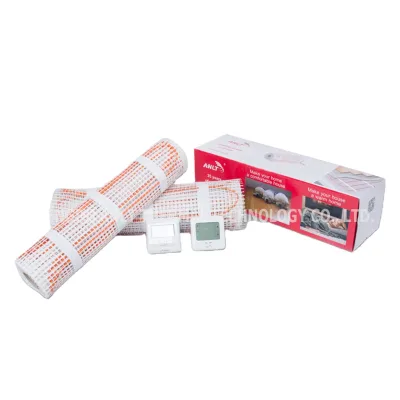
Installation support is a key differentiator among suppliers. Many providers offer comprehensive after-sale services, including online technical support, onsite training, onsite installation, and onsite inspection. For a complex driveway project, the availability of onsite installation services can be a decisive factor, ensuring the mat is laid correctly with the proper bending radius and electrical connections. The inclusion of a thermostatic mixing valve in some listings suggests that these systems are often part of a larger hydronic or electric control loop, requiring professional integration to function safely and efficiently.
Supplier Evaluation and Verification Protocols
Evaluating a supplier for driveway heating mats requires a rigorous verification process beyond the basic product listing. The "Brand Name" is often listed as "youyu" or generic terms, but the actual manufacturer's identity and location are crucial. The place of origin is consistently noted as "China," with specific regions like Anhui mentioned. While China is a major manufacturing hub, buyers should verify the specific factory's capacity and history in producing outdoor-rated heating systems.
Customization is a widely available attribute, with "OEM design" and "Customized" model numbers frequently observed. This allows buyers to tailor the mat size, voltage, and output to the specific dimensions of their driveway. However, customization introduces lead time variables. Buyers must clarify the lead time for custom orders, as this can differ significantly from standard stock items. The "Project Solution Capability" often includes 3D model design, which is a valuable service for planning complex driveway layouts and ensuring the heating mat fits the architectural design.
When evaluating suppliers, buyers should look for evidence of the "Function" attribute, specifically "OEM design," which implies the supplier has the engineering capability to modify existing products. The warranty period is another key metric, with observed warranties ranging from 1 year to 3 years. A longer warranty period often indicates higher confidence in the product's durability, particularly for outdoor applications exposed to freeze-thaw cycles. Buyers should explicitly ask for the warranty terms in writing, covering both the heating element and the insulation materials.
Quality Control and Long-Term Procurement Considerations
Quality control for driveway heating mats must address the harsh environmental conditions these systems face. The "Feature" of "Easy Installation" is common, but the actual quality of the insulation and conductor bonding must be verified. The material composition, such as the use of fluoropolymer for insulation or rubber for outer layers, directly impacts longevity. Buyers should request material safety data sheets (MSDS) to confirm the resistance of these materials to UV radiation, road salts, and oil spills, which are common on driveways.
Long-term procurement considerations include the availability of spare parts and the reliability of the after-sale service network. The "After-sale Service" options listed, such as onsite inspection and training, are essential for maintaining the system over its lifespan. If a mat fails after several years, the ability to source a replacement or get technical support for repairs is critical. The "Single package size" and "Single gross weight" data points help in planning logistics for future maintenance or expansion projects.
Finally, buyers should be aware that the "Type" is generally "Floor Heating Systems," but the specific application for a driveway may require additional components not always included in the base price. The "Selling Units" are often listed as "Single item," which means the buyer may need to purchase multiple units to cover the entire driveway area. Ensuring that all purchased units are from the same production batch can help maintain consistency in performance and color, although the "Color" is typically red, which may be visible if the tile is not fully opaque. By adhering to these verification steps and understanding the technical nuances, buyers can secure a reliable heating solution for their driveway projects.
FAQs
What certifications do under tile driveway heating mats have?
These mats typically carry CE and ROHS certifications, with some models also including ISO, TUV, and EAC marks. Buyers must verify specific test reports for the exact model number to ensure compliance with local building codes for outdoor heating systems.
Can I customize the voltage and size of the heating mat?
Yes, customization is available for voltage ranging from 110V to 220V and specific model numbers like FMAT150/220. Suppliers offer OEM design services to tailor dimensions and output capacity to the specific requirements of your driveway project.
How long is the warranty period for these electric heating systems?
Warranty periods vary from 1 year to 3 years depending on the specific product listing and manufacturer. A longer warranty often indicates higher confidence in the product's durability against freeze-thaw cycles and outdoor environmental exposure.
What is the minimum installation temperature for these mats?
The minimum installation temperature is specified as -20°C for certain models to ensure proper bonding and mechanical stress resistance. Installing below this threshold may compromise the adhesive or the mat integrity during cold weather construction.
Which insulation materials are used for outdoor driveway applications?
Outer insulation materials include rubber or fluoropolymer to provide resistance against moisture, chemicals, and physical abrasion. These materials are critical for ensuring the longevity of the heating element in harsh outdoor driveway environments.
What is the typical output capacity per square meter?
The output capacity is observed at 8.5 watts per square foot, which converts to approximately 28 watts per meter with a tolerance of plus or minus 10%. This power density serves as a baseline for thermal performance in driveway de-icing.
Do suppliers offer onsite installation and technical support services?
Many suppliers provide comprehensive after-sale services including online technical support, onsite training, onsite installation, and onsite inspection. These services are essential for ensuring the mat is laid correctly with the proper bending radius and electrical connections.