Source Unisex Cotton Knitted Varsity Jacket for Sports, Casual, and Work
Explore 30 listings for the Unisex Cotton Knitted Varsity Jacket, comparing options from China suppliers. Buyers can evaluate specifications like material composition, seasonal suitability, and customization services including OEM and ODM.
Key considerations
Products List


High Quality Customized Bomber Jacket, Cotton Varsity Jacket and Baseball Jacket
$12.00 - $23.00
MOQ: 100 piece
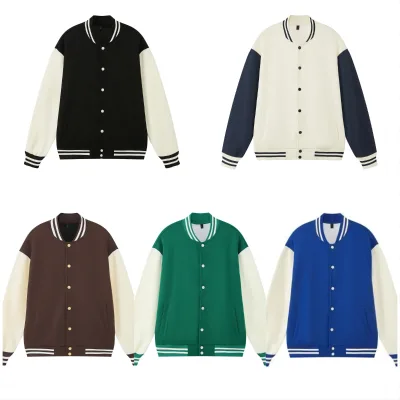
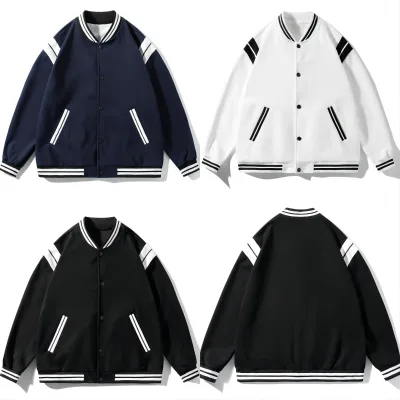
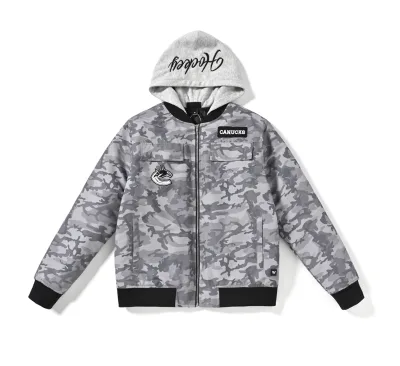

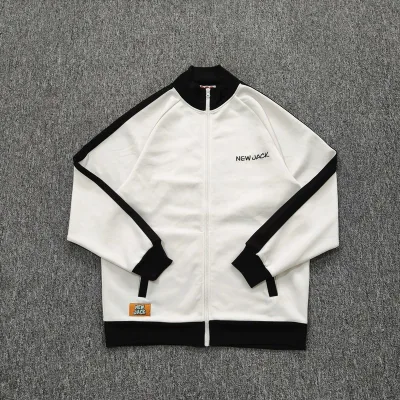


Customized Buttoned Durable Varsity Jacket Sporty Baseball Jacket for Men
$6.99 - $15.99
MOQ: 100 Piece


Custom Embroidered Baseball Jackets Varsity Jackets Wholesale Men's Varsity Jackets
$15.90 - $22.90
MOQ: 50 pieces
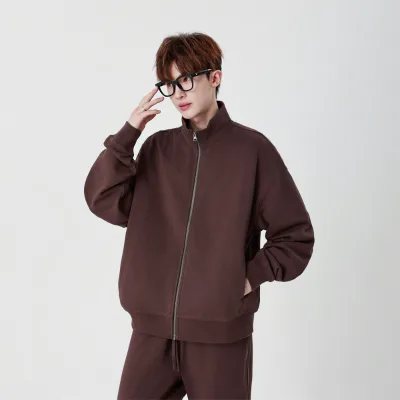


Men's Cotton Blend Varsity Jacket Baseball Coat Athletic Uniform Team Wear
$3.50 - $18.00
MOQ: 50 Pieces

Breathable Cotton Blend Men's Varsity Jacket Baseball Coat Lightweight Design
$3.50 - $18.00
MOQ: 50 Pieces


Comprehensive Sourcing Guide
Strategic Sourcing Guide for Unisex Cotton Knitted Varsity Jackets
Understanding Product Attributes and Technical Specifications
When sourcing a Unisex Cotton Knitted Varsity Jacket, buyers must first establish a precise understanding of the product's technical baseline. The core keyword implies a specific blend of materials and construction methods that differ significantly from woven alternatives. Based on available market data, the material composition for this category often includes cotton, polyester/cotton blends, or 100% polyester, depending on the specific manufacturer's capability. A critical observation for the buyer is the knitted fabric type, which distinguishes these garments from standard woven varsity jackets. The knitted structure provides inherent stretch and comfort, making it suitable for the "Spring / Autumn" and "Winter" seasons as noted in various product listings.
The construction of the jacket typically features a V-Neck or Crew Neck collar, with the V-Neck being a prominent style in the current market. The garment length is generally categorized as "Regular," ensuring a standard fit that appeals to a broad demographic. For sizing, the market offers both specific measurements like "L" and "Free Size" options, which simplifies inventory management for buyers targeting a wide audience. The closure mechanism is frequently a single button, though variations exist. The fabric weight is a significant technical differentiator; some listings specify a heavy weight of 480 grams, indicating a robust, warm garment suitable for colder weather, while others may offer lighter variants. The style is consistently described as "Sporty," aligning with the "Sports and Casual" usage profile. Buyers should verify if the fabric is fleece-lined for added warmth, as this is a common attribute in high-quality knitted varsity jackets.
Compliance, Certification, and Material Verification
Navigating the compliance landscape for apparel sourced from China requires a rigorous approach to material verification and certification checks. While specific certifications like GOTS or OEKO-TEX are often mentioned in broader industry contexts, buyers must treat these as verification targets rather than guaranteed attributes of every listing. The supplied data indicates that product standards are often "customized," meaning the buyer must explicitly define the required compliance framework during the inquiry phase. For a unisex cotton product, verifying the fiber content is paramount. If the listing claims "Cotton" or "Polyester/Cotton," the buyer should request a mill test report or a third-party lab analysis to confirm the percentage of natural fibers versus synthetics.
The "Eco-Friendly" feature is listed as a potential attribute for some items in this category. However, this claim requires substantiation. Buyers should not assume that an "Eco-Friendly" label implies specific certifications without documentation. Instead, the procurement strategy should involve requesting proof of sustainable sourcing practices or specific chemical restrictions. The "100% Inspection" guarantee mentioned in some product profiles is a strong quality control indicator, suggesting that the supplier has an internal process to screen for defects before shipment. However, this internal inspection should be complemented by a pre-shipment inspection (PSI) conducted by a third party to ensure the "100% Inspection" claim translates to actual product quality. The origin is consistently listed as China, with specific mentions of Zhejiang as a production hub, which is a known center for textile manufacturing. Buyers should verify that the supplier's facility in this region adheres to local labor laws and environmental regulations.
Cost Drivers and Pricing Structure Analysis
The pricing structure for unisex cotton knitted varsity jackets is influenced by several variable factors, primarily material costs, order volume, and customization complexity. The observed price range in the market spans from $0.50 to $38.00 USD. This wide disparity indicates that the final unit cost is heavily dependent on the specific configuration of the order. A jacket priced at the lower end of the spectrum likely utilizes a basic polyester/cotton blend, standard sizing, and minimal customization. Conversely, a unit priced near $38.00 likely incorporates high-grade cotton, specialized fleece lining, complex embroidery, and custom branding.
Order volume is a primary driver of cost efficiency. The Minimum Order Quantity (MOQ) varies significantly, ranging from as low as 1 piece to as high as 1500 pieces, with a high-confidence fact noting an MOQ of 10,000 for certain bulk configurations. Buyers must align their order quantity with their budget constraints. For smaller orders, the unit price will be higher due to the fixed costs of setup and production lines. For large-scale procurement, the ability to leverage an MOQ of 10,000 can drastically reduce the per-unit cost. Additionally, the "OEM and ODM Service" availability is a cost factor. Customizing the model number, such as "Sweatshirt-017X" or "QC-BW191," or adding specific branding like "Holya" incurs additional setup fees. The "7 days sample order lead time" suggests that rapid prototyping is available, but rush orders may carry a premium. Packaging costs also vary; options range from simple "OPP Bag" to "1PC/Polybag," and bulk packaging requirements can influence the final landed cost.
Typical Applications and Market Positioning
The versatility of the Unisex Cotton Knitted Varsity Jacket makes it suitable for a diverse range of applications, primarily falling under "Sports and Casual" usage. The "Sporty" style and "Windproof" features make these jackets ideal for athletic activities, outdoor events, and casual streetwear. The "Unisex" and "Adults" classification ensures that the product can be marketed to a broad demographic, from teenagers to adults, without the need for gender-specific sizing adjustments. The "Solid" pattern type is particularly advantageous for corporate merchandise, team uniforms, and promotional events, as it provides a clean canvas for logos and branding.
The seasonal applicability is another key factor in market positioning. With attributes listed for "Spring / Autumn," "Winter," and "Autumn," these jackets serve as transitional outerwear. The heavy fabric weight of 480 grams positions the product as a winter-ready garment, while lighter knitted versions can serve as spring layers. The "Varsity Jacket" style is culturally associated with collegiate and athletic aesthetics, making it a popular choice for university merchandise, sports teams, and fashion-forward casual wear. The "Embroidered" technical capability allows for high-quality branding, which is essential for brand identity in the competitive streetwear market. Buyers should consider the end-user's environment; for instance, a "Windproof" jacket is essential for outdoor sports in cooler climates, whereas a standard cotton knit may suffice for indoor casual wear.
Supplier Evaluation and Service Capabilities
Selecting the right supplier is critical for ensuring product consistency and timely delivery. The market data highlights several key service capabilities that buyers should evaluate. The availability of "OEM" (Original Equipment Manufacturer) and "ODM" (Original Design Manufacturer) services is a standard feature, allowing buyers to customize the product from design to final production. The "Customization" attribute is explicitly available, meaning buyers can request specific model numbers, colors, and fabric weights. The "Supply Type" is listed as "Oem Service," confirming the supplier's readiness to produce private-label goods.
When evaluating suppliers, buyers should look for those who offer a "7 days sample order lead time," as this indicates a responsive production line capable of quick turnaround for prototyping. The "Gurantee: 100% Inspection" is a strong indicator of a supplier's commitment to quality, but it must be verified through a site audit or third-party inspection. The "Place of Origin" being Zhejiang, China, suggests a mature supply chain with access to raw materials and skilled labor. Buyers should also assess the supplier's flexibility regarding "prod_standard," which is often "customized." This means the supplier can adapt to specific buyer requirements rather than forcing a rigid standard. The "Selling Units" being "Single item" suggests that the supplier can handle small test orders, which is beneficial for initial market testing before committing to large volumes.
Quality Control and Long-Term Procurement Strategy
Implementing a robust quality control (QC) strategy is essential for mitigating risks in the apparel supply chain. The "100% Inspection" claim should be the baseline, but buyers should also implement their own QC protocols. This includes checking the "Weaving method" to ensure it is truly "Knitted" and not a hybrid that compromises the garment's stretch. Verifying the "Fabric Type" as "Fleece" or "Cotton" through physical sampling is necessary to ensure the tactile and thermal properties match the description. The "Closure Type" and "Sleeve Style" should be inspected for durability and consistency across the batch.
For long-term procurement, buyers should focus on building a relationship with suppliers who offer "OEM and ODM Service" and can scale production as demand grows. The "MOQ" of 10,000 for high-volume orders suggests that suppliers are equipped for large-scale production, but buyers must ensure that quality does not degrade as volume increases. The "prod_packing" of "OPP Bag" or "1PC/Polybag" should be standardized to protect the product during transit. Buyers should also consider the "Standard" of "any size" as a flexibility point, allowing for adjustments in sizing as market trends shift. Finally, maintaining clear communication regarding "Features" like "Eco-Friendly" and "Windproof" ensures that the product continues to meet evolving consumer expectations and regulatory requirements. By adhering to these guidelines, buyers can secure a reliable supply of high-quality unisex cotton knitted varsity jackets that meet both functional and aesthetic demands.
FAQs
What customization options are available for this jacket?
Customization is available for this Unisex Cotton Knitted Varsity Jacket. Buyers can request specific model numbers, colors, and fabric weights. The supplier supports OEM and ODM services to tailor the product to specific brand needs.
Which materials are used to make this jacket?
The jacket is primarily made from cotton or polyester/cotton blends. Some listings also specify 100% polyester or fleece fabric types. Buyers should verify the exact fiber content through mill test reports to ensure quality standards.
Can I order a small sample before bulk production?
Yes, sample orders are supported with a lead time of 7 days. This allows buyers to verify quality and design before committing to larger volumes. The supplier can handle single item selling units for initial testing purposes.
What is the typical MOQ for this product?
The minimum order quantity varies from 1 to 1500 pieces depending on the configuration. High-confidence data indicates an MOQ of 10,000 for certain bulk configurations. Buyers should align their order quantity with their budget constraints.
Where is this jacket manufactured?
The product originates from China, with specific production hubs in Zhejiang. This region is known for its mature textile supply chain and skilled labor. Buyers should verify that the facility adheres to local labor and environmental regulations.
How is the quality of the jacket ensured?
The supplier offers a 100% inspection guarantee as a baseline quality control measure. Buyers should complement this with third-party pre-shipment inspections to ensure actual product quality. Verification of the knitted weaving method is also essential.
What packaging options are provided for this item?
Packaging options include OPP bags or 1PC per polybag. The specific packing method can be customized based on buyer requirements. Standard packaging protects the product during transit while bulk packaging requirements can influence the final landed cost.