Source Us Plug Button Panel for Boat, Yacht, and Bus Applications
Compare 30 listings for the Us Plug Button Panel designed for marine and vehicle systems. Buyers can evaluate specifications like voltage, IP rating, and material to find suitable options for boat, yacht, and bus installations.
Key considerations
Products List


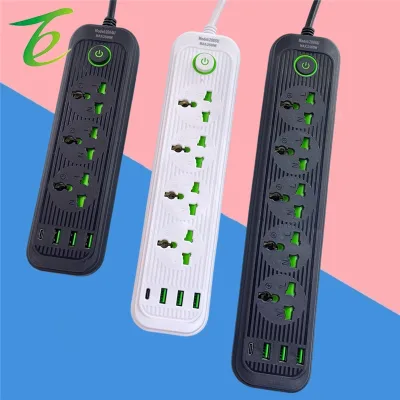


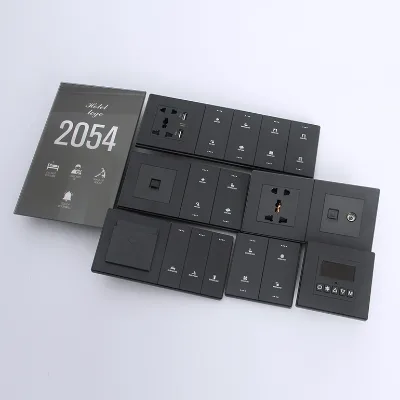
Comprehensive Sourcing Guide
Strategic Sourcing Guide for US Plug Button Panels
Understanding Product Variants and Technical Specifications
When sourcing a Us Plug Button Panel, buyers must first navigate the diverse landscape of product definitions found in the current market. The term "button panel" often encompasses a broad spectrum of devices, ranging from simple mechanical switches to complex capacitive control interfaces. Based on observed market data, the core product category frequently includes items labeled as "Switch Panel" or "Car Charger Panel," though these may serve vastly different applications than a standard wall-mounted US plug. A critical observation from current listings indicates that the "Product Name" can vary significantly, with specific models such as IB-P803, KF, VB1, VB1-2, B010-2, and 311 appearing in the same search context. This variation suggests that a single search term may yield results for automotive components, industrial machinery switches, and residential electrical interfaces simultaneously.
The technical specifications for these panels are equally diverse. Voltage requirements are a primary differentiator. Some observed units are designed for low-voltage environments, specifically operating within a 12V-24V range, which is typical for automotive or marine applications. Conversely, other listings explicitly define the function as an "AC Plug" with an "AC/DC" interface type, indicating compatibility with standard mains electricity. The housing material is another critical specification; while some panels feature a robust ABS (Acrylonitrile Butadiene Styrene) construction, others are described with standards referencing PVC, Copper, or Iron. The physical dimensions also vary, with specific standard measurements observed at 49.5 x 31.5 x 20 mm and larger units measuring 118 x 75 mm.
The operating principle of the switch mechanism is another area requiring careful verification. Market data shows a split between traditional mechanical designs and modern electronic interfaces. Some products utilize a "Capacitive" principle, offering a touch-sensitive experience, while others are described as "Single-pole on-off Switches" with a "Rocker" feature. The contact type is equally varied, with "Type c Contact" appearing alongside descriptions of "Null Line and Live Line" wiring configurations. Buyers must distinguish between these technologies to ensure the selected panel matches the intended electrical system. Furthermore, the "IP Class" for environmental protection ranges from standard ratings to IP65, which offers dust-tight protection and resistance to water jets, a crucial factor for applications in boats, yachts, or outdoor machinery.
Compliance and Certification Verification
Navigating the compliance landscape for US plug button panels requires a rigorous approach to certification verification. The global supply chain for these components is heavily concentrated in China, as indicated by origin data. Consequently, buyers must ensure that products intended for the US market meet specific American safety standards, even if the manufacturer lists certifications from other regions. Observed listings frequently cite certifications such as ISO, CE, and CCC (China Compulsory Certification). While CE and ISO are internationally recognized, the CCC certification is specific to the Chinese market and does not automatically validate a product for US sale.
For a product to be legally sold and installed in the United States, it typically requires Underwriters Laboratories (UL) certification or an equivalent recognized testing laboratory mark. The provided context mentions "UL 1682" and "UL 2238" as background standards, but these are not confirmed as current compliance markers for the specific units listed. Therefore, buyers should not assume that a product listing an ISO or CE mark is compliant with US National Electrical Code (NEC) requirements. The "American Standard" is explicitly mentioned in some product descriptions, but this is a generic descriptor rather than a specific certification body.
Buyers must verify the specific certification status for the exact model number they intend to purchase. The presence of a "CCC" mark on a product listing does not guarantee US compliance. Instead, procurement teams should request valid test reports from accredited laboratories that specifically address US safety standards, such as UL 20 for power supply units or relevant standards for switch panels. The "Certification" field in product listings often aggregates multiple marks (e.g., "CCC, CE, ISO"), but this aggregation does not imply that every listed product possesses every certification. It is the buyer's responsibility to confirm that the specific unit being sourced has the necessary approvals for the target market. Failure to verify this can lead to customs seizures, liability issues, and safety hazards.
Cost Drivers and Pricing Dynamics
The pricing structure for US plug button panels is influenced by a complex interplay of material costs, customization options, and order volume. The observed price range in the market spans from 0 to 100 USD, a wide spectrum that reflects the diversity of product types. At the lower end of this range, buyers may find basic mechanical switches or simple control panels with minimal features. At the higher end, prices likely reflect advanced features such as capacitive sensing, IP65 waterproofing, or specialized materials like copper or iron housings.
Material composition is a primary cost driver. Products described with ABS housing may be priced differently than those utilizing copper or iron components. The inclusion of a "With Lamp" feature also adds to the cost, as it requires additional internal wiring and light-emitting components. Customization is another significant factor; the availability of "Customization" suggests that buyers can request specific branding, color variations, or functional modifications, which typically incurs a premium over standard off-the-shelf models. The "Brand" field indicates that options exist for "Gxt or OEM," meaning buyers can choose between established brand names or generic OEM products, which often carry different price points.
Order volume plays a decisive role in the final unit cost. The observed Minimum Order Quantity (MOQ) ranges from 1 to 10,000 units. Buyers ordering small quantities, such as single samples or small batches, will face a higher per-unit cost compared to those placing large industrial orders. The "Sample Order" is noted as acceptable, which allows for quality verification before committing to large volumes, but this convenience comes at a higher price point. Additionally, packaging requirements influence costs; variations such as "50 Pieces/Carton," "1PC/Poly Bag," or "60PCS/Inner Box" affect the logistics and handling fees. Buyers should negotiate based on the total landed cost, including packaging and shipping, rather than focusing solely on the unit price.
Typical Applications and Usage Scenarios
The versatility of button panels is evident in the wide array of applications listed in the market data. These products are not limited to a single industry but are utilized across automotive, marine, residential, and commercial sectors. The "Usage" field explicitly lists "Toys, Digital Products, Electrical Appliance, Machinery, Communication, Vehicle," indicating a broad utility. For the automotive and marine sectors, the "Application" data highlights "Boat, Yacht, Bus," suggesting that these panels are designed to withstand the harsh environments associated with transportation. The IP65 rating observed in some listings supports this, as it provides protection against dust and water, essential for marine and outdoor vehicle applications.
In the residential and commercial sectors, the applications shift towards lighting control and general power management. The "Application" field includes "Home, Commercial, Hotel, Apartment/Villa, Lighting, Electronics, Home Appliance." This suggests that button panels are used as control interfaces for lighting systems in hotels and villas, or as power distribution points in commercial buildings. The "Function" of "AC Plug" and "Power Supply" further reinforces their role in electrical infrastructure. The "Principle" of operation, whether capacitive or mechanical, dictates the user experience in these settings. For instance, a capacitive switch might be preferred in a modern hotel lobby for its sleek design, while a rocker switch might be chosen for a utility room for its tactile feedback.
The "Kind" of switch, described as "Single-pole on-off Switch," is suitable for basic on/off control in lighting circuits. However, the "Structure" of "Power Built-in Type" indicates that some panels integrate the power supply directly, which is beneficial for compact installations in digital products or compact electrical appliances. The "Detection Method" of "Retro-reflective Mode" suggests advanced sensing capabilities, potentially used in automated systems or security applications. Buyers must align the specific application requirements with the product's technical capabilities to ensure optimal performance and safety.
Supplier Evaluation and Selection Criteria
Selecting the right supplier for US plug button panels requires a multi-faceted evaluation process that goes beyond simple price comparison. Since the origin of these products is predominantly China, buyers must assess the supplier's ability to navigate international trade regulations and maintain consistent quality. The "Condition" of the products is listed as "New," which is a baseline requirement, but buyers should verify the manufacturing process to ensure that "New" implies current production and not refurbished stock.
The "Standard" of the product is another critical evaluation point. While some listings mention "Standard" or "American Standard," these terms are generic. Buyers should request detailed technical drawings and specifications to confirm that the product meets the specific dimensional and electrical standards required for their project. The "Characteristics" of "Long Life and Exquisite Design" are subjective claims that should be validated through sample testing. Buyers should not rely solely on marketing descriptions but should request evidence of durability, such as cycle testing data or material stress reports.
Supplier reliability is also measured by their flexibility in order fulfillment. The "Sample Order" being acceptable is a positive indicator, but buyers should also evaluate the supplier's capacity to handle large orders, given the observed MOQ range up to 10,000 units. The "Product Packing" details, such as "10PCS/Inner Box, 100PCS/Outer Carton," indicate the supplier's logistical capabilities. A supplier that can provide consistent packaging and labeling is essential for maintaining supply chain efficiency. Additionally, the "Grounding" status, noted as "Non-Grounding" in some listings, is a critical safety feature that must be verified against the specific electrical system requirements of the buyer's application.
Quality Control and Long-Term Procurement
Implementing a robust quality control (QC) strategy is essential for mitigating risks associated with sourcing button panels. The "Protection" features listed as "Insulation" and "Durable" are key attributes that must be verified through physical inspection and testing. Buyers should establish clear acceptance criteria for insulation resistance, mechanical durability, and environmental resistance. The "IP Class" of IP65, if claimed, should be verified through independent testing to ensure the product can withstand the specified conditions.
Long-term procurement considerations involve building a sustainable relationship with suppliers who can provide consistent quality and support. The "Wiring" configuration, described as "Null Line and Live Line," requires precise manufacturing to ensure safe and reliable connections. Any deviation in wiring could lead to electrical failures or safety hazards. Buyers should implement a pre-shipment inspection protocol that includes visual checks for defects, functional testing of the switch mechanism, and verification of the "Contact Type."
Furthermore, the "Feature" of the product, such as "Rocker" or "Capacitive," should be tested for longevity. A switch that feels smooth initially may degrade over time if the internal components are of poor quality. Buyers should request sample batches for extended testing to evaluate the "Long Life" claim. The "Product Type" of "Car Charger Panel" or "Switch Panel" may also require specific compatibility testing with the intended electrical system. By maintaining a rigorous QC process and fostering transparent communication with suppliers, buyers can ensure a steady supply of high-quality button panels that meet their operational and safety requirements.
Final Procurement Considerations and Risk Mitigation
The final stage of the procurement process involves synthesizing all gathered information to make an informed decision. Buyers must balance the technical specifications, compliance requirements, cost factors, and supplier capabilities to select the optimal product. The "Voltage" range of 12V-24V or AC compatibility must be matched precisely to the application's power source. The "Shape" of the panel, described as "EP" in some listings, should be evaluated for fit and finish in the intended installation environment.
Risk mitigation strategies should include diversifying the supplier base to avoid single points of failure. Given the wide range of MOQs, buyers can start with smaller orders to test supplier performance before scaling up. The "Brand" option of "Gxt or OEM" allows for flexibility in branding, but buyers should ensure that OEM products meet the same quality standards as branded items. Finally, buyers should maintain open communication channels with suppliers to address any issues promptly and ensure that the "Standard" and "Certification" requirements are met throughout the production and delivery process. By adhering to these guidelines, buyers can successfully source US plug button panels that deliver value and reliability.
FAQs
What certifications are available for these panels?
Available certifications include ISO, CE, and CCC. Buyers must verify that specific models possess the required marks for their target market, as CCC is specific to China and may not satisfy US safety codes without additional testing.
Which voltage ranges do these switch panels support?
Most units operate within a 12V-24V low-voltage range suitable for vehicles and boats. Some listings also indicate AC/DC interface types for power supply applications, so verify the specific model function before purchase.
Can I order samples before placing a bulk order?
Sample orders are acceptable for most suppliers to verify quality. This allows buyers to test features like IP65 protection or capacitive principles before committing to larger quantities with minimum order requirements.
What materials are used for the housing construction?
Housing materials commonly include ABS, PVC, copper, or iron. The choice affects durability and cost, with ABS often used for its robustness in automotive and marine environments requiring long life.
Which applications are these panels designed for?
Applications span boats, yachts, buses, and commercial lighting systems. They are also suitable for home appliances, digital products, and machinery, depending on the specific model's voltage and protection rating.
How are the products packaged for shipment?
Packaging varies by model, ranging from single poly bags to cartons containing 50 to 600 pieces. Buyers should confirm inner and outer carton counts to ensure logistics compatibility with their receiving facility.
What is the origin of these switch panels?
The products originate from China. Buyers should account for international shipping and ensure suppliers can provide necessary documentation for customs clearance and compliance with destination country regulations.