Find Used 10 Speed Tractor Truck for Mining, Construction, and Hauling
Source 30 listings of Used 10 Speed Tractor Truck units featuring diesel engines, manual transmissions, and varying load capacities from 21 to 40 tons. Buyers can compare specifications including horsepower, axle models, and emission standards to identify suitable commercial vehicles for heavy-duty applications.
Key considerations
Products List

$9000.00 - $10000.00
MOQ: 1 Pieces


Used Ho Wo Tractor Truck 6*4 Truck 10 Wheels Tractor Truck Used 2023
$9000.00 - $10000.00
MOQ: 1 Pieces


$24500.00 - $30000.00
MOQ: 1 Pieces


Low Price Excellent Condition Used 375HP 10 Wheels 6X4 Tractor Trailer Head Tractor Truck
$30000.00 - $34000.00
MOQ: 1 Pieces


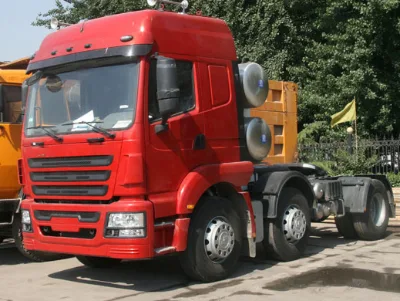

Used/New Sitrak C9h 6X4 Euro6 570HP 10-Wheel Diesel Tractor Used Tractor Truck
$19000.00 - $20000.00
MOQ: 1 Pieces


High-Quality Diesel 6×4 Used 371 Tractor Truck with Manual Transmission
$26500.00 - $27780.00
MOQ: 1 Pieces


Comprehensive Sourcing Guide
Strategic Sourcing Guide for Used 10-Speed Tractor Trucks
Understanding the Core Product Profile and Technical Specifications
When sourcing a used 10-speed tractor truck, buyers must first align their requirements with the specific technical attributes observed in the current market. The core product in this category is frequently identified as a "Second Hand Used Truck" or specifically a "Sinotruck HOWO 10 Wheeler," often marketed under model designations such as "X3000" or "ZZ3257N3847C." These vehicles are predominantly diesel-powered commercial units designed for heavy-duty applications. A critical observation for buyers is the powertrain configuration; the observed horsepower range for these units typically falls between 351 and 450hp, with specific models like the 371HP and 420HP variants being common. The engine capacity for these heavy-duty units is generally greater than 8 liters, ensuring sufficient torque for demanding loads.
The transmission system is a defining feature of the "10-speed" designation. The market data indicates that these trucks utilize manual transmission types, specifically the HW19710 model in many instances. This manual configuration is paired with a drive wheel setup of 6×4, which provides the necessary traction for off-road and heavy-load scenarios. The braking system is noted as mechanical, a traditional and robust design often found in heavy commercial vehicles. For buyers evaluating the chassis, the front axle is frequently identified as the HF7, while the rear axle is the ST16. These components are essential for maintaining structural integrity under the high load capacities observed in this segment.
Dimensions and physical specifications are equally vital for logistics planning. The standard product packing dimensions for these trucks are observed in two primary configurations: 6800mm x 2490mm x 3668mm and 6825mm x 2490mm x 3650mm. These measurements define the footprint for shipping and storage. Furthermore, the tire design is predominantly tubeless, with radial tires being a common specification. The tire size is often 1200r20, which is standard for heavy-duty tractors. The fuel tank capacity is typically 400 liters, supporting long-haul operations. Buyers should note that while many units are listed as "Used," some market listings may also contain "New" condition attributes, requiring careful verification of the actual vehicle history and mileage, which is often observed to be greater than 100,000 km.
Compliance, Certification, and Regulatory Verification
Navigating the regulatory landscape is a critical step in the procurement of used heavy vehicles. The market data indicates that these trucks are subject to specific emission standards and tire certifications. Buyers must verify that the vehicle meets the Euro emission standard, which is a common requirement for international trade and operation in regulated zones. The observed data also references ECE and ISO certifications regarding tire safety and performance. However, it is imperative for buyers to treat these as observations of the product category rather than guaranteed attributes for every single unit listed.
The "10-speed" tractor truck must comply with the emission standards of the destination country. While the observed data mentions "Euro Engine Capacity:>8L," this suggests a correlation between engine displacement and emission compliance, but it does not explicitly confirm the specific Euro tier (e.g., Euro 3, Euro 4, or Euro 5) without further verification. Buyers should request the official emission certificate and engine compliance documents before finalizing a purchase. Similarly, the tire certification must be validated against local road safety regulations. The presence of "ECE" and "ISO" in the product attributes suggests that the tires meet international standards, but the specific certification numbers should be cross-referenced with the vehicle's registration documents.
Additionally, the product origin is identified as China. This geographic factor influences the compliance requirements, particularly regarding import duties and safety inspections. Buyers must ensure that the vehicle's condition, specifically the "Used" status, does not violate any import restrictions in their target market regarding vehicle age or mileage. The "Service Life" of these trucks is estimated at 6-10 years, which may impact the remaining operational lifespan relative to local regulations that restrict the import of older commercial vehicles.
Cost Drivers and Financial Considerations
The financial landscape for sourcing used 10-speed tractor trucks is characterized by a significant variance in pricing. The observed listed price range in the market spans from 2,000 USD to 378,000 USD. This wide range indicates that the final cost is heavily dependent on specific variables such as the model year, actual mileage, condition of the engine and transmission, and the specific configuration of the truck. The lower end of the price spectrum likely corresponds to units with higher mileage, older model years, or those requiring significant refurbishment. Conversely, the higher end of the range may reflect units with lower mileage, better maintenance records, or specialized configurations.
The Minimum Order Quantity (MOQ) for these vehicles is observed to be 1 unit, allowing for flexible procurement strategies where buyers can purchase single units without needing to commit to a bulk order. This is particularly advantageous for small to medium-sized logistics companies or individual operators. However, the cost of ownership extends beyond the purchase price. Buyers must factor in the cost of shipping, which is influenced by the vehicle's dimensions (approx. 6800mm length) and weight. The "Naked Packing" or "Nude Packing" observed in some listings suggests that the vehicles are shipped without additional protective crating, which may reduce shipping costs but requires careful handling to prevent damage during transit.
Other cost drivers include the potential need for customization. The market data indicates that customization is available, which can add to the overall cost. Buyers should evaluate whether the base model meets their operational needs or if modifications are required for specific cargo types or road conditions. The "Road Conditions" attribute notes "off-Road" capability, which may necessitate additional investment in suspension upgrades or specialized tires if the primary use case involves rough terrain. Additionally, the "Service Life" of 6-10 years implies that buyers should budget for ongoing maintenance and potential part replacements as the vehicle ages.
Typical Applications and Operational Scenarios
The operational versatility of the used 10-speed tractor truck makes it suitable for a wide range of commercial applications. The primary usage is defined as a "Commercial Vehicle," specifically designed for heavy transport. The "Dumping Type" is noted as "Front Lifting Style," indicating that many of these units are configured as dump trucks, ideal for construction, mining, and aggregate transport. The load capacity is a critical factor, with observed ranges varying between 21-30 tons and 31-40 tons. This variation suggests that buyers must carefully match the truck's capacity to their specific cargo requirements to avoid overloading or underutilizing the vehicle.
The "Road Conditions" attribute highlights "off-Road" capability, making these trucks suitable for construction sites, quarries, and unpaved industrial zones. The 6×4 drive wheel configuration provides the necessary traction for these challenging environments. The "Integral Power Steering" ensures maneuverability even when the vehicle is heavily loaded, which is essential for tight spaces often found in industrial settings. The "Cab" configuration, described as "Hw76 Cabin, One Sleeper with A/C," supports long-haul operations, providing comfort for drivers on extended routes.
For buyers considering these trucks for long-distance transport, the 400-liter fuel tank and high engine capacity (>8L) are significant advantages. The "Service Life" of 6-10 years suggests that these vehicles are built for durability, provided they are maintained according to the manufacturer's specifications. The "Mileage" being greater than 100,000 km is a common observation, indicating that these trucks are often sourced from fleets that have completed significant operational cycles. Buyers should assess the remaining service life based on the current mileage and the condition of critical components like the engine, transmission, and axles.
Supplier Evaluation and Due Diligence
Evaluating suppliers for used 10-speed tractor trucks requires a rigorous due diligence process to mitigate risks associated with purchasing used heavy equipment. Since the product origin is identified as China, buyers should verify the legitimacy of the supplier and their ability to provide accurate documentation. The absence of specific supplier names in the market data underscores the importance of independent verification rather than relying on brand reputation alone. Buyers should request proof of ownership, maintenance records, and inspection reports to confirm the condition of the vehicle.
The "Customization" availability is a positive indicator of supplier flexibility, but it also requires clear communication to ensure that the modifications meet the buyer's specifications. Buyers should ask for detailed photos and videos of the actual vehicle, focusing on the engine bay, chassis, tires, and interior cabin. The "Condition" attribute, which can range from "Used" to "New," necessitates a clear definition of what constitutes the vehicle's state. A "Used" vehicle with high mileage may have hidden issues that are not immediately apparent, so a third-party inspection is highly recommended.
Buyers should also evaluate the supplier's ability to handle logistics and documentation. The "Naked Packing" or "Nude Packing" mentioned in the product attributes implies that the supplier may not provide extensive packaging services, so the buyer must arrange for appropriate shipping protection. The "Lead Time" and "MOQ" are critical factors in the procurement timeline, with the observed MOQ of 1 allowing for immediate purchase. However, buyers should confirm the actual lead time for delivery and any potential delays due to customs clearance or shipping logistics.
Quality Control and Inspection Protocols
Implementing a robust quality control protocol is essential when sourcing used 10-speed tractor trucks. The inspection process should begin with a thorough review of the vehicle's documentation, including the engine serial number, chassis number, and emission compliance certificates. The "Engine" model, such as the "Wd615.47," should be verified against the physical engine to ensure it matches the specifications. The "Front Axle" and "Rear Axle" models (HF7 and ST16) should also be inspected for signs of wear, damage, or unauthorized modifications.
The physical inspection should cover the "Tires," which are observed to be 1200r20 radial tires. Buyers should check the tread depth, sidewall condition, and overall wear pattern to assess the remaining life of the tires. The "Fuel Tank" capacity of 400 liters should be verified for leaks or corrosion. The "Cab" interior, including the "One Sleeper with A/C," should be tested for functionality, ensuring that the air conditioning system and other electrical components are operational.
The "Braking System," noted as mechanical, requires a detailed inspection of the brake pads, discs, and lines. Buyers should perform a test drive to evaluate the braking performance, steering response, and transmission shifting. The "Mileage" of >100,000 km should be cross-referenced with the service history to ensure that the vehicle has been maintained according to the manufacturer's schedule. The "Service Life" of 6-10 years suggests that the vehicle should be in good condition if it has been well-maintained, but buyers should be prepared for potential repairs as the vehicle ages.
Long-Term Procurement and Lifecycle Management
Procuring a used 10-speed tractor truck is not just a one-time transaction but the beginning of a long-term asset management cycle. The "Service Life" of 6-10 years indicates that buyers should plan for the entire lifecycle of the vehicle, including maintenance, repairs, and eventual decommissioning. The "Customization" option allows for adaptability to changing operational needs, but buyers should ensure that any modifications are reversible or do not compromise the vehicle's structural integrity.
Buyers should establish a maintenance schedule based on the vehicle's mileage and usage patterns. The "Diesel" powertrain requires regular oil changes, filter replacements, and engine tune-ups to maintain performance and efficiency. The "Manual" transmission and "Mechanical" braking system are robust but require regular inspection and adjustment to prevent premature wear. The "Road Conditions" of "off-Road" usage may accelerate wear on the suspension and tires, necessitating more frequent inspections and replacements.
The "Load Capacity" of 21-40 tons is a critical factor in determining the vehicle's utility. Buyers should ensure that the truck is not consistently operated at maximum capacity, as this can shorten its service life. The "Seat Capacity" and "Cab" configuration should be evaluated for driver comfort and safety, as these factors impact driver retention and operational efficiency. Finally, buyers should consider the resale value of the vehicle at the end of its service life, as well-maintained trucks with lower mileage and good documentation will command a higher price in the secondary market.
FAQs
What is the typical horsepower range for these trucks?
The typical horsepower range falls between 351 and 450hp. Specific models often feature 371HP or 420HP variants powered by diesel engines with capacities exceeding 8 liters.
Which transmission type is standard for these vehicles?
These vehicles typically utilize a manual transmission type. Specific models often employ the HW19710 transmission paired with a 6x4 drive wheel configuration for heavy-duty traction.
Can buyers customize the specifications of these trucks?
Yes, customization is available for these units. Buyers can request specific modifications to meet operational needs, though the base model often comes in standard configurations like the X3000.
What is the observed price range for these used trucks?
The observed listed price range spans from 2,000 to 378,000 USD. Costs vary significantly based on condition, mileage, model year, and specific configuration requirements.
How is the load capacity defined for these commercial vehicles?
Load capacity is observed in ranges between 21 to 30 tons and 31 to 40 tons. Buyers must match these capacities to their specific cargo requirements to ensure safe operation.
What are the standard dimensions for product packing?
Standard product packing dimensions are observed as 6800mm by 2490mm by 3668mm or 6825mm by 2490mm by 3650mm. These measurements define the footprint for shipping and storage logistics.