Source Vacuum Centrifugal Concentrator for Liquid Prep, Pharma, Food
Compare 30 Vacuum Centrifugal Concentrator units from Chinese manufacturers offering GMP and ISO certifications. These machines support low-temperature vacuum concentration with customizable capacities ranging from 50L to 80,000kg per hour for diverse industrial applications.
Key considerations
Products List


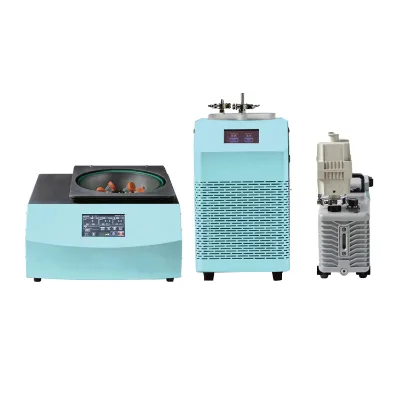


High-Efficiency Vacuum Evaporator Forced Circulation Liquid Concentrator
$5500.00 - $6600.00
MOQ: 1 Pieces

Comprehensive Sourcing Guide
Strategic Sourcing Guide for Vacuum Centrifugal Concentration Systems
The global demand for efficient liquid processing equipment has driven significant innovation in vacuum concentration technologies. For procurement professionals in the pharmaceutical, food, and chemical sectors, the Vacuum Centrifugal Concentrator represents a critical asset for reducing solvent volumes while preserving product integrity. Sourcing these systems requires a disciplined approach that balances technical performance with regulatory compliance. This guide outlines the essential factors for evaluating vacuum concentration machinery, focusing on the specific attributes observed in the current market, including material standards, operational parameters, and certification requirements.
Technical Architecture and Operational Parameters
Understanding the core technical specifications is the first step in defining a viable procurement strategy. The vacuum concentration process relies on reducing the boiling point of solvents through the application of a vacuum, allowing for evaporation at lower temperatures. This is particularly vital for heat-sensitive materials. The observed market data indicates that these systems often employ a "Pressure Reduction Concentrating" method combined with "Vacuum Concentration" techniques. The operational environment is typically maintained under specific vacuum conditions, with observed ranges spanning from -0.085 to -0.095 MPa. This level of vacuum is essential for achieving the desired "De-Moisture Speed," which can vary significantly based on the model, ranging from 100 to 80,000 kg per hour.
The physical construction of these units is predominantly "Stainless Steel," ensuring corrosion resistance and compliance with hygiene standards required for liquid processing. The "Working Temperature" is a critical variable, with observed specifications ranging from 65°C to 105°C, often described as controllable per application. This flexibility allows the machinery to adapt to different product viscosities and thermal sensitivities. The heating resource is typically "Steam or Hot Water," providing a reliable and consistent energy input.
A key differentiator in the current market is the configuration of the concentrating effect. Buyers will encounter systems described as having a "Three Effect" or "Triple Effect" design. This multi-stage approach enhances energy efficiency by reusing vapor from one stage to heat the next, aligning with the "Energy-Saving Design" feature observed in many listings. The evaporation mechanism may utilize "Film Rising/Falling" or "Forced Circulation" principles, depending on the specific application requirements. The inclusion of a "Vacuum Pump" is standard, though some suppliers may list it as "Offered" rather than included, necessitating a clear definition of scope in the purchase order.
Compliance, Certification, and Regulatory Standards
In the B2B procurement of industrial machinery, particularly for applications involving "Liquid" finished dosage forms, regulatory compliance is non-negotiable. The observed market data highlights that reputable suppliers provide equipment certified under "GMP" (Good Manufacturing Practice) and "ISO" standards. For international trade, "CE" certification is also frequently observed, indicating conformity with health, safety, and environmental protection standards for products sold within the European Economic Area.
When evaluating a potential supplier, buyers must verify that the certification documents are current and applicable to the specific model being purchased. The "Standard" for these machines often references capacity ranges, such as 50L to 2,000L or 300L to 3,000L, rather than a single universal standard. This implies that compliance must be verified against the specific capacity and configuration of the unit. The "Condition" of the equipment is typically listed as "New," but buyers should request evidence of the manufacturing process to ensure that the "New" status aligns with the claimed certifications.
The "Computerized" nature of the control systems varies across the market. Some models are fully "Computerized," offering precise control over temperature, vacuum levels, and flow rates, while others are "Non-Computerized," relying on manual or semi-automated controls. The choice between these two depends on the required "Precision." High-precision applications may demand the advanced control loops found in computerized systems, whereas simpler processes might suffice with manual controls. Buyers should explicitly state their precision requirements during the sourcing phase to avoid mismatches between the control system and the process needs.
Cost Drivers and Total Cost of Ownership
The price range for vacuum concentration systems in the current market is vast, observed from $1 to $100,000 USD. This wide disparity is not indicative of quality variance alone but reflects differences in capacity, automation level, and customization. The "Evaporating Capacity" is a primary cost driver; units capable of processing 80,000 kg/hour will naturally command a higher price than those limited to 300 kg/hour. Additionally, the "Three Effect" or "Triple Effect" design adds to the initial capital expenditure due to the complexity of the heat exchanger and condenser systems.
Beyond the purchase price, the "Total Cost of Ownership" (TCO) must be considered. The "Heating Resource" compatibility can impact operational costs; systems designed for steam may require significant infrastructure investment if steam is not already available on-site. The "Voltage" specifications, ranging from 220V to 380V and frequencies of 50/60Hz, also influence installation costs, as electrical upgrades may be necessary to match the local grid.
Customization is a significant factor in pricing. The "Customization" attribute is listed as "Available" and "Customized" in many listings, suggesting that buyers can tailor the machine to specific needs. However, this flexibility often comes with a premium. The "After-sales Service" is another critical cost component. While some suppliers offer "Lifelong" service, others may provide a standard "1 Year" warranty. The long-term cost of maintenance, spare parts, and technical support should be factored into the budget, as downtime in a production line can be far more expensive than the initial equipment cost.
Typical Applications and Process Integration
The versatility of vacuum centrifugal concentrators makes them suitable for a wide array of industries. The primary "Application" areas identified include the processing of "Condenser," "Vaporizer," and "Heater" functions within a broader production line. The "Finished Dosage Form" is consistently "Liquid," indicating that these systems are integral to the final stages of pharmaceutical, biotechnology, and food processing where liquid concentrates are required.
The "Principle" of operation, often described as a "Mixing Heat Exchanger," allows for efficient heat transfer and mixing, which is crucial for maintaining product homogeneity. The "Style" of the machinery is generally "Steel Type," providing the durability needed for industrial environments. The "Features" such as "Film Rising/Falling" and "Forced Circulation" are selected based on the viscosity and thermal sensitivity of the specific liquid being processed.
Buyers must ensure that the selected equipment integrates seamlessly with their existing infrastructure. The "Working Vacuum Condition" and "Working Temperature" ranges must align with the process parameters of the specific product. For instance, a product requiring a strict temperature range of 65°C to 85°C may not be compatible with a system optimized for 65°C to 105°C without careful calibration. The "Evaporating Capacity" must also match the production throughput requirements; a system with a capacity of 100-3000 kg/hour may be insufficient for large-scale operations requiring 3000-80000 kg/hour.
Supplier Evaluation and Quality Assurance
Evaluating suppliers requires a rigorous assessment of their technical capabilities and track record. The "prod_model" identifiers, such as ZN, LHSJN, LH-TEE, LHDEE, and SDI-EVP, serve as unique identifiers for different configurations. Buyers should verify that the specific model number corresponds to the technical specifications they require. The "prod_packing" details, which include "Wood, Container" or "Wooden Cartons and Pallets," are essential for logistics planning, especially for international shipments from "China."
Quality control should be a central part of the supplier evaluation process. Buyers should request detailed documentation regarding the "Condition" of the equipment, ensuring that "New" units are indeed manufactured to the highest standards. The "After-sales Service" commitment, whether "Lifelong" or limited to "1 Year," should be clearly defined in the contract. The "Precision" of the equipment, whether "Precision" or "Normal Precision," must be validated through factory acceptance tests (FAT) before shipment.
The "Location" of the supplier, predominantly "China," offers competitive pricing but requires careful management of logistics and communication. The "Lead Time" and "MOQ" (Minimum Order Quantity) are critical factors; observed data suggests an MOQ of 1, which is favorable for buyers testing new technologies or scaling up gradually. However, buyers should confirm if this applies to all models or only specific configurations. The "Standard" of the product, often listed as "NEW," should be cross-referenced with the latest industry standards to ensure compliance.
Long-Term Procurement and Lifecycle Management
Procuring vacuum concentration machinery is a long-term investment that requires careful planning for the entire lifecycle of the equipment. The "Customized" nature of these systems means that future modifications or expansions may be necessary. Buyers should ensure that the supplier has the capacity to support these changes over the long term. The "After-sales Service" is particularly important in this regard; a "Lifelong" service agreement provides peace of mind but requires a thorough review of the terms and conditions.
Maintenance and spare parts availability are critical for minimizing downtime. The "Vacuum Pump," a key component, should be evaluated for its service life and the availability of replacement parts. The "Voltage" and "Heating Resource" compatibility should be future-proofed to accommodate potential changes in energy infrastructure or process requirements. The "Working Temperature" and "Working Vacuum Condition" ranges should be monitored regularly to ensure the equipment continues to operate within the specified parameters.
Finally, the "Certification" status should be reviewed periodically to ensure continued compliance with evolving regulations. The "GMP" and "ISO" certifications are not static; they require ongoing audits and maintenance. Buyers should establish a protocol for regular reviews of the equipment's compliance status, ensuring that the machinery remains a valid asset for production. By focusing on these long-term considerations, buyers can secure a reliable and efficient vacuum concentration system that supports their operational goals for years to come.
Comparative Analysis of Key Specifications
To assist in the decision-making process, the following table summarizes the key technical and operational differences observed in the market data. This comparison highlights the variability in capacity, voltage, and certification, which are critical for matching the right equipment to specific production needs.
| Feature Category | Specification Range A | Specification Range B | Specification Range C |
|---|---|---|---|
| Evaporating Capacity | 100~3000 kg/Hour | 3000~80000 kg/Hour | 50L~2,000L (Volume) |
| Working Temperature | 65~85°C (Controllable) | 65~105°C (Controllable) | Variable (Per Application) |
| Working Vacuum | -0.085~-0.09 MPa | -0.07~-0.095 MPa | Vacuum Condition |
| Voltage | 220V | 220/380V & 50/60Hz | 380V |
| Certification | ISO, CE | ISO | GMP, ISO |
| Computerized | Non-Computerized | Computerized | Computerized |
| Effect Type | Triple Effect | Three Effect | N/A |
| Warranty | 1 Year | Lifelong | N/A |
| Material | Stainless Steel | Stainless Steel | Stainless Steel |
This table illustrates that no single specification fits all needs. The choice between a 100 kg/hour unit and an 80,000 kg/hour unit will dictate the entire procurement strategy, from electrical infrastructure to floor space requirements. Similarly, the certification requirements will vary based on the end-use application, with pharmaceutical products often demanding GMP compliance while other industries may only require ISO.
In conclusion, sourcing a Vacuum Centrifugal Concentrator requires a meticulous approach that balances technical specifications with regulatory and operational realities. By carefully evaluating the observed data and adhering to the principles of evidence-based procurement, buyers can select equipment that ensures efficiency, compliance, and long-term reliability. The market offers a diverse range of options, from basic manual units to highly automated, computerized systems, each tailored to specific industrial needs. Success lies in the ability to match these diverse offerings with the precise requirements of the production process.
FAQs
What certifications do vacuum centrifugal concentrators typically have?
These machines typically hold GMP, ISO, and CE certifications to ensure regulatory compliance. Buyers should verify that the specific model matches the required standard, as some listings show ISO alone while others include GMP for pharmaceutical applications.
Can the equipment be customized for specific production needs?
Yes, customization is available and many units are listed as customized to fit unique requirements. Buyers can specify capacity ranges like 50L to 2,000L or 300L to 3,000L to ensure the machine meets their exact throughput demands.
How is the vacuum pump supplied with the concentrator system?
The vacuum pump is either included with the unit or offered as an optional add-on depending on the supplier. Buyers must clarify the scope of supply to avoid missing critical components needed for the vacuum concentration process.
What is the typical working temperature range for these machines?
The working temperature generally ranges from 65°C to 105°C and is controllable per application. This flexibility allows the system to handle heat-sensitive liquids by maintaining precise thermal conditions during the evaporation process.
Which materials are used to construct the vacuum concentrator body?
The equipment is predominantly constructed from stainless steel to ensure corrosion resistance and hygiene. This material choice supports the processing of liquid dosage forms and meets the strict standards required for pharmaceutical and food industries.
What is the minimum order quantity for purchasing this machinery?
The minimum order quantity is typically one unit, allowing buyers to test new technologies or scale gradually. This low entry barrier facilitates procurement for both small-scale pilot projects and larger industrial operations.