Source Vacuum Caps for High Voltage, Industrial, and Medical Uses
Source Vacuum Caps from 30 verified listings. Compare silicone rubber O-ring seals with strengths from 45 to 760 kN. Options include high-voltage transmission components and general industrial parts with OEM customization available; compare the available evidence and request quotations based on your requirements.
Key considerations
Products List

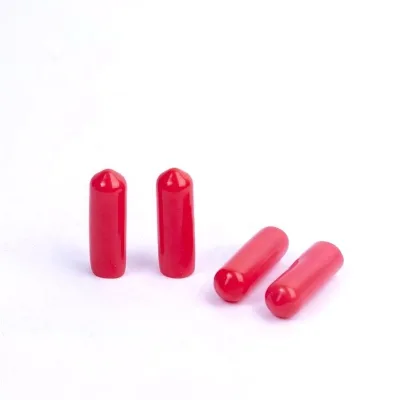


Special Shapes and Colors Silicone Caps
$0.08 - $0.09
MOQ: 1000 Pieces
Ningbo Beilun Hengnai Fluorine & Plastic Production Co., Ltd.

Different Sizes of Silicone Rubber Caps
$0.06 - $0.09
MOQ: 1000 Pieces
Ningbo Beilun Hengnai Fluorine & Plastic Production Co., Ltd.

Higher Quality of Silicone Caps
$0.01 - $0.01
MOQ: 10000 Pieces
Ningbo Beilun Hengnai Fluorine & Plastic Production Co., Ltd.


Silicone Rubber Caps with Many Colors
$0.07 - $0.07
MOQ: 1000 Pieces
Ningbo Beilun Hengnai Fluorine & Plastic Production Co., Ltd.


Comprehensive Sourcing Guide
Vacuum Caps Sourcing Guide
Procurement professionals evaluating Vacuum Caps must first distinguish between high-voltage suspension insulators and general-purpose sealing components, as the supplied data reveals a dual market presence. One segment targets high-voltage power transmission with strengths ranging from 45 to 760 kN, while another focuses on household appliances and industrial machinery using silicone rubber or rubber materials. Buyers must carefully align their specific application needs with these distinct product categories to avoid selecting components with mismatched voltage ratings or mechanical strengths.
The observed listing signals indicate a wide variance in customization capabilities and packaging standards across the available inventory. Some suppliers offer compression or injection molding services with custom designs, whereas others provide standard O-ring cross-sections with fixed dimensions like 0.605 inches outer diameter. Understanding whether the requirement is for a non-standard part or a standard industrial component is critical, as this decision dictates the necessary lead times, which can range from five to thirty days based on order quantity.
Product Scope and Observed Listing Signals
Buyers should verify the specific application domain before proceeding, as the market data shows products serving both agricultural and medical sectors alongside heavy industrial power transmission. The presence of silicone rubber and rubber materials suggests versatility in sealing environments, yet the strength specifications vary significantly from general-purpose seals to high-load suspension insulators. Clarifying whether the vacuum cap must withstand high voltage or simply provide a seal for steel tubes and threaded pipes is the first step in narrowing the supplier pool.
Listing signals also reveal diverse packaging and shipping protocols that impact logistics planning and cost estimation. While some items are shipped in plywood crates suitable for heavy industrial loads, others are packed in polybags within cartons or according to specific customer requirements. This inconsistency in packaging standards requires buyers to explicitly define their shipping needs to ensure the product arrives undamaged, particularly when sourcing from origins in Zhejiang or Ningbo, China, where processing services like moulding are standard.
Technical Specifications to Verify
Technical due diligence must begin with the cross-section shape and material composition, as the data highlights O-rings and circular head codes made from silicone rubber or general rubber. Buyers need to confirm if the specific model number, such as SC1187-1500 or SC312-1500, aligns with the required pressure ratings and environmental resistance, including oil and ozone resistance. The distinction between a standard 0.605-inch outer diameter and custom-designed dimensions is vital for ensuring a proper fit in the intended machinery or appliance.
Mechanical strength and processing methods are equally critical verification points for high-performance applications. The observed strength range of 45 to 760 kN applies to specific high-voltage suspension insulators, not necessarily to all Vacuum Caps in the catalog. Procurement teams must verify the production style, whether compression or injection molding, to ensure the manufacturing process matches the required tolerance levels and durability expectations for the specific industrial or household application.
Compliance and Safety Documentation
Compliance verification requires checking for specific certifications like ISO, RoHS, REACH, FDA, CE, and EN 1822, though the availability of these varies by product line. Some listings explicitly mention multiple certifications including ISO and FDA, which are essential for medical or food-grade applications, while others may only list ISO or CE for general industrial use. Buyers must request current certification documents for the specific batch or model to ensure the product meets the regulatory standards of their target market.
Safety documentation should also address the IP rating and environmental durability claims, such as oil and ozone resistance, which are listed as key advantages for certain rubber components. It is necessary to confirm that the stated IP rating and resistance properties are backed by test results for the specific material grade being purchased. Without this verification, there is a risk of component failure in harsh environments where chemical exposure or moisture ingress could compromise the vacuum seal integrity.
Cost Drivers and Commercial Terms
Cost structures are heavily influenced by the MOQ, which ranges widely from single items to 30,000 pieces, and the level of customization required. Non-standard parts and custom designs often incur higher unit costs and longer lead times compared to standard O-rings or pre-molded components. Buyers should negotiate payment terms carefully, as the data indicates these are often open to negotiation, and understand how order quantity impacts the final price per unit within the observed 0.01 to 13 USD range.
Commercial terms also encompass shipping methods and lead time variability, which can span from five to thirty days depending on the order volume. The choice between sea, air, or express shipping significantly affects the total landed cost and delivery speed, requiring a balance between urgency and budget constraints. Additionally, the origin location in China, specifically Zhejiang or Ningbo, may influence freight costs and import duties, necessitating a clear understanding of Incoterms before finalizing the purchase agreement.
Supplier Qualification and Quality Control
Supplier qualification should focus on their processing capabilities, such as moulding, and their ability to provide drawing formats like PDF, IGS, STEP, CAD, and JPG for custom projects. A qualified supplier must demonstrate proficiency in both compression and injection molding to meet diverse design requirements while maintaining consistent quality across batches. Verifying their experience with OEM and ODM services ensures they can adapt to specific design changes without compromising the structural integrity of the Vacuum Caps.
Quality control protocols must be established to verify that the final product matches the agreed-upon specifications, including material composition and dimensional accuracy. Buyers should request samples to test for durability, oil resistance, and ozone resistance before committing to large orders, especially given the wide range of observed strengths and applications. Establishing a clear quality assurance framework helps mitigate the risk of receiving components that do not meet the rigorous demands of high-voltage or industrial machinery applications.
Long-Term Procurement Checks
Long-term procurement strategies should include regular audits of supplier performance regarding lead times and consistency in meeting quality standards. Since lead times can vary based on order quantity, maintaining a buffer stock or establishing a reliable supply chain partner is essential for preventing production delays. Continuous monitoring of the supplier's ability to deliver on time and maintain the specified material properties ensures operational stability over the product lifecycle.
Buyers must also plan for potential changes in material availability and regulatory requirements that could affect the supply of silicone rubber or rubber components. Regularly reviewing the supplier's certification status and adherence to standards like ISO and RoHS helps ensure ongoing compliance with evolving market regulations. Establishing a long-term relationship with a supplier who offers flexible customization and reliable shipping methods will provide a competitive advantage in managing procurement costs and risks.
FAQs
What materials are used for Vacuum Caps?
Vacuum Caps are primarily manufactured from silicone rubber to ensure durability and resistance to oil and ozone. This material choice supports applications in industrial components and machinery. The silicone rubber construction allows for effective sealing in various environments, meeting specific customer design requirements for high-performance sealing solutions.
Can Vacuum Caps be customized for specific needs?
Yes, customization is available for Vacuum Caps to meet unique operational requirements. Manufacturers offer OEM and ODM services, allowing for specific model numbers and designs. Buyers can request custom parts that adhere to their own drawings or specifications, ensuring the final product fits precisely into their intended machinery or assembly lines.
What certifications do Vacuum Caps typically hold?
Vacuum Caps often hold certifications such as ISO, RoHS, REACH, FDA, CE, and ISO. These certifications ensure compliance with international standards for quality and safety. The specific certifications may vary by product model, but they generally confirm that the materials and manufacturing processes meet rigorous regulatory requirements for industrial and household applications.
What is the typical lead time for orders?
The typical lead time for Vacuum Caps ranges from 5 to 30 days, depending on the order quantity. This timeframe allows for efficient processing and production scheduling. Buyers should note that larger orders may require more time, so it is advisable to plan procurement activities accordingly to ensure timely delivery of the required components.
How are Vacuum Caps packaged for shipment?
Vacuum Caps are packaged in various ways, including plywood crates, polybags inside cartons, or standard carton boxes. The packaging method can be tailored according to customer requirements to ensure safe transit. This flexibility helps protect the products during shipping by sea, air, or express delivery, maintaining their integrity upon arrival at the destination.
What is the minimum order quantity for Vacuum Caps?
The minimum order quantity for Vacuum Caps varies, with observed ranges from 1 to 30,000 units. Some specific models may have a MOQ of 3,000 pieces. Buyers should check the specific requirements for their desired model, as the MOQ can influence pricing and production scheduling, making it a key factor in procurement planning.