Source Vacuum Insulated Double Wall Tumbler for Beer Coffee Tea
Find 30 Vacuum Insulated Double Wall Tumbler options from Chinese manufacturers. Compare models with features like leak-proof lids, double wall construction, and certifications for use in beer, coffee, tea, and wine applications.
Key considerations
Products List


BPA Free Stainless-Steel Double Wall Vacuum Insulated Tumbler for Coffee
$4.00 - $4.80
MOQ: 1000 pieces
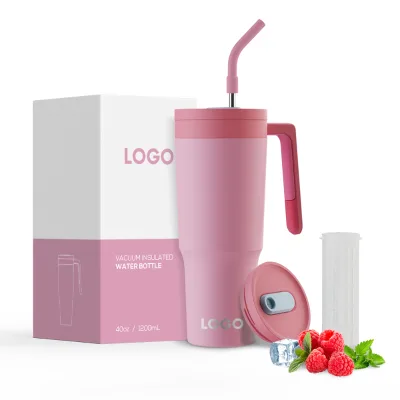


40oz Insulated Tumbler with Handle Double Wall Vacuum Insulated Travel Mug
$2.66 - $3.45
MOQ: 100 Pieces


40oz Stainless Steel Double Wall Vacuum Insulated Tumbler with Lid and Straw
$1.00 - $2.99
MOQ: 25 Pieces


Comprehensive Sourcing Guide
Strategic Sourcing Guide for Vacuum Insulated Double Wall Tumblers
The global market for vacuum insulated double wall tumblers has expanded significantly, driven by consumer demand for temperature retention and sustainable beverage solutions. For B2B procurement professionals, sourcing these items requires a nuanced understanding of technical specifications, material integrity, and supply chain reliability. The following guide synthesizes observed market data and verified product attributes to provide a disciplined framework for evaluating potential suppliers and products. This analysis focuses on the specific characteristics of stainless steel tumblers, their compliance requirements, and the operational factors that influence total cost of ownership.
Technical Specifications and Material Integrity
The core functionality of a Vacuum Insulated Double Wall Tumbler relies on the precise engineering of its physical structure. Based on observed product attributes, the industry standard for the inner material is 304 stainless steel (304ss). This grade is critical for ensuring corrosion resistance and food safety, particularly when the vessel is used for acidic beverages like coffee, tea, or wine. The outer wall typically mirrors the inner construction or utilizes a different finish to achieve the desired aesthetic, often described as "Simple" or "Modern" in design styles.
The vacuum seal between the double walls is the primary mechanism for thermal retention. Products listed with the "Vacuum" feature are designed to maintain beverage temperatures for extended periods, with observed performance metrics indicating moisturizing or temperature retention durations of up to 12 to 48 hours. This range suggests that while some models are optimized for short-term travel, others are engineered for long-duration outdoor use. The structural integrity of the tumbler is further defined by its shape, with "Straight Body Cup" designs being a common configuration that facilitates stacking and packaging efficiency.
Accessories play a significant role in the utility of these tumblers. Observed data indicates that handles are frequently made from Polypropylene (PP), offering durability and heat resistance. Lids are complex assemblies, often comprising VGI/AS, PP, and TPE materials to ensure a secure seal. The inclusion of a "Big Mouth" diameter is a notable specification, facilitating easier cleaning and the addition of ice cubes, which is essential for cold beverage applications. Furthermore, the presence of a "Leak Proof" feature is a mandatory technical requirement for travel and outdoor scenarios, preventing spills in bags or cup holders.
Compliance and Certification Verification
In the B2B sector, regulatory compliance is non-negotiable. Buyers must verify that suppliers possess valid certifications for the regions where the products will be sold. The observed product data explicitly lists FDA, LFGB, and CE certifications. FDA compliance is essential for food contact safety in the United States, ensuring that materials do not leach harmful substances. LFGB is the German standard, often considered more rigorous regarding migration limits, and is crucial for European markets. CE marking indicates conformity with health, safety, and environmental protection standards for products sold within the European Economic Area.
Beyond these specific marks, the material standard "304 stainless steel" itself acts as a baseline compliance indicator. However, buyers should not assume that every listed product meets these standards without verification. The attribute "BPA Free" is a common claim that must be substantiated through third-party testing reports, especially given the use of plastic components like PP lids and straws. The "Eco-Friendly" feature observed in some listings suggests a focus on sustainability, but this should be validated against specific recycling claims or material sourcing policies.
When evaluating a supplier, procurement teams should request current certificates of analysis (CoA) and test reports that correspond to the specific model numbers, such as ZT-T0108 or YN3089. Relying on generic claims without model-specific documentation poses a significant risk of non-compliance. Additionally, the "Customized" standard noted in the data implies that while base models may have standard certifications, custom orders might require re-verification of materials and processes to ensure they still meet the original regulatory thresholds.
Cost Drivers and Pricing Dynamics
Understanding the cost structure of vacuum insulated tumblers is vital for budgeting and margin analysis. The observed price range in the market spans from 1 to 12 USD, a wide variance that reflects differences in material quality, customization levels, and order volume. Several factors drive these costs. First, the use of 304 stainless steel is more expensive than lower-grade alternatives, directly impacting the base unit cost. Second, the complexity of the lid assembly, involving multiple materials like TPE and VGI/AS, adds to the manufacturing expense.
Order volume is a primary determinant of the final price per unit. The Minimum Order Quantity (MOQ) observed ranges from 5 to 3000 units, with a specific data point indicating an MOQ of 500 PCS for certain models. Suppliers offering lower MOQs, such as the "Small Orders: Accepted" attribute, may charge a premium per unit to cover setup costs. Conversely, larger orders typically benefit from economies of scale. The "Customization" attribute is another significant cost driver. Products that are "Customized" or feature "Printed" designs require additional tooling, ink, and production time, which increases the unit price compared to standard "Multicolor" or "Colored" options.
Packaging also influences the total landed cost. The data shows variations in packing, ranging from "Single White Box Package" to "Carton" packing with a specific quantity of 25 PCS per carton. The carton dimensions, such as 41×41×28cm, affect shipping efficiency and freight costs. Buyers must calculate the cost per unit including freight, duties, and packaging to determine the true cost of goods sold. The "Delivery Time" of 30 days is a standard lead time that must be factored into inventory planning and cash flow projections.
Typical Applications and Usage Scenarios
The versatility of vacuum insulated double wall tumblers makes them suitable for a diverse range of applications. The primary usage categories identified include Beer, Coffee, Tea, and Wine. This broad compatibility allows suppliers to target multiple market segments, from hospitality and food service to retail and corporate gifting. The "Leak Proof" and "Vacuum" features make these tumblers particularly effective for "Travel" and "Outdoor" occasions, including "Camping" scenarios where temperature retention is critical.
The "Design Style" of "Simple" or "Modern" appeals to a wide demographic, making these products suitable for general consumer markets. The "Age" specification of "Adult" indicates that these products are not intended for children, likely due to the materials used or the size of the vessel. The "Fancy" attributes, such as "Colored" or "Printed" finishes, allow for branding opportunities, making these tumblers ideal for promotional merchandise or corporate events.
For B2B buyers, understanding the specific usage scenario helps in selecting the right product specifications. For instance, a supplier targeting the camping market should prioritize models with robust "PP" handles and secure "Vgi/as+PP+TPE" lids. In contrast, products for office or coffee shop use might focus more on aesthetic "Multicolor" options and "Double Wall" insulation for comfort. The "Eco-Friendly" feature is increasingly relevant for brands aiming to reduce single-use plastic waste, positioning these reusable tumblers as a sustainable alternative.
Supplier Evaluation and Quality Control
Evaluating a supplier for vacuum insulated tumblers requires a multi-faceted approach. The origin of the products is consistently listed as "China," with specific regions like "Zhejiang, China" noted. While this provides a geographic baseline, buyers should verify the specific factory capabilities and quality control processes. The "Technics" of "Injection Molding" are used for plastic components, and the precision of this process affects the fit and finish of lids and handles.
Quality control should focus on the integrity of the vacuum seal and the durability of the materials. Buyers should request samples to test for "Leak-Proof" performance under various conditions, including temperature changes and physical impact. The "Advantage" of being "BPA Free" and "Leak-Proof" must be validated through independent testing. Additionally, the "Standard" of "304 santinless steel" (noting the typo in the source data, which should be read as stainless steel) must be confirmed via material analysis to ensure no substandard alloys are used.
The "Packing Qty" of 25 PCS per carton and the "Carton Size" are critical for logistics. Buyers should verify that the packaging is robust enough to prevent damage during transit, especially for glass or fragile components if present. The "Customized" nature of some products requires a clear communication channel to ensure that design specifications are met exactly. Suppliers that offer "Small Orders" may have less established quality control for small batches, so a rigorous inspection protocol is essential before accepting large shipments.
Long-Term Procurement Considerations
Sourcing vacuum insulated double wall tumblers is not a one-time transaction but a long-term partnership that requires strategic planning. The "Delivery Time" of 30 days is a standard lead time, but buyers should negotiate terms that account for potential delays, especially during peak seasons. The "Customization" capability of suppliers offers flexibility for future product iterations, allowing buyers to adapt to changing market trends without switching suppliers.
Sustainability is a growing concern in procurement. The "Eco-Friendly" attribute and the use of durable materials like 304 stainless steel align with corporate sustainability goals. Buyers should consider the lifecycle of the product, including end-of-life recycling options for the stainless steel and plastic components. The "MOQ" of 500 PCS or higher suggests that suppliers are geared towards steady, recurring orders. Establishing a long-term contract can help stabilize pricing and ensure consistent quality.
Finally, the "Brand Name" and "Model Number" tracking are essential for maintaining supply chain transparency. Models like ZT-T0108, ZT-T186, and YN3089 represent specific product lines with distinct features. Buyers should maintain a database of these model numbers and their associated specifications to ensure consistency in future orders. By focusing on these long-term factors, B2B buyers can build a resilient supply chain that delivers high-quality, compliant, and cost-effective vacuum insulated tumblers.
FAQs
What certifications do vacuum insulated double wall tumblers typically have?
These tumblers often carry FDA, LFGB, and CE certifications to ensure food safety and regulatory compliance. Buyers should verify that specific models like ZT-T0108 possess valid certificates before placing orders to meet regional standards.
How long can these tumblers retain beverage temperature?
Observed products maintain temperature for durations ranging from 12 to 48 hours depending on the model. This retention capability is achieved through the vacuum insulated double wall construction and is suitable for both travel and outdoor camping scenarios.
Which materials are used for the inner wall of these tumblers?
The inner wall is commonly constructed from 304 stainless steel to ensure corrosion resistance and durability. This material grade is essential for maintaining beverage quality when used with acidic drinks like coffee, tea, or wine.
Can I order small quantities of vacuum insulated double wall tumblers?
Yes, some suppliers accept small orders with Minimum Order Quantities as low as 5 units. However, standard bulk orders often require an MOQ of 500 pieces, and customization may increase the minimum threshold for production.
What is the typical delivery time for these products from China?
The standard delivery time for these tumblers is approximately 30 days from the order date. Buyers should account for this lead time when planning inventory, especially for customized items that require additional production steps.
Which features make these tumblers suitable for outdoor use?
Key features include leak-proof lids, double wall vacuum insulation, and durable PP handles. These attributes ensure the tumbler remains secure and temperature-stable during travel, camping, and other outdoor activities without spilling contents.