Source Durable Plastic Electrostatic Charging Machine for Powder Coating, Surface Treatment, and Industrial Finishing
Compare 30 listings for the Durable Plastic Electrostatic Charging Machine used in powder coating, surface treatment, and industrial finishing. Buyers can review specifications, certifications, and pricing to find suitable suppliers for their production needs.
Key considerations
Products List


High Voltage Mixed Plastic Separator Electrostatic Recycling Machine
$6500.00 - $33000.00
MOQ: 1 Pieces

Mixed Plastic Separating Sorting Machine Waste Recycling Plastic Electrostatic Separator
$6500.00 - $33000.00
MOQ: 1 Pieces


Electrostatic Separator Price Small Separation Machine Copper Plastic Separator Machine
$4000.00 - $9000.00
MOQ: 1 Pieces


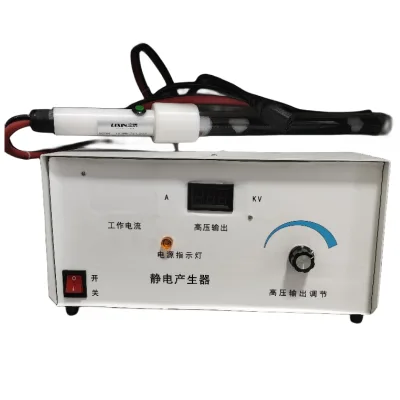


$28000.00 - $35000.00
MOQ: 1 Pieces


Comprehensive Sourcing Guide
Strategic Sourcing Guide for Durable Plastic Electrostatic Charging Systems
The global demand for efficient surface finishing solutions has elevated the importance of electrostatic charging technology in industrial manufacturing. For procurement professionals seeking durable plastic electrostatic charging machines, the market presents a complex landscape of specifications, compliance requirements, and operational capabilities. This guide provides a structured approach to sourcing these critical assets, focusing on evidence-based evaluation of product attributes, technical performance, and supplier reliability. Buyers must navigate a variety of product models, from specialized coating spray guns to broader electrostatic charging systems, ensuring that the selected equipment aligns with specific production needs and regulatory standards.
Technical Specifications and Operational Capabilities
When evaluating electrostatic charging machinery, the primary focus must be on the core technical specifications that define performance and durability. The market offers a diverse range of configurations, including units designed specifically for powder coating workpieces and those functioning as static chargers for broader applications. A critical observation in the current supply base is the prevalence of models utilizing electrostatic powder spraying technology. This technology is fundamental to achieving uniform coating adhesion and minimizing material waste.
Buyers should scrutinize the power and voltage requirements of potential units. Available data indicates that systems often operate on standard industrial voltages such as 110V or 240V, with power ratings around 40 units (typically Watts or Kilowatts depending on the specific model configuration). The presence of a PLC (Programmable Logic Controller) as a core component is a significant indicator of modern automation capabilities. This allows for precise control over the charging process, ensuring consistency in high-volume production environments.
The substrate compatibility is another vital technical parameter. While some systems are designed for iron substrates, durable plastic electrostatic charging machines must be capable of handling non-conductive materials effectively. The technology must facilitate the transfer of charge to the plastic surface without causing dielectric breakdown or uneven distribution. Furthermore, the dimension specifications vary significantly; some units offer customization options to fit specific production lines, while others adhere to standard industrial footprints. For instance, certain large-scale units may have dimensions around 210022503260mm, whereas portable or specialized spray guns may be compact.
Compliance, Certification, and Regulatory Standards
Navigating the regulatory landscape is essential for international procurement. Compliance ensures that the machinery meets safety standards and environmental regulations in the destination market. The most frequently observed certifications in the current supply base include RoHS (Restriction of Hazardous Substances) and CE (Conformité Européenne). These certifications indicate that the equipment adheres to specific health, safety, and environmental protection requirements. Additionally, ISO certification is a notable attribute found in several high-quality units, suggesting adherence to international management system standards.
Buyers must verify the specific certification status of each supplier. While RoHS and CE are common, the absence of these marks should trigger a deeper investigation into the manufacturer's quality assurance processes. The HS code 8504409999 is relevant for classification purposes, particularly for charger components and related electrical equipment. Understanding the correct classification is crucial for accurate duty calculation and customs clearance.
It is important to distinguish between the product's origin and the location of the showroom. Many units originate from manufacturing hubs in China, specifically regions like Anhui and Zhejiang. However, suppliers may maintain showrooms in diverse locations such as Canada, Turkey, France, Vietnam, Peru, and Indonesia. This global presence can facilitate local support and demonstration, but the actual manufacturing quality control remains tied to the origin facility. Buyers should request documentation proving the validity of certifications for the specific batch of equipment being purchased, rather than relying on general claims.
Cost Drivers and Pricing Structures
The pricing for electrostatic charging systems exhibits a wide range, observed between 6.8 USD and 35,000 USD. This variance is driven by several factors, including the complexity of the technology, the level of automation, and the scale of the unit. Basic components, such as simple chargers or handheld spray guns, tend to fall at the lower end of the spectrum. In contrast, fully automated systems with PLC integration, digital displays, and extensive safety features command premium prices.
The Minimum Order Quantity (MOQ) is another significant cost driver. The observed MOQ range spans from 1 to 30 units. For small-scale operations or pilot projects, suppliers offering an MOQ of 1 are essential. However, larger industrial deployments may benefit from bulk purchasing, potentially unlocking volume discounts or more favorable shipping terms. The packaging method also influences the final cost; units are typically shipped in wooden boxes or wooden cases for heavy-duty equipment, while smaller components may be packed in cartons. The choice of packaging affects shipping weight and insurance costs.
Buyers should also consider the total cost of ownership, which includes maintenance, energy consumption, and after-sales support. Systems with high efficiency and low cost advantages are desirable, but the initial purchase price should not be the sole determinant. The availability of spare parts, the duration of the warranty, and the cost of remote or on-site support services are critical financial considerations. Some suppliers offer a one-year after-sales service, while others provide online support or overseas service machinery options.
Typical Applications and Industry Use Cases
The versatility of durable plastic electrostatic charging machines makes them suitable for a wide array of industrial applications. The primary use case is in powder coating operations, where the equipment is used to apply a dry powder finish to workpieces. This process is widely used in the automotive, appliance, and furniture industries to create durable, aesthetically pleasing, and corrosion-resistant surfaces. The technology is particularly effective for coating plastic components, which require a specific charge profile to ensure the powder adheres properly before curing.
Beyond powder coating, these systems are utilized in static control applications where charge dissipation or accumulation is necessary. For example, in electronics manufacturing, static chargers may be used to prevent electrostatic discharge (ESD) damage to sensitive components. The "Static charger" model, often associated with lead-acid battery systems, demonstrates the adaptability of this technology to various power needs. The ability to handle different battery types, such as lead-acid, and provide features like reverse connect protection and zero voltage output, expands the application scope to include battery charging and maintenance sectors.
The key selling points of these machines, such as "Easy to Operate" and "High Efficiency," directly correlate with their application in high-volume manufacturing environments. Operators require intuitive interfaces, often featuring digital displays, to manage the charging parameters effectively. The automation level, ranging from manual operation to fully automatic systems, dictates the suitability for different production scales. Small workshops may prefer manual or semi-automatic units, while large factories will require fully automated lines integrated with PLCs for seamless operation.
Supplier Evaluation and Operational Support
Selecting the right supplier is as critical as selecting the right machine. Buyers should evaluate suppliers based on their customization capabilities, after-sales service provisions, and transparency regarding production processes. The availability of customization is a strong indicator of a supplier's flexibility and ability to meet unique client requirements. Whether it is adjusting dimensions, modifying voltage specifications, or tailoring the control interface, the ability to offer OEM and ODM services is a significant advantage.
After-sales service is a pivotal factor in long-term procurement success. Suppliers offering "Service Machinery Overseas" or "Online Support" provide valuable safety nets for international buyers. The distinction between a one-year warranty and ongoing online support should be clearly understood. Additionally, the provision of video outgoing inspections and machinery test reports adds a layer of transparency to the purchasing process. These documents allow buyers to verify the condition and functionality of the equipment before it leaves the factory, reducing the risk of receiving defective or non-compliant units.
The location of the supplier's showroom and their capacity to fulfill orders as requested are also important. A global footprint, with showrooms in multiple continents, suggests a mature supply chain capable of handling international logistics. However, the actual production capacity and lead times must be verified. While some suppliers claim a delivery time of 2-3 days, this may apply only to specific models or stock items. For customized orders, lead times will likely be longer. Buyers should confirm the "Capacity" attribute, which is often listed as "as Requested," to understand the supplier's ability to scale production.
Quality Control and Long-Term Procurement Considerations
Ensuring the quality of electrostatic charging machines requires a rigorous approach to quality control. Buyers should demand detailed machinery test reports and video inspections to validate the performance claims. The "Condition" of the product is typically listed as "New," but this should be verified through the inspection process. The use of high-quality materials, such as iron substrates for structural components and durable plastics for housing, contributes to the longevity of the equipment.
Long-term procurement considerations extend beyond the initial purchase. The recyclability of the equipment is an emerging factor in sustainable sourcing. Products marked as "Recyclable" align with corporate sustainability goals and may offer benefits in terms of end-of-life disposal costs. The standard of the product, such as the 1kg or 210022503260mm specifications, should be consistent with the buyer's operational requirements. Deviations from these standards may indicate a lack of standardization or a custom-made unit that requires specific maintenance protocols.
Buyers must also consider the obsolescence risk of the technology. Systems with PLCs and digital displays are generally more future-proof than those with purely mechanical controls. The availability of software updates and the ability to integrate with other automated systems are key indicators of long-term viability. Furthermore, the "Key Selling Points" such as "High Efficiency" and "Low Cost" should be validated through performance testing rather than accepted as marketing claims.
Comparative Analysis of Product Attributes
To facilitate decision-making, the following table summarizes key attributes observed in the current market for durable plastic electrostatic charging machines. This comparison highlights the diversity of options available and assists buyers in matching product features to their specific needs.
| Attribute Category | Specific Feature | Observed Value/Range | Relevance to Buyer |
|---|---|---|---|
| Technology | Core Technology | Electrostatic Powder Spraying Technology | Essential for coating adhesion |
| Power | Voltage | 110V / 240V | Determines electrical infrastructure needs |
| Automation | Automation Level | Automatic / Manual | Impacts labor costs and throughput |
| Control | Core Component | PLC | Enables precise process control |
| Display | Interface | Digital Display | Facilitates easy operation and monitoring |
| Safety | Protection Features | Reverse Connect Protection, Zero Voltage Output | Critical for operator safety |
| Certification | Standards | RoHS, CE, ISO | Ensures regulatory compliance |
| Origin | Manufacturing Location | China (Anhui, Zhejiang) | Affects shipping and tariff implications |
| Service | After-Sales | Overseas Service, Online Support, 1 Year Warranty | Reduces downtime and maintenance costs |
| Customization | Availability | Available / OEM & ODM | Allows for tailored solutions |
This table serves as a reference point for buyers to quickly assess the technical and operational fit of potential suppliers. It underscores the importance of verifying specific attributes against the general market observations. While the data provides a baseline, the unique requirements of each buyer must be the final arbiter in the selection process.
Conclusion
Sourcing durable plastic electrostatic charging machines requires a meticulous approach that balances technical specifications, compliance requirements, and supplier reliability. The market offers a wide array of options, from basic chargers to advanced automated systems with PLC integration. By focusing on verified attributes such as certification status, power specifications, and after-sales support, buyers can mitigate risks and ensure the acquisition of high-quality equipment. The wide price range and diverse customization options provide flexibility, but they also demand careful evaluation to avoid mismatches between product capabilities and operational needs. Ultimately, successful procurement depends on a thorough understanding of the technology, a rigorous quality control process, and a strategic partnership with a supplier who can deliver consistent value over the long term.
FAQs
What certifications do durable plastic electrostatic charging machines have?
These machines typically hold RoHS and CE certifications to ensure safety and environmental compliance. Some units also carry ISO certification, indicating adherence to international management standards. Buyers should verify specific batch documentation rather than relying on general claims.
Can I customize the dimensions of the electrostatic charging equipment?
Yes, customization is available for dimensions and other specifications to fit specific production lines. Some models offer standard footprints while others allow tailored dimensions. Suppliers often accept OEM and ODM requests to meet unique client requirements.
How long is the delivery time for these charging systems?
The observed delivery time for available units is typically 2 to 3 days. This fast turnaround may apply to specific models or stock items. Customized orders often require longer lead times, so capacity and request details should be confirmed before purchase.
Which voltage options are supported by the electrostatic charging machines?
The systems operate on standard industrial voltages of 110V or 240V. Power ratings are generally around 40 units, though this varies by model configuration. Buyers must ensure the selected unit matches their facility's electrical infrastructure requirements.
What after-sales services are provided for these machines?
Suppliers offer various support options including online support, overseas machinery service, and a one-year warranty. Video outgoing inspections and machinery test reports are also provided to verify equipment condition. These services help ensure long-term operational reliability.
How does the pricing range for these machines vary?
Prices range from 6.8 USD to 35,000 USD depending on complexity and automation levels. Basic components like chargers are lower cost, while fully automated systems with PLCs command higher prices. Minimum order quantities also range from 1 to 30 units.
Where are these machines manufactured and where are showrooms located?
Manufacturing origins are primarily in China, specifically regions like Anhui and Zhejiang. Showrooms are located globally in Canada, Turkey, France, Vietnam, Peru, and Indonesia. This global presence facilitates local support while quality control remains tied to the origin facility.