Source Veterinary Orthopedic Power Tool for Trauma, Bone, and Pets
Compare 30 Veterinary Orthopedic Power Tool listings featuring stainless steel construction, battery operation, and customizable options. Buyers can evaluate models like the ND-5001 and Rj79 for animal trauma surgery and orthopedic procedures with varying speeds and voltage requirements.
Key considerations
Products List


Surgical Power Veterinary Drill Tools, Orthopedic Drill, Medical Drill
$450.00 - $600.00
MOQ: 1 Pieces


Medical Power Tool Multi-Function Bone Drill Veterinary Orthopedic Instruments
$1200.00 - $1350.00
MOQ: 1 Sets
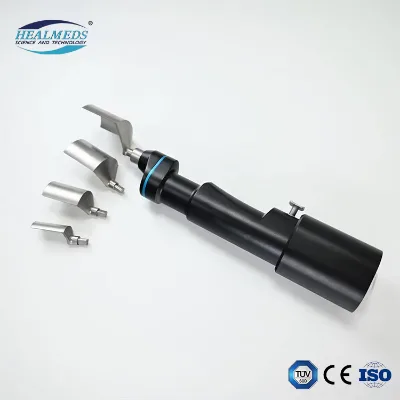

Veterinary Small Oscillating Saw for Bone Surgery Orthopedic Surgical Medical Power Tool
$530.00 - $580.00
MOQ: 1 Pieces

Veterinary Small Oscillating Saw Medical Power Tool for Bone Orthopedic Surgical
$530.00 - $580.00
MOQ: 1 Pieces


Mini Multifunctional Veterinary Surgical Instrument Orthopedic Surgical Bone Drill
$1150.00 - $1250.00
MOQ: 1 Pieces


Veterinary Power Tool Oscillating Bone Saw Orthopedic Surgical Instruments
$432.00 - $480.00
MOQ: 1 Pieces


Comprehensive Sourcing Guide
Strategic Sourcing Guide for Veterinary Orthopedic Power Tools
Understanding the Technical Landscape of Veterinary Surgical Equipment
The procurement of veterinary orthopedic power tools requires a precise understanding of the specific technical attributes that distinguish high-performance surgical instruments from general-purpose equipment. In the current market, these devices are engineered primarily for animal trauma surgery and orthopedic procedures, serving a critical role in the treatment of pets and other veterinary patients. The core functionality of these tools often centers on their ability to operate as battery-operated systems, providing the mobility necessary for complex surgical environments without the constraints of tethered power cords.
A critical technical observation in the available product data is the variation in power specifications. Some units are designed with an output power of 72W, while others operate on specific voltage ranges such as 7.2V or 14.4V for battery models, and 110V-240V for mains-powered variants. The operating speed is another vital parameter; observed data indicates no-load speeds ranging from 0 to 1100 rpm for certain models, while others may operate at a steady 600 rpm. For applications requiring high torque, such as cutting through dense bone structures, some units are rated with a torque of 20000g/Cm. The motor technology is also a key differentiator, with modern units increasingly utilizing brushless motors to ensure longevity and consistent performance during extended surgical procedures.
The physical construction of these tools is equally important. The primary material observed in the market is stainless steel, chosen for its durability and resistance to corrosion in sterile environments. The weight of the device and its packaging is a factor for surgeon ergonomics; for instance, specific models have a unit weight of 1700g, with the aluminum alloy case adding another 2280g to the total transport weight. The device color is typically silver, a standard finish that aids in visual inspection for cleanliness. Furthermore, the tools are often designed with interchangeable blades of different sizes to accommodate various surgical needs, from minor soft tissue work to major bone resections.
Compliance, Certification, and Regulatory Standards
Navigating the regulatory landscape is a fundamental step in sourcing veterinary orthopedic power tools. These devices are classified as medical devices, and in many jurisdictions, they fall under specific regulatory types, such as Type 2, which dictates the level of scrutiny and documentation required for import and use. Buyers must verify that the supplier provides evidence of compliance with recognized international standards. The observed product data references several key certifications, including ISO, CE, and SGS. Additionally, specific product listings mention an "ISOCE" certification status, which implies a combination of standards adherence, though buyers should always request the original certificate documents to confirm the scope and validity of these claims.
The manufacturing origin also plays a role in regulatory acceptance. Products sourced from regions such as Wuhu or Anhui in China (Mainland) are common in the global market. When evaluating suppliers from these locations, procurement teams must ensure that the manufacturing facilities adhere to quality management systems that align with the destination country's requirements. While background knowledge suggests ISO13485 as a relevant standard for medical device manufacturers, the explicit product data provided highlights ISO and CE as the primary observed standards. Therefore, the verification process should focus on confirming the presence of these specific marks and the associated documentation.
Compliance is not merely about the device itself but extends to the sterilization capabilities of the equipment. Veterinary tools must withstand high-temperature sterilization processes to prevent cross-contamination between patients. The data indicates an autoclave temperature capability of 135 degrees Celsius, a critical specification for ensuring that the stainless steel construction and internal components can survive repeated sterilization cycles without degradation. Buyers should explicitly ask suppliers to provide test reports or validation data confirming that the device can consistently withstand these temperatures without compromising the battery integrity or motor performance.
Cost Drivers and Pricing Structures
The pricing of veterinary orthopedic power tools is influenced by a complex interplay of factors, including the complexity of the motor technology, the quality of materials used, and the level of customization offered. The observed market data reveals a significant price range, spanning from $1 to $2200 USD. This wide disparity suggests that the market includes both basic, entry-level models and highly specialized, high-performance units. The "most competitive price" mentioned in some listings is a marketing term that requires careful interpretation; it often refers to the base unit price rather than the total cost of ownership, which includes accessories, batteries, and chargers.
Several specific cost drivers contribute to the final price point. First, the inclusion of a lithium battery and a brushless motor typically increases the cost compared to older brushed motor technologies. Second, the packaging plays a role; units supplied in aluminum alloy cases with sterilizing boxes and cartons command a higher price than those in simple cardboard packaging. The "Each Set Packed in Aluminium Box Then in a Carton" specification indicates a premium packaging standard designed for protection and professional presentation, which adds to the manufacturing cost.
Customization is another significant factor. The availability of customization options allows buyers to tailor the device to specific surgical workflows, such as selecting different charger plug types (e.g., US, EU, UK standards) or choosing specific blade configurations. These customizations often incur additional costs and may affect the lead time. Furthermore, the warranty period, observed as 2 years in the provided data, is a value-added feature that can influence the price. A longer warranty often signals higher confidence in product reliability and can justify a higher upfront investment. Buyers should request a detailed breakdown of costs to understand how much of the price is attributed to the device, the battery, the charger, and the packaging.
Typical Applications and Surgical Versatility
Veterinary orthopedic power tools are designed for a diverse range of applications, primarily focusing on animal trauma surgery and orthopedic procedures. The versatility of these devices is evident in their ability to handle various surgical tasks, from bone cutting to wire and pin chuck operations. The observed speed of the wire and pin chuck at 600 rpm suggests that these tools are suitable for precise tasks requiring controlled rotation, such as placing pins or wires for fracture fixation.
The application scope extends to different types of animals, with a specific focus on pets. However, the robust construction and high torque capabilities (up to 20000g/Cm) suggest that these tools can also be used for larger animals, provided the surgeon has the appropriate technique and training. The "Tplo Saw" designation in the product attributes points to a specific application in Total Patellar Ligament Osteotomy, a common procedure in veterinary orthopedics for treating cranial cruciate ligament injuries in dogs. This indicates that the tools are not generic but are engineered for specific, high-demand surgical procedures.
The reusability of these devices is a key feature for veterinary clinics. Unlike single-use instruments, these tools are designed for multiple uses, provided they are properly cleaned and sterilized. The stainless steel construction and the ability to withstand autoclave temperatures at 135 degrees Celsius support this reusability. The inclusion of different blade sizes allows surgeons to adapt the tool to various anatomical structures, enhancing the versatility of the equipment in a busy surgical suite.
Supplier Evaluation and Quality Assurance
Evaluating suppliers for veterinary orthopedic power tools requires a rigorous approach to ensure that the products meet the necessary quality and safety standards. The first step is to verify the supplier's ability to provide the specific technical attributes observed in the market, such as the correct voltage ranges, battery types, and motor specifications. Buyers should request detailed product datasheets that confirm the model numbers, such as ND-5001, Rj79, EC1003, NM-300, and Em-300, to ensure they are receiving the exact specifications required for their surgical needs.
Quality assurance processes should be a central part of the supplier evaluation. Buyers should inquire about the supplier's quality control measures, including how they test the output power, no-load speed, and torque of the devices. The presence of certifications like ISO, CE, and SGS is a positive indicator, but buyers must verify the authenticity of these certificates. Additionally, the supplier should be able to provide evidence of the device's ability to withstand the specified autoclave temperature of 135 degrees Celsius.
The packaging and shipping standards are also critical indicators of supplier reliability. The observation that products are packed in aluminum alloy cases and cartons suggests a commitment to protecting the equipment during transit. Buyers should confirm that the packaging includes all necessary components, such as the charger, different plug types, and sterilizing boxes, to ensure the device is ready for immediate use upon arrival. The lead time and delivery reliability should also be assessed, as delays in receiving critical surgical equipment can disrupt veterinary operations.
Long-Term Procurement and Maintenance Considerations
Sourcing veterinary orthopedic power tools is not just a one-time transaction but a long-term investment that requires careful consideration of maintenance, support, and lifecycle management. The 2-year warranty observed in the market is a standard offering, but buyers should clarify the terms of the warranty, including what is covered (e.g., motor, battery, casing) and what is excluded. Understanding the warranty process is essential for minimizing downtime in the event of a device failure.
Battery life and replacement are critical long-term considerations. Since these tools are battery-operated, the longevity of the lithium battery is a key factor in the total cost of ownership. Buyers should inquire about the expected number of charge cycles and the availability of replacement batteries. The charging time, observed as approximately 3 hours, is another factor to consider; faster charging times can improve operational efficiency in a busy clinic.
Maintenance and repair services are also vital. Buyers should assess the supplier's ability to provide technical support, spare parts, and repair services. The availability of different blade sizes and other consumables should be confirmed to ensure that the clinic can continue to operate smoothly without interruption. Additionally, the supplier should provide training materials or support to ensure that veterinary staff are properly trained in the use and maintenance of the equipment.
Comparative Analysis of Key Product Specifications
To facilitate informed decision-making, it is helpful to compare the key specifications of the available veterinary orthopedic power tools. The following table summarizes the observed attributes across different models, highlighting the variations in voltage, speed, and power that buyers should consider.
| Specification | Model ND-5001 | Model Rj79 | Model EC1003 | Model NM-300 | Model Em-300 |
|---|---|---|---|---|---|
| Type | Veterinary X Machine | Tplo Saw | Orthopedic Tool | Orthopedic Tool | Mandible Saw Drill |
| Output Power | 72W | Not Specified | Not Specified | Not Specified | Not Specified |
| Operating Voltage | 7.2V | 14.4V | 110V-240V | 110V-240V | 100V-240V |
| No-Load Speed | 0~1100 rpm | 600 rpm | Not Specified | Not Specified | 600 rpm |
| Motor Type | Not Specified | Brushless | Not Specified | Not Specified | Brushless |
| Battery | Not Specified | Lithium | Not Specified | Not Specified | Lithium |
| Torque | Not Specified | 20000g/Cm | Not Specified | Not Specified | Not Specified |
| Material | Stainless Steel | Stainless Steel | Stainless Steel | Stainless Steel | Stainless Steel |
| Autoclave Temp | 135°C | 135°C | 135°C | 135°C | 135°C |
| Warranty | 2 Years | 2 Years | 2 Years | 2 Years | 2 Years |
| Origin | Wuhu | Anhui, China | China | China | China |
This comparison underscores the importance of matching the specific technical requirements of the surgical procedure with the capabilities of the device. While all models share common features like stainless steel construction and autoclave compatibility, the variations in voltage, speed, and motor type necessitate a careful selection process based on the specific needs of the veterinary clinic.
Final Procurement Recommendations
In conclusion, sourcing veterinary orthopedic power tools requires a balanced approach that considers technical specifications, regulatory compliance, cost factors, and long-term maintenance. Buyers should prioritize devices that meet the specific surgical needs of their clinic, ensuring that the voltage, speed, and torque are appropriate for the intended applications. Verification of certifications and standards is essential to ensure compliance with local regulations, while a thorough evaluation of the supplier's quality assurance and support capabilities will help mitigate risks associated with equipment failure.
By carefully analyzing the available product data and adhering to the principles of evidence-based procurement, veterinary clinics can make informed decisions that enhance their surgical capabilities and ensure the best outcomes for their animal patients. The wide range of options available in the market, from basic models to high-performance units, provides ample opportunity for clinics to select the tools that best fit their operational requirements and budget constraints.
FAQs
Can veterinary orthopedic power tools be customized for specific needs?
Yes, customization is available for these devices to meet specific surgical requirements. Buyers can select different charger plug types and blade sizes to match their workflow. This flexibility ensures the tool adapts to various animal trauma surgery and orthopedic procedures effectively.
What is the maximum autoclave temperature these tools can withstand?
These veterinary orthopedic power tools can withstand an autoclave temperature of 135 degrees Celsius. This capability ensures the stainless steel construction and internal components survive repeated sterilization cycles without degradation, maintaining safety and reusability for pet surgeries.
Which certifications do these veterinary orthopedic power tools typically hold?
These tools typically hold ISO, CE, and SGS certifications as standard compliance marks. Some listings also reference an ISOCE certification status. Buyers should verify original certificate documents to confirm the scope and validity of these regulatory standards for medical device import.
How long does it take to charge the battery of these tools?
The charging time for these battery-operated tools is approximately 3 hours. This duration applies to the lithium battery units used for mobility during surgery. Fast charging helps maintain operational efficiency in busy veterinary clinics requiring immediate tool availability.
What is the warranty period for these veterinary orthopedic power tools?
The standard warranty period for these devices is 2 years. This coverage typically includes the motor and casing, though specific terms vary by supplier. A longer warranty often signals higher confidence in product reliability and justifies the investment for long-term clinic use.
Which models are available for veterinary orthopedic power tools?
Available models include ND-5001, Rj79, EC1003, NM-300, and Em-300. Each model offers specific specifications like torque, speed, and voltage. Buyers must request detailed datasheets to confirm the exact model number matches their surgical needs for animal trauma or orthopedic procedures.
Can these tools operate on different voltage ranges?
Yes, these tools are available with voltage options ranging from 110V to 240V for mains power. Battery models operate at 7.2V or 14.4V. This versatility allows the devices to function in various international settings without requiring additional voltage converters for the surgical suite.