Source Vintage Patterned Tulle Curtains for Home Hotel Cafe
Compare 30 listings of Vintage Patterned Tulle Curtains suitable for home, hotel, and cafe applications. Buyers can review specifications like width, weight, and customization options from verified manufacturers in China.
Key considerations
Products List


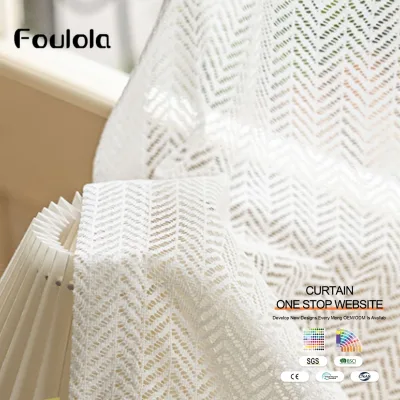

Wholesale Vintage Floral New-Style Luxury Design Living Room Bedroom Textile Window Curtains
$16.00 - $17.41
MOQ: 100 Pieces


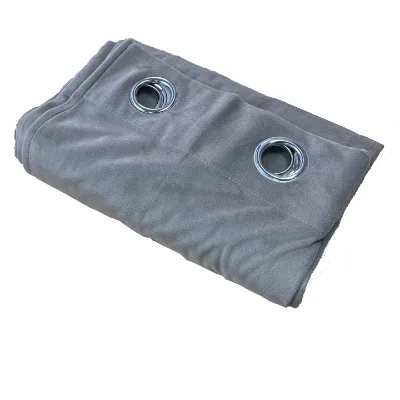


Comprehensive Sourcing Guide
Sourcing Strategy for Vintage Patterned Tulle Curtains
The procurement of Vintage Patterned Tulle Curtains requires a nuanced understanding of the intersection between aesthetic heritage and modern manufacturing capabilities. While the term "vintage" often implies a specific historical era, in the context of B2B sourcing, it frequently refers to a design language characterized by intricate embroidery, lace motifs, and soft, sheer textures that evoke a classic or romantic ambiance. Buyers must navigate a market where product attributes are often observed as specific instances rather than universal standards for every listed item. This guide outlines the critical technical, compliance, and operational factors necessary for sourcing these specialized window treatments effectively, relying strictly on verified product data and established industry practices.
Technical Specifications and Material Composition
When evaluating Vintage Patterned Tulle Curtains, the primary technical differentiator lies in the fabric composition and the specific weaving or embroidery techniques employed. The observed product data indicates a diverse range of specifications that buyers must reconcile with their design requirements. A critical observation is the variation in fabric weight, which directly impacts the drape and light filtration properties of the curtain. Data points reveal weights ranging from 110 GSM to as high as 357 GSM. For a "vintage" aesthetic, lighter weights such as 110 GSM or 115 GSM are often associated with traditional tulle and sheer fabrics, offering a delicate, airy feel. Conversely, heavier weights like 125 GSM or 357 GSM may indicate denser embroidery or layered constructions that provide more substantial texture while maintaining the sheer quality.
The width specifications are equally variable, with observed ranges spanning from 60 cm to 140 cm, and specific listings noting widths of 118/120 inches. This variance necessitates careful calculation during the sourcing phase to ensure the fabric covers the intended window area without excessive seaming or waste. Buyers should verify if the supplier offers standard widths or if the product is cut to custom dimensions, as some data points suggest standards like "140*245cm, as per customer's needs."
The construction technique is another vital technical parameter. The observed data highlights "Woven" as a primary technic, alongside specific patterns described as "Embroidered," "Lace," and "Plain." For a vintage look, the "Embroidered" and "Lace" patterns are particularly relevant, often achieved through specialized looms or post-weaving embroidery processes. The style of the fabric also varies between "Plain Dyed" and "Yarn Dyed." Yarn-dyed fabrics typically offer superior colorfastness and depth, which is crucial for maintaining the rich, classic tones associated with vintage designs over time. Additionally, the opacity is frequently noted as "Sheer," which aligns with the traditional definition of tulle, allowing for light diffusion while providing a degree of privacy.
Design Customization and Aesthetic Flexibility
A defining characteristic of the current market for these curtains is the high degree of customization available. The observed facts confirm that "Customization" is available, with specific attributes noting that "Logo" customization is accepted and that "Design" accepts customized curtain designs. This flexibility is essential for buyers seeking a unique vintage aesthetic that deviates from mass-produced stock items. The ability to accept "Customized Curtain Designs" allows for the incorporation of specific vintage motifs, such as floral lace patterns or specific embroidery densities that mimic historical textiles.
Furthermore, the "Is_Customized" attribute is marked as "Yes" across several data points, indicating that the manufacturing process is inherently adaptable. Buyers should leverage this by specifying not only the pattern but also the color palette and the specific type of vintage style desired, whether it be Victorian, Art Deco, or a general romantic aesthetic. The "Style" attribute observed includes "Plain Dyed" and "Yarn Dyed," but the "Pattern" attribute explicitly lists "Embroidered" and "Lace," which are the key drivers for the vintage look. It is important to note that while "Plain" patterns are observed, the core keyword "vintage patterned" suggests a preference for the more complex "Embroidered" or "Lace" variations.
The header type is another design element that influences the final aesthetic. The data mentions "Ring-mounted" headers, which provide a modern, clean look but may not always align with a traditional vintage aesthetic that might prefer rod pockets or grommets. Buyers must verify the header options available to ensure the installation method complements the vintage design intent. The "Feature" attribute also includes "Half Blackout," which suggests that some vintage-style tulle curtains may offer functional light control, blending the aesthetic of sheer fabric with practical utility.
Compliance, Certification, and Quality Standards
In the B2B procurement of textiles, verifying compliance and certification is non-negotiable to ensure product safety and ethical manufacturing. The observed data explicitly lists "ISO9001" as a certification for certain products. This standard indicates that the supplier has a quality management system in place, which is a strong indicator of consistent production processes. However, buyers should not assume that all listed products carry this certification unless explicitly stated in the product specification.
Regarding fabric safety and environmental standards, the provided context mentions "OEKO-TEX" only as low-confidence background information. Consequently, buyers must not assert that a specific product is OEKO-TEX certified based on the supplied facts. Instead, the procurement strategy should involve a direct inquiry to the supplier to confirm if the fabric meets OEKO-TEX Standard 100 requirements, which test for harmful substances. This is particularly important for curtains used in residential settings like "Home" or hospitality environments like "Hotel" and "Cafe," where safety standards are strictly enforced.
The "prod_standard" attribute is listed as "fabric" in some instances and specific dimensions like "140x245cm" in others. This suggests that the standard may refer to the material quality or the finished dimensions. Buyers should request detailed test reports regarding colorfastness, tensile strength, and shrinkage to ensure the vintage patterns do not fade or distort after washing. The "Cleaning Method" is observed as "Machine Washable," which is a significant quality indicator for durability. However, buyers should verify the specific care instructions, as vintage-style embroidery may require delicate cycles or specific detergents to maintain the integrity of the pattern.
Cost Drivers and Pricing Dynamics
The pricing structure for Vintage Patterned Tulle Curtains is influenced by several variables, including material weight, customization level, and order volume. The observed price range in the market spans from 1.23 USD to 17.41 USD. This wide disparity suggests that factors such as the complexity of the embroidery, the weight of the fabric (ranging from 110 GSM to 357 GSM), and the level of customization significantly impact the final cost. Lighter, plain tulle will naturally be at the lower end of the spectrum, while heavy, intricately embroidered, or custom-designed curtains will command prices at the higher end.
The Minimum Order Quantity (MOQ) is another critical cost driver, with observed ranges from 1 to 1000 units. For buyers seeking small batches or samples, an MOQ of 1 allows for low-risk testing of the vintage design. However, for large-scale procurement, such as outfitting a hotel chain, an MOQ of 1000 may be required to achieve economies of scale. The "OEM Service" attribute is noted as "Accpet" (Accepted) in some listings, while others show variations like "Cuentas Por Cobrar" (Accounts Receivable), which may indicate different payment terms or service models. Buyers should clarify the exact terms of OEM services, including whether the supplier handles design, packaging, and branding, as these services add value but also increase the unit cost.
Packaging is also a factor in the overall cost. The observed "prod_packing" includes "Box" and "PP Bag and Carton." Secure packaging is essential for delicate tulle fabrics to prevent creasing and damage during transit. The choice of packaging may influence the shipping cost and the final landed price, particularly for international shipments where volume and weight are key determinants of freight charges.
Typical Applications and Usage Scenarios
The versatility of Vintage Patterned Tulle Curtains is evident in their diverse application scenarios. The observed "Usage" attributes consistently list "Home," "Hotel," and "Cafe." In residential settings, these curtains are ideal for living rooms, bedrooms, and dining areas where a soft, romantic, or classic atmosphere is desired. The "Sheer" opacity and "Embroidered" patterns allow natural light to filter through while adding a layer of visual texture that enhances the interior design.
In the hospitality sector, such as hotels and cafes, these curtains serve both aesthetic and functional purposes. They can be used to create a welcoming ambiance in lobbies, guest rooms, and dining areas. The "Season" attribute is listed as "Everyday," indicating that these products are suitable for year-round use without seasonal limitations. The "Location" attribute specifies "Window," confirming their primary function as window treatments. However, the "Type" attribute also mentions "Folding screens," suggesting that some vintage tulle products may be designed as room dividers or decorative screens, offering additional utility beyond standard window curtains.
The "Key Word" attributes further reinforce the application context, with terms like "Sheer Curtains," "Curtain Tulle," "Lace Curtains," and "Tulip Curtains." These keywords help buyers identify products that match specific design themes. For instance, "Tulip Curtains" might imply a specific floral pattern suitable for spring-themed or garden-style interiors, while "Lace Curtains" suggests a more intricate, delicate design.
Supplier Evaluation and Quality Control Protocols
Evaluating suppliers for Vintage Patterned Tulle Curtains requires a rigorous approach to ensure that the observed product attributes translate into consistent quality. The "prod_origin" is noted as "China" and "Zhejiang," indicating the primary manufacturing hubs. While these regions are known for textile production, buyers must verify the specific factory capabilities to ensure they can meet the high standards required for vintage designs. The "OEM Service" acceptance suggests that suppliers are capable of custom manufacturing, but buyers should request samples to verify the quality of the embroidery and the consistency of the dyeing process.
Quality control should focus on several key areas: pattern alignment, color consistency, and fabric integrity. Since the "Pattern" is often "Embroidered" or "Lace," buyers must check for loose threads, uneven stitching, or misaligned motifs. The "Weight" variation observed (110-357 GSM) means that buyers must specify the exact weight requirement to avoid receiving a product that is too heavy or too light for the intended design. Additionally, the "Cleaning Method" being "Machine Washable" should be validated through actual testing to ensure the vintage patterns do not degrade or fade after repeated washing cycles.
Buyers should also assess the supplier's ability to handle customization requests. The "Design" attribute noting "Accept Customized Curtain Designs" implies flexibility, but the lead time and cost implications of such customization must be clearly defined. The "Location" of the supplier, whether in "China" or specifically "Zhejiang," may impact logistics and lead times, which should be factored into the procurement timeline.
Long-Term Procurement Considerations
Sourcing Vintage Patterned Tulle Curtains is not merely a one-time transaction but a long-term relationship that requires ongoing management of quality and supply chain stability. The "Customization" availability and "OEM Service" acceptance suggest that suppliers can grow with the buyer's needs, offering new designs or variations as market trends evolve. However, buyers must establish clear communication channels to ensure that future orders maintain the same quality standards as the initial samples.
The "Certification" status, particularly ISO9001, should be monitored to ensure the supplier continues to adhere to quality management standards. For long-term projects, such as outfitting a large hotel chain, buyers should consider the scalability of the supplier's production capacity. The "MOQ" range of 1-1000 indicates that suppliers can accommodate both small and large orders, but buyers should negotiate terms that allow for flexibility in order volumes as demand fluctuates.
Finally, buyers should consider the sustainability and ethical aspects of their procurement. While specific environmental certifications like OEKO-TEX are not confirmed in the provided data, buyers should proactively request information regarding the environmental impact of the fabric production and the working conditions in the manufacturing facilities. This proactive approach ensures that the vintage aesthetic is achieved without compromising on ethical standards, aligning with the growing demand for responsible sourcing in the B2B textile market.
Comparative Analysis of Product Attributes
To assist buyers in making informed decisions, the following table summarizes the key observed attributes and their implications for sourcing Vintage Patterned Tulle Curtains.
| Attribute Category | Observed Values | Procurement Implication |
|---|---|---|
| Fabric Weight | 110, 115, 125, 357 GSM | Heavier weights (357 GSM) offer more texture but may be less sheer; lighter weights (110-125 GSM) are typical for traditional tulle. |
| Width | 60cm, 140cm, 118/120" | Verify width requirements against window dimensions; custom widths may be available as per "customer's needs." |
| Pattern Style | Embroidered, Lace, Plain | "Embroidered" and "Lace" are essential for the vintage aesthetic; "Plain" may not meet the core keyword requirement. |
| Dyeing Technique | Plain Dyed, Yarn Dyed | Yarn-dyed fabrics generally offer better colorfastness, crucial for maintaining vintage tones. |
| Customization | Logo, Design, OEM Accepted | High flexibility for branding and design; verify lead times and costs for custom orders. |
| Certification | ISO9001 | Indicates quality management; verify specific fabric safety standards (e.g., OEKO-TEX) directly with suppliers. |
| Usage | Home, Hotel, Cafe | Suitable for diverse environments; ensure durability for high-traffic commercial spaces. |
| Cleaning | Machine Washable | Confirms ease of maintenance; verify specific care instructions for embroidered details. |
By carefully analyzing these attributes and adhering to the verification protocols outlined above, buyers can successfully source high-quality Vintage Patterned Tulle Curtains that meet both aesthetic and functional requirements. The key lies in balancing the observed product data with rigorous due diligence to ensure a procurement strategy that delivers consistent value and quality.
FAQs
Can I customize the design of Vintage Patterned Tulle Curtains?
Yes, customization is available for these curtains. Suppliers accept customized designs and logos, allowing you to specify unique vintage motifs or embroidery patterns to match your specific interior aesthetic requirements.
What certifications do vintage patterned tulle curtain manufacturers hold?
Some listed products carry ISO9001 certification, indicating a quality management system is in place. Buyers should verify specific safety standards like OEKO-TEX directly with suppliers as this is not universally confirmed in the provided data.
How much does vintage patterned tulle curtain fabric weigh?
Fabric weights vary significantly, ranging from 110 GSM to 357 GSM depending on the specific model and embroidery density. Lighter weights suit traditional sheer looks, while heavier options offer denser textures for a more substantial vintage appearance.
Which widths are available for Vintage Patterned Tulle Curtains?
Available widths include 60 cm, 140 cm, and 118 to 120 inches. Some products are also available in custom dimensions like 140x245 cm to meet specific customer needs, ensuring proper coverage for various window sizes.
What is the minimum order quantity for Vintage Patterned Tulle Curtains?
The minimum order quantity ranges from 1 to 1000 units depending on the supplier and customization level. This flexibility allows buyers to order small samples or large batches for hotels and cafes without excessive initial investment.
Where are vintage patterned tulle curtain factories located?
Manufacturing origins are primarily in China, with specific production hubs noted in Zhejiang. Buyers should confirm the exact factory location to assess shipping logistics and ensure the supplier meets their specific regional sourcing requirements.
How do I clean Vintage Patterned Tulle Curtains?
Many of these curtains are machine washable, making maintenance convenient for home and hospitality use. However, buyers should verify care instructions for specific embroidered or lace patterns to prevent damage during the washing process.