Source Vintage Stainless Steel Embroidery Scissors for Sewing, Crafting, and Pruning
Find 30 Vintage Stainless Steel Embroidery Scissors designed for sewing, handicrafts, and pruning tasks. Compare models with alloy handles, smooth edges, and antique finishes from Chinese manufacturers to select the right tool for your business needs.
Key considerations
Products List
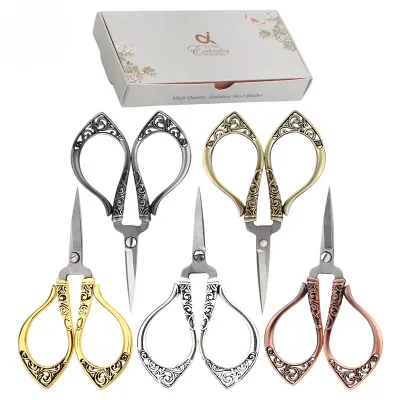
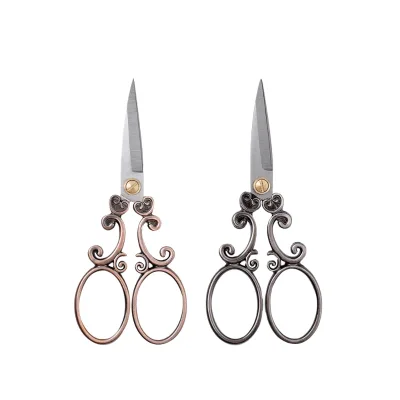
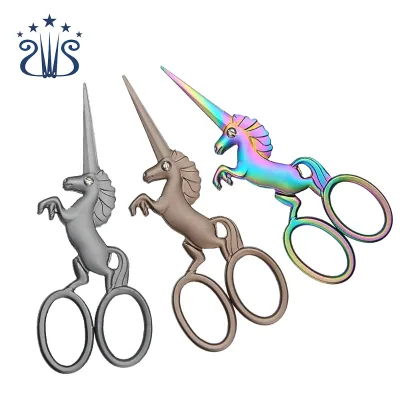
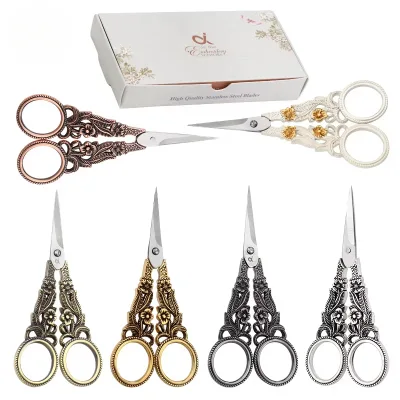
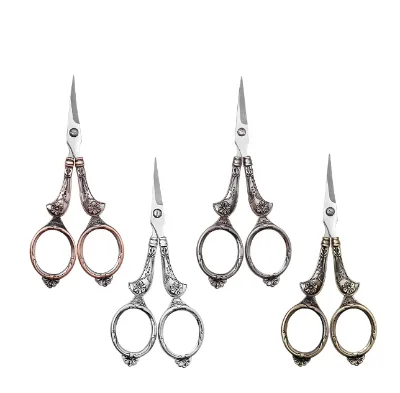
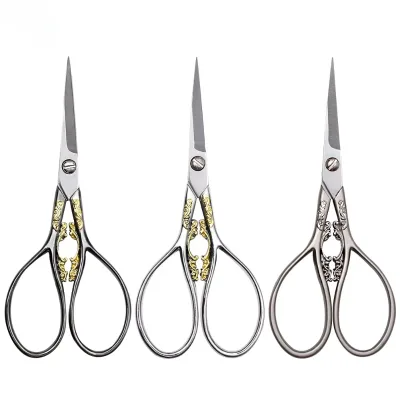


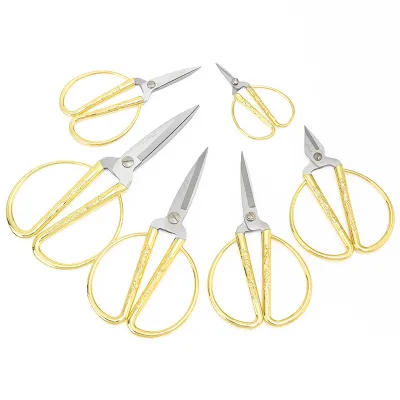
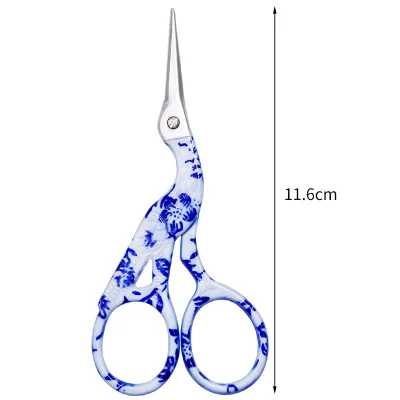
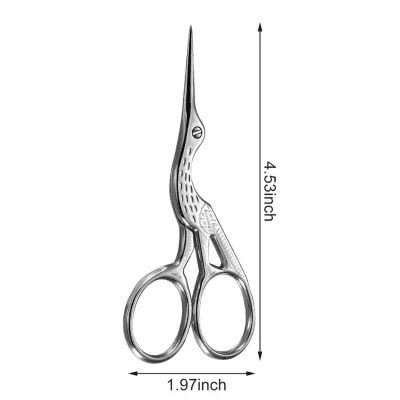
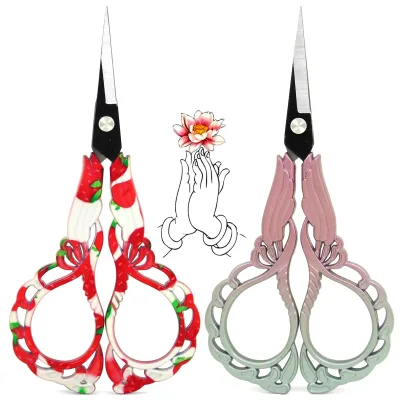
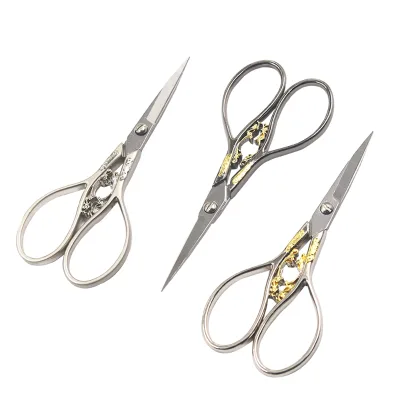
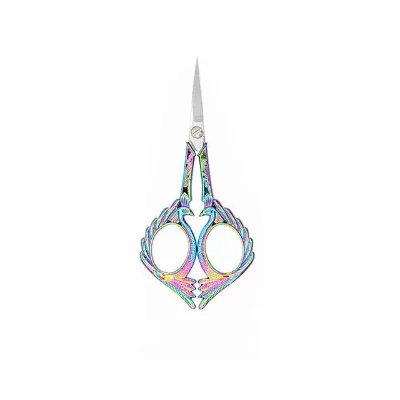


Comprehensive Sourcing Guide
Vintage Stainless Steel Embroidery Scissors Sourcing Guide
Vintage-style embroidery scissors occupy a distinctive niche in the sewing and craft tool market: they combine decorative, antique-inspired silhouettes with functional cutting performance for fine needlework. For B2B buyers, this category presents an attractive blend of high perceived value and relatively low unit cost, making it suitable for craft retailers, sewing kit assemblers, and promotional gift programs. However, the ornamental styling can mask meaningful differences in steel quality, edge finishing, and joint construction, so a disciplined specification process is essential before committing to volume orders.
This guide walks through the full procurement cycle for Vintage Stainless Steel Embroidery Scissors, from interpreting listing data to qualifying suppliers and managing repeat orders. Throughout, the emphasis is on verification: treat every listed attribute as a starting observation to confirm with samples, documentation, and inspection, rather than as a guarantee that applies across an entire product line.
Product Scope and Observed Listing Signals
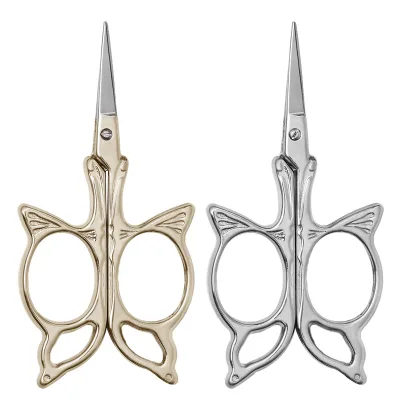
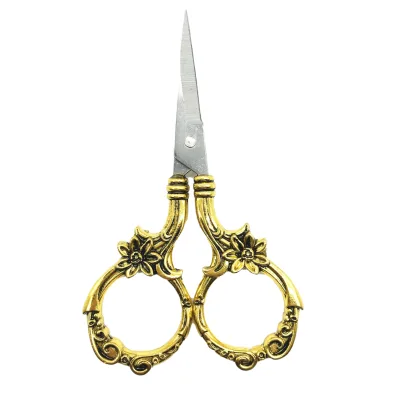
Observed listings in this category describe products named as vintage scissors and vintage crimping pattern scissors, with applications covering embroidery, sewing handicraft, fabric and sewing shears use, and multi-purpose cutting. Scissor types on offer include antique finishes such as ancient gold, ancient silver, antique cyan, ancient red, and ancient tin, alongside gun black, with crimping variants offered in silver gray and red copper. A separate unicorn-scissors style appears with multicolor, dark brown, and grey color options. Place-of-origin data points to Anhui and Zhejiang in China, and brand names listed include Longmao and LM, with OEM customization support indicated. Model numbers such as LMFGJ002 and LMFGJ078 and an SKU series KQ-FGJ740-744 help anchor specific variants.
The commercial signals are equally informative for buyers. Observed MOQs range from as low as 2 pieces to 10 pieces for specific items, which is favorable for sampling and small-batch testing, though full-line MOQ behavior across a catalog should be confirmed directly. Listed unit prices in the observed range run from roughly $0.19 to $15, reflecting the spread between basic small embroidery shears and larger or more elaborately finished pieces. Buyers should use these signals to segment the assortment: decorative vintage shapes for retail display appeal, and crimping pattern scissors for specialized handicraft functions.
Technical Specifications to Verify
Dimensional specifications vary meaningfully across the observed products and should be matched to intended use before ordering. Listed items show total lengths of 13 cm and 11.5 cm, opening lengths of 6.5 cm and 6 cm, and a knife-edge length of 5.2 cm on one variant; another listing gives a size of 100×60 mm. Weight data ranges widely, from around 25.6–26.9 g for lightweight vintage scissors to 42 g for unicorn-style scissors and 62 g for the alloy-handled crimping pattern scissors. Buyers should verify which measurements apply to which model, since handle styling can reduce the effective blade-to-total-length ratio and affect precision work on embroidery hoops.
Material and finish details deserve equal scrutiny. The primary material is listed as stainless steel with an industrial grade designation, but buyers should confirm the specific steel composition, hardness treatment, and whether the handle material differs (one crimping model lists an alloy handle). Edge type is listed as smooth and tip type as sharp — appropriate for embroidery thread trimming — while decorative plating in ancient gold, silver, red, or tin finishes should be checked for adhesion and corrosion resistance, since plated surfaces on cutting tools can wear at the joint and blade edges. Foldability is listed as no, and cutting performance attributes such as smooth action through thread and fabric should be validated on physical samples.
Compliance and Safety Documentation
Because these are sharp-tipped metal cutting tools, buyers exporting to regulated markets should verify applicable product safety requirements with their suppliers rather than assuming compliance. Sharp tips may trigger restrictions or packaging requirements in some jurisdictions, particularly for products positioned near children's craft categories; confirm whether any target market requires blunt-tip variants or child-resistant packaging, and obtain the supplier's written position on tip regulations before finalizing retail-ready packaging.
Documentation requests should be proportionate and specific. Reasonable items to request include material declarations confirming stainless steel composition, information on plating or surface-coating chemistry (relevant to restricted substances in some markets), and any internal or third-party test reports the factory can produce for metal content or coating safety. Note that observed listings state a warranty of "not available" on at least one item, so after-sales commitments must be negotiated contractually rather than assumed. Where a supplier claims certification, verify certificate validity and scope directly with the issuing body rather than relying on copies alone.
Cost Drivers and Commercial Terms
Several factors drive the spread between the low and high ends of the observed price range. Finish complexity is the most visible: antique-tone plating (ancient gold, silver, red, cyan, tin, gun black) and decorative shapes such as unicorn silhouettes add tooling, plating, and finishing cost relative to plain finishes. Size and weight also matter — the 62 g alloy-handled crimping model will price differently from the ~26 g lightweight embroidery shears — and packaging choices influence landed cost, with box packing and a single gross weight of 0.5 kg on one item versus 0.1 kg on another directly affecting freight calculations. Single package sizes observed (15×8×4 cm, 19×9×2 cm, 17.5×6.5×0.7 cm) should feed into container-load and per-unit shipping estimates.
Commercial terms to clarify include the MOQ structure (observed at 2–10 pieces per item, but confirm per-model and per-finish minimums, as rare finishes often carry higher minimums), price breaks across quantity tiers, and whether OEM customization — noted as supported — carries tooling or setup fees. Confirm the selling unit (single item in observed listings), the packing format (box), and who bears responsibility for freight terms, incoterms, and any finish-related defect allowance. Because the observed price span is wide, always compare like-for-like: same model number, same finish, same packaging configuration.
Supplier Qualification and Quality Control
Supplier qualification should begin with a review of the supplier's specialization in scissors or sewing notions, not just their listing quality. Anhui and Zhejiang are the listed origins in this category — both established regions for small metal craft tools — but buyers should still verify factory-versus-trader status, years of operation in cutting tools, and the supplier's ability to produce the specific decorative finishes at consistent quality. Request samples of each intended finish and model (the low observed MOQs of 2–10 pieces make this inexpensive) and evaluate them before any volume commitment.
Incoming quality control should focus on the attributes that define usability in this category: blade alignment and smooth joint action, sharpness and tip integrity, finish consistency and plating adhesion across the batch, and dimensional conformity to the specified total length, opening length, and weight. Because weight figures in the observed data vary by several grams between models, weight can serve as a practical batch check. Agree on an AQL-based inspection plan, define acceptable finish variation in writing (antique finishes are inherently varied, so "acceptable variation" must be explicit), and establish a sampling and rejection protocol for burrs, loose joints, or plating defects before production begins.
Long-Term Procurement Checks
For repeat purchasing, stability of specification matters more than the initial sample. Maintain a locked specification sheet per model number — dimensions, weight, material grade, finish code, packaging size, and gross weight — and require the supplier to notify and re-approve any change. Re-run sample checks on first articles of each new production lot, since plating baths and polishing processes can drift over time even when dimensions remain consistent. Monitor SKU continuity: the observed SKU series (KQ-FGJ740-744) and model numbers (LMFGJ002, LMFGJ078) suggest multiple related variants, so confirm which models are active, which are seasonal, and whether any face discontinuation.
Finally, track commercial stability over time. Reconfirm pricing tiers and MOQs at each reorder rather than assuming prior terms hold, particularly for decorative finishes where plating material costs can fluctuate. Keep documented records of defect claims and resolutions to inform an annual supplier review, and consider qualifying a second source for your highest-volume models to protect against supply interruption. A structured, evidence-based relationship — with clear specifications, agreed inspection standards, and periodic reassessment — is the most reliable way to sustain quality in a category where ornamental appeal and functional cutting performance must both be delivered consistently.
FAQs
What materials are used for Vintage Stainless Steel Embroidery Scissors?
These scissors are crafted from industrial-grade stainless steel to ensure durability and resistance to corrosion during frequent use. The handles may feature alloy construction for added strength and aesthetic appeal. This combination of materials provides a reliable cutting edge suitable for delicate fabrics and intricate embroidery work without compromising on longevity or performance.
What are the typical dimensions of these vintage-style scissors?
Total lengths generally range from 11.5cm to 13cm, with opening lengths between 6cm and 6.5cm. The blade or knife-edge length is approximately 5.2cm. Single package sizes vary slightly, often measuring around 15x8x4 cm or 19x9x2 cm depending on the specific model and packaging style chosen by the manufacturer.
Can these scissors be customized for bulk orders?
Yes, OEM customization support is available for buyers seeking specific branding or design modifications. Manufacturers typically accommodate custom requests for bulk purchases, allowing for tailored solutions that meet specific project requirements. Buyers should contact suppliers directly to discuss the scope of customization, including potential changes to packaging, handle design, or branding elements.
What is the minimum order quantity for these scissors?
The minimum order quantity varies by supplier, ranging from as low as 2 pieces to 10 pieces for certain models. Some suppliers may require higher MOQs up to 5000 pieces for specific configurations. Buyers should verify the exact MOQ with the supplier, as it depends on the specific product model, customization needs, and current inventory status.
Where are these vintage scissors manufactured?
These products are primarily manufactured in China, with specific origins noted in Anhui and Zhejiang provinces. These regions are known for their established manufacturing capabilities in hardware and sewing tools. Buyers can expect production facilities in these areas to handle the stainless steel fabrication and alloy handle assembly required for these vintage-style designs.
What colors are available for these embroidery scissors?
Available colors include ancient gold, ancient silver, antique cyan, ancient red, ancient tin, silver gray, and red copper. Some models also offer multicolor or dark brown options. The finish is often designed to mimic a vintage aesthetic, with smooth edges and sharp tips suitable for detailed fabric work. Colors are typically as shown in product images.