Source Wall Mounted Jib Crane with Wireless Remote Controller for Workshop, Port, and Warehouse
Explore 30 listings for the Wall Mounted Jib Crane with Wireless Remote Controller designed for workshop, port, and warehouse operations. Buyers can compare lifting capacities, arm lengths, and rotation angles to find the right equipment for their industrial needs.
Key considerations
Products List


Industrial Wall Mounted Jib Crane with Wireless Remote Control Easy Operation
$1223.00 - $2900.00
MOQ: 1 Pieces
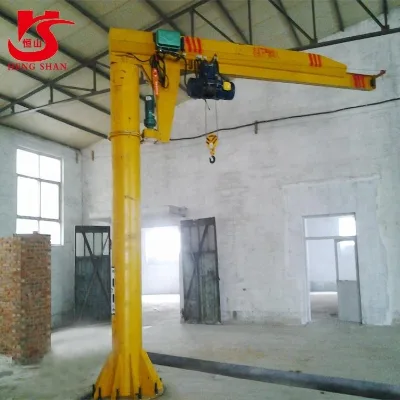


Hot Sale High Quality Wireless Remote Control Wall Mounted Jib Crane 500kg 1ton
$1000.00 - $3000.00
MOQ: 1 pieces


Comprehensive Sourcing Guide
Strategic Sourcing Guide for Wall Mounted Jib Cranes with Wireless Remote Controllers
Understanding Technical Specifications and Configuration Options
When sourcing a wall-mounted jib crane equipped with a wireless remote controller, the primary objective is to align the equipment's physical and operational parameters with specific site requirements. The market offers a diverse range of configurations, but the core technical attributes must be verified against actual site constraints. The fundamental structure of these units is typically described as "Solid Web," which provides the necessary rigidity for cantilever applications. The arm length is a critical dimension, with observed specifications ranging from 1 to 10 meters, and in some heavy-duty variants, extending up to 10 meters for specific models. Buyers must ensure that the selected arm length accommodates the required coverage area without exceeding the structural load limits of the mounting wall.
The lifting capacity is another pivotal specification. Data indicates a broad spectrum of load capacities, ranging from 0.5 tons to over 10 tons, with specific models available for 1, 2, 3, 5, and 8 tons. The maximum lifting weight for many units is observed to be under 20 tons, while specific high-capacity models exceed 10 tons. The lifting height varies significantly depending on the model; standard configurations often offer a lifting height between 2 and 5 meters, whereas more versatile units can reach heights of 15 to 20 meters, and in specialized industrial setups, up to 50 meters. The rotation angle is equally important for operational flexibility, with common configurations offering 180, 270, or 360-degree rotation. The "Standing Bz" and "Cantilever" types are frequently cited, indicating different mounting and structural approaches that must be matched to the facility's layout.
The power source is generally standardized for industrial environments, typically requiring a 3-phase 380V 50Hz supply. The hoisting mechanism is predominantly electric, driven by a hoist electric system. The control method has evolved to include remote control options, which is a specific requirement for the core keyword. This wireless operation allows for greater mobility and safety for the operator, who is not tethered to a pendant or fixed control station. The product origin is predominantly China, with specific manufacturing hubs noted in regions like Changyuan, Henan Province. Buyers should verify that the specific model number, such as "Jib Crane," "bx," "BZ/BZD," or "EW," corresponds to the intended application, as these designations often dictate the internal component quality and structural design.
Compliance, Certification, and Safety Standards
Ensuring that the wall-mounted jib crane meets international and local safety standards is a non-negotiable aspect of the procurement process. The supply chain for these industrial lifting devices is heavily regulated, and compliance documentation serves as the primary evidence of safety and quality. Observed certifications for these products include ISOCE, RoHS, GS, and CE. The presence of CE certification is particularly significant for products intended for the European market, indicating conformity with health, safety, and environmental protection standards. However, buyers must treat these certifications as observations of specific listings rather than universal guarantees for every unit in a category. It is essential to request valid, current certificates from the supplier for the specific model being purchased.
The structural standards for these cranes are often defined by load capacity and design specifications. Some listings reference standards such as "1-10Ton" or specific configurations like "5/2t, 18m span, 8m lift, A3." The "A3" designation likely refers to a specific duty class or structural standard, which buyers should verify against their local regulatory requirements. The material composition is consistently noted as steel, which is the industry standard for durability and load-bearing capacity. The condition of the equipment is typically "New," but buyers should clarify the warranty terms and the origin of the steel used in the fabrication.
Customization is a key feature in this sector, with "Customizable Color" and "Customized Color Acceptable" being common attributes. This allows facilities to match the crane to their safety color-coding schemes, such as yellow or orange, which are frequently observed in the market. The "Customization" attribute also extends to the arm length and lifting height, allowing for bespoke solutions. However, customization can impact lead times and certification validity. Buyers must ensure that any custom modifications do not void existing certifications or compromise the structural integrity of the crane. The "OEM" (Original Equipment Manufacturer) support being "Supported" suggests that suppliers are willing to produce units under the buyer's brand, but this should be accompanied by clear agreements on quality control and liability.
Cost Drivers and Pricing Structure Analysis
The pricing of wall-mounted jib cranes with wireless remote controllers is influenced by a complex interplay of factors, including load capacity, arm length, lifting height, and the complexity of the control system. The observed price range in the market spans from $450 to $19,999 USD. This wide variance reflects the difference between basic, low-capacity units and heavy-duty, high-lift configurations with advanced remote control systems. The minimum order quantity (MOQ) is frequently observed as 1, indicating that these products are available for single-unit procurement, which is advantageous for small workshops or pilot projects.
Several specific cost drivers should be considered when evaluating a quote. First, the maximum lifting weight is a primary determinant; units capable of lifting over 10 tons will naturally command a higher price than those limited to 0.5 or 1 ton. Second, the lifting height significantly impacts cost, as taller cranes require more robust structural components and potentially more powerful hoisting mechanisms. The range of 15-20 meters or up to 50 meters involves substantial engineering and material costs compared to the 2-5 meter range. Third, the control system adds to the cost; a wireless remote controller is a more expensive component than a standard pendant control, and the range and reliability of the wireless signal can vary by manufacturer.
Packaging is another factor that can influence the final landed cost. Observed packing methods include "Wood Box," "Wooden," "Bare + Key Protection + Wooden Case for Parts," and "Plastic Packing." The choice of packaging affects shipping costs and the risk of damage during transit. A "Wooden Case for Parts" suggests a more secure and professional packaging approach, which may be necessary for high-value or delicate components like the remote control system. Buyers should also consider the "prod_standard" which may refer to the duty cycle or specific load ratings, as higher standards often correlate with higher prices. The origin of the product, specifically from China, generally offers competitive pricing due to manufacturing scale, but buyers must factor in shipping, import duties, and potential currency fluctuations when calculating the total cost of ownership.
Typical Applications and Operational Environments
Wall-mounted jib cranes with wireless remote controllers are designed for versatility across a wide range of industrial environments. The observed applications include mines, construction sites, wharves, ports, coal stacks, warehouses, and workshops. The specific choice of a wall-mounted unit is often driven by space constraints; unlike floor-mounted cranes, wall-mounted versions utilize vertical wall space, freeing up floor area for other operations. This makes them ideal for workshops where floor space is at a premium or for loading docks where maneuverability is critical.
In a warehouse setting, the ability to rotate 180, 270, or 360 degrees allows for efficient material handling around corners or in tight aisles. The wireless remote control is particularly beneficial in these environments, as it allows the operator to move freely and position the load precisely without being restricted by a cable or fixed control station. For construction sites and wharves, the durability of the steel construction and the "Solid Web" structure are essential to withstand harsh conditions and heavy loads. The "Popular Fixed Pillar Rotatory" feature suggests that these units are well-suited for stationary but flexible lifting tasks in these dynamic environments.
The "Mine" and "Coal Stack" applications imply a need for robust equipment capable of handling heavy, irregular loads. The lifting height capabilities, ranging from 3 to 50 meters, allow these cranes to serve in multi-level storage facilities or deep excavation sites. The "Workshop" application is perhaps the most common, where the crane facilitates the assembly, maintenance, or movement of heavy machinery components. The "Customizable Color" attribute is often utilized in these settings to enhance visibility and safety, ensuring the crane is easily seen by personnel. The "Air Operation+Ground Operation" capability indicates that some models are designed for dual-mode operation, adding to their versatility in complex industrial settings.
Supplier Evaluation and Quality Assurance Protocols
Evaluating a supplier for wall-mounted jib cranes requires a rigorous approach to verify their capability to deliver high-quality, compliant products. The first step is to confirm the supplier's ability to provide valid certification documents. While "ISOCE," "RoHS," "GS," and "CE" are observed, buyers must request the actual certificates for the specific model and batch being purchased. The supplier should also demonstrate a clear understanding of the "prod_standard" and "prod_model" designations, ensuring that the unit meets the specific load and structural requirements of the buyer's application.
Quality control should be a central part of the supplier evaluation. Buyers should inquire about the manufacturing process, specifically the welding and assembly of the "Solid Web" structure. The use of "Steel" as the primary material is standard, but the grade and quality of the steel can vary. Suppliers should be able to provide material test reports or mill certificates. The "Condition: New" attribute is expected, but buyers should verify the warranty terms and the availability of spare parts. The "OEM: Supported" status suggests that the supplier is capable of custom manufacturing, but this should be accompanied by a clear quality assurance plan to ensure that custom units meet the same standards as standard models.
The "Location" of the supplier, such as "Changyuan, Henan Province, China," provides insight into the manufacturing ecosystem. Buyers should assess the supplier's logistics capabilities, including their experience with international shipping and the packaging methods they employ. The "Wood Box" or "Wooden Case" packaging is a positive indicator of care in transit, but buyers should verify that the packaging meets international shipping standards. The "MOQ: 1" is a favorable term for buyers, but it is essential to ensure that the supplier maintains quality standards even for single-unit orders. The "Lead Time" is not explicitly provided in the data, so buyers must negotiate this clearly, as customization and shipping can significantly impact delivery schedules.
Long-Term Procurement and Maintenance Considerations
Procuring a wall-mounted jib crane is a long-term investment that requires careful consideration of maintenance, operational safety, and lifecycle costs. The "Wireless Remote Controller" is a critical component that requires regular maintenance and battery management. Buyers should ensure that the supplier provides detailed manuals for the remote control system, including troubleshooting guides and battery replacement procedures. The "Hoist Electric" mechanism also requires periodic inspection of the motor, gears, and cables to ensure safe operation.
The "Customization" aspect, while beneficial, can complicate long-term maintenance. If a buyer opts for a customized color or arm length, they must ensure that replacement parts are readily available. The "prod_packing" method, such as "Bare + Key Protection + Wooden Case for Parts," suggests that the supplier provides protective measures for critical components, which is a positive sign for long-term storage and maintenance. However, buyers should verify the availability of spare parts for the specific model, especially for the remote control system and the hoist mechanism.
Safety is a continuous concern. The "Rotation Angle" and "Lifting Height" capabilities must be regularly checked to ensure they have not degraded due to wear and tear. The "Maximum Lifting Weight" should never be exceeded, and regular load testing may be required by local regulations. The "Application" environment, whether it be a "Mine" or "Workshop," will dictate the frequency of maintenance. Harsh environments like ports or coal stacks may require more frequent inspections due to exposure to dust, moisture, and corrosive elements.
Finally, the "Standard" and "Certification" status should be reviewed periodically to ensure ongoing compliance with changing regulations. The "OEM" relationship with the supplier can be valuable for long-term support, but buyers should establish clear service level agreements (SLAs) for technical support and spare parts delivery. The "Product Name" and "Model Number" should be clearly documented in the facility's asset management system to facilitate efficient maintenance scheduling and inventory tracking. By addressing these long-term considerations, buyers can ensure that their wall-mounted jib crane remains a safe and efficient asset for years to come.
FAQs
What certifications do wall mounted jib cranes with wireless remote controller have?
These cranes typically hold ISOCE, RoHS, GS, and CE certifications. Buyers must verify that specific listings provide valid, current certificates for the exact model being purchased to ensure compliance with safety standards.
Which lifting capacities are available for Wall Mounted Jib Crane with Wireless Remote Controller?
Available capacities range from 0.5 tons to over 10 tons, with some models supporting up to 20 tons. Specific configurations include 1, 2, 3, 5, and 8 tons, depending on the structural design and intended application.
How does the arm length vary for Wall Mounted Jib Crane with Wireless Remote Controller?
Arm lengths generally span from 1 to 10 meters for standard units. Customization options may extend these dimensions, but buyers must ensure the selected length does not exceed the structural load limits of the mounting wall.
Can Wall Mounted Jib Crane with Wireless Remote Controller be customized for color?
Yes, customization for color is available and often includes yellow or orange options. This allows facilities to match safety color-coding schemes, though buyers should confirm that custom modifications do not void existing certifications.
What is the typical price range for Wall Mounted Jib Crane with Wireless Remote Controller?
The observed price range spans from 450 to 19,999 USD. Costs vary significantly based on load capacity, lifting height, and the complexity of the wireless remote control system included in the unit.
Where are Wall Mounted Jib Crane with Wireless Remote Controller manufactured?
These products originate primarily from China, with specific manufacturing hubs in Changyuan, Henan Province. Buyers should assess the supplier's logistics capabilities and experience with international shipping when selecting a source.