Source Wall Mounted Keyboard Rack for Desk Storage, Office Setup, and Workstation Organization
Compare 30 listings for Wall Mounted Keyboard Rack options featuring adjustable designs, metal construction, and foldable structures. Buyers can evaluate specifications like mounting profiles, thickness, and customization availability from verified manufacturers in Guangdong.
Key considerations
Products List


$255.00 - $275.00
MOQ: 2 Pieces


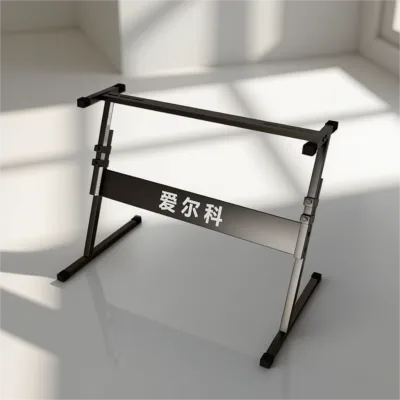
Comprehensive Sourcing Guide
Strategic Sourcing Guide for Wall-Mounted Keyboard Racks
Understanding Product Definitions and Structural Variations
When initiating a procurement search for a wall-mounted keyboard rack, buyers must first distinguish between the specific functional categories available in the market. The core keyword often encompasses a broad spectrum of hardware, ranging from simple extension brackets to complex, adjustable under-desk assemblies. In the current supply landscape, distinct product attributes define these variations. Some listings explicitly identify the product as an "Adjustable Keyboard Tray" with a "Triangle Bracket" structure, while others are categorized as "Desktop Extension Brackets" featuring a "Single-side Bracket" design.
The structural integrity of these units is paramount. The observed product attributes indicate a prevalence of "Metal" as the primary material, with specific mentions of "Stainless Steel," "Iron," and "SPCC Cold Rolled Steel." The manufacturing arts often involve "Cold-Rolled Steel" processes, resulting in finishes that are either "Brushed" or treated to specific color profiles such as "Black," "White," or "Silver." Buyers should note that while some products are described with a "Simple Modern" or "Countryside" style, the functional requirement for a wall-mounted system often leans toward "Modern Simple industrial" aesthetics. The "Folded" attribute suggests that some units offer collapsibility for space-saving storage, a feature that may be critical for dynamic office environments.
It is essential to recognize that not all listed products are designed for the same mounting surface. While the search term focuses on "wall-mounted" solutions, the provided data includes products with "Wall-Mounted Cabinet" installation types and others designed for "Desktop Storage" or "Space Extension." A procurement strategy must therefore verify the mounting mechanism. Some units are described as "Drill-Free," implying a clamp-based attachment to a desk edge, whereas others are explicitly designed for wall fixation. Confusing these two categories can lead to installation failures. The "Type" attribute in the supply data ranges from "Extender Desk Clamp" to "Network Cabinet," highlighting the need for precise specification matching to ensure the purchased hardware serves the intended ergonomic purpose of "Hand Support" and "Stable Work Surface Extension."
Technical Specifications and Material Compliance
Technical due diligence is the cornerstone of sourcing reliable hardware. The material composition directly influences the durability and load-bearing capacity of the keyboard rack. The supply data highlights a mix of materials, including "Stainless Steel," "Iron," and "SPCC Cold Rolled Steel." When evaluating a potential supplier, buyers must verify the specific grade of steel used. For instance, "SPCC Cold Rolled Steel" is a standard for general structural applications, but the thickness varies significantly. One observed specification lists a "Mounting Profile" thickness of 1.0mm with "Others" at 0.6mm. This variance is critical; a rack intended to support heavy mechanical keyboards or multiple monitors requires a higher gauge thickness to prevent sagging or deformation over time.
The finish and surface treatment are equally important for both aesthetics and longevity. The "Finished" attribute in the market includes "Brushed" surfaces, which are often preferred for their ability to hide fingerprints and minor scratches. The "Standard" attribute frequently cites "Cold-Rolled Steel," which implies a specific manufacturing process that enhances the material's strength and surface quality. Buyers should confirm if the product meets the "19inch" standard if the rack is intended to integrate with server racks or specialized data center environments, although this is less common for standard office keyboard trays.
Furthermore, the "Spcification" of the product, such as "4u 6u 9u 12u 18u 22u 28u 32u 37u 42u," indicates a modular sizing system often used in telecommunications and server infrastructure. While these specific rack unit (U) measurements may not apply to a standard desktop keyboard tray, they signal the supplier's capability to handle precision engineering. For a wall-mounted keyboard solution, the physical dimensions (e.g., "600500450") must be cross-referenced with the available wall space and the user's ergonomic requirements. The "Product Color" is often listed as "Optional," allowing for customization to match office decor, but buyers must verify if color changes impact the lead time or minimum order quantity (MOQ).
Certification Standards and Regulatory Adherence
In the B2B procurement of hardware, compliance with international standards is a non-negotiable requirement for risk mitigation. The supply data explicitly mentions "ISO" and "CE" certifications as available attributes for certain products. These certifications are vital indicators that the manufacturer adheres to specific quality management systems (ISO) and European safety, health, and environmental protection standards (CE). When sourcing a wall-mounted keyboard rack, buyers should request proof of these certifications to ensure the product has undergone rigorous testing for structural stability and material safety.
The "Condition" of the product is typically listed as "New," but this does not guarantee compliance. Buyers must verify if the specific batch of hardware being purchased holds valid certification documents. The "Application" field in the data points to "Data Center Server Rack" and "Electronic Monitoring System," suggesting that some suppliers may offer hardware designed for high-security or high-traffic environments. If the procurement is for a general office setting, the "Electronic Monitoring System" application may be irrelevant, but the underlying quality standards associated with it should still be present.
It is crucial to avoid assuming that all products listed under the keyword "Wall Mounted Keyboard Rack" possess these certifications. The data shows a mix of attributes, and some products may lack explicit certification mentions. Buyers should treat the presence of "ISO,CE" as a high-confidence fact for specific listings but must actively verify this for any new supplier. Additionally, the "Feature" attributes such as "Durable," "Waterproof," and "Strong" are observations that require validation through third-party test reports. A claim of "Waterproof" capability, for instance, should be backed by a specific IP rating or test methodology, especially if the hardware is intended for environments with high humidity or potential liquid exposure.
Cost Drivers and Pricing Dynamics
Understanding the cost structure of wall-mounted keyboard racks requires an analysis of the variables that influence the final price. The observed price range in the market spans from $0.3 to $420, a vast disparity that reflects differences in material quality, customization levels, and order volume. The lower end of the spectrum likely corresponds to basic "Iron" or thin-gauge "SPCC" brackets with minimal finishing, while the higher end represents heavy-duty "Stainless Steel" units with advanced customization and branding.
The "MOQ" (Minimum Order Quantity) is a significant cost driver, with observed ranges from 1 to 500 units. For buyers seeking small batches or prototypes, suppliers with an MOQ of 1 are essential, though the unit cost will be higher. Conversely, large-scale procurement can leverage economies of scale, potentially reducing the per-unit cost significantly. The "Customization" attribute is a major factor in pricing. Products labeled as "Customized" or offering "ODM and OEM Customization" typically command a premium. This includes custom colors, specific dimensions, or tailored branding (e.g., "Youjiang" or "Gometal" branding).
Lead times also impact the total cost of ownership. The observed "Delivery Time" is listed as "15 ~ 20 Days." This timeline can fluctuate based on the complexity of the order, the availability of raw materials like "Cold-Rolled Steel," and the specific manufacturing arts required. Rush orders or expedited shipping will incur additional costs. Furthermore, the "Product Packing" method, often described as "Carton" or "Carton Package," adds to the logistics cost. Bulkier or more complex packaging solutions may increase shipping fees, especially for international procurement.
Buyers should also consider the "Brand" factor. While some products are generic, others carry specific brand names like "Youjiang" or "Gometal." Branded products often include a premium for perceived quality and after-sales support. However, the "Brand Name" should not be the sole determinant of value; the underlying material specifications and certification status are more reliable indicators of long-term value.
Supplier Evaluation and Manufacturing Capabilities
Evaluating a supplier for wall-mounted keyboard racks requires a multi-faceted approach that goes beyond the initial product listing. The "prod_origin" is a critical piece of information, with "Jieyang, Guangdong" identified as a key manufacturing hub. This region is known for its metalworking and hardware industries, suggesting a concentration of suppliers with established supply chains for steel and finishing processes. However, buyers must verify the specific factory capabilities rather than relying solely on the origin city.
The "Manufacturing Arts" and "Process" attributes provide insight into the supplier's technical proficiency. The ability to perform "Cold-Rolled Steel" processing and apply "Brushed" finishes indicates a mature production line. Buyers should assess whether the supplier has the capacity for "ODM and OEM Customization," as this flexibility is often a sign of a responsive and capable manufacturer. The "Type" of product offered, such as "Network Cabinet" or "Extender Desk Clamp," can also indicate the supplier's specialization. A supplier offering a wide range of hardware types may have broader capabilities but less focus on the specific niche of keyboard racks.
Supplier reliability is further gauged by their adherence to "Standard" specifications and their ability to meet "Delivery Time" commitments. The "15 ~ 20 Days" lead time is a benchmark, but buyers should inquire about the supplier's track record for on-time delivery. Additionally, the "Condition" of the product, listed as "New," should be verified through site audits or third-party inspections to ensure that the goods are not refurbished or damaged stock.
The "Feature" set, including "Easy Installation" and "Stable Work Surface Extension," should be validated through sample testing. A supplier that claims "Drill-Free" installation must provide clear, foolproof instructions and robust clamping mechanisms. The "Usage" of the product, such as for "Space Extension" or "Hand Support," should align with the supplier's design intent. If a supplier claims a product is suitable for "Electronic Monitoring System" use, the buyer must ensure the hardware meets the specific environmental and structural requirements of such applications.
Quality Control and Long-Term Procurement Strategy
Implementing a robust quality control (QC) protocol is essential for mitigating risks in the procurement of wall-mounted keyboard racks. Given the "Durable" and "Strong" claims associated with these products, buyers should establish clear acceptance criteria based on the "Material" and "Finish" specifications. For example, verifying the thickness of the "Mounting Profile" (e.g., 1.0mm) against the order specifications is a critical QC step. Any deviation could compromise the structural integrity of the rack, leading to safety hazards or premature failure.
The "Finished" state of the product, whether "Brushed" or otherwise, should be inspected for consistency in color and texture. The "Product Colorblack/Hite/Silver" attribute suggests that color consistency is a key quality metric. Buyers should request color samples or Pantone codes to ensure the final product matches the desired aesthetic. Additionally, the "Folded" mechanism should be tested for smooth operation and durability, ensuring that the hinges or joints do not loosen after repeated use.
Long-term procurement considerations involve building a sustainable relationship with suppliers who can maintain quality over time. The "Customization" and "ODM/OEM" capabilities should be leveraged to create a unique product identity that aligns with the buyer's brand. However, buyers must be cautious of "Keyword" stuffing in product descriptions, which may obscure the true nature of the product. For instance, a product listed with keywords like "Computer Desk Attachment Steel Structure Desk Acc" should be scrutinized to ensure it meets the specific functional requirements of a keyboard rack.
Finally, buyers should consider the "Application" scope. If the product is intended for "Data Center Server Rack" use, the quality standards must be significantly higher than for a standard office environment. The "Standard" of "19inch" and the "Spcification" of rack units (U) must be strictly adhered to in such cases. For general office use, the focus should be on ergonomic design, ease of installation, and aesthetic appeal. By maintaining a clear distinction between these application scenarios, buyers can ensure that their procurement strategy aligns with their specific operational needs and long-term goals.
FAQs
What materials are used for wall mounted keyboard racks?
These racks are typically constructed from metal, including stainless steel, iron, and SPCC cold-rolled steel. The specific material grade determines durability and load-bearing capacity for your specific ergonomic needs.
Can I find customized options for these brackets?
Yes, customization is available with ODM and OEM services accepted by many suppliers. Buyers can request specific colors like black, white, or silver, as well as tailored dimensions and branding options.
What is the typical delivery time for these products?
The standard delivery time ranges from 15 to 20 days for most orders. This timeline may vary depending on the complexity of customization and the specific manufacturing capacity of the chosen factory.
Which certifications should I look for in these racks?
Look for products that explicitly hold ISO and CE certifications to ensure quality and safety compliance. These standards verify that the manufacturer adheres to international quality management and European safety regulations.
How does the minimum order quantity affect pricing?
The minimum order quantity ranges from 1 to 500 units, directly influencing the per-unit cost. Lower MOQs allow for small batches but often carry a higher price, while larger orders leverage economies of scale.
Where are these metal brackets typically manufactured?
Many of these products originate from Jieyang, Guangdong, a known hub for metalworking and hardware. This location suggests a concentrated supply chain for steel processing and finishing techniques like cold rolling.