Source Water Activated Paper Adhesive Tape for Carton Sealing
Find 30 listings for Water Activated Paper Adhesive Tape suitable for carton sealing, office use, and industrial packaging. Buyers can compare specifications like thickness, adhesive type, and width from suppliers in China.
Key considerations
Products List


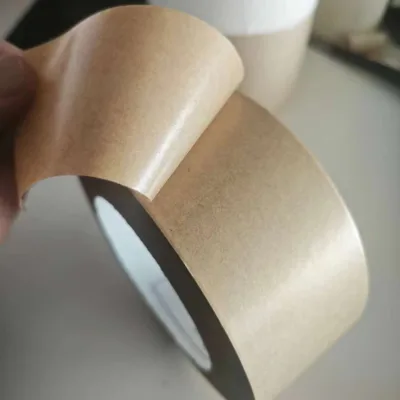


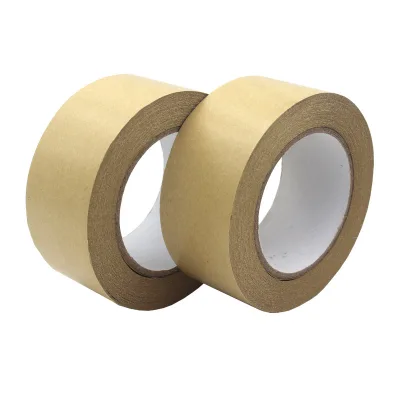


Good Performance Water Activated/Self Adhesive Kraft Paper Packaging Tape
$0.50 - $1.00
MOQ: 1000 Pieces
Comprehensive Sourcing Guide
Strategic Sourcing Guide for Water Activated Paper Adhesive Tape
Selecting the right water-activated paper adhesive tape requires a nuanced understanding of material science, supply chain logistics, and compliance frameworks. This guide synthesizes observed market data and technical attributes to provide a disciplined approach for B2B procurement professionals. The focus remains on verifying facts against actual product listings rather than relying on generalized marketing claims. Buyers must navigate a landscape where adhesive types, backing materials, and dimensional specifications vary significantly between suppliers.
Technical Specifications and Material Composition
The foundation of a successful procurement strategy lies in the precise definition of technical specifications. Water-activated paper tape is distinct from pressure-sensitive alternatives due to its reliance on moisture to activate the adhesive bond. The supplied data indicates a diverse range of adhesive technologies available in the market. One observed category utilizes starch-based adhesion, while others employ hot melt glue or acrylic formulations. A critical distinction in the current product pool is the presence of water-activated adhesive types specifically noted for their application on kraft paper backings.
Thickness and width are primary determinants of performance. Observed specifications reveal thickness ranges from 39 microns to 65 microns for certain kraft paper variants, while other listings cite standards such as 125 microns or 135 microns. Widths are frequently standardized at 25mm or 50mm, though many suppliers offer custom dimensions based on client requirements. Length is similarly flexible, often listed as "as requirement," suggesting that buyers should explicitly define linear footage needs to avoid ambiguity in the final contract.
The backing material is another critical variable. The data highlights "Kraft Paper" as a primary substrate, often associated with high-quality sealing applications. In contrast, other product listings describe BOPP (Biaxially Oriented Polypropylene) materials, which are typically transparent and used for office applications rather than heavy-duty industrial sealing. When sourcing water-activated tape, buyers must verify that the backing is indeed paper-based and not a plastic film, as the activation mechanism relies on the paper's ability to absorb water and swell, creating a mechanical bond with the carton surface.
| Attribute Category | Observed Range/Value | Verification Requirement |
|---|---|---|
| Adhesive Type | Starch, Hot Melt, Acrylic, Water Activated | Confirm activation method matches packaging line equipment. |
| Thickness | 39mic - 65mic, 125mic, 135mic | Validate against required tensile strength and tear resistance. |
| Width | 25mm, 50mm, Custom | Ensure compatibility with existing tape dispensers. |
| Backing Material | Kraft Paper, BOPP | Verify material is paper-based for water-activation. |
| Color | White, Transparent | Select based on branding or visibility needs. |
Compliance and Certification Verification
In the global supply chain, compliance is not merely a formality but a risk mitigation strategy. The observed product data includes references to specific certifications such as SGS and ISO9001:2008. While these are high-confidence facts for specific listings, buyers should not assume that every supplier in the category holds these credentials. The presence of "SGS" and "RoHS" in the standard field for some products indicates a commitment to safety and environmental standards, but the absence of such data in other listings does not inherently imply non-compliance; it simply means the information was not explicitly listed in the provided product summary.
Buyers must actively request current certification documents rather than relying on marketing claims. The data mentions "SGS ISO90012008," which refers to a specific version of the quality management standard. It is crucial to verify if the supplier holds a more recent iteration of the ISO standard, as standards evolve. Additionally, while "FSC" and "REACH" appear in the low-confidence background section, they should not be treated as guaranteed attributes. If sustainability is a procurement priority, the buyer must explicitly ask for FSC chain-of-custody documentation and REACH compliance statements, as these are not universally present in the observed data set.
The origin of the product is also a factor in compliance. The data lists origins in China, specifically Dongguan and Guangdong. While these are major manufacturing hubs, the specific location can influence shipping costs and lead times. Buyers should verify the exact factory location to assess logistical risks and ensure that the origin aligns with any trade agreements or tariff considerations relevant to their import strategy.
Cost Drivers and Pricing Dynamics
Understanding the cost structure of water-activated paper tape is essential for budgeting and negotiation. The observed price range in the market spans from $0.05 to $6.00 USD. This wide variance is likely driven by differences in material quality, adhesive technology, and order volume. The minimum order quantity (MOQ) also varies significantly, ranging from 1 unit to 10,000 units. This flexibility suggests that the market accommodates both small-scale testing and large-scale industrial procurement.
Several factors drive the final cost. First, the adhesive type plays a role; starch-based adhesives may have different cost structures compared to acrylic or hot melt formulations. Second, the thickness of the paper directly impacts material costs. A 135-micron tape will inherently cost more per roll than a 39-micron variant due to the higher volume of raw material. Third, customization is a significant cost driver. The data confirms that customization is available for color, width, and length. Custom printing, such as the "4 Color at Most" option observed, will incur additional setup and production costs compared to standard white or kraft-colored tape.
Packaging also influences the unit price. Listings show packaging options ranging from individual boxes to shrink-wrapped sets of six rolls, or bulk cartons containing 36 or 72 rolls. Bulk packaging generally reduces the per-unit cost by minimizing packaging material and handling time. Buyers should calculate the total cost of ownership, including storage requirements for bulk shipments and the efficiency gains from using standardized roll sizes that match their dispensing equipment.
Typical Applications and Performance Requirements
The application of water-activated paper tape is diverse, ranging from heavy-duty industrial sealing to light office use. The observed data explicitly mentions "Carton Sealing" as a primary application, which aligns with the use of kraft paper and high-strength adhesives. This type of tape is favored in logistics and e-commerce for its tamper-evident properties and ability to bond securely with corrugated cardboard. The "High Level" quality designation in the data suggests that some products are engineered for demanding environments where package integrity is critical.
In contrast, other listings describe "Office" usage and "Sellotape" types, which are typically BOPP-based and transparent. These products are generally not water-activated in the same sense as kraft paper tape and are better suited for light-duty sealing of envelopes or light boxes. Buyers must distinguish between these applications to avoid purchasing the wrong product. For instance, using a transparent BOPP tape for heavy industrial shipping may result in failure, while using a heavy kraft tape for office envelopes may be unnecessary and wasteful.
Performance metrics such as elongation and tensile strength are vital for ensuring the tape performs under stress. The data indicates an elongation of 150% and a tensile strength of 35 N/mm for certain products. These figures suggest a balance between flexibility and strength, allowing the tape to stretch slightly without breaking while maintaining a secure hold. Heat shrinkage is listed at 0.1%, which is a critical parameter for applications involving temperature fluctuations. Peel strength is noted at 7 N/Inch, providing a benchmark for the bond strength required for specific packaging scenarios. Buyers should request test data for these specific metrics if their application involves extreme conditions or high-value goods.
Supplier Evaluation and Quality Control
Evaluating suppliers requires a rigorous approach that goes beyond surface-level product descriptions. The observed data includes a mix of specifications, such as model numbers like "BJ-700B," "BJ-N650A," and "KT125M." These identifiers can be useful for tracking specific product lines, but buyers must verify that the supplier can consistently reproduce these specifications. The availability of free samples is a common offering, with listings stating "Sample: Freely" or "Sample: for Free." This is a valuable tool for buyers to physically test the tape's activation, adhesion, and durability before committing to a large order.
Quality control should be integrated into the procurement process. The data mentions "Quality: High Level" as an attribute, but this is a subjective claim. Buyers should establish clear acceptance criteria based on the technical specifications provided. For example, if a contract specifies a thickness of 125 microns, the buyer must have a method to verify this, such as micrometer testing upon receipt. The presence of certifications like SGS and ISO9001:2008 provides a baseline for the supplier's quality management system, but on-site audits or third-party inspections may be necessary for high-volume contracts.
Packaging standards are another area for scrutiny. The data lists various packing methods, including "Cartons and Pallets," "6 Rolls/Shrink," and "Box." Consistent and protective packaging is essential to prevent damage during transit, especially for paper-based products that can be susceptible to moisture. Buyers should specify packaging requirements in the purchase order to ensure the tape arrives in optimal condition.
Long-Term Procurement Considerations
Sourcing water-activated paper tape is not a one-time transaction but a long-term relationship that requires strategic planning. The flexibility in specifications, such as "as requirement" for length and width, offers opportunities for optimization over time. As a buyer's needs evolve, the ability to customize the tape can lead to significant efficiency gains. For instance, adjusting the width to match specific box sizes can reduce waste and improve application speed.
Sustainability is a growing consideration in procurement. While the data mentions "Kraft Paper" and "FSC" in the background, the actual availability of FSC-certified materials varies. Buyers with strong sustainability goals should prioritize suppliers who can provide verified chain-of-custody documentation. Additionally, the adhesive type should be evaluated for environmental impact. Starch-based adhesives are often more biodegradable than synthetic alternatives, which may align better with corporate environmental objectives.
Finally, supply chain resilience is paramount. The observed lead times and origins in China highlight the importance of diversifying suppliers or maintaining safety stock. The wide range of MOQs, from 1 to 10,000, allows for a hybrid strategy where small orders are placed for testing and larger orders are consolidated for cost efficiency. Buyers should maintain open communication with suppliers regarding production capacity and potential disruptions to ensure a steady supply of critical packaging materials. By focusing on verified specifications, robust quality control, and strategic supplier relationships, procurement professionals can secure a reliable supply of water-activated paper adhesive tape that meets both operational and strategic goals.
FAQs
What adhesive types are available for water activated paper tape?
The market offers starch adhesion, hot melt glue, acrylic, and water activated adhesive types. Buyers must verify the specific adhesive matches their activation equipment and packaging line requirements before ordering.
Which thickness standards are commonly observed for this tape?
Observed thickness standards range from 39 microns to 65 microns for kraft variants, with other listings citing 125 microns or 135 microns. Buyers should validate these dimensions against required tensile strength and tear resistance.
Can buyers request custom dimensions for width and length?
Yes, customization is available for width, length, and color. Specifications often list widths like 25mm or 50mm, but many suppliers offer custom dimensions based on client requirements to ensure dispenser compatibility.
What certifications are documented for these water activated tape products?
Some listings explicitly document SGS and ISO9001:2008 certifications. Buyers should request current certification documents rather than relying on marketing claims, as not every supplier in the category holds these credentials.
How does the price range vary for water activated paper tape?
The observed price range spans from 0.05 to 6 USD per unit. This variance is driven by material quality, adhesive technology, thickness, and order volume, with bulk packaging generally reducing the per-unit cost.
What is the typical elongation and tensile strength for this tape?
Certain products show an elongation of 150% and a tensile strength of 35 N/mm. These metrics indicate a balance between flexibility and strength, allowing the tape to stretch without breaking while maintaining a secure hold.