Source Water Resisting Steel Sheet Pile for retaining walls, docks, and foundations
Compare 30 listings for Water Resisting Steel Sheet Pile from verified Chinese suppliers. Evaluate specifications like GB and ASTM standards, hot rolled or cold drawn techniques, and delivery times ranging from 7 to 14 days for structural applications.
Key considerations
Products List


Comprehensive Sourcing Guide
Strategic Sourcing Guide for Water Resisting Steel Sheet Piles
Understanding Technical Specifications and Material Grades
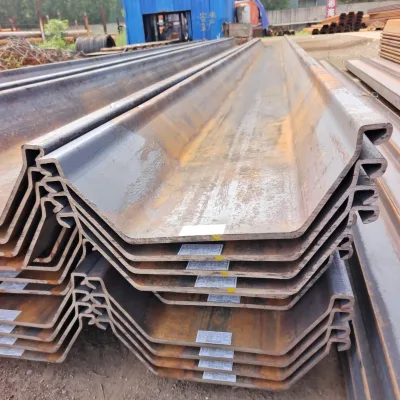
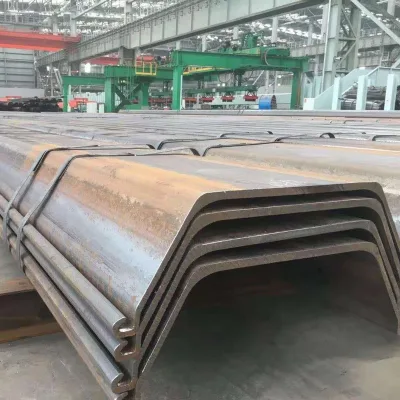
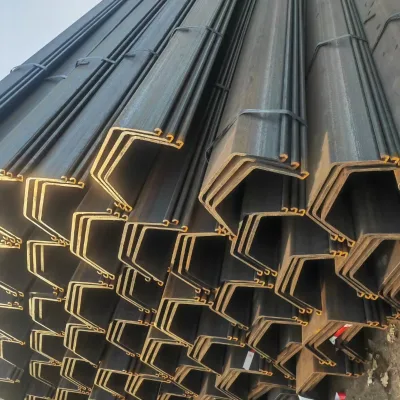
When sourcing water-resisting steel sheet piles, the primary objective is to identify products capable of withstanding hydrostatic pressure and soil loads while maintaining a watertight interlock. The core technical specification for these products often centers on the model number and profile shape. In the current market, buyers frequently encounter U-shaped steel sheet piles, which are distinct from Z-shaped profiles. The U-shape is particularly noted for its high moment of inertia, providing excellent resistance to bending moments, which is critical for deep excavations and retaining walls.
Material grade is another non-negotiable specification. The supply chain data indicates that these products are available in non-alloy steel grades, which are standard for general structural applications. Buyers must verify the specific grade designation, as the market lists options such as Q235, Q355, S235, A36, and SS400. These designations correspond to different yield strengths and chemical compositions. For instance, Q355 offers higher strength than Q235, making it suitable for deeper water retention projects. The tolerance for these dimensions is typically observed within a range of ±1%, a critical factor for ensuring that the interlocking mechanism functions correctly during installation. If the tolerance exceeds this range, the interlock may fail to seal, compromising the water-resisting capability of the wall.
The manufacturing process significantly influences the final product's performance. Two primary techniques are observed in the market: hot rolling and cold drawing. Hot-rolled sheet piles are the industry standard for large-scale civil engineering projects due to their uniform grain structure and high ductility. Conversely, cold-drawn variants may offer tighter dimensional tolerances but are less common for heavy-duty sheet piling. The surface finish is equally important; options include black (as-rolled) or polished surfaces. A black surface is standard and often requires a protective coating system to prevent corrosion, while a polished surface might indicate a specific treatment for enhanced aesthetic or initial corrosion resistance, though long-term protection is still required for water environments.
Compliance, Certification, and International Standards
Compliance with international and regional standards is the backbone of a reliable procurement strategy. The steel sheet pile market is governed by a complex web of standards that vary by region and application. Buyers must verify that the product adheres to the specific standard requested for their project. The available data confirms that products are manufactured to meet a wide array of standards, including GB (China), AISI (USA), ASTM (USA), BS (UK), DIN (Germany), and JIS (Japan).
For a project in China, compliance with GB standards is mandatory. For international projects, ASTM or BS standards are often required. It is crucial to note that a single supplier may offer products compliant with multiple standards, but the buyer must explicitly request the certification for the specific standard applicable to their jurisdiction. The presence of ISO certification is a strong indicator of a manufacturer's commitment to quality management systems, though it does not guarantee the specific mechanical properties of the steel itself. Buyers should request a mill test certificate (MTC) that explicitly references the standard (e.g., ASTM A572 or GB/T 1591) and verifies the chemical and mechanical properties against that specific standard.
The table below outlines the common standard groups and their typical application contexts based on observed market data:
| Standard Group | Typical Region | Key Focus Area | Verification Requirement |
|---|---|---|---|
| GB | China | Domestic structural requirements | Verify specific GB grade (e.g., Q235) |
| ASTM/AISI | North America | High-strength and corrosion resistance | Check yield strength and impact values |
| BS/DIN | Europe | Rigorous safety and fatigue limits | Confirm compliance with European norms |
| JIS | Asia-Pacific | Specific rolling and dimensional specs | Validate JIS grade equivalents |
Buyers should be wary of suppliers who claim compliance with multiple standards without providing specific documentation for each. The "Standard" attribute in product listings often appears as a list of all possible standards the factory can produce, not necessarily that every single unit sold meets all of them simultaneously. Therefore, the procurement contract must explicitly state the required standard to avoid ambiguity.
Cost Drivers and Pricing Structures
The pricing of water-resisting steel sheet piles is influenced by several dynamic factors, primarily the raw material cost of steel, the complexity of the profile, and the logistics involved. The observed price range in the market spans from $1 to $1,000 per unit, though this wide range likely reflects differences in unit size, weight, and the specific model number (e.g., U-shaped vs. Profile). It is essential for buyers to understand that sheet piles are often priced by weight rather than by the piece, especially when the "Invoicing" term is listed as "By Actual Weight." This means the final cost is directly tied to the tonnage delivered, making accurate weight estimation crucial for budgeting.
The "Selling Units" attribute indicates that some suppliers offer single-item sales, which is beneficial for small-scale repairs or prototype testing. However, for large infrastructure projects, the "MOQ" (Minimum Order Quantity) becomes a significant cost driver. The market data shows an MOQ range of 1 to 100 units, with a specific observation of a 1-ton minimum for certain suppliers. This tonnage requirement can significantly impact the unit price; larger orders typically benefit from economies of scale, reducing the cost per ton.
Payment terms also play a role in the total cost of ownership. Standard terms observed include a 30% deposit via Telegraphic Transfer (TT) followed by a 70% balance payment. This structure is common in the industry but requires careful cash flow management. Additionally, the "Price Term" (Incoterms) such as FOB, EXW, or CIF dictates who bears the shipping and insurance costs. A buyer selecting an EXW (Ex Works) term from a location like Henan or Tianjin will need to arrange and pay for all transportation, which can add substantial hidden costs compared to a CIF (Cost, Insurance, and Freight) offer where the supplier manages logistics to the destination port.
Typical Applications and Performance Features
Water-resisting steel sheet piles are engineered for a variety of demanding applications where structural integrity and fluid containment are paramount. The primary application is in the construction of retaining walls for deep excavations, cofferdams, and waterfront structures. The "Feature" attributes observed in the market highlight key performance characteristics: high intensity, recyclability, ease of installation, earthquake resistance, and anti-corrosion properties. These features are not merely marketing claims but functional requirements for the product's success in the field.
The "High Intensity" feature ensures the pile can withstand the lateral pressure of soil and water without buckling. "Earthquake Resistance" is a critical specification for projects in seismic zones, requiring the steel to have sufficient ductility to absorb energy without fracturing. The "Anti-Corrosion" feature is particularly relevant for water-resisting applications, as prolonged exposure to moisture and saline environments can degrade the steel. While the base material is often non-alloy, the "Special Use" attributes indicate that these products can be sourced as high-strength steel plates or wear-resistant steel, which are better suited for harsh environments.
Installation is another critical aspect of the application. The "Connection Form" is typically a welded connection or a mechanical interlock, depending on the profile. The "Install" attribute mentions "Online Guidance," suggesting that suppliers may offer technical support during the installation phase to ensure the interlocks are properly engaged. This guidance is vital for achieving a watertight seal. Furthermore, the "Recyclable" nature of the product aligns with modern sustainability goals, allowing the steel to be reused or recycled at the end of the project's life cycle, reducing the environmental footprint of the construction.
Supplier Evaluation and Origin Verification
Evaluating a supplier for steel sheet piles requires a deep dive into their geographical origin and production capabilities. The supply chain data reveals that products originate from various regions in China, including Henan, Shandong, and Tianjin. Each of these locations has its own industrial ecosystem and logistical advantages. Henan is a major hub for steel processing, while Tianjin offers proximity to major ports, potentially reducing lead times for export. Shandong is also a significant steel-producing region.
When evaluating a supplier, buyers should verify the "Place of Origin" against their project requirements. For instance, if a project requires strict adherence to specific regional standards, a supplier from the corresponding region might have more experience with those regulations. The "Processing Service" offered, such as cutting or bending, is another key evaluation metric. A supplier that offers cutting services can provide custom lengths, reducing waste on-site. However, buyers must ensure that the cutting process does not compromise the structural integrity of the interlock.
The "Customization" attribute is a strong indicator of a supplier's flexibility. If a project requires non-standard dimensions or specific surface treatments, a supplier that offers customization is preferable. However, customization often comes with longer lead times and higher costs. The "Delivery Time" observed in the market ranges from 7 to 14 days, which is relatively fast for steel products. Buyers should confirm if this lead time includes the time for manufacturing or if it assumes the product is already in stock. The "Stock" attribute confirms that some suppliers maintain inventory, which can be a significant advantage for urgent projects.
Quality Control and Long-Term Procurement Considerations
Quality control is the final gatekeeper in the procurement process. Buyers must implement rigorous inspection protocols to ensure the delivered sheet piles meet the specified tolerances and standards. The "Tolerance" of ±1% is a critical quality metric; any deviation beyond this range can lead to installation failures. Inspection should include dimensional checks, surface quality assessment, and verification of the mechanical properties through mill test certificates. The "Certification" of ISO is a good starting point, but it should be supplemented with third-party inspection reports for critical projects.
Long-term procurement considerations involve the durability and maintenance of the sheet pile wall. The "Special Use" attributes, such as "Wear Resistant Steel" or "High-strength Steel Plate," suggest that the product is designed for longevity. However, the "Surface" finish (black or polished) will dictate the need for additional protective coatings. In water environments, the risk of corrosion is high, and the "Anti-Corrosion" feature must be backed by a robust coating system or cathodic protection plan.
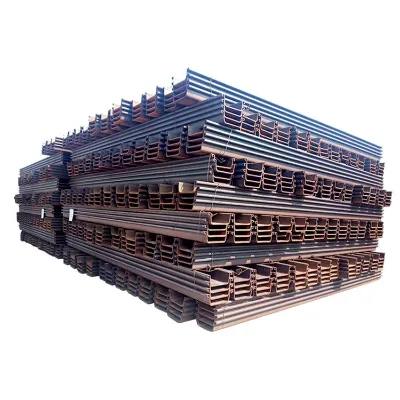
The "Invoicing" method of "By Actual Weight" requires precise measurement upon delivery to avoid disputes. Buyers should plan for a weighing process at the destination to verify the weight against the invoice. Additionally, the "Packing" method, whether "Standard Export Package," "Export Package," or "In Bundles with Steel Straps," affects the condition of the product upon arrival. Proper packing is essential to prevent damage during transit, especially for long, slender sheet piles.
Finally, the "Payment" terms and "Lead Time" must be aligned with the project schedule. A lead time of 8 to 14 days is standard, but buyers should account for potential delays in customs clearance or shipping. The "Provide Free Samples" attribute can be a valuable tool for initial quality verification before placing a large order. By systematically addressing these quality control and long-term considerations, buyers can ensure a successful procurement of water-resisting steel sheet piles that meet both immediate project needs and long-term performance expectations.
FAQs
What standards apply to water resisting steel sheet piles?
Products comply with multiple standards including GB, AISI, ASTM, BS, DIN, and JIS. Buyers must specify the required standard in the contract as suppliers may list all capabilities rather than certifying every unit for every standard simultaneously.
How is the tolerance managed for sheet pile interlocks?
The dimensional tolerance is typically observed within a range of ±1%. This precision is critical for ensuring the interlocking mechanism functions correctly to maintain a watertight seal during installation.
Can suppliers provide customization for specific project needs?
Yes, customization is available for dimensions and surface treatments. However, custom orders often result in longer lead times and higher costs compared to standard stock items.
What is the typical delivery time for these steel products?
Delivery times generally range from 7 to 14 days depending on the supplier and order volume. Some suppliers maintain stock for urgent projects, while others require manufacturing time.
Which payment terms are standard for this product category?
Standard terms include a 30% deposit via Telegraphic Transfer followed by a 70% balance payment. Buyers should also consider Incoterms like FOB or CIF which affect shipping costs.
What material grades are available for water resisting applications?
Available grades include Q235, Q355, S235, A36, and SS400. These non-alloy steel grades offer varying yield strengths suitable for different structural and hydrostatic pressure requirements.
How are these steel sheet piles typically packaged for export?
Packaging options include standard export packages, bundles with steel straps, or custom requests from the customer. The specific method depends on the supplier and the buyer's shipping requirements.