Source Waterproof Tarnish Free Mama Necklace for Moms, Babies, and Gifts
Explore 30 listings for a Waterproof Tarnish Free Mama Necklace designed for mothers, children, and decorative use. Buyers can compare materials like stainless steel and alloy, plating options, and customizable designs to find the right fit for their needs.
Key considerations
Products List
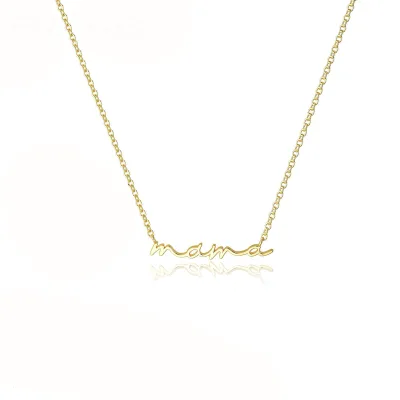
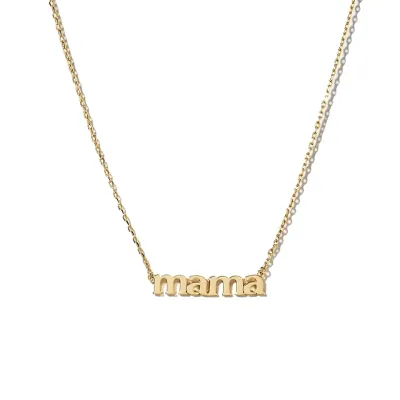

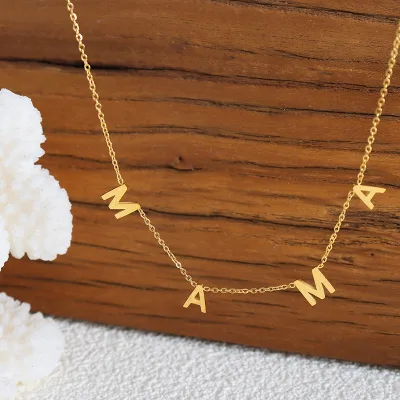


Popular Mother's Day Gift Necklace Love Pendant I Love You Mom Sweater Chain Necklace
$1.20 - $1.40
MOQ: 100 Pieces


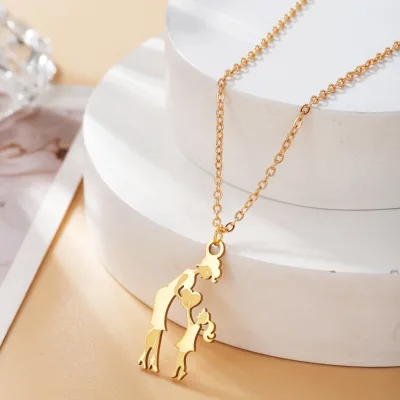

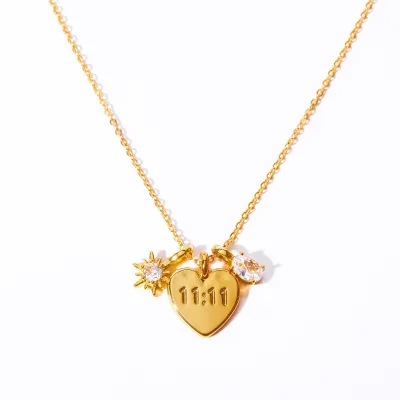


Cross-Border Mother's Day Gift Platinum Heart-to-Heart Elegant Love Necklace
$0.86 - $0.96
MOQ: 1040 Pieces

Hot Selling New Mother's Day Necklace Design Love Versatile Temperament Clavicle Chain
$0.61 - $0.67
MOQ: 1500 Pieces


European and American Cross-Border Hot-Selling Mother’ S Day Gift Letter Necklace
$0.54 - $0.64
MOQ: 1560 Pieces

Cross-Border Heart-Shaped Mother's Day Gift Mother and Child Concentric Necklace
$0.56 - $0.64
MOQ: 1600 Pieces

Cross-Border Hot Selling Mother's Day Parent-Child Necklace Mother Son Alloy Necklace
$0.90 - $0.95
MOQ: 1100 Pieces
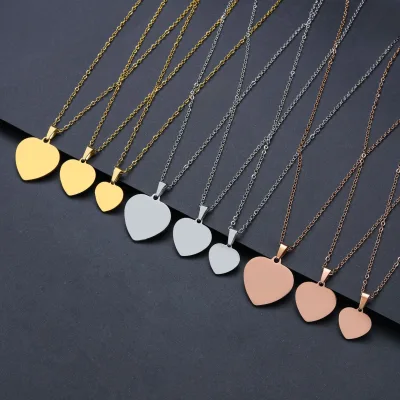

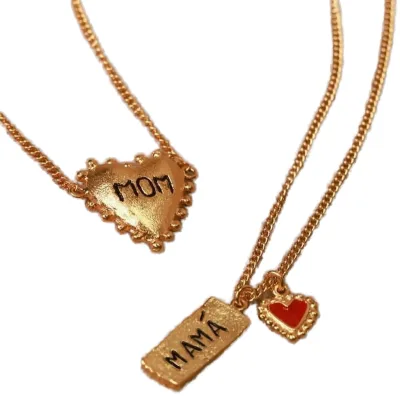
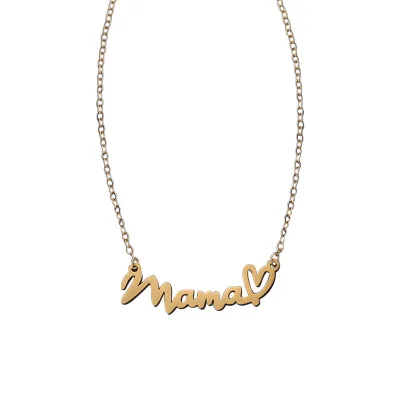

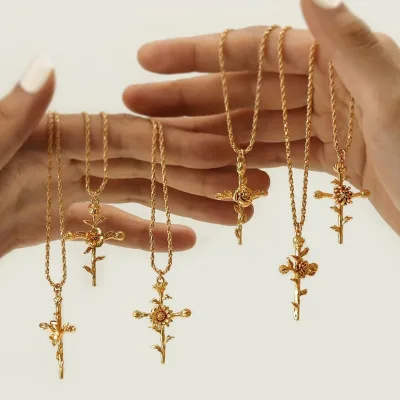

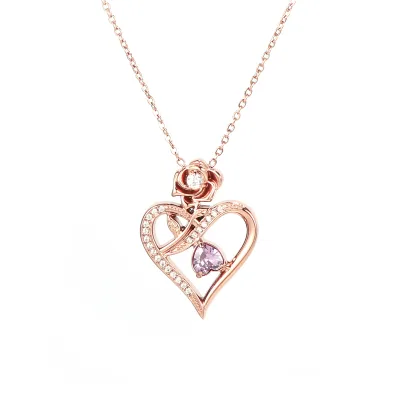


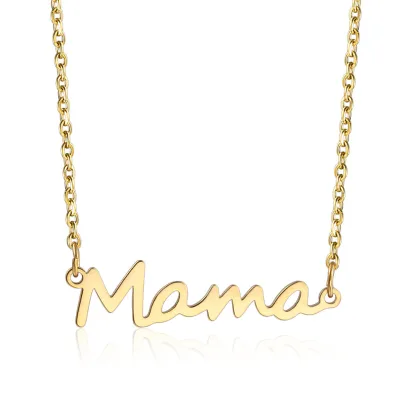
Comprehensive Sourcing Guide
Strategic Sourcing Guide for Waterproof Tarnish-Free Mama Necklaces
The global demand for personalized jewelry, specifically items designed for mothers, has surged, creating a robust market for "mama" necklaces that combine emotional resonance with practical durability. For B2B procurement professionals, the core keyword "waterproof tarnish-free mama necklace" represents a specific subset of the broader fashion jewelry category. Sourcing these items requires a disciplined approach that distinguishes between marketing claims and verifiable product attributes. This guide synthesizes available product data and industry standards to provide a framework for evaluating suppliers, ensuring quality, and managing the procurement lifecycle for this specific product line.
Technical Specifications and Material Composition
The foundation of any durable jewelry product lies in its material composition and physical specifications. When evaluating "mama" necklaces, buyers must scrutinize the listed materials, as the term "waterproof" and "tarnish-free" are inextricably linked to the base metal and plating quality. The observed product data indicates a diverse range of materials, including Stainless Steel, Alloy, and 925 Sterling Silver. Stainless steel is frequently cited as a primary material for items requiring high resistance to corrosion and water exposure. In contrast, alloy-based products often rely on plating to achieve a similar aesthetic, which introduces different longevity considerations.
Length and size specifications vary significantly across the supply base. Data points show lengths ranging from 40+5 cm to 45 cm, with some items specified as 18 inches. The "40+5 cm" specification suggests an adjustable chain design, a critical feature for necklaces intended for a broad demographic including women and children. Buyers should verify that the "adjustable" nature of the chain is robust and does not compromise the clasp integrity. Furthermore, the standard dimensions observed, such as 8810cm or 5003mm, likely refer to packaging or specific component dimensions rather than the necklace itself. Procurement teams must request clear technical drawings that distinguish between the finished product dimensions and packaging standards to avoid fulfillment errors.
Plating Technologies and Tarnish Resistance Claims
The claim of "tarnish-free" performance is heavily dependent on the plating process. The supplied facts list various plating options, including Gold, Silver, and Platinum. The presence of "Mama Gold," "Mama Silver," and "Mom Gold" as specific color attributes suggests that these are distinct product SKUs rather than generic descriptions. For a necklace to be marketed as waterproof and tarnish-free, the plating thickness and the quality of the underlying metal are paramount.
While the data confirms the availability of Gold and Silver plating, it does not provide specific micron thickness values or the type of PVD (Physical Vapor Deposition) or electroplating used. In the absence of specific test data, buyers must treat these attributes as observations of available options rather than guaranteed performance metrics for every listed product. The "Platinum" plating option noted in the data is particularly noteworthy, as platinum plating generally offers superior resistance to tarnishing compared to standard gold or silver plating. However, without certified test results confirming the adhesion and thickness of the plating, procurement teams should not assume that all "Gold" plated items will perform identically in water exposure scenarios. The distinction between "Fashion" style and "Cute" style also implies that design complexity may affect the uniformity of the plating application.
Customization Capabilities and Design Flexibility
A significant portion of the "mama" necklace market relies on personalization. The product data explicitly states that OEM/ODM and Custom designs are "Warmly Welcome," and customization is "Available." This indicates a supply chain capable of adapting to specific branding needs, such as engraving names, specific charms, or unique pendant shapes like the "Lock" or "Bead" shapes observed. The "Double Ring Heart Necklace" and "Layered Detachable Twists Necklace" models demonstrate the variety of design structures available.
Buyers should verify the extent of customization. The data mentions "Customized" sizes and logos, but it does not specify the minimum order quantities (MOQ) required for custom tooling or design changes. While the general MOQ range observed is 1-1600 units, custom designs often carry higher thresholds. The ability to offer "Custom design" alongside "normal" designs suggests a flexible manufacturing process. However, the procurement strategy must account for the potential impact of customization on lead times and quality control. The "Teething Necklace for Babies" model highlights a specific application where customization might involve safety features, such as the size of the beads or the security of the clasp, which are distinct from standard fashion jewelry requirements.
Compliance, Safety, and Application Context
The intended application of the necklace dictates the necessary compliance checks. The data lists "Suitable for" categories including Female, Male, and Children. The inclusion of "Children" and specific models like the "Teething Necklace for Babies" elevates the compliance requirements significantly. Products intended for children, especially those used for teething, must adhere to strict safety standards regarding material toxicity, choking hazards, and mechanical strength.
While the data mentions "Quality: Best" and "Usage: Decoration, Health," these are subjective marketing statements rather than certified compliance metrics. Buyers must independently verify that the "Alloy" or "Stainless Steel" materials used meet relevant regional safety standards, such as REACH in Europe or CPSIA in the United States, particularly for items marketed for children. The "Health" usage claim for teething necklaces requires rigorous scrutiny to ensure the materials are non-toxic and the design prevents accidental ingestion. The "Lock" charm and "Bead" pendant shapes observed must be evaluated for secure attachment to prevent detachment, which is a critical safety failure point for products used by infants.
Supplier Evaluation and Operational Logistics
Evaluating suppliers for this product category requires a focus on their ability to maintain consistency across different material types and plating finishes. The observed product origins are listed as China and specifically Zhejiang, China, a major hub for jewelry manufacturing. The packaging standards vary, with some items listed as "OPP Bag + Bubble Bag + Carton," while others use "Carton Box" or "Box." This inconsistency in packaging standards suggests that buyers need to establish clear packaging specifications in their purchase orders to ensure product protection during transit.
The "prod_model" identifiers, such as "25082023," "KN235390-K," and "AVA002," serve as critical tracking numbers for inventory management. Buyers should insist on a clear mapping between these model numbers and the specific material, plating, and customization options to avoid mix-ups. The "OEM: Yes" attribute confirms that many suppliers are open to private labeling, but the lack of specific supplier names in the data means buyers must conduct their own due diligence. Key evaluation criteria should include the supplier's history with stainless steel versus alloy products, their quality control protocols for plating adhesion, and their ability to handle the specific packaging requirements for both adult and children's lines.
Cost Drivers and Procurement Considerations
The observed price range of 0.22 to 6.8 USD indicates a wide spectrum of product value, driven primarily by material costs and plating complexity. The lower end of the range likely corresponds to alloy products with standard plating, while the higher end may reflect stainless steel or 925 Sterling Silver options. The "Standard" weight of 3g mentioned for one model suggests that weight is a factor in pricing, with heavier items generally commanding higher prices.
Buyers must consider the total cost of ownership, which includes not just the unit price but also the cost of customization, packaging, and potential returns due to tarnishing or quality issues. The "Waterproof" claim is a major cost driver; achieving true water resistance often requires higher-grade plating or solid metal construction, which increases the base cost. Additionally, the "Customized" nature of many items means that setup costs for molds or laser engraving must be factored into the procurement budget. The MOQ range of 1-1600 offers flexibility, but buyers should negotiate based on volume to secure better pricing tiers, especially for custom designs that require dedicated production runs.
Quality Control and Long-Term Sourcing Strategy
To ensure the "waterproof tarnish-free" promise is met, a robust quality control (QC) strategy is essential. Given the variation in materials from alloy to stainless steel, QC protocols must be material-specific. For alloy products, testing for plating thickness and salt spray resistance is critical. For stainless steel items, verifying the grade of the steel (e.g., 304 vs. 316) is necessary to confirm corrosion resistance. The "Quality: Best" claim in the data is insufficient for B2B procurement; buyers should require third-party test reports or in-house QC records that validate the durability of the plating and the integrity of the clasps.
Long-term procurement success depends on building relationships with suppliers who can consistently deliver on these technical specifications. The availability of "Custom design" and "OEM" services suggests that suppliers are willing to adapt, but consistency is key. Buyers should implement a phased sampling process, starting with small batches to test the "waterproof" claims under real-world conditions before scaling up to larger orders. The diverse product models, from "Layered Detachable Twists" to "Teething Necklaces," require distinct QC checklists. By focusing on material verification, plating integrity, and safety compliance, buyers can mitigate the risks associated with the varied product landscape and ensure a reliable supply of high-quality "mama" necklaces.
FAQs
What materials are used for waterproof tarnish free mama necklaces?
These necklaces are made from stainless steel, alloy, or 925 sterling silver. Stainless steel offers high corrosion resistance while alloy options rely on gold or silver plating for durability and appearance.
Can I customize the design of a Waterproof Tarnish Free Mama Necklace?
Yes, custom designs and normal styles are available with OEM and ODM services warmly welcomed. Buyers can request specific logos, sizes, and pendant shapes like locks or beads for personalization.
Which plating options ensure a tarnish-free finish for these necklaces?
Gold, silver, and platinum plating are available to enhance tarnish resistance. Platinum plating generally offers superior protection, though specific thickness and adhesion should be verified for waterproof performance.
What are the standard length specifications for these necklaces?
Common lengths include 40 plus 5 cm, 45 cm, and 18 inches. The 40 plus 5 cm specification often indicates an adjustable chain suitable for women and children.
How are these necklaces packaged for shipment to buyers?
Packaging varies by model and may include OPP bags with bubble wrap inside cartons, or standalone carton boxes. Buyers should specify packaging requirements to ensure product protection during transit.
Are these necklaces suitable for children and teething babies?
Yes, specific models like teething necklaces are designed for children and feature safety-focused designs. However, strict safety compliance regarding material toxicity and choking hazards must be verified for infant use.
What is the price range for sourcing these necklaces?
The observed price range is between 0.22 and 6.8 USD per unit. Costs vary based on material type, plating quality, and customization requirements such as logo engraving or specific dimensions.