Source Waterproof Anti-Slip Motorcycle Gloves for riding, off-road, and cycling
Explore 30 listings of Waterproof Anti-Slip Motorcycle Gloves designed for riding, off-road adventures, and cycling. Buyers can compare features like material, sizing, and customization options to find the right protective gear for their needs.
Key considerations
Products List
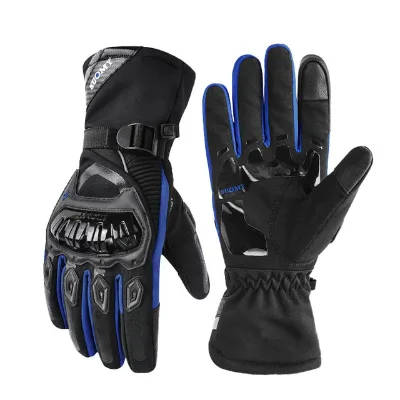


Outdoor Racing Hand Protection Non-Slip Riding Motorcycle Gloves Cycling Gloves
$3.20 - $4.20
MOQ: 1000 Pairs


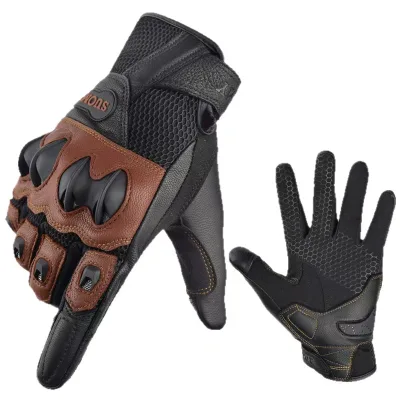
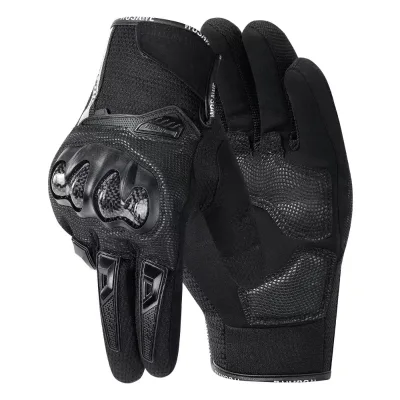


Comprehensive Sourcing Guide
Strategic Sourcing Guide for Waterproof Anti-Slip Motorcycle Gloves
Understanding Product Attributes and Core Specifications
When sourcing waterproof anti-slip motorcycle gloves, buyers must first distinguish between general protective gear and specialized equipment designed for specific riding conditions. The core keyword implies a dual requirement: the ability to repel water while maintaining a secure grip on handlebars and controls. Based on observed market data, these products are frequently categorized under "Protective Safety" with a primary function of "Driven Gloves." The material composition is a critical differentiator; listings indicate a prevalence of Nylon & Cotton blends, as well as Polyester/Nylon combinations, which offer a balance of durability and comfort. Some variations utilize 100% Cotton, though this may impact water resistance unless treated.
The construction style is predominantly "Full Finger," providing comprehensive protection for the digits. The "Style" attribute often ranges from "Plain" to "OEM Custom" designs, allowing for brand differentiation. A key technical observation is the "Pattern" classification, which often falls under "Other," suggesting that specific weave patterns or stitching techniques may vary significantly between suppliers rather than adhering to a single industry standard. The "Technics" employed include "Jacquard," which can influence the texture and grip characteristics of the palm area.
Size specifications are generally standardized to M, L, XL, and XXL, catering to an "Adults" age group and "Unisex" applicability. However, buyers should verify if specific models, such as those with model numbers like MT505 or HMJ-MD series, adhere to these standard sizing charts or offer custom sizing options. The "Feature" set is extensive, with high-confidence attributes including "Eco-Friendly," "Abrasion Resistance," and "Anti-Slip." Notably, some product descriptions list a comprehensive feature set including "Windbreak," "Waterproof," "Rip-Stop," "Quick-Drying," "Moisture-Wicking," "Flame-Retardant," "Breathable," "Anti-UV," and "Anti-Static." While these claims are present in product listings, procurement teams must treat them as observations requiring verification rather than guaranteed performance metrics for every unit ordered.
Technical Verification of Waterproofing and Grip Performance
The term "waterproof" in the context of motorcycle gloves requires rigorous technical scrutiny. While product attributes list "Waterproof" as a key feature, the underlying material technology varies. The presence of "Nylon & Cotton" or "Polyester / Nylon" suggests that water resistance may be achieved through coating, laminating, or specific weaving techniques rather than inherent material properties. Buyers should specifically inquire about the "Waterproof" mechanism. Is it a membrane layer, a hydrophobic coating, or a tight weave? Without specific test data provided in the general listings, the buyer must request proof of water penetration resistance.
Similarly, the "Anti-Slip" feature is critical for safety. The "Feature" attribute explicitly mentions "Anti-Slip," but the method of achieving this grip is not always detailed. Some gloves utilize "Jacquard" techniques to create textured surfaces, while others may rely on silicone prints or rubberized palm patches. The "Buckle" attribute is noted as "Without Buckle" in some listings, indicating a slip-on design, which relies entirely on the fit and the friction of the material for retention. In contrast, other models might incorporate different closure systems.
The "Standard" dimensions provided in some listings, such as "25150.50cm" or "Width 10mm-160mm," likely refer to packaging or specific component dimensions rather than the glove itself. Buyers must clarify these measurements to ensure they align with the physical product. The "Finger Length" is specified as "Full Finger Gloves," which is a baseline requirement for motorcycle safety. However, the exact length relative to the wrist and the cuff design (e.g., whether it extends over a jacket sleeve) is a vital detail for wind and water protection that is often omitted in summary attributes.
Compliance, Certification, and Safety Standards
In the realm of personal protective equipment (PPE), compliance is non-negotiable. While the supplied data mentions "CE" as a low-confidence background element, it is crucial to understand that CE certification is a mandatory requirement for selling safety gear in many international markets, particularly the European Union. However, the presence of a CE mark on a listing does not guarantee that the specific batch of gloves meets the rigorous EN 13594 standard for motorcycle gloves.
Buyers must verify if the supplier can provide valid test reports from accredited laboratories. The "Standard" attribute in the provided data lists dimensions like "1kg" or specific box sizes, which are packaging standards, not safety standards. Therefore, the buyer must explicitly request the specific safety standard the gloves are tested against. Is it EN 13594:2015? Does it cover abrasion resistance, cut resistance, and impact protection? The "Feature" list mentions "Flame-Retardant," which is a specific safety claim that requires independent verification. Without a valid certificate, claims of flame retardancy or high-level abrasion resistance remain unverified assertions.
Furthermore, the "Place of Origin" is consistently listed as "Guangdong, China" or generally "China." While this is a major manufacturing hub, it does not inherently dictate quality. Buyers should evaluate the supplier's history of exporting to regions with strict safety regulations. The "Supply Ability" of 500 pairs per week suggests a small to medium-scale operation, which may impact the consistency of quality control across large orders. The "MOQ" (Minimum Order Quantity) ranges from 1 pair to 202,000, offering flexibility but also indicating that the supplier may handle both sample orders and bulk production.
Cost Drivers and Pricing Dynamics
The observed price range for these gloves spans from $0.05 to $2,020 USD. This extreme variance is not indicative of a single product type but rather reflects the spectrum from basic promotional items to high-end, specialized racing gear. The lower end of the range likely corresponds to basic cotton or nylon gloves with minimal protective features, possibly intended for casual use or promotional giveaways. The upper end may include gloves with advanced materials, integrated armor, and certified safety features.
Several factors drive the cost of waterproof anti-slip motorcycle gloves. Material quality is a primary driver; high-performance waterproof membranes (like Gore-Tex or proprietary equivalents) and high-tenacity aramid fibers significantly increase the unit cost compared to standard cotton or basic polyester blends. The complexity of the "Design" and "Customization" options also impacts pricing. "OEM Custom" designs, "Customized Packing," and "Customize Logo" services add layers of production complexity and tooling costs.
The "Packaging Details" also influence the final price. Options range from simple "PP bags" to "Carton Box" packaging, and further customization to "As the customer Request." Premium packaging adds to the logistics cost but may be necessary for retail presentation. The "Port of dispatch" is listed as "Shenzhen," which is a major logistics hub, but shipping costs will vary based on the destination and the weight of the shipment, which is influenced by the "Standard" weight of the packaging (e.g., 1kg per unit).
Buyers should be wary of prices that seem too good to be true, especially those claiming high-level features like "Flame-Retardant" and "Waterproof" at the lowest price points. The "Selling Units" are often listed as "Single item," which can be misleading for bulk procurement. The "MOQ" of 1 pair allows for sampling, but the unit price for bulk orders will likely differ significantly from the single-item listing price.
Supplier Evaluation and Operational Capabilities
Evaluating a supplier for motorcycle gloves requires a focus on their operational stability and quality assurance processes. The "Supply Ability" of 500 pairs per week is a specific metric that buyers must contextualize. For a large order, this capacity might be insufficient without a production schedule that extends over several months. Buyers should ask about peak season capacity and how the supplier manages order backlogs.
The "Design" attribute of "OEM Custom" and "Logo: Customize Logo Acceptable" indicates that the supplier is willing to work with buyers on branding. However, the ability to execute custom designs does not automatically equate to the ability to maintain strict quality control on those custom items. Buyers should request to see samples of previous OEM work to assess the quality of stitching, logo application, and material consistency.
The "Place of Origin" being Guangdong, China, is a common location for textile manufacturing. Buyers should verify the specific factory location within the province, as some regions have stricter environmental and labor regulations than others. The "Packaging" options, including "Carton" and "Carton Box," suggest the supplier has experience with export logistics. However, the "Packing Details" note that items are "Packed into PP bags, then into the carton," which is a standard practice but requires verification to ensure the inner bags provide adequate protection against moisture during transit.
Quality Control Protocols and Inspection Strategies
Given the safety-critical nature of motorcycle gloves, a robust quality control (QC) protocol is essential. The "Feature" list includes "Abrasion Resistance" and "Anti-Slip," which are performance metrics that must be validated. Buyers should implement a pre-shipment inspection that includes physical testing of the gloves. This should involve checking for consistent stitching, verifying the integrity of the waterproof coating, and testing the grip on various surfaces.
The "Model Number" variations, such as MT505, GL035, and the HMJ-MD series, suggest a diverse product line. QC protocols must be specific to each model, as the material composition and construction may differ. For instance, a "Cotton" glove will have different QC criteria than a "Polyester / Nylon" blend. The "Size" range of M, L, XL, and XXL must be verified for dimensional accuracy, as sizing inconsistencies can lead to high return rates and safety issues.
Buyers should also inspect the "Color" consistency, as the listed options include Blue, Black, and Red. Color fastness is a critical quality attribute, especially for gloves that may be exposed to sweat and rain. The "Feature" of "Eco-Friendly" should be verified through material safety data sheets (MSDS) or supplier declarations to ensure that the dyes and treatments used do not contain harmful substances.
Long-Term Procurement and Market Considerations
Sourcing waterproof anti-slip motorcycle gloves is not just a one-time transaction but a long-term partnership that requires strategic planning. The "Season" attribute is listed as "Universal," which suggests the gloves are marketed for year-round use. However, buyers should consider regional climate variations. In tropical regions, "Breathable" and "Moisture-Wicking" features are paramount, while in colder climates, "Windbreak" and "Flame-Retardant" properties may take precedence.
The "Customization" availability offers a significant advantage for buyers looking to build a unique brand identity. However, long-term procurement requires stability in the supply chain. Buyers should assess the supplier's ability to maintain consistent quality over multiple production runs. The "MOQ" flexibility allows for smaller initial orders, but buyers should plan for volume growth to negotiate better pricing and secure production slots.
Finally, the "Keywords" such as "Touch Screen" and "Waterproof" indicate market trends. Buyers should stay informed about evolving consumer expectations, such as the increasing demand for touch-screen compatibility in gloves. While the "Feature" list mentions "Touch Screen," this is a specific functionality that requires testing to ensure the conductive material does not degrade over time. Long-term success in this market depends on balancing cost, safety, and the ability to adapt to changing consumer needs through continuous product development and supplier collaboration.
FAQs
What materials are used for Waterproof Anti-Slip Motorcycle Gloves?
These gloves typically use Nylon and Cotton blends or Polyester and Nylon combinations. Some variations may utilize 100% Cotton, though this impacts water resistance unless treated with specific coatings.
Can buyers request custom logos and packaging for these gloves?
Yes, customization is available for both logos and packaging details. Suppliers accept requests for custom logos and can pack items into PP bags or cartons as per customer specifications.
Which sizes are available for adult unisex motorcycle gloves?
Standard sizes include M, L, XL, and XXL to fit adult unisex users. Some models may offer custom sizing options, but the primary range covers these four standard measurements.
How is the minimum order quantity determined for these gloves?
The minimum order quantity can be as low as one pair for sampling purposes. However, bulk orders may require higher quantities, with observed ranges extending up to 202,000 pairs depending on the supplier.
What features are listed for these protective safety gloves?
Common features include anti-slip, abrasion resistance, and waterproof capabilities. Additional attributes may list windbreak, rip-stop, quick-drying, and flame-retardant properties, though these require verification.
Where are these motorcycle gloves typically manufactured and shipped from?
The place of origin is consistently listed as Guangdong, China. The port of dispatch is typically Shenzhen, facilitating export logistics for international buyers sourcing these protective items.