Source Waterproof Customized Mehndi Stickers for Events
Find 30 listings for Waterproof Customized Mehndi Stickers suitable for weddings, festivals, and personal use. Compare digital and screen printing options on vinyl or paper materials to select the best adhesive labels for your design needs; compare the available evidence and request quotations based on your requirements.
Key considerations
Products List

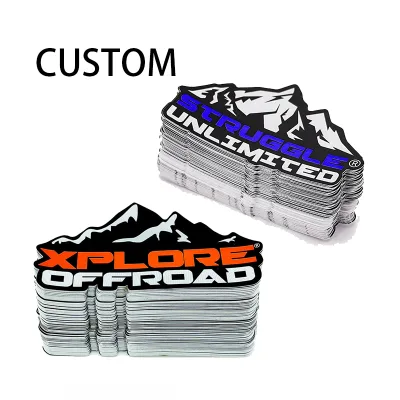
Customized Self-Adhesive Waterproof Stickers Customized Printed Stickers
$0.06 - $0.18
MOQ: 500 Pieces


Wholesale Hot Sale Customized Waterproof Stickers Metal Logo Custom Shape Labels
$0.03 - $0.29
MOQ: 6000 Pieces




Self-Adhesive Embossed Metal Stickers Recyclable Waterproof Aluminum Labels
$0.10 - $0.70
MOQ: 6000 Pieces


Comprehensive Sourcing Guide
Waterproof Customized Mehndi Stickers Sourcing Guide
Sourcing Waterproof Customized Mehndi Stickers requires distinguishing between temporary skin applications and general adhesive labels, as the supplied data indicates a broad range of materials including vinyl, paper, and metal. Buyers must verify that the specific product variant intended for skin contact utilizes non-toxic, skin-safe inks and adhesives, as the observed listings include items designated for medicine, food, and shipping labels which may not meet dermatological safety standards. The presence of digital, screen, and gravure printing options suggests varying levels of color fidelity and detail resolution, which is critical for the intricate designs typical of mehndi art.
Procurement teams should prioritize suppliers who explicitly confirm the "Custom Sticker" usage category alongside waterproof features, ensuring the adhesive remains intact during water exposure without causing skin irritation. The observed product models and origins, primarily from China and Shandong, indicate a mature manufacturing base, yet the diversity in materials like paper and metal necessitates strict filtering to isolate vinyl-based options suitable for temporary skin application. Buyers must cross-reference the "Customized" attribute with specific material safety data sheets to ensure the final product aligns with the intended cosmetic or decorative use rather than industrial packaging.
Product Scope and Observed Listing Signals
The market signals for Waterproof Customized Mehndi Stickers reveal a complex landscape where general adhesive products often overlap with specialized skin-safe variants. Observed listings feature a wide price range from 0.01 to 1.2 USD and MOQs spanning from single units to 100,000 pieces, indicating that suppliers cater to both prototyping and mass production needs. The presence of "Competitive Price with Good Quality" as a stated advantage suggests a highly competitive market where differentiation relies on material quality and print precision rather than price alone. Buyers must navigate this variance by confirming that the specific listing supports the "Custom Sticker" usage and "Waterproof" feature simultaneously.
Detailed observation of product attributes shows that while many items are labeled as "Adhesive Sticker" or "Label Sticker," the material composition varies significantly between vinyl, paper, and metal. This variation is critical because paper-based stickers, often used for packaging or price tags, will not perform adequately as waterproof mehndi stickers on skin. The data confirms that customization is available across printing types including digital and screen printing, allowing for bespoke designs, but the buyer must explicitly verify that the chosen material and ink formulation are safe for direct skin contact and resistant to water, sweat, and friction.
Technical Specifications to Verify
Technical verification for mehndi stickers must focus on the material composition, specifically confirming the use of vinyl over paper or metal for skin applications. The supplied facts list "Vinyl" and "Paper" as materials, but only vinyl typically offers the necessary flexibility and water resistance for temporary skin wear. Buyers should request physical samples to test the "Waterproof" claim under conditions mimicking real-world usage, such as immersion in water or exposure to humidity, to ensure the adhesive does not degrade or the print does not smear. The "Self-Adhesive Sticker" installation method noted in the data is standard, but the tack strength must be balanced to allow for easy removal without leaving residue or damaging the skin.
Printing technology selection is another critical technical parameter, with digital, screen, and gravure printing all observed in the market. Digital printing offers high detail suitable for complex mehndi patterns, while screen printing may provide better opacity for specific color requirements. The "Custom" standard and "Shape" attributes indicate that suppliers can produce non-standard geometries, but the buyer must verify the resolution limits of the chosen printing method to ensure fine lines remain crisp. Additionally, the "Color: Customize" and "Color: Silver" options suggest a broad palette, yet the ink formulation must be verified for skin safety, as standard industrial inks used for shipping labels or food packaging may contain prohibited substances for cosmetic use.
Compliance and Safety Documentation
Compliance for mehndi stickers involves rigorous verification of material safety, particularly regarding skin contact and chemical composition. While the observed data mentions usage in "Medicine" and "Food," these categories imply different regulatory frameworks than cosmetic or decorative skin applications. Buyers must demand Safety Data Sheets (SDS) and specific skin-safety certifications for the inks and adhesives used, ensuring they comply with relevant regional regulations for temporary body art. The absence of explicit certification names in the provided facts means the buyer cannot assume compliance and must treat all listed products as requiring independent verification before mass procurement.
Documentation should also cover the manufacturing standards and origin details to ensure traceability. The data indicates origins in China and Shandong, regions with established manufacturing capabilities, but buyers must confirm that the production facilities adhere to international quality management systems. Since the product standard is listed as "Custom" or "Premium Label," there is no universal standard to reference, making it essential to define specific acceptance criteria in the purchase agreement. This includes verifying that the "Box" or "Plastic Bag+ Carton" packing methods protect the product from contamination during transit, which is vital for maintaining hygiene standards required for skin-contact items.
Cost Drivers and Commercial Terms
Cost structures for Waterproof Customized Mehndi Stickers are heavily influenced by the chosen material, printing method, and order volume. The observed MOQ range of 1 to 100,000 pieces allows for flexibility, but the unit price typically decreases significantly as volume increases, with some listings showing an MOQ of 100,000 pieces for specific pricing tiers. Buyers should analyze the trade-off between the lower unit cost of high-volume orders and the inventory risk associated with custom designs. The "Competitive Price with Good Quality" advantage suggests that cost savings should not come at the expense of material integrity, particularly regarding the waterproof and skin-safe properties.
Commercial terms such as payment methods, shipping, and lead times are critical variables in the procurement equation. The data lists payment options including T/T, Western Union, and Paypal, alongside shipping via sea or air, which impacts both cash flow and delivery speed. Lead times for samples are noted as 3-7 days, but production lead times for custom orders are not explicitly defined in the provided facts, requiring direct negotiation with the supplier. Buyers must clarify whether the "Custom" standard includes design fees or if the cost is embedded in the unit price, and ensure that the shipping method aligns with the urgency of the project, especially for time-sensitive events or product launches.
Supplier Qualification and Quality Control
Supplier qualification for mehndi stickers requires a thorough assessment of their manufacturing capabilities and quality control processes. The observed data mentions "Machinery" processing and various product models, indicating an industrial-scale operation, but buyers must verify the specific equipment used for printing and cutting to ensure consistency. Quality control should focus on the adhesion strength, print durability, and material flexibility, as these are the primary failure points for waterproof stickers on skin. Buyers should request a quality assurance plan that details how defects are identified and managed, ensuring that the final product meets the "Custom" specifications without compromising safety or performance.
Verification of the supplier's ability to handle customization is equally important, given the "Customized" attribute and the variety of shapes and colors available. The supplier must demonstrate proficiency in managing complex designs, particularly the intricate patterns required for mehndi art, without introducing errors in registration or color fidelity. Buyers should assess the supplier's sample process, noting the 3-7 day sample turnaround, to evaluate their responsiveness and attention to detail. Establishing a clear communication channel for design approvals and pre-production samples is essential to mitigate the risk of receiving a product that does not match the intended aesthetic or functional requirements.
Long-Term Procurement Checks
Long-term procurement success depends on establishing a robust framework for ongoing quality assurance and supplier performance monitoring. Buyers should implement regular audits of the supplier's production lines to ensure that the "Waterproof" and "Custom" attributes remain consistent over time, especially as order volumes scale up. The variability in materials and printing types observed in the market necessitates a dynamic quality control strategy that adapts to changes in raw material sourcing or manufacturing processes. Regular testing of batch samples for skin safety and water resistance is essential to maintain compliance and customer satisfaction throughout the product lifecycle.
Strategic relationship management involves monitoring the supplier's ability to meet evolving market demands and technical requirements. As the market for customized mehndi stickers evolves, suppliers must be capable of adopting new printing technologies or materials that offer improved performance or sustainability. Buyers should maintain open dialogue regarding potential design updates or material improvements, leveraging the supplier's expertise in "Competitive Price with Good Quality" to drive continuous value. Establishing a long-term partnership based on mutual trust and clear performance metrics will ensure a stable supply chain capable of supporting growth and adapting to future challenges in the cosmetic and decorative sticker sectors.
FAQs
Can I get Waterproof Customized Mehndi Stickers with digital printing?
Yes, digital printing is available for these adhesive stickers. This method supports full-color designs and ensures vibrant results for intricate mehndi patterns. The stickers are made from vinyl or paper materials, offering flexibility in texture and finish. Buyers can customize colors and shapes to match specific branding or event themes while maintaining waterproof durability for various applications.
What is the minimum order quantity for these stickers?
The minimum order quantity ranges from 1 to 100,000 pieces depending on the supplier and product specifications. Some listings indicate an MOQ of 100,000 pieces for certain standard models, while others allow smaller orders starting from just one unit. This flexibility allows businesses to test market response with small batches or fulfill large-scale commercial requirements efficiently.
How long does it take to receive samples?
Sample production typically takes 3 to 7 days. This timeframe allows suppliers to prepare customized designs or standard prototypes for buyer approval. Once samples are confirmed, bulk production can begin. Buyers should account for shipping time when planning project timelines, as shipment methods vary between sea and air freight options depending on urgency and order volume.
Are these stickers suitable for outdoor use?
Yes, many of these adhesive stickers are designed for outdoor use. They feature waterproof properties that protect against moisture and environmental exposure. The materials, such as vinyl, ensure durability and longevity when applied to various surfaces. This makes them ideal for outdoor events, packaging, or decorative applications where resistance to weather conditions is essential for maintaining appearance and adhesion.
What packaging options are available for bulk orders?
Packaging options include plastic bags, boxes, and cartons. Suppliers often use plastic bags for individual units and cartons for bulk shipping to ensure protection during transit. Some products are packed in boxes for retail readiness. Buyers can specify packaging preferences to meet storage or display requirements, ensuring the stickers arrive in optimal condition for immediate use or distribution.
Can I customize the color and shape of the stickers?
Yes, customization of color and shape is available. Buyers can choose from various color options, including silver or other custom shades, to match their design needs. Shapes can be tailored to specific requirements, allowing for unique mehndi patterns or branding elements. This level of customization ensures that the final product aligns perfectly with the intended aesthetic and functional goals.