Source Waterproof Night Vision Wrist Compass for hiking, camping, and travel
Explore 30 listings of Waterproof Night Vision Wrist Compass units designed for outdoor activities. Buyers can compare features like navigation, altitude, and durability across models from China-based suppliers.
Key considerations
Products List

Waterproof Navigation Survival Luminous Sighting Hiking Orienteering Lensatic Compass
$1.80 - $2.00
MOQ: 500 Pieces

Hiking Camping Multifunctional Inclinometer Sighting Optic Resistant Waterproof Compass
$0.80 - $1.00
MOQ: 1000 Pieces

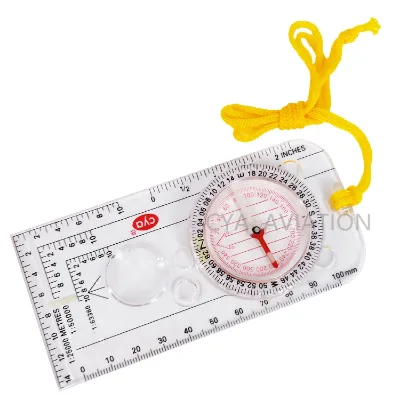
Compact Accurate Simple Sighting Mirror Plastic Portable Exploration Compass
$0.80 - $1.00
MOQ: 1000 Pieces




Comprehensive Sourcing Guide
Strategic Sourcing Guide for Waterproof Night Vision Wrist Compasses
The global market for precision navigation instruments has seen a surge in demand for multifunctional devices that combine durability with low-light visibility. For procurement professionals seeking a Waterproof Night Vision Wrist Compass, the sourcing landscape requires a nuanced understanding of overlapping technical attributes. The core keyword implies a device that serves dual purposes: providing directional guidance in total darkness while withstanding exposure to water. However, the supply chain for such specialized items is fragmented, with manufacturers often producing distinct variants that may not possess every feature simultaneously. This guide provides a disciplined approach to evaluating suppliers, verifying technical claims, and managing procurement risks for these critical navigation tools.
Technical Architecture and Functional Verification
When sourcing a Waterproof Night Vision Wrist Compass, the first step is to dissect the technical architecture. The product category is not monolithic; it encompasses devices ranging from simple mechanical compasses with luminous dials to complex electronic instruments integrating digital sensors. Based on available market data, the functional spectrum for these devices is broad. Buyers must distinguish between products that offer basic navigation and those that integrate advanced sensor arrays.
The functional capabilities observed in the market include navigation, timekeeping, barometric pressure measurement, temperature sensing, humidity monitoring, and altimetry. Some advanced units also feature gradienters and instant messaging capabilities, though these are less common in traditional wrist-mounted formats. A critical distinction lies in the noctilucence feature. While some products are explicitly marketed with noctilucence for low-light operations, others are listed as lacking this feature entirely. For a "night vision" requirement, the buyer must verify if the device relies on passive luminescent materials (such as tritium or photoluminescent paint) or active electronic night vision systems.
The market data indicates a specific product model, WXY-0489, which is associated with a comprehensive suite of functions including navigation, time, barometer, thermometer, hygrometer, altimeter, and gradienter. Conversely, other models like the MC-1 are described primarily as navigation compasses with a pointer dial display. The presence of "Operation Principle: Infrared Night Vision" in some listings suggests the existence of electronic night vision devices, yet these are often categorized separately from standard wrist compasses. A procurement strategy must therefore begin with a clear definition of whether the requirement is for a mechanical compass with a glowing dial or an electronic device with infrared capabilities.
Material Integrity and Environmental Durability
Durability is a paramount concern for equipment used in outdoor hiking, camping, and travel scenarios. The sourcing guide must prioritize materials that ensure the device withstands harsh environmental conditions. The observed product attributes frequently cite "Quakeproof" and "Waterproof" as standard features. However, the term "waterproof" requires specific verification. While some listings confirm a "Waterproof Standard: Yes," the exact IP rating (e.g., IP67, IP68) is rarely explicitly stated in general product summaries. Buyers should request specific test data or certification documents that validate the water resistance claims before finalizing an order.
The shell material is another critical factor. Data indicates that some units utilize metal shells, which offer superior impact resistance compared to plastic alternatives. The product weight is also a significant variable; for instance, a specific model is noted to weigh 32g, which is relatively light for a wrist-mounted device. Heavier units may offer more robust construction but could cause fatigue during extended wear. The "Carrying Mode" varies as well, with options including "Hanging Ring Type" and "Hand-hold," suggesting that the form factor is not standardized. Procurement teams must evaluate whether the carrying mode aligns with the intended usage, such as hands-free operation during hiking or secure hand-holding for precise surveying.
Compliance, Standards, and Certification Protocols
Navigating the compliance landscape for navigation instruments involves verifying adherence to both international standards and specific product specifications. The market data reveals a standard dimension of "4"L x 2.4"W" for certain models, while others adhere to a size specification of "75 X 55 X 29mm." These dimensional variances highlight the lack of a single universal standard for the category. Buyers must ensure that the selected product meets the physical constraints of their specific application, particularly if the device needs to fit into a standardized wrist strap or a specific mounting system.
Regarding certifications, the available information mentions CE certification as a background fact. However, this should not be assumed to apply to all listed products. The presence of "CE" in the background data suggests that some manufacturers may pursue this certification, but it is not a guaranteed attribute for every item in the search results. Procurement professionals must treat certification status as a variable to be confirmed on a per-supplier basis. Additionally, the "Product Standard" for some items is listed as "4"L x 2.4"W," which serves as a dimensional reference rather than a safety or performance standard. Buyers should explicitly request documentation regarding material safety, environmental compliance, and any relevant industry-specific certifications for electronic components if the device includes digital sensors.
Cost Drivers and Economic Considerations
The economic landscape for waterproof night vision wrist compasses is characterized by a wide price range, observed between $0.42 and $4,348 USD. This vast disparity indicates a market segmented by technology level, brand reputation, and production volume. The lower end of the spectrum likely corresponds to basic mechanical compasses with simple luminous dials, while the higher end may encompass advanced electronic units with integrated sensors, infrared capabilities, and premium build materials.
The Minimum Order Quantity (MOQ) also varies significantly, ranging from 1 to 1,000 units. This flexibility allows buyers to source small batches for testing or prototyping, as well as large volumes for mass deployment. The "Selling Units" are typically listed as "Single item," which simplifies the calculation of unit costs. However, buyers must account for the "Carton Size" and "Qty/CTN" when calculating logistics costs. For example, a specific model has a carton size of 41.5x35.5x23.5 cm with 144 pieces per carton and a gross weight of 7.30 kg. These logistical parameters directly impact shipping costs and storage requirements.
Customization is a key cost driver. While some products are listed as "Non-Customized," others offer "Customization: Available." Customization can include branding, specific color schemes, or tailored functional configurations. Buyers should anticipate that customized orders will likely carry a higher MOQ and a longer lead time. The "Operation Principle" of the device, such as "Infrared Night Vision," also influences the cost structure, as electronic components generally command a higher price point than passive mechanical systems.
Supplier Evaluation and Operational Capabilities
Evaluating suppliers for this specialized category requires a deep dive into their operational capabilities and product diversity. The market data indicates that products originate from China, which is a major manufacturing hub for these instruments. However, the specific supplier names are not provided, and buyers must rely on due diligence to identify reputable manufacturers. The "Product Name" and "Brand Name" (e.g., CYA) are useful identifiers for tracking specific product lines.
Suppliers should be assessed based on their ability to provide consistent quality across different models. The data shows multiple model numbers, including WXY-0489, WXY-0472, WXY-0477, and L45-1B. A supplier offering a diverse range of models may indicate a robust R&D department and a flexible manufacturing process. The "Application" of the products varies from "Special" and "Home" to "Outdoor Hiking Camping" and "Civil." A supplier that can demonstrate experience in multiple application sectors is likely better equipped to handle specific customization requests.
The "Packing" method is another indicator of supplier professionalism. Some products are packed in "Paper Box," while others are shipped "by Sea," suggesting bulk logistics capabilities. Buyers should verify the packaging integrity to ensure that the devices arrive without damage, especially given the "Quakeproof" claims. The "Condition" of the products is consistently listed as "New," which is a baseline expectation but should be confirmed in the contract.
Quality Control and Long-Term Procurement Strategy
Implementing a robust quality control (QC) strategy is essential for mitigating risks associated with the wide variance in product specifications. Given the "Waterproof" and "Quakeproof" claims, buyers should mandate third-party testing for water resistance and impact resistance. The "Safety" and "Efficiency" attributes listed in the data suggest that these are general product goals, but they must be validated through specific test protocols.
For long-term procurement, buyers should consider the "Environmentally Friendly" aspect of the products. While this is listed as an attribute, the specific materials and manufacturing processes used to achieve this status should be scrutinized. The "Convenience" and "Flexibility" of the device are also important for user adoption. A product that is "Durable" and "Safe" but difficult to use may not meet the operational needs of the end-user.
Procurement teams should establish a clear specification sheet that defines the exact requirements for the "Noctilucence" feature, the "Carrying Type," and the "Dial Display." The data shows conflicting information, with some products having "With Noctilucence" and others "Without Noctilucence." This ambiguity underscores the need for precise communication with suppliers. Buyers should also consider the "Usage" scenarios, such as "Travel" and "Gift," which may influence the aesthetic and packaging requirements.
Comparative Analysis of Product Attributes
To facilitate decision-making, the following table summarizes the key attributes observed in the market data. This comparison highlights the variability in specifications and the need for careful selection.
| Attribute Category | Observed Variations | Procurement Implication |
|---|---|---|
| Functionality | Navigation, Time, Barometer, Thermometer, Hygrometer, Altimeter, Gradienter, Instant Message | Define required sensor suite; avoid over-specifying if basic navigation suffices. |
| Noctilucence | With Noctilucence, Without Noctilucence, With Noctilucent Display | Critical for night operations; verify the type of luminescence (passive vs. active). |
| Waterproof | Waterproof (Standard: Yes), Waterproof Standard: Yes | Request specific IP ratings; do not assume universal compliance. |
| Material | Metal Shell, Various unspecified materials | Metal offers higher durability; verify weight and comfort for wrist mounting. |
| Carrying Mode | Hanging Ring Type, Hand-hold, Wrist-mounted (implied) | Ensure compatibility with user gear and intended activity (hiking vs. surveying). |
| Customization | Available, Non-Customized | Factor in MOQ and lead time for customized orders; standard items may be faster. |
| Origin | China | Consider logistics, tariffs, and supply chain stability in procurement planning. |
| Price Range | $0.42 - $4,348 USD | Align budget with required functionality; high price may indicate advanced electronics. |
Final Procurement Recommendations
Sourcing a Waterproof Night Vision Wrist Compass requires a methodical approach that balances technical requirements with economic realities. The market offers a wide array of options, from simple mechanical compasses to complex electronic instruments. Buyers must clearly define their needs regarding functionality, durability, and visibility in low-light conditions. The variability in specifications, such as the presence or absence of noctilucence and the specific waterproof standards, necessitates rigorous verification before placing orders.
By focusing on supplier capabilities, demanding specific test data, and understanding the cost drivers associated with customization and logistics, procurement professionals can secure high-quality navigation instruments that meet their operational needs. The key to success lies in treating product attributes as observations to be verified rather than guaranteed claims, ensuring that the final selection aligns with the specific demands of the intended application.
FAQs
What functions does the Waterproof Night Vision Wrist Compass offer?
The device offers navigation, time, barometer, thermometer, hygrometer, altimeter, and gradienter functions. Some models also include instant messaging capabilities, while others focus solely on basic navigation with a pointer dial display.
Can I find a Waterproof Night Vision Wrist Compass with noctilucence?
Yes, some models feature noctilucence for low-light visibility, while others are listed without this feature. Buyers must verify specific product attributes as availability varies between models like WXY-0489 and MC-1.
Which materials are used for the shell of these compasses?
Some units utilize metal shells for superior impact resistance compared to plastic alternatives. The product is also described as durable, quakeproof, and safe for use in outdoor hiking and camping scenarios.
How are these products packaged and shipped?
Products are typically packed in paper boxes for individual items or shipped by sea for bulk orders. Carton dimensions and quantities vary, with some listings specifying 144 pieces per carton and a gross weight of 7.30 kg.
What is the origin and condition of these devices?
All listed products originate from China and are in new condition. They are designed for unisex use and are suitable for travel, gifts, and special home applications with convenient carrying modes.
Can these compasses be customized for specific needs?
Customization is available for some products, while others are non-customized. Buyers should verify if branding or functional configurations can be tailored, as this may affect minimum order quantities and lead times.
What is the price range for waterproof night vision wrist compasses?
The observed price range spans from 0.42 to 4348 USD, reflecting differences in technology and features. Lower prices typically correspond to basic mechanical compasses, while higher prices cover advanced electronic units with infrared capabilities.