Source Waterproof Non-Slip Car Floor Mats for SUVs, Sedans, and Trucks
Explore 30 listings of waterproof non-slip car floor mats featuring custom logos, machine-woven or molded designs, and rubber or PU materials. Buyers can compare specifications like thickness, packaging, and OEM capabilities from verified Chinese manufacturers.
Key considerations
Products List


Leather Floor Mat Waterproof Non-Slip Custom Car Floor Mat Luxury Car Mats
$23.75 - $25.42
MOQ: 100 Pieces


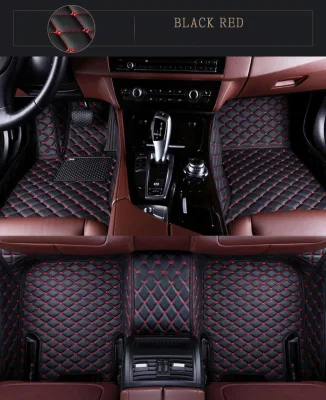


Custom Car Mats 2024 TPE Car Floor Mat Luxury Waterproof Non Slip Car Carpet
$0.50 - $2.00
MOQ: 1000 Meters


All-Weather Waterproof and Durable Car Floor Mats Non-Slip Cargo Rubber Mats a
$14.00 - $16.00
MOQ: 100 Pieces

All-Weather Waterproof and Durable Car Floor Mats Non-Slip Cargo Rubber Mats C
$14.00 - $16.00
MOQ: 100 Pieces

All-Weather Waterproof and Durable Car Floor Mats Non-Slip Cargo Rubber Mats B
$14.00 - $16.00
MOQ: 100 Pieces

All-Weather Waterproof and Durable Car Floor Mats Non-Slip Cargo Rubber Mats D
$14.00 - $16.00
MOQ: 100 Pieces
Comprehensive Sourcing Guide
Strategic Sourcing Guide for Waterproof Non-Slip Car Floor Mats
Understanding Material Composition and Functional Attributes
When sourcing waterproof non-slip car floor mats, the primary technical differentiator lies in the material composition and the specific functional attributes engineered into the product. The supply market currently presents a diverse range of materials, with Polyurethane (PU) and Rubber being the most frequently observed base materials in available listings. Buyers must recognize that these materials serve distinct purposes; for instance, Rubber variants are often highlighted for their durability and heavy-duty grip, while PU options may offer a different balance of flexibility and aesthetic finish. A critical observation from current market data indicates that some products are explicitly described as utilizing Environmental Latex, suggesting a growing segment focused on sustainability and specific chemical properties.
The functional requirements for these mats extend beyond simple floor covering. The core keyword "non-slip" is technically addressed through specific backing technologies. Market observations confirm the presence of "Anti Slip Backing" as a standard feature in high-performance units. This attribute is essential for preventing the mat from shifting during vehicle operation, which is a safety imperative. Furthermore, the "Waterproof" claim is a non-negotiable baseline for this category. Products are frequently engineered to be "Waterproof and Stain Resistant," ensuring that liquids, mud, and debris do not penetrate the mat to damage the vehicle's original carpeting.
The construction technique also plays a vital role in performance. The data indicates two primary manufacturing methods: "Machine Woven Mat" and "Machine Molding Mat." Machine molding often results in a "Three-Dimensional" shape, which is crucial for containing spills and dirt within the contours of the mat. This 3D design, sometimes referred to as "3D All Full" in design specifications, provides a physical barrier that woven mats may not offer to the same degree. Buyers should verify whether the specific product they are evaluating utilizes a molded structure to ensure maximum containment of liquids and debris, particularly for vehicles used in harsh environments.
Technical Specifications and Customization Parameters
Defining the precise technical specifications is the next critical step in the procurement process. Unlike generic floor coverings, car floor mats require exact dimensional accuracy to fit the specific contours of a vehicle's footwell. The market data reveals that while some products are sold as "Universal Type," the most precise fit is achieved when the "Car Model" or "Auto Model" is provided by the client. This allows for a tailored manufacturing process where the mat is designed to match the specific floor plan of the vehicle. Specifications such as "Thickness" are variable; while some listings note a fixed thickness of 6mm, others offer "Custom Thickness" to meet specific OEM requirements or customer preferences.
Customization is a dominant feature in this sector. The supply chain is highly adaptable, with "Customization" listed as an available attribute across multiple product lines. This extends to color, with options ranging from standard "Black" and "Black Brown" to fully "Customizable" or "Optional" color schemes. The ability to accept a "Custom Logo" is another significant technical parameter, allowing brands to integrate their identity directly onto the mat surface. This is particularly relevant for corporate fleets or automotive accessory retailers looking to white-label products.
The physical dimensions and packaging standards also require careful attention. Standard specifications observed in the market include dimensions such as 807535 cm, though these may vary based on the vehicle model. Packaging is equally important for logistics; products are typically shipped in "Carton Box" or "Waterproof Canvas Bag Packed" configurations to protect the mats during transit. Some listings specify a "Woven Bag + Carton" combination, ensuring the product remains clean and undamaged. Buyers must confirm the "No. of Mats" per set, as standard configurations often include 3 PCS (front and rear sets) or 4 PCS, depending on the vehicle layout.
Compliance, Certification, and Quality Assurance
Navigating the compliance landscape for automotive accessories requires a clear understanding of the certifications that validate product quality and safety. While specific test results are not universally provided in general listings, the presence of management certifications is a strong indicator of a supplier's operational maturity. The data highlights "ISO" and "ISO/TS" certifications as common management standards held by suppliers in this category. These certifications suggest that the manufacturing process adheres to international quality management systems, which is a prerequisite for reliable mass production.
When evaluating quality assurance, buyers should look for evidence of "Environmental Latex" usage, which implies adherence to stricter chemical safety standards. Although specific chemical standards like REACH are mentioned in background contexts, the explicit mention of environmental attributes suggests a focus on reducing harmful emissions and odors, which is critical for interior vehicle components. The "Wear-Resistant" attribute is another key quality indicator, suggesting that the material has been tested for longevity under friction and heavy use.
To ensure compliance, procurement teams should request specific documentation regarding the material safety and manufacturing standards. The "Mgnt Certification" (Management Certification) serves as a proxy for the supplier's ability to maintain consistent quality control. Buyers should verify if the supplier holds valid ISO certificates and request copies to confirm their current status. Additionally, the "Standard" attribute, often listed as "Standard" or specific dimensions, should be cross-referenced with the buyer's internal quality requirements. It is essential to confirm that the "Three-Dimensional" shape and "Anti Slip Backing" are not just marketing terms but are backed by physical testing data that the supplier can provide upon request.
Cost Drivers and Pricing Structures
The pricing structure for waterproof non-slip car floor mats is influenced by several dynamic factors, including material costs, customization levels, and order volume. The observed price range in the market spans from $0.5 to $55.8 USD, a wide variance that reflects the diversity of product quality and specification complexity. Lower-priced items typically correspond to universal, non-customized mats with basic materials, while higher-priced units often feature custom molding, premium materials like high-grade rubber or environmental latex, and complex 3D designs.
The Minimum Order Quantity (MOQ) is a significant cost driver. Market data indicates MOQs ranging from 10 sets to 1000 sets, with a common baseline of 50 sets. Suppliers with lower MOQs (e.g., 10 or 50 sets) may charge a higher unit price to cover setup and production costs, whereas larger orders often benefit from economies of scale. Buyers must balance their inventory needs with the cost implications of different MOQ tiers. Additionally, the "Selling Units" are often listed as "Single Item," which can complicate bulk pricing negotiations if the buyer is not purchasing a full set.
Customization adds a layer of cost complexity. Accepting a "Custom Logo" or "Customized Design" typically incurs additional tooling or setup fees. The "Sample Time" of 3 days for free samples (freight collect) suggests that the initial prototyping phase is relatively efficient, but the cost of these samples and the subsequent bulk production run must be factored into the total cost of ownership. Buyers should also consider the "Competitive" pricing strategy mentioned in listings, which implies that market competition is high, and there is room for negotiation, especially for large volume orders.
Supplier Evaluation and Operational Capabilities
Evaluating suppliers for car floor mats requires a focus on their operational capabilities, particularly regarding customization and production flexibility. The "Place of Origin" is a critical factor, with major manufacturing hubs identified in "China," specifically regions like "Hebei" and "Guangdong." These regions have established supply chains for automotive accessories, offering a competitive advantage in terms of logistics and material sourcing. Buyers should verify the specific location of the factory to assess lead times and shipping costs accurately.
The ability to handle "OEM Orders" and "Customized Design" is a key differentiator. Suppliers that explicitly welcome OEM orders demonstrate the capacity to produce private-label goods, which is essential for retailers and brands. The "Design" attribute, specifically "3D All Full," indicates a supplier's technical capability to produce complex, high-fidelity molds. Buyers should assess the supplier's portfolio to ensure they have experience with the specific type of mat (e.g., PU vs. Rubber) and the desired level of customization.
Furthermore, the "Sample Time" and "Freight Collect" policy provide insight into the supplier's responsiveness and willingness to engage in the pre-production phase. A 3-day sample turnaround is indicative of an agile production environment. However, buyers must also consider the "Lead Time" for bulk production, which is not explicitly detailed in the general data but is a critical operational metric. Suppliers with a history of "Factory Direct Sale" may offer more transparent pricing and better communication channels, reducing the risk of miscommunication regarding specifications.
Long-Term Procurement and Application Strategy
For long-term procurement success, buyers must align their sourcing strategy with the specific applications of the mats. The "Usage" category includes "Drawer Anti-Slip Mat" and "Floor" applications, indicating versatility. However, the primary focus for "Car Floor Mat" sourcing is the automotive interior. The "Season" attribute, listed as "Annual," suggests that these products are not seasonal but have year-round demand, making them a stable category for inventory planning.
Sustainability and durability are becoming increasingly important in long-term procurement. The "Environmental Latex" attribute points to a market trend toward eco-friendly materials. Buyers should prioritize suppliers who can demonstrate a commitment to sustainable manufacturing practices, as this aligns with broader corporate social responsibility goals and consumer preferences. The "Easy Cleaned" feature is another long-term value driver, reducing maintenance costs for fleet operators and end-users.
To ensure a sustainable supply chain, buyers should establish clear quality control protocols that include regular audits of the supplier's manufacturing processes. Verifying the "Standard" compliance and "Certification" status on an ongoing basis is essential to maintain product consistency. Additionally, maintaining a relationship with suppliers who offer "Custom Thickness" and "Custom Logo" capabilities allows for future product evolution and adaptation to changing market trends. By focusing on suppliers with robust "Management Certification" and a proven track record in "Machine Molding" and "Machine Woven" techniques, buyers can secure a reliable supply of high-quality, waterproof non-slip car floor mats that meet both current and future business needs.
Comparative Analysis of Product Attributes
| Attribute Category | Observation A | Observation B | Observation C |
|---|---|---|---|
| Material | PU | Rubber | Environmental Latex |
| Technics | Machine Woven Mat | Machine Molding Mat | Machine Molding Mat |
| Shape | Three-Dimensional | Three-Dimensional | Three-Dimensional |
| MOQ | 50 Sets | 50 | 10 Sets |
| Color | Customizable | Black / Black Brown | Optional |
| Packing | Carton Box | Waterproof Canvas Bag | Woven Bag + Carton |
| Origin | China | Hebei-China | Guangdong, China |
| Function | Special Type | Universal Type | Waterproof & Stain Resistant |
This table summarizes the key variations observed in the market. Buyers should use this comparison to identify which combination of attributes best fits their specific requirements. For instance, if a buyer requires a specific thickness or a custom logo, they must prioritize suppliers who explicitly list "Custom Thickness" and "Custom Logo Accepted" as available options. The diversity in material and packaging also highlights the need for detailed specification sheets before placing any order.
Final Procurement Considerations
In conclusion, sourcing waterproof non-slip car floor mats requires a meticulous approach that balances technical specifications, supplier capabilities, and cost efficiency. The market offers a wide array of options, from universal mats to highly customized 3D solutions. Buyers must verify the material composition, ensuring it meets their durability and environmental standards. They should also confirm the supplier's ability to handle customization requests, such as logos and specific dimensions, while maintaining strict quality control through established management certifications. By carefully evaluating the cost drivers, including MOQ and pricing structures, and selecting suppliers with proven operational capabilities in key manufacturing regions, buyers can secure a reliable supply chain that delivers high-performance automotive accessories. The focus should remain on evidence-based decision-making, relying on the specific attributes and certifications provided by the supplier rather than unverified market claims.
FAQs
How can I customize the logo on waterproof non-slip car floor mats?
You can accept a custom logo on these mats as a standard service. Suppliers typically offer this customization for orders meeting their minimum quantity requirements, allowing brands to integrate their identity directly onto the product surface.
What material options are available for waterproof non-slip car floor mats?
Common materials include PU, Rubber, and Environmental Latex for durability and grip. Some products feature specific attributes like being waterproof and stain resistant, ensuring liquids do not penetrate the mat to damage the vehicle carpeting.
Which certification standards do manufacturers of these mats typically hold?
Many suppliers hold ISO and ISO/TS management certifications to validate their quality systems. These standards indicate adherence to international quality management processes, which is a prerequisite for reliable mass production of automotive accessories.
Can I order waterproof non-slip car floor mats with custom thickness?
Yes, custom thickness is available for specific OEM requirements or customer preferences. While some listings note a fixed thickness of 6mm, buyers can request tailored dimensions to match specific vehicle footwell contours.
How is the minimum order quantity determined for these car mats?
MOQs typically range from 10 to 1000 sets depending on the supplier and customization level. A common baseline is 50 sets, though lower MOQs may incur higher unit prices to cover setup and production costs.
What packaging methods are used for shipping waterproof non-slip car floor mats?
Products are usually shipped in carton boxes or waterproof canvas bags to ensure protection. Some listings specify a woven bag plus carton combination to keep the mats clean and undamaged during transit.
Which locations are the primary manufacturing hubs for these car mats?
Major manufacturing hubs are located in China, specifically in regions like Hebei and Guangdong. These areas offer established supply chains for automotive accessories, providing competitive advantages in logistics and material sourcing.