Source Waterproof Rocker Micro Switch for Home, Hotel, and Vehicle
Find 30 Waterproof Rocker Micro Switch options with varying certifications and protection levels. Buyers can compare models like dsn-MR-C1 and KR1-1-F4 for applications in electrical appliances, vehicles, and digital products.
Key considerations
Products List


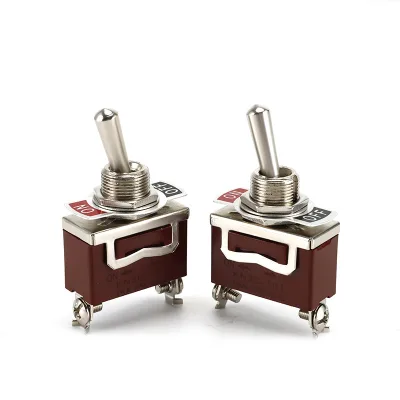
Waterproof Rocker Switch Rocker Switch T125 55 Wireless Remote Power Switch 230V
$0.35 - $0.65
MOQ: 500 Pieces




Comprehensive Sourcing Guide
Waterproof Rocker Micro Switch Sourcing Guide
The Waterproof Rocker Micro Switch serves as a critical interface component for environments where moisture, dust, or frequent physical actuation threaten standard switch reliability. Based on observed market listings, these components are engineered with composite structures and built-in amplifiers to ensure stable signal transmission in demanding settings. Buyers should recognize that while the core mechanism relies on capacitive principles, the external housing often utilizes PA66 materials to provide the necessary insulation and durability against harsh conditions.
Procurement decisions for this category require balancing the specific application needs against the available customization options. The market offers variants ranging from single-pole on-off switches to multi-control configurations, with some models featuring integrated lamps for visual feedback. Sourcing teams must verify whether the specific unit requires a "Null Line and Live Line" wiring configuration or a different setup, as the wiring architecture directly impacts the integration complexity within the final assembly.
Product Scope and Observed Listing Signals
The observed product range includes distinct models such as the dsn-MR-C1, KR1-1-F4, and KR2-12-F2, each tailored for specific operational contexts. Listings indicate a diverse array of usage scenarios, spanning commercial buildings, hotels, and residential villas, alongside applications in electronics, home appliances, and machinery. The presence of "Inner Waterproof Instructure" in certain models suggests a design philosophy focused on sealing internal components, which is a vital signal for buyers targeting outdoor or high-humidity environments.
Buyers must carefully distinguish between units designed for general electrical appliances and those intended for specialized sectors like vehicles, toys, or communication equipment. The market data reveals variations in physical dimensions, with standard sizes observed around 2115mm, 3427mm, and 30*22mm, which dictates the available mounting space in the target device. Additionally, the availability of OEM services and customization options allows for branding and functional adjustments, but the buyer must confirm if the specific model supports the required color options, such as grey, red, or black, to match the product aesthetic.
Technical Specifications to Verify
Technical verification begins with the protection level, where observed listings cite IP65 ratings and specific waterproofing claims like "Inner Waterproof Instructure." It is essential to confirm that the insulation and waterproofing features meet the specific environmental exposure of the end product, as not all listed units may offer the same degree of ingress protection. The structural design, described as an "Amplifier Built-in Type," implies a specific internal architecture that must be compatible with the control circuitry of the host device to ensure reliable signal processing.
Electrical ratings and actuation principles are equally critical, with observed standards including voltage options of 6V, 12V, 24V, 110VAC, and 220VAC. Buyers should verify that the selected switch's voltage rating aligns with the system's power supply to prevent premature failure or safety hazards. Furthermore, the detection method, identified as "Correlation Type," and the mechanical nature of the switch require validation to ensure the actuation force and response time meet the operational speed and tactile feedback requirements of the application.
Compliance and Safety Documentation
Compliance verification is a non-negotiable step, as the supplied data indicates the presence of multiple certifications including CE, ISO, RoHS, and GS. These certifications signal adherence to international safety and environmental standards, but buyers must request valid, up-to-date certificates for the specific batch or model being procured. The presence of CE and RoHS marks is particularly relevant for products entering the European market, ensuring that the materials used, such as the PA66 standard, do not contain restricted substances.
Safety documentation must also address the specific usage contexts, such as vehicle or toy applications, which may have additional regulatory requirements beyond general electrical safety. While the listings mention "Insulation" and "Durable" as protection features, the buyer should ensure that the supplier provides test reports or compliance statements that explicitly cover the intended application environment. For instance, switches used in vehicles or machinery may require specific vibration or thermal cycling test results that are not automatically covered by general CE certification.
Cost Drivers and Commercial Terms
Cost structures for waterproof rocker micro switches are influenced by the complexity of the waterproofing mechanism and the customization level required. Models with "Inner Waterproof Instructure" or specific voltage ratings like 220VAC may command different price points compared to standard variants, and the observed price range of 0.05 to 1.65 USD reflects this variability. Buyers should analyze whether the lower end of the price spectrum corresponds to basic, non-customized units or if it includes specific high-performance features that offer better long-term value.
Commercial terms are heavily impacted by the Minimum Order Quantity (MOQ), which ranges from 50 to 3000 units across the observed listings. This wide range suggests that suppliers offer flexibility for prototyping or small-batch runs, but larger orders may be necessary to secure optimal pricing or to access specific customization options. The packaging method, observed as either blister or carton, also affects logistics costs and should be factored into the total landed cost calculation, especially for international shipments where carton integrity is crucial for protecting the switches during transit.
Supplier Qualification and Quality Control
Supplier qualification should focus on the ability to provide consistent quality control for products that vary significantly in condition, with some listings marked as "New" and others as "Used." For a B2B procurement of waterproof switches, it is imperative to source only from suppliers guaranteeing "New" condition units to ensure reliability and safety. The warranty period, observed as 12 months for certain models, serves as a key indicator of the supplier's confidence in their product quality and their commitment to after-sales support.
Quality control processes must verify the consistency of the "Composite" structure and the "Single-pole on-off" functionality across the entire order. Buyers should request samples to test the mechanical feature and the "Correlation Type" detection method under actual operating conditions before committing to a large volume. Additionally, the origin of the products, noted as China or specifically Ningbo, should be cross-referenced with the supplier's manufacturing capabilities to ensure that the production facility maintains the necessary standards for waterproofing and electrical safety.
Long-Term Procurement Checks
Long-term procurement success depends on establishing a reliable supply chain that can maintain the specific technical specifications and certifications over time. Buyers should monitor the consistency of the "PA66" standard and the "Metal waterproof button switch" construction to ensure that material substitutions do not compromise the durability or waterproofing performance. Regular audits of the supplier's quality management system are recommended to verify that the "Insulation" and "Waterproof" claims remain valid as production volumes scale.
Finally, the procurement strategy must account for the lifecycle of the product, including the availability of spare parts and the continuity of the "OEM" services. As the market evolves, the specific models like KR2-12-201F3 or dsn-MR-C1 may be discontinued, so maintaining a relationship with a supplier who offers "Customization" is vital for adapting to future design changes. Establishing clear communication channels for reporting any deviations in the "Protection Level" or "Wiring" configuration will help mitigate risks associated with supply chain disruptions or product obsolescence.
FAQs
What certifications are available for these switches?
These switches typically carry CE, ISO, RoHS, and GS certifications. Buyers should verify specific documentation for each model to ensure compliance with regional regulations. The presence of multiple certifications indicates adherence to international safety and environmental standards, which is critical for commercial and industrial applications.
Can these switches be customized for specific projects?
Yes, customization is available for many models. Suppliers often support OEM requests, allowing for tailored specifications such as color, lamp inclusion, or specific voltage ratings. This flexibility ensures the components meet unique design requirements for electronics, home appliances, or vehicle applications without compromising functionality.
What is the typical MOQ for ordering these components?
The minimum order quantity generally ranges from 50 to 3000 units. This wide range accommodates both small prototype batches and large-scale production runs. Buyers should confirm the exact MOQ with the supplier, as it may vary based on the specific model, customization level, and current inventory status.
Are these switches suitable for outdoor or wet environments?
Many models feature waterproof and insulation protection, with some achieving IP65 ratings. These features make them suitable for environments where moisture exposure is a concern. However, buyers must check the specific protection level and construction details for each model to ensure adequate durability for their intended application.
What voltage options are supported by these switches?
Standard voltage options include 6V, 12V, 24V, 110VAC, and 220VAC. This variety allows for integration into diverse electrical systems, from low-voltage electronics to standard household appliances. Selecting the correct voltage rating is essential for safe operation and long-term reliability in the final product.
Where are these switches typically manufactured?
These components are primarily manufactured in China, with specific origins noted in cities like Ningbo. Sourcing from this region often provides competitive pricing and established supply chains. Buyers should verify the exact origin and any associated logistics details to ensure alignment with their sourcing strategy and delivery timelines.