Source High Performance MPP Pipe for construction, drainage, and cable protection
Find 30 listings for High Performance MPP Pipe suitable for industrial and municipal projects. Buyers can compare specifications like tensile strength, water absorption, and wall thickness across suppliers in Cangzhou and Nanjing to select the right thermoplastics or FRP options.
Key considerations
Products List




Comprehensive Sourcing Guide
Strategic Sourcing Guide for High Performance MPP Pipe Procurement
Navigating the global market for high-performance MPP (Modified Polypropylene) pipes requires a disciplined approach that distinguishes between verified product attributes and general market expectations. Buyers in the infrastructure, telecommunications, and industrial sectors must prioritize technical validation over marketing claims. The following guide outlines the critical dimensions of sourcing these specialized piping solutions, focusing on material integrity, manufacturing processes, and supplier reliability.
Technical Specifications and Material Integrity
The foundation of a successful procurement strategy lies in understanding the specific technical parameters of the pipe. High-performance MPP pipes are engineered to withstand demanding environmental conditions, yet the specific metrics vary significantly between suppliers. When evaluating potential products, buyers must scrutinize the tensile strength, water absorption rates, and contraction percentages.
Based on observed market data, specific high-performance variants demonstrate a tensile strength range of 41 to 50 MPa. This metric is crucial for applications involving underground burial or high-pressure environments where structural failure is not an option. Furthermore, the water absorption rate is a critical indicator of long-term durability. Premium grades often exhibit water absorption of less than 0.01%, ensuring that the material does not degrade or lose mechanical properties when exposed to moisture over extended periods. In contrast, other thermoplastic categories may show absorption rates between 1.5% and 3.5%, which can compromise performance in wet environments.
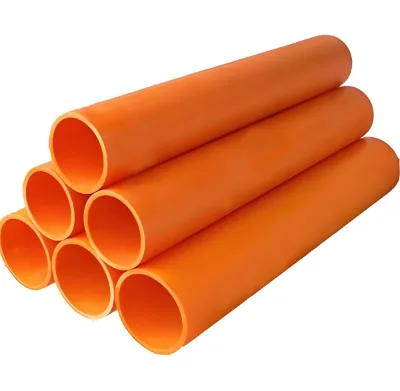
The physical dimensions and wall thickness are equally vital. Standard models often range from Dn110mm to Dn315mm, with wall thicknesses that can be customized to meet heavy-duty requirements. The availability of thickened walls is a specific feature for applications requiring enhanced structural rigidity. Buyers should verify that the product model aligns with their specific diameter needs, as the market offers a wide spectrum including 110, 315, 400, 500, 630, 710, 800, 1200, and 1600 mm. It is essential to confirm whether the pipe is a single-layer or multi-layer structure, as this impacts the pressure rating and flexibility.
| Attribute | High-Performance MPP Observation | Alternative Thermoplastic Observation |
|---|---|---|
| Tensile Strength | 41~50 MPa | 81~130 MPa (FRP variants) |
| Water Absorption | < 0.01% | 1.5%~3.5% |
| Contraction Percentage | < 0.4% | Variable |
| Material Base | PP (Polypropylene) | FRP (Fiberglass Reinforced) |
| Wall Thickness | Customizable (Thickened) | Standard or Custom |
Manufacturing Processes and Customization Capabilities
The manufacturing method dictates the final quality and consistency of the pipe. High-performance MPP pipes are typically produced using advanced extrusion technologies. Buyers should look for suppliers utilizing automatic and computerized production lines to ensure uniformity. The control systems employed, such as Siemens PLC Touching Screens, play a significant role in maintaining precise temperature and pressure profiles during extrusion.
A key differentiator in the market is the level of customization available. While some products come in standard configurations, the ability to customize the product model, standard, and packing is a hallmark of a flexible supplier. The production process often involves a processing period of 40 to 60 days, which is a critical factor for project planning. Buyers must verify if the supplier offers single-screw extrusion or more complex multi-layer configurations depending on the application's pressure and temperature requirements.
Furthermore, the surface treatment of the pipe should be smooth to facilitate installation and reduce friction during cable pulling or fluid transport. The raw materials used, such as resin and specific agents, must be of high quality to ensure the final product meets hygienic performance qualifications. Some suppliers may offer products with a "High" quality rating, but this should be backed by verifiable test data rather than a generic label.
Compliance, Standards, and Certification Verification
One of the most challenging aspects of sourcing MPP pipes is navigating the complex landscape of industry standards. While specific standards like EN 10208, ISO 3183, DIN 8077/8078, and ISO 15874 are often referenced in the broader piping industry, buyers must exercise caution. These standards should not be assumed to apply to every listed product without explicit confirmation from the supplier.
Instead of relying on general standard names, procurement teams should demand specific test reports that validate the pipe's performance against the relevant standards for their specific application. For instance, if the pipe is intended for telecommunications ducting, the relevant local or international standards for cable protection must be met. The "High" quality and "Qualified" hygienic performance attributes observed in some listings are positive indicators but must be supported by third-party certification documents.
Buyers should also verify the origin of the product. Locations such as Cangzhou and Nanjing in China are known manufacturing hubs, but the specific factory's compliance history is what matters. The standard listed as "Dn110mm-315mm" in some contexts appears to be a model range rather than a formal standard code, highlighting the need for buyers to distinguish between product specifications and regulatory compliance documents.
Cost Drivers and Economic Considerations
The cost of high-performance MPP pipes is influenced by several variables, including material costs, customization levels, and order volume. The observed price range in the market is vast, spanning from 0.1 to 100,000 USD, which reflects the diversity from small fittings to large-diameter industrial pipes. The Minimum Order Quantity (MOQ) also varies significantly, ranging from 1 to 1000 units, allowing flexibility for both small projects and large-scale infrastructure developments.
Material composition is a primary cost driver. Pipes utilizing high-grade resins and specialized agents will command a higher price than those using standard formulations. Additionally, the customization of wall thickness and the inclusion of multi-layer structures increase manufacturing complexity and cost. Buyers should also factor in the processing period of 40 to 60 days into their total cost of ownership, as delays can impact project timelines and incur additional expenses.
Packing requirements also affect the final price. Options such as pallets, plastic bags, cartons, or custom packaging according to customer requirements can vary in cost. Standard packing, such as six meters per pipe, is common, but specialized shipping needs may require additional packaging solutions.
Typical Applications and Performance Requirements
High-performance MPP pipes are versatile and find applications across various sectors. Their primary use cases include telecommunications ducting, electrical cable protection, and industrial fluid transport. The material's ability to withstand high temperatures and resist chemical corrosion makes it suitable for harsh environments.
In the telecommunications sector, these pipes are used to protect fiber optic cables from physical damage and environmental factors. The smooth surface treatment facilitates the easy pulling of cables, reducing installation time and risk. In industrial settings, the pipes serve as conduits for various fluids and gases, where their high tensile strength and low water absorption ensure long-term reliability.
Some products are also marketed for use as tool handles and construction members, leveraging the material's strength and lightweight properties. However, buyers must ensure that the specific pipe grade matches the intended application. A pipe designed for cable ducting may not possess the necessary chemical resistance for industrial fluid transport without specific validation.
Supplier Evaluation and Quality Control
Selecting the right supplier is as critical as selecting the right product. Buyers should evaluate suppliers based on their production capabilities, quality control processes, and track record. The presence of automatic and computerized machinery indicates a commitment to consistency and precision. Suppliers who offer "New" condition machinery and utilize components from reputable brands like ABB, Rkc, Omron, or Siemens demonstrate a higher level of technical sophistication.
Quality control should be a collaborative effort. Buyers must request detailed quality assurance protocols, including how tensile strength, water absorption, and contraction percentages are tested. The observation of "High" quality and "Qualified" hygienic performance should be backed by specific test reports. Additionally, the supplier's ability to provide customized solutions, such as specific wall thicknesses or packing arrangements, is a strong indicator of their flexibility and customer focus.
Geographic location can also play a role in logistics and communication. Suppliers located in major manufacturing hubs like Cangzhou or Nanjing may offer competitive advantages in terms of supply chain efficiency. However, the proximity of the supplier to the project site should be weighed against their technical capabilities and quality standards.
Long-Term Procurement Considerations
Sourcing high-performance MPP pipes is not a one-time transaction but a long-term partnership. Buyers should consider the supplier's ability to provide consistent quality over time, especially for large infrastructure projects that may span several years. The processing period of 40 to 60 days must be factored into the project schedule, and suppliers should have the capacity to scale production if project requirements change.
Future-proofing the procurement strategy involves ensuring that the pipes meet evolving regulatory standards and environmental requirements. As sustainability becomes a more significant factor, buyers should inquire about the recyclability of the materials and the environmental impact of the manufacturing process. The use of high-quality resins and agents should be balanced with eco-friendly practices.
Finally, the availability of after-sales support and technical assistance is crucial. Suppliers who offer comprehensive support, including installation guidance and troubleshooting, add significant value to the procurement process. By focusing on these long-term considerations, buyers can ensure that their investment in high-performance MPP pipes delivers reliable results for years to come.
FAQs
What is the tensile strength of High Performance MPP Pipe?
High Performance MPP Pipe exhibits a tensile strength ranging from 41 to 50 MPa. This metric ensures structural integrity for underground burial or high-pressure environments where failure is not an option.
How much water absorption does the pipe material have?
Premium High Performance MPP Pipe shows water absorption of less than 0.01%. This low rate prevents material degradation and maintains mechanical properties when exposed to moisture over extended periods.
Which pipe diameters are available for this product?
Available models range from Dn110mm to Dn315mm, with specific sizes including 110, 315, 400, 500, 630, 710, 800, 1200, and 1600 mm. Buyers should verify the specific diameter aligns with project needs.
Can the wall thickness be customized for heavy duty use?
Yes, wall thickness is customizable with thickened wall options available for heavy-duty applications. This feature provides enhanced structural rigidity for demanding industrial or infrastructure projects requiring specific load capacities.
What is the typical processing period for these pipes?
The standard processing period for High Performance MPP Pipe is 40 to 60 days. Buyers must factor this timeline into project schedules to avoid delays in large-scale infrastructure developments.
How is the pipe surface treated for installation?
The pipe surface treatment is smooth to facilitate easy installation and reduce friction. This finish is critical for cable pulling operations and fluid transport where minimizing resistance is essential for efficiency.